Physician Warns Against New Brunswick’s Ban on Flavoured Vapes

News
Jul.11.2022
In a release on its website, the New Brunswick Medical Association (NBMA) recently said that local physicians are pleased with the flavour ban that has been set in place.

Titled, “Physicians pleased with new restrictions on vaping products,” the NMBA article said that alongside other health entities, they welcome restrictions on vaping products. However, local physician Dr. John Oyston MB BS, BMedSci, FRCA, FRCP(C), wrote in response to the release, explaining why he believes the ban will be detrimental to public health.


Addressing the letter to the NMBA, the Canadian Cancer Society; the New Brunswick Lung Association; and Dr. Kerrie Luck, Ph.D. and Dr. Jeff Steeves, Past President, New Brunswick Medical Society, he explained that the flavour ban will likely increase tobacco-related deaths and black market activity.
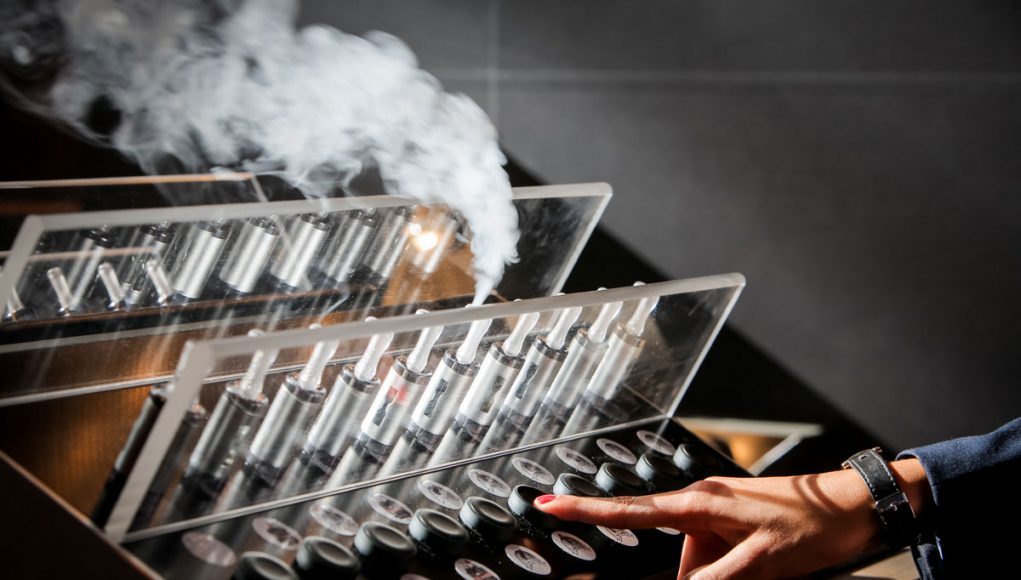
Physician Warns Against New Brunswick’s Ban on Flavoured Vapes

“As a physician who has seen the disease, disability and death caused by tobacco smoking, I urge you to intervene in opposition to the vape flavour ban, which is likely to increase deaths from tobacco use.


I understand your concern about recreational vaping by youth, but banning flavours is not an effective way to address this issue. Youth vape for many reasons, and in most studies flavours are about the third most common reason, after peer pressure and curiosity. It is true that over 90% of youth who vape use flavours, but that does not mean that banning flavours will reduce vaping by 90%. Over 90% of car drivers use coloured vehicles. If car colours were banned and all cars only came in natural metal colour, how many people would stop driving? It makes more sense to rigorously enforce existing laws against supplying vape to minors than to make up new laws.


Alcohol use causes much more damage to teenagers than vaping. Flavours make alcohol attractive to teens, but no-one is suggesting we deprive adult drinkers of the pleasure of drinking grape, hop and fruit flavoured alcohol in order to reduce teen drinking.


Flavour bans make vaping less popular both for teens and for adult smokers trying to quit. Smokers use vaping because they want to get away from the smell and toxic chemicals in cigarette smoke. Smokers who use tobacco-flavoured vape are more likely to relapse and resume smoking. To make smokers use tobacco-flavoured vape would be like insisting on an alcoholic taking whisky-flavoured medication.


You refer to protecting youth from lung damage. Please remember that “EVALI” was caused NOT by regular store-bought nicotine vape, but by the consumption of black-market THC products. Banning legal flavours will encourage a dangerous black market in flavours. Research has shown no lung damage in people who vape for three years, and smokers who switch to vaping breathe more easily and can walk further.


Smoking is five to twenty times more dangerous than vaping. Sonia Johnson, Director General of Health Canada,​ recently stated that zero Canadians have died from vaping. This compares to 120 Canadians dying every day from smoking. If the flavour ban stops four teens from vaping, but prevents one adult smoker from quitting tobacco use, the net effect is negative.


​ Please look at the data: Vape flavour bans in Nova Scotia and San Francisco have led to a black market and to an increase in tobacco smoking.”

BAT says a U.S. import block on some disposable vapes could cut illegal sales by about a third
Reuters reported that British American Tobacco (BAT) CEO Tadeu Marroco said a potential U.S. move to block imports of some disposable vapes could reduce the market for unregulated e-cigarettes by as much as a third, though any impact is unlikely before 2027.
Feb.13 by 2FIRSTS.ai
Alan Zhao: In the Post-“Absolute Resolve” Era: Speculating on U.S.-Referenced Regulatory Alignment and the Restructuring of Order in South America’s Novel Tobacco Market
Alan Zhao analyzes post-Operation Absolute Resolve geopolitics and the rise of “U.S.-referenced regulatory alignment” in South America’s novel tobacco market as U.S. influence grows. Using regulatory reliance, digitalized enforcement, and industrial shifts, he assesses how rule redesign may alter market access, competition, and supply chains, asking how firms can find durable certainty as order is rewritten.
Jan.06 by 2Firsts Perspectives
UK government letter agrees nicotine pouches are lower risk than smoking and a harm reduction tool
In correspondence with 20isPlenty campaigners, the government agreed nicotine pouches are likely to pose lower health risks than smoking and confirmed they are a harm reduction tool, while warning about their high nicotine content, fast absorption and potential to be flavoured.
Jan.06 by 2FIRSTS.ai
PMTA Manufacturing Panel Sees Small Firms Warn “Unknown Is Death” as FDA Defends Review Boundaries
During FDA’s Feb 10 PMTA roundtable (manufacturing controls panel), small ENDS manufacturers warned that uncertainty in manufacturing expectations creates existential financial risk. FDA officials reiterated review flexibility is constrained by statutory and scientific boundaries. The panel debated testing standards, documentation requirements, open-system responsibility, supply chain changes, and software updates—highlighting unresolved PMTA challenges for small manufacturers.
Feb.11
Scottish retailers call for tougher action as illegal vape black market “deepens,” SGF says
Scottish retailers, through the Scottish Grocers’ Federation (SGF), are calling for tougher action and more investment to tackle a “deepening black market” in illegal vapes, including illegal sales to children. SGF warns the problem will worsen, with negative health impacts, if incoming regulations on vaping product sales are not carefully crafted and if shopkeepers’ views are not heard.
Jan.14 by 2FIRSTS.ai
Police dismantle a network of 50+ stores selling unmarked nicotine products in the Moscow region
TASS reported that police dismantled a distribution network in the Moscow region selling nicotine-containing products, e-cigarettes and vapes without mandatory markings, with organizers earning more than 10 million rubles per month (more than about $130,000). Interior Ministry spokesperson Irina Volk said some items were labeled with counterfeit identification tools of the Chestny Znak system, while others had no codes.
Dec.30 by 2FIRSTS.ai