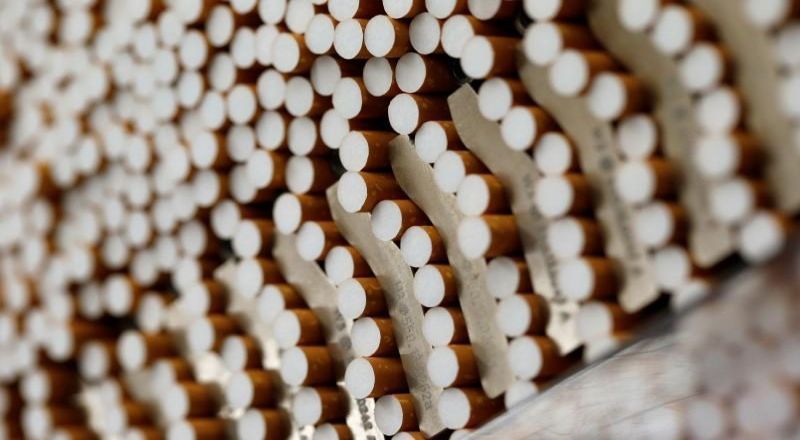
According to Okezone's report on December 23, the Indonesian Ministry of Industry revealed that standardizing tobacco product packaging could potentially exacerbate the circulation of illegal tobacco. Due to the lack of distinctiveness in uniform packaging, the market share of legal products may gradually be eroded, leading to a domino effect on the entire industry.
The Director of the Ministry of Industry for the Beverage, Tobacco, and Stimulant Industry, Merrijantij Punguan Pintaria, stated that ...
Standardizing tobacco packaging can make it easier for illegal cigarettes to circulate, as the packaging looks the same and it is more difficult to distinguish between legal and illegal cigarettes. This could further weaken the performance of the legal tobacco industry. If not controlled, the circulation of illegal cigarettes could undermine company revenue, job creation, and raw material consumption.
The Indonesian Ministry of Health is currently drafting the "Regulation of the Minister of Health on the Safety of Tobacco Products and E-cigarettes" required by Government Regulation No. 28 of 2024. Standardized packaging is included as part of the draft "RPMK Tobacco Regulation".
Mai Li also pointed out that illegal tobacco not only threatens the survival of the industry but could also lead to a reduction in national tax revenue.
Additionally, tobacco tax revenue has been below target in the past year. In 2023, tobacco tax revenue was 213 trillion Indonesian rupiah (131 billion dollars), falling short of the target of 227.21 trillion rupiah (140 billion dollars) set in the 2023 fiscal budget.
The Director of the Communication and Community Services Department of the Ministry of Health, Siti Nadia Tarmizi, responded that the Ministry of Health is internally coordinating the implementation of the "Health Government Regulations," including the still pending "RPMK Tobacco Regulations.
We welcome news tips, article submissions, interview requests, or comments on this piece.
Please contact us at info@2firsts.com, or reach out to Alan Zhao, CEO of 2Firsts, on LinkedIn
Notice
1. This article is intended solely for professional research purposes related to industry, technology, and policy. Any references to brands or products are made purely for objective description and do not constitute any form of endorsement, recommendation, or promotion by 2Firsts.
2. The use of nicotine-containing products — including, but not limited to, cigarettes, e-cigarettes, nicotine pouchand heated tobacco products — carries significant health risks. Users are responsible for complying with all applicable laws and regulations in their respective jurisdictions.
3. This article is not intended to serve as the basis for any investment decisions or financial advice. 2Firsts assumes no direct or indirect liability for any inaccuracies or errors in the content.
4. Access to this article is strictly prohibited for individuals below the legal age in their jurisdiction.
Copyright
This article is either an original work created by 2Firsts or a reproduction from third-party sources with proper attribution. All copyrights and usage rights belong to 2Firsts or the original content provider. Unauthorized reproduction, distribution, or any other form of unauthorized use by any individual or organization is strictly prohibited. Violators will be held legally accountable.
For copyright-related inquiries, please contact: info@2firsts.com
AI Assistance Disclaimer
This article may have been enhanced using AI tools to improve translation and editorial efficiency. However, due to technical limitations, inaccuracies may occur. Readers are encouraged to refer to the cited sources for the most accurate information.
We welcome any corrections or feedback. Please contact us at: info@2firsts.com