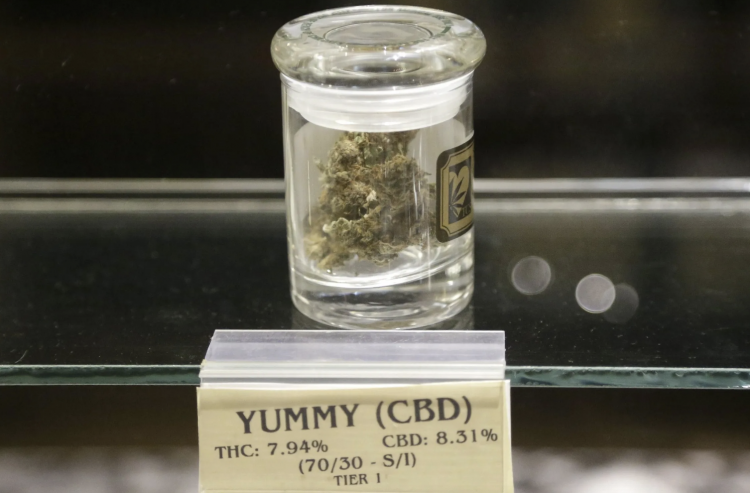
Consumers have started queuing up to purchase recreational marijuana, just six months after Governor Dan McKee signed a law allowing individuals aged 21 and over to buy it.
At present, five stores have been allowed to sell recreational marijuana products, but according to the law, the state could eventually have as many as 33 stores. So far, the state's Marijuana Regulation Office has authorized stores to open in Central Falls, Providence, Pawtucket, Portsmouth, and Warwick. These five stores have already started selling medical marijuana.
Last week, the Democratic governor stated in a press release, "This milestone is the result of carefully executed procedures to ensure our state enters this emerging market in a safe, controlled, and fair manner.
According to Joe Pakuris, people were already waiting outside when Mother Earth Wellness, located in Poteau, opened its doors at 5:00 AM on Thursday. Usually opening at 8:00 AM, the store began its first ever recreational sale at 5:18 in the morning.
He said that as of midday, the store had already served around 300 customers, of which roughly 80% were recreational marijuana buyers.
We had a very successful day," he said. "I think it was a smooth transition and the state did an excellent job in implementing the plan. Everything went great.
In addition to a 7% state sales tax and a 3% local sales tax imposed by cities or towns, the law also levies a 10% state marijuana consumption tax. It is estimated to generate approximately $15 million in tax revenue during the first full fiscal year of sales.
It is illegal to smoke or consume cannabis in any public place where smoking or tobacco use is prohibited, as well as any location that may harm children. Under the influence of cannabis, individuals are also prohibited from driving a vehicle.
The legislation also stipulates the expungement of any prior convictions for possession of marijuana, which will be decriminalized.
Approximately 20 states across the country have approved the sale of recreational marijuana, including neighboring Massachusetts, where it has been legal for about four years. In Connecticut, recreational marijuana has been legalized, but sales are not expected to begin until next year.
Not everyone is happy, as state law enforcement agencies express concern about the possibility of more damaged drivers on the roads.
2FIRSTS will continue to report on this topic, with further updates available on the '2FIRSTSAPP.' Scan the QR code below to download the app.
Disclaimer
This article is provided solely for professional research, industry discussion, and informational purposes. Any references to brands, companies, products, technologies, or policies are made for factual reporting and analytical purposes only, and do not constitute endorsement, recommendation, promotion, or advertising by 2Firsts.
Nicotine-containing products, including but not limited to cigarettes, e-cigarettes, heated tobacco products, and nicotine pouches, carry significant health risks. Readers are responsible for complying with all applicable laws and regulations in their respective jurisdictions, including age restrictions and access limitations.
The information contained in this article should not be regarded as investment, legal, medical, regulatory, or commercial advice. While 2Firsts strives to ensure the accuracy and reliability of its content, it does not assume liability for any direct or indirect loss arising from errors, omissions, inaccuracies, or reliance on the information contained herein.
This article is not intended for individuals below the legal age for accessing tobacco or nicotine-related information in their jurisdiction.
Copyright Notice
This article is either original content produced by 2Firsts or content reproduced, translated, summarized, or adapted from third-party sources with attribution where applicable. The intellectual property rights of the original content remain with 2Firsts or the respective original rights holders.
No individual or organization may copy, reproduce, distribute, republish, modify, translate, or otherwise use this content without prior authorization. Any unauthorized use may result in legal action.
For copyright-related inquiries, corrections, or removal requests, please contact: info@2firsts.com.
AI-Assisted Translation and Editing Notice
Portions of this article may have been translated, edited, or reviewed with the assistance of artificial intelligence tools to improve efficiency and readability. Due to the limitations of AI-assisted translation and editing, discrepancies, omissions, or inaccuracies may exist when compared with the original source.
Where applicable, readers are advised to refer to the original source for the most complete and accurate information. If you identify any errors or believe that any content infringes upon your rights, please contact us at info@2firsts.com, and we will review and address the matter promptly.