Russia's State Duma Passes Tobacco and Nicotine Ingredient Disclosure Bill, Targeting 2027 End to Trade-Secret Protection for Certain Harmful Ingredient Data

Regulations
Nov.12
Russia's State Duma Passes Tobacco and Nicotine Ingredient Disclosure Bill, Targeting 2027 End to Trade-Secret Protection for Certain Harmful Ingredient Data
Russia's State Duma passed a government-sponsored amendment on November 11, 2026, by 414 votes to none, seeking to prevent businesses from classifying information on the presence and number of types of certain harmful ingredients in tobacco and nicotine-containing products as trade secrets. The measure covers ingredients capable of increasing nicotine dependence or exhibiting toxic, carcinogenic, mutagenic or reproductive toxicity, including substances that acquire such properties during heating or smoldering. Bill No. 1286415-8 would amend Article 5 of Federal Law No. 98-FZ on Commercial Secrets and is scheduled to take effect on January 1, 2027. The bill has cleared all three readings in the State Duma but has not completed the remaining legislative procedures.

Key Points

  • Russia's State Duma passed Bill No. 1286415-8 on November 11 by 414 votes to none, proposing changes to trade-secret protections for tobacco and nicotine product ingredient information.
  • Information concerning the presence and number of types of specified harmful ingredients would no longer qualify for trade-secret protection.
  • The measure covers ingredients that increase nicotine dependence or exhibit toxic, carcinogenic, mutagenic or reproductive toxicity, including substances that acquire such properties during heating or smoldering.
  • The proposed effective date is January 1, 2027, two months earlier than originally planned, subject to completion of the remaining legislative process.

2Firsts

November 12, 2026

Russia's State Duma passed an amendment on November 11 that would prevent businesses from classifying certain harmful ingredient information in tobacco and nicotine-containing products as trade secrets. The measure is scheduled to take effect on January 1, 2027, covering tobacco products and nicotine-containing products as defined under Russian law, including applicable vaping products.

According to parliamentary records, Bill No. 1286415-8 received 414 votes in favor, none against and no abstentions in its third reading. Another 36 lawmakers did not vote.

The bill would amend Article 5 of Federal Law No. 98-FZ on Commercial Secrets, dated July 29, 2004, to exclude information on the presence and number of types of specified harmful ingredients from trade-secret protection.

The provisions cover substances that may increase nicotine dependence or exhibit toxic, carcinogenic, mutagenic or reproductive toxicity, including ingredients that may acquire such properties during heating or smoldering.

State Duma Passes Amendment Limiting Trade-Secret Protection for Harmful Ingredient Data

The Russian government submitted Bill No. 1286415-8 to the State Duma on July 10, 2026. Lawmakers approved it in the first reading on October 1.

The chamber passed the measure in its second and third readings on November 11, completing its consideration in the lower house.

Article 5 of Russia's Law on Commercial Secrets lists categories of information that cannot be protected as trade secrets. The amendment would add specified ingredient information concerning tobacco and nicotine-containing products to that list.

The measure covers substances capable of increasing nicotine dependence or causing toxic, carcinogenic, mutagenic or reproductive effects. It also includes ingredients that may acquire such hazardous properties during heating or smoldering.

In the explanatory materials accompanying the bill, the Russian government said existing trade-secret protections had restricted public access to some ingredient information relevant to the potential health effects of tobacco and nicotine products.

State Duma Speaker Vyacheslav Volodin said after the vote that information about harmful ingredients in tobacco and vaping products should not be protected as commercially confidential.

The amendment concerns information on the presence and number of types of specified harmful ingredients. It does not establish a blanket requirement to disclose complete product formulations, proprietary manufacturing processes or the precise concentration of every chemical substance.

January 2027 Start Would Change Ingredient Confidentiality Rules for Manufacturers

The bill was originally scheduled to take effect on March 1, 2027. During the State Duma's consideration, lawmakers moved the proposed commencement date forward to January 1, 2027.

Under Russia's legislative process, the measure still requires consideration by the Federation Council, presidential signature and official publication before becoming law.

Its scope covers tobacco products and nicotine-containing products. For manufacturers of vaping and other nicotine products within those statutory categories, the amendment would change the legal conditions under which qualifying harmful ingredient information can be treated as commercially confidential.

The measure addresses the confidentiality status of product information rather than directly prohibiting the manufacture or sale of the products concerned.

Russian legal materials link the initiative to the country's broader policy on reducing tobacco and other nicotine product consumption through 2035.

As of November 12, 2026, Bill No. 1286415-8 had completed all three readings in the State Duma. January 1, 2027 remains its proposed effective date.

Follow 2Firsts for timely updates on global tobacco and nicotine regulations, market developments and industry trends.

Cover Image: Vedomosti

South Korea Imports 12,126 Kg of Nicotine Analogues From April to August After Bringing Synthetic Nicotine Under Tobacco Law
South Korea's liquid-vape market is showing changes across raw-material imports, product types and sales channels after synthetic nicotine came under the Tobacco Business Act on April 24. Customs data show nicotine-analogue imports totaled 12,126 kilograms from April through August, while synthetic-nicotine imports over the same five months totaled 231,663 kilograms, just 39.3% of the amount imported in March alone. Physical liquid-vape stores tracked in Seoul and Gyeonggi Province fell 9.9%, unmanned outlets edged higher and online sales listings increased from 27,774 to 42,437. Government testing of 105 liquid inhalation products promoted as nicotine-free separately found nicotine in 13 and 6-methylnicotine in 12.
Sep.22
Latest UK ONS Data: Vaping Rate Edges Down to 9.9% in 2025, a Year After Overtaking Cigarette Smoking
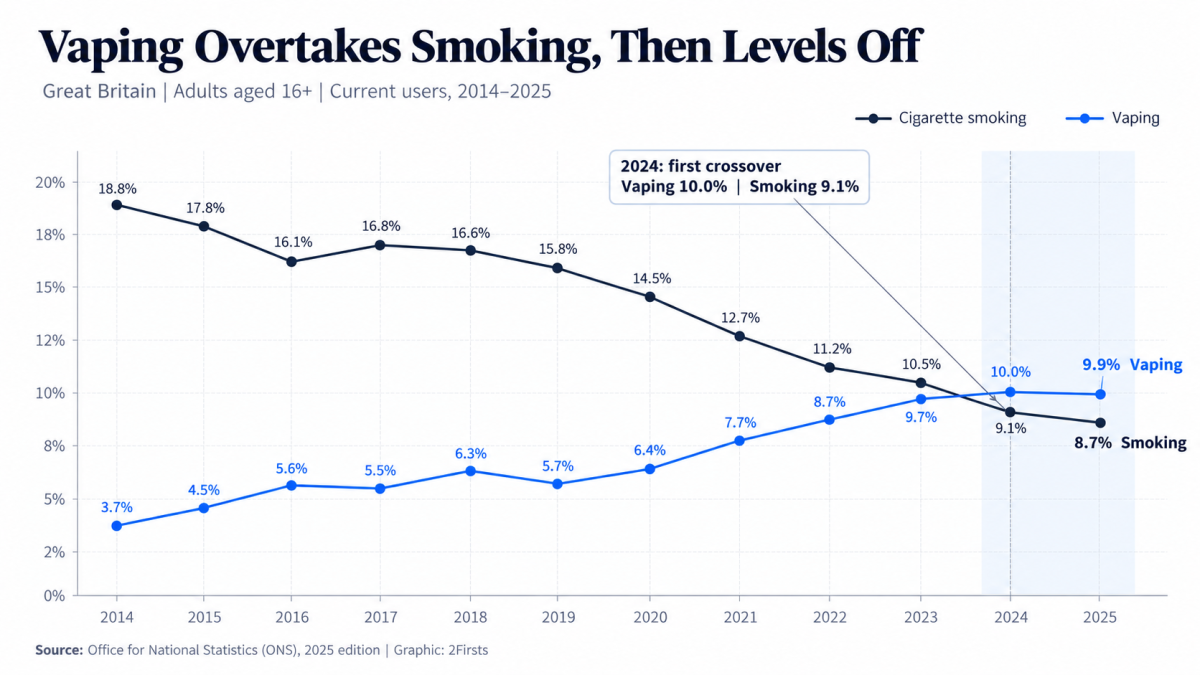
Vaping prevalence in Great Britain edged down to 9.9% in 2025 from 10.0% in 2024, with the number of adult users holding at approximately 5.4 million for a second consecutive year, according to the Office for National Statistics (ONS). E-cigarette use had risen from 6.4% in 2020 to 10.0% in 2024, when it exceeded cigarette smoking prevalence for the first time. Cigarette smoking continued to decline to 8.7% in 2025, widening the gap to 1.2 percentage points. Daily vaping declined slightly, while usage among adults aged 25–34 increased despite falling rates in other age groups.
DATA
Oct.14
EU Commission Clarifies Vaping, Smokeless Nicotine Use in Proposed Cardiovascular Checks
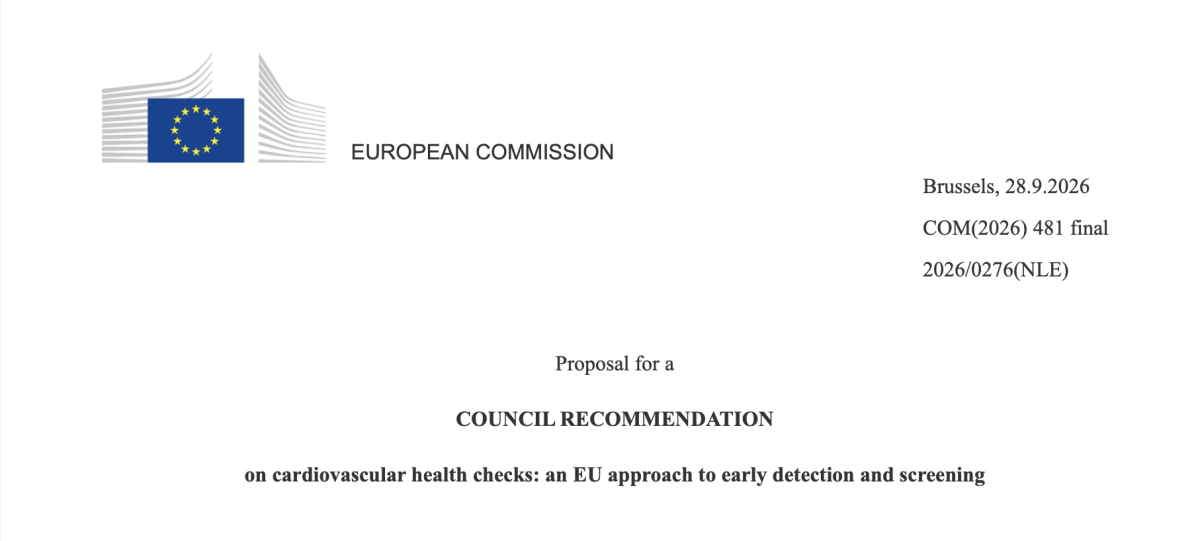
The European Commission has clarified to 2Firsts that its proposed cardiovascular health checks would assess smoking, vaping and the use of smokeless nicotine products as part of patients’ medical histories. The Commission also said Member States may organise additional checks within their healthcare systems. In the same response, it pointed to JRC research on e-cigarettes, heated tobacco products and nicotine pouches that has fed into the evaluation of EU tobacco legislation.
Nov.09
Texas Extends Tobacco Tax Interpretation to a 6-Methylnicotine Product, Citing VELO Ruling
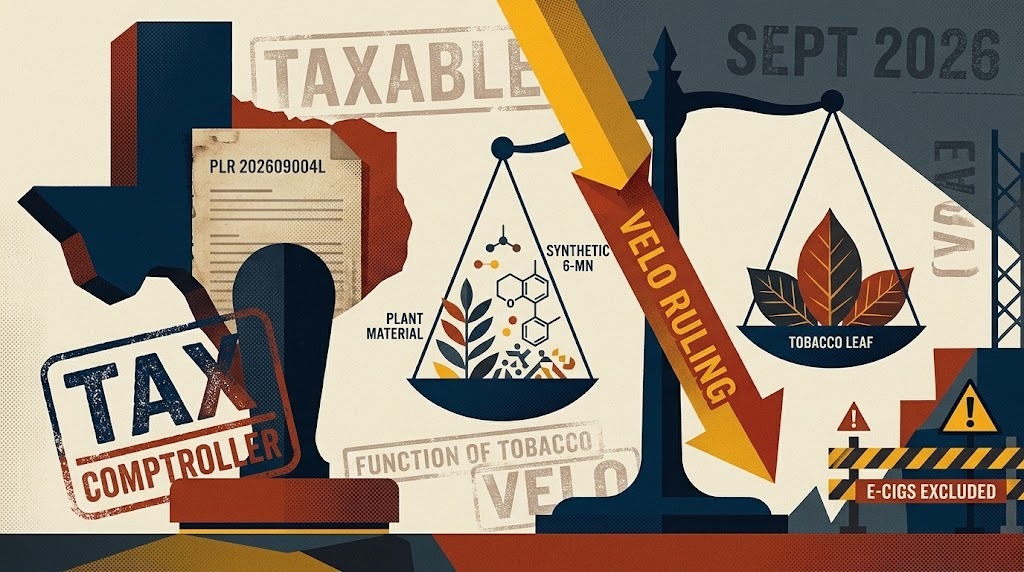
The Texas Comptroller of Public Accounts ruled in September 2026 that a combustible product made with non-tobacco plant material and 6-methylnicotine (6-MN), a synthetic nicotine analog, qualifies as a taxable tobacco product. The applicant said the product contained neither tobacco leaf nor measurable conventional nicotine. The determination applies reasoning from a May Texas Supreme Court decision involving VELO nicotine pouches, finding that the plant material and 6-MN together perform the functions of tobacco in a conventional smoking product. The ruling carries applicable tax, licensing and reporting obligations but is limited to the facts submitted by the taxpayer. It does not establish a blanket tax classification for all 6-MN products or extend the same conclusion to e-cigarettes.
Regulations
Nov.06
Australia Adds 6-Methylnicotine to Schedule 9 Prohibited Substances, Effective October 1
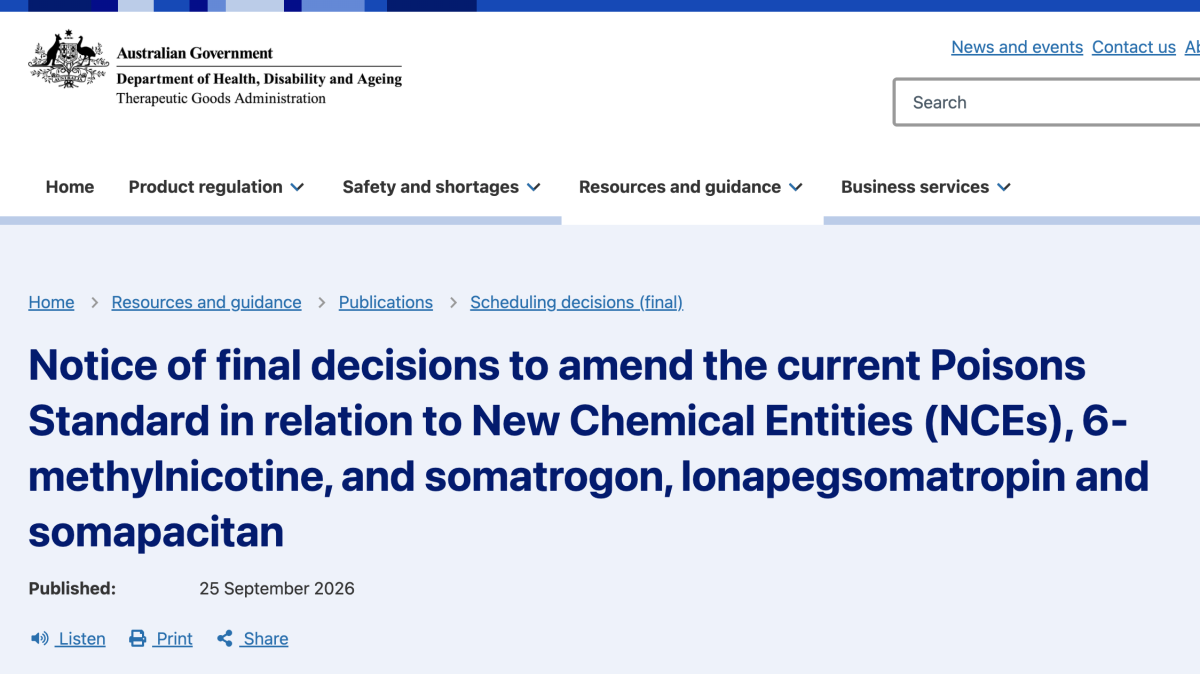
Australia's Therapeutic Goods Administration published a final decision on September 25 to classify 6-methylnicotine as a Schedule 9 prohibited substance under the Poisons Standard, effective October 1, 2026. TGA said the chemical has been reported in e-cigarette liquids sold in Australia and marketed as nicotine-free or nicotine alternatives, while evidence also indicates its use in preparations such as oral pouches. The government originally proposed a Schedule 7 classification but ultimately adopted the stricter Schedule 9 designation, citing acute toxicity, dependence risk, use in unapproved consumer products and misleading marketing.
News
Sep.29 by 2Firsts Perspectives
Malaysia's Poisons Board Backs New Vape Nicotine Exemption After Unanimously Opposing 2023 Proposal
Malaysia's Poisons Board has endorsed Health Minister Dzulkefly Ahmad's proposal to exempt liquid nicotine used in vaping products from the Poisons List, according to a November 2, 2026, report by CodeBlue. The Board unanimously opposed a similar proposal in 2023, but the government proceeded with the exemption. The Kuala Lumpur High Court invalidated the 2023 decision in May 2026, and the government withdrew its appeal in August. No new ministerial order has been published. The development raises questions about the interaction between Malaysia's two regulatory frameworks and the treatment of RM354.51 million in excise duties collected on e-cigarette and vape products between May 2023 and June 11, 2026.
Regulations
Nov.03