Seoul Metropolitan Council Addresses Regulatory Gaps in Vape Industry as Youth Usage Surges

Nov.13.2024
Seoul Metropolitan Council Addresses Regulatory Gaps in Vape Industry as Youth Usage Surges
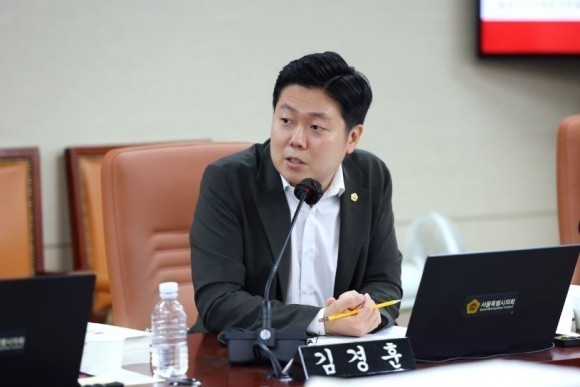
Kim Kyung-hoon, a member of the Seoul Metropolitan Council's Education Committee, raised the issue of vape regulation at an administrative audit meeting, pointing out that the product contains nicotine and is popular among teenagers, calling for stricter measures.

Kim Kyung-hoon, a member of the Seoul Metropolitan Council's Education Committee, raised the issue of vape regulation at an administrative audit meeting, according to a report by n.news on November 13. 


Kim pointed out that the product, unlike regular cigarettes, has a fruit flavor and is difficult to distinguish from regular smoking, but it contains nicotine. A survey by the Korea Disease Control and Prevention Agency shows that about 70% of teenage smokers start using vapes, highlighting the severity of the problem.


Kim emphasized that vapes are likely to be used as drugs and there are distribution channels among teenagers. He called on the Education Office to strengthen enforcement, investigate the situation, and take appropriate measures. The Seoul Metropolitan Office of Education responded that there is no separate data on the current situation, and vapes are not included under the current tobacco laws, which would require legal amendments.

We welcome news tips, article submissions, interview requests, or comments on this piece.

Please contact us at info@2firsts.com, or reach out to Alan Zhao, CEO of 2Firsts, on LinkedIn


Notice

1.  This article is intended solely for professional research purposes related to industry, technology, and policy. Any references to brands or products are made purely for objective description and do not constitute any form of endorsement, recommendation, or promotion by 2Firsts.

2.  The use of nicotine-containing products — including, but not limited to, cigarettes, e-cigarettes, nicotine pouchand heated tobacco products — carries significant health risks. Users are responsible for complying with all applicable laws and regulations in their respective jurisdictions.

3.  This article is not intended to serve as the basis for any investment decisions or financial advice. 2Firsts assumes no direct or indirect liability for any inaccuracies or errors in the content.

4.  Access to this article is strictly prohibited for individuals below the legal age in their jurisdiction.


Copyright


This article is either an original work created by 2Firsts or a reproduction from third-party sources with proper attribution. All copyrights and usage rights belong to 2Firsts or the original content provider. Unauthorized reproduction, distribution, or any other form of unauthorized use by any individual or organization is strictly prohibited. Violators will be held legally accountable.

For copyright-related inquiries, please contact: info@2firsts.com


AI Assistance Disclaimer


This article may have been enhanced using AI tools to improve translation and editorial efficiency. However, due to technical limitations, inaccuracies may occur. Readers are encouraged to refer to the cited sources for the most accurate information.

We welcome any corrections or feedback. Please contact us at: info@2firsts.com

DOJ Trade Fraud Task Force Tops $1 Billion in Cases, Putting Vape Supply Chains at Risk of Fraud Enforcement
According to the U.S. Department of Justice (DOJ), Fox News and other reports, the DOJ’s Trade Fraud Task Force (TFTF) has been linked to more than $1 billion in recoveries, penalties, forfeitures and publicly charged losses in less than one year. The task force focuses on trade fraud issues including country-of-origin fraud, illegal transshipment, false declarations and tariff evasion. While vape products are not the main source of the $1 billion figure, the industry’s reliance on global manufacturing and cross-border supply chains places it within broader U.S. trade enforcement scrutiny. The development suggests that U.S. oversight of cross-border vape products may increasingly extend beyond product authorization into import compliance, supply-chain transparency and corporate accountability.
Jul.23
South Korea’s New Vape Rules Raise Bar for E-Liquid Makers and China-Linked Supply Chains, Expert Says
South Korea’s new vape regulations are reshaping the e-liquid market, raising compliance requirements for manufacturers, retailers and overseas suppliers. In an interview with 2Firsts, Korean nicotine products specialist Sam Kim discusses licensing barriers, inventory impacts, China-linked supply chains, and emerging regulatory challenges around nicotine analogues, nicotine-free products and DIY mixing. The Korean case may offer broader insights as governments worldwide adapt to rapidly evolving nicotine products.
Jul.16
Malaysia Police Plan Saliva Tests at Roadblocks to Detect Synthetic Drugs Mixed Into Vape Liquids
Malaysian police plan to use saliva test kits at roadblocks to detect drivers using synthetic liquid drugs marketed as “Piu Piu” and “Magic Mushroom,” substances that authorities say are mixed into vape liquids and inhaled through e-cigarette devices, raising road-safety concerns and adding pressure on vape regulation.
Jun.29
FDA Proposes Foreign Tobacco Factory Registration Rule to Tighten Import Oversight
The FDA has proposed a rule requiring foreign tobacco manufacturers to register facilities and list products before exporting to the U.S. If finalized, the rule could affect overseas OEM/ODM factories, contract manufacturers, specification developers, bulk product makers, and repackaging or relabeling firms. FDA says the proposal would help identify unauthorized imported tobacco products, including e-cigarettes.
Special Report
Jun.26
China’s Shanghai Tobacco Group Launches CNY 10.98 Million (Approximately US$1.53 Million) Procurement for Heated Tobacco Production Utility Equipment
Shanghai Tobacco Group Co., Ltd., a tobacco manufacturing company under China National Tobacco Corporation (CNTC), has launched a public tender for heated tobacco products (HTPs) production utility equipment at its Shanghai Cigarette Factory. The project is valued at CNY 10.98 million and covers six combined air-conditioning units, electrical cabinets and control systems for production facilities. The procurement includes equipment design, supply, installation, commissioning and related training services.
Aug.07
Seita’s Julia Neumaier Says France Should Target Vape Access, Not Plain Packaging
Julia Neumaier, general manager of Seita, Imperial Brands’ French subsidiary, said France should focus vaping regulation on access control, age verification, online sales and distribution channels, rather than applying tobacco-style plain packaging to vaping products.
Jul.15