Smoore: Profit Growth Gradually Improving, Fourth Quarter Shows Promise — A 2Firsts Reader Submission

Oct.13.2025
Smoore: Profit Growth Gradually Improving, Fourth Quarter Shows Promise — A 2Firsts Reader Submission
Smoore released its financial results for the third quarter of 2025.A reader submitted to 2Firsts, noting that Smoore’s declining profit margin was mainly due to the substantial upfront investment in its new heated tobacco products, the relatively low margins of vaping devices, and price reductions resulting from product iterations in the European atomization market.as product structure adjustments near completion, the company’s profit growth is expected to further rebound in the fourth quart.

Special Statement


1.This article is an expert opinion submission, and 2FIRSTS has obtained the author’s authorization for publication.


2.The views expressed herein represent solely the author’s personal opinions and do not reflect the stance of 2FIRSTS.


3.2FIRSTS shares this article for the purpose of disseminating information and offering diverse perspectives. Readers are advised to exercise discretion when interpreting and citing the information and viewpoints contained herein.


Contributed by 聚菁荟萃. A long-time researcher in capital markets.

The English translation is for reference only. Please refer to the Chinese version as the authoritative text.


Smoore International announced its third-quarter operating results on Sunday, October 12, showing a profit growth rebound compared with the first half of the year.


In the third quarter of 2025, Smoore’s revenue surged by 27.2% year-on-year, while its adjusted profit (excluding the impact of share-based compensation) increased by 4.0%. This marks a clear improvement over the first half, when revenue rose 18.3% and adjusted profit declined 2.1%. On Monday’s market open, despite the Hang Seng Index falling 3.5% due to Donald Trump’s renewed tariff threats against China, Smoore’s stock rose 2.2% (as of midday), reflecting investor satisfaction with the company’s performance.


Investors’ main questions focus on two aspects:


Why did profits grow only slightly while revenue surged — did the company overspend or engage in low-margin business? Is its strategy sound?

How long will this “strong revenue but mild profit” trend last?


Falling Profit Margins: The Three-in-One Cause


Smoore’s revenue growth inflection point appeared in the second quarter of 2024, which was also when its profit turned downward. Considering inventory buildup ahead of shipments, that quarter coincided with Smoore beginning to supply new heated tobacco products to its major client, British American Tobacco (BAT).
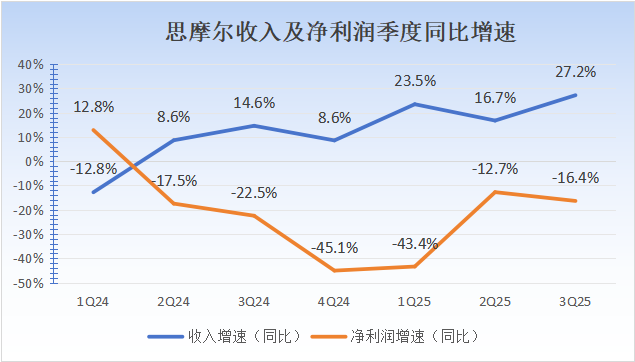
 

Smoore: Profit Growth Gradually Improving, Fourth Quarter Shows Promise — A 2Firsts Reader Submission
Smoore: Profit Growth Gradually Improving, Fourth Quarter Offers Hope(Data source: Smoore International [6969.HK],|via the WeChat account “聚菁荟萃.”)


Note: The net profit figures above are reported net profits and include the impact of non-cash share-based compensation.


The launch of this much-anticipated heated tobacco product caused Smoore’s profits to decline, not due to product failure, but as a necessary phase in market rollout.


An analogy can be drawn to printers — the printer itself is priced low, but once consumers adopt a model, they must keep buying the brand’s ink cartridges. The real profit lies in the consumables, not the device. Similarly, in the e-cigarette business, devices (vape kits) have low margins, while pods generate high margins.


During early market entry, the sales ratio of devices is typically high. Consumers first purchase starter kits (device + pods) and later transition to buying pods only. Over the past few quarters, Smoore entered new markets such as Serbia and Japan, likely selling large quantities of heated devices — a necessary upfront investment rather than profit contribution. Whether these users will stick with Smoore’s ecosystem depends on its ability to develop and retain them through future pod sales.


Atomization Products: Rapid Iteration Compresses Profit Margins


While stronger enforcement against illegal vapor products benefits legitimate players, the pace of product iteration in the vaping industry remains exceptionally fast — a constant race between regulation and innovation.


Since Q4 2024, to comply with European environmental standards, small-puff disposable vapes have been phased out, replaced by large-puff atomization products. These have greater capacity but lower prices. On a per-nicotine-unit basis, these new models are roughly 20–30% cheaper than previous products. This structural shift, which began in late 2024, has continued through 2025 and is reshaping the market, gradually transmitting margin pressure from retail to manufacturing. Consequently, Smoore’s profitability has also been affected.


Fourth-Quarter Profit Growth Expected to Rebound


Based on the above analysis, there are signs that profit margins may begin to recover. Although heated tobacco products will continue to influence margins as new markets open, the impact of atomization product transition should subside by Q4 2025, as the large-puff product switch will have been completed for a full year. Year-on-year comparisons will thus normalize, allowing for further profit improvement on top of the third-quarter rebound.


However, the vaping market remains highly dynamic, and several factors could once again widen the gap between revenue and profit growth — such as accelerated expansion of heated products into new markets, regulatory shifts in different countries, or intensified competition driven by new product iterations. These developments warrant close monitoring for their potential impact on Smoore’s stock performance.


Source: Originally published on WeChat 聚菁荟萃


Cover Image: Smoore International Official Website

Product | PMI Japan Launches TEREA Golden Breeze Pearl With Grapefruit-Pineapple Capsule, Expanding Local Range to 29 Variants
Philip Morris Japan introduced TEREA Golden Breeze Pearl in Japan on November 9, 2026, adding a capsule menthol heated-tobacco stick with a grapefruit flavor profile and a crushable capsule that releases pineapple notes. Designed for the IQOS ILUMA series, the product comes in packs of 20 sticks priced at ¥640, including tax. Distribution began through IQOS stores, selected partner retail outlets and tobacco retailers from November 9, followed by the official IQOS online store on November 18. The launch expands Japan's TEREA portfolio to 29 variants, including eight products classified by Philip Morris Japan as capsule menthol.
product
Nov.27
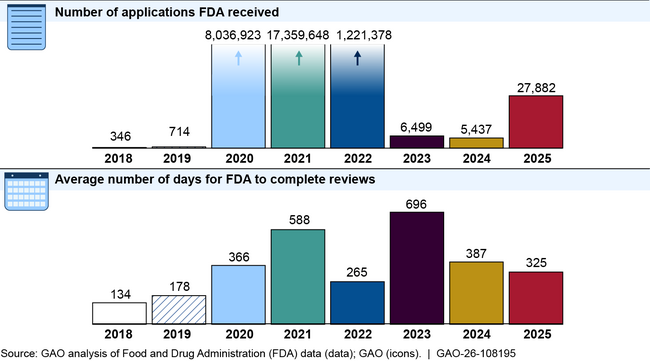
GAO Audit Finds Nearly 132,000 FDA Tobacco Applications Waiting an Average 1,266 Days as Nicotine Pouch Pilot Practices Move Into Vape PMTA Reviews
A U.S. Government Accountability Office audit found that 131,915 tobacco product applications submitted to the FDA since 2018 remained without a final review as of December 31, 2025, with pending applications waiting an average of 1,266 days. GAO also found FDA lacks the data needed to systematically determine whether scientific reviews meet applicable timelines. HHS agreed to upgrade the agency's tracking systems. At the same time, FDA has begun applying lessons from its nicotine pouch PMTA pilot to e-cigarette reviews, while changes to enforcement policy and electronic submissions are making the specific stage of a PMTA increasingly relevant to market access.
FDA
Oct.03
How Investors Are Repricing the Global Tobacco Industry as Nicotine Markets Shift
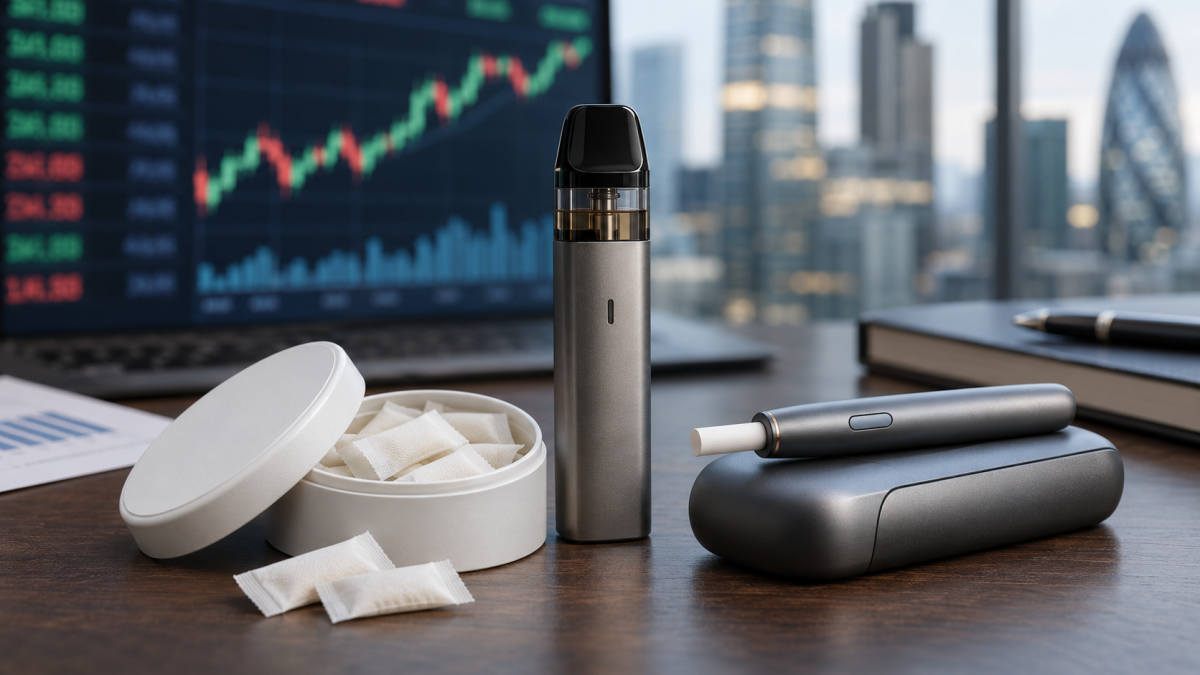
How are investors reassessing the global tobacco industry as nicotine markets evolve? In an interview with 2Firsts, Charlie Chen, Head of Research at CCB International Securities, forecasts annual growth of 30–50% for nicotine pouches, outpacing vaping and heated tobacco. He examines how regulatory enforcement, shifting market shares and new business models are influencing company valuations. The report also explores differences between multinational tobacco groups and Chinese companies, drawing on insights from the New Approaches Summit on profitability, investment strategies and industry consolidation.
Nov.11
Special Report|RLX's RMB744 Million UK Acquisition: Wholesale Accounts for Nearly 65% of Totally Wicked Revenue — What Distribution Network Did It Buy?
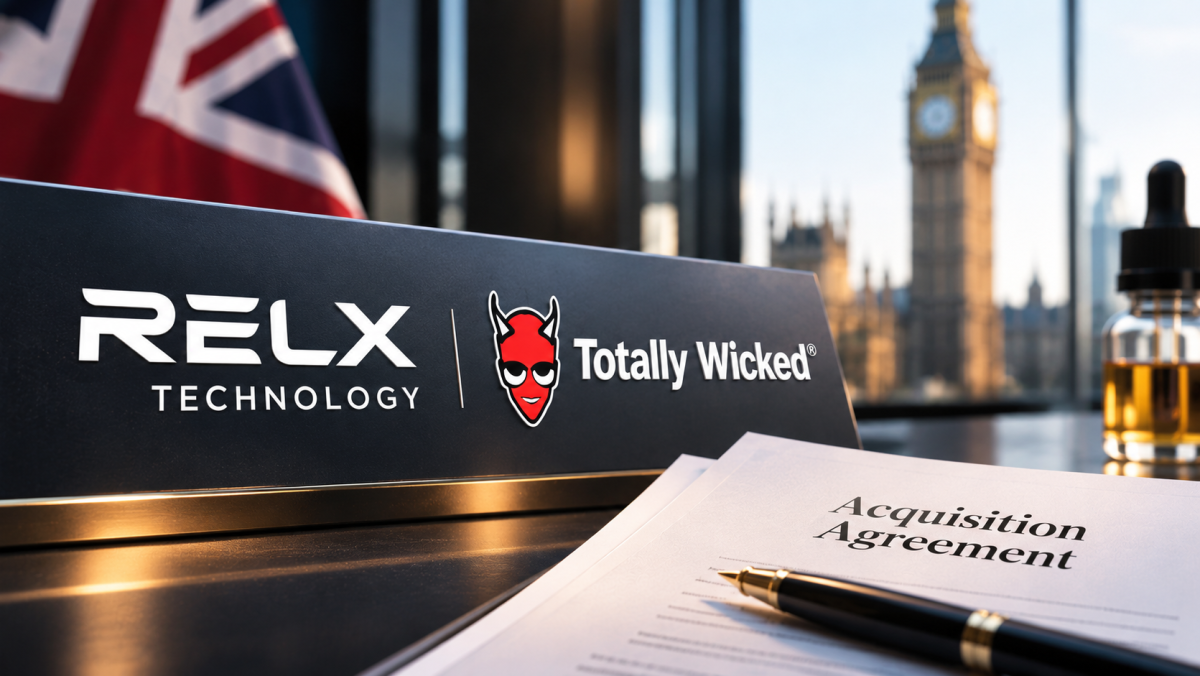
RLX Technology acquired controlling interests in British vaping group Totally Wicked for approximately RMB744 million in May 2025. Audited accounts show that the target generated £115.5 million in revenue in its final full financial year before the acquisition, with wholesale contributing nearly 65%. The group also operated 150 branded vape shops, e-liquid manufacturing, e-commerce businesses and distribution operations in the UK and Germany. RLX recognized RMB121.1 million in channel relationship assets, RMB67.8 million in brand assets and RMB508.5 million in goodwill. Totally Wicked contributed approximately RMB625 million in revenue after consolidation in 2025. A separate European distribution acquisition in 2026 has further expanded RLX's international operations, drawing attention to the profitability and commercial value of its acquired distribution businesses.
Capital MarketsEXPO
Nov.27 by 2Firsts Perspectives
PMI Showcases ZYN, IQOS and U.S. Investments at NACS Show 2026
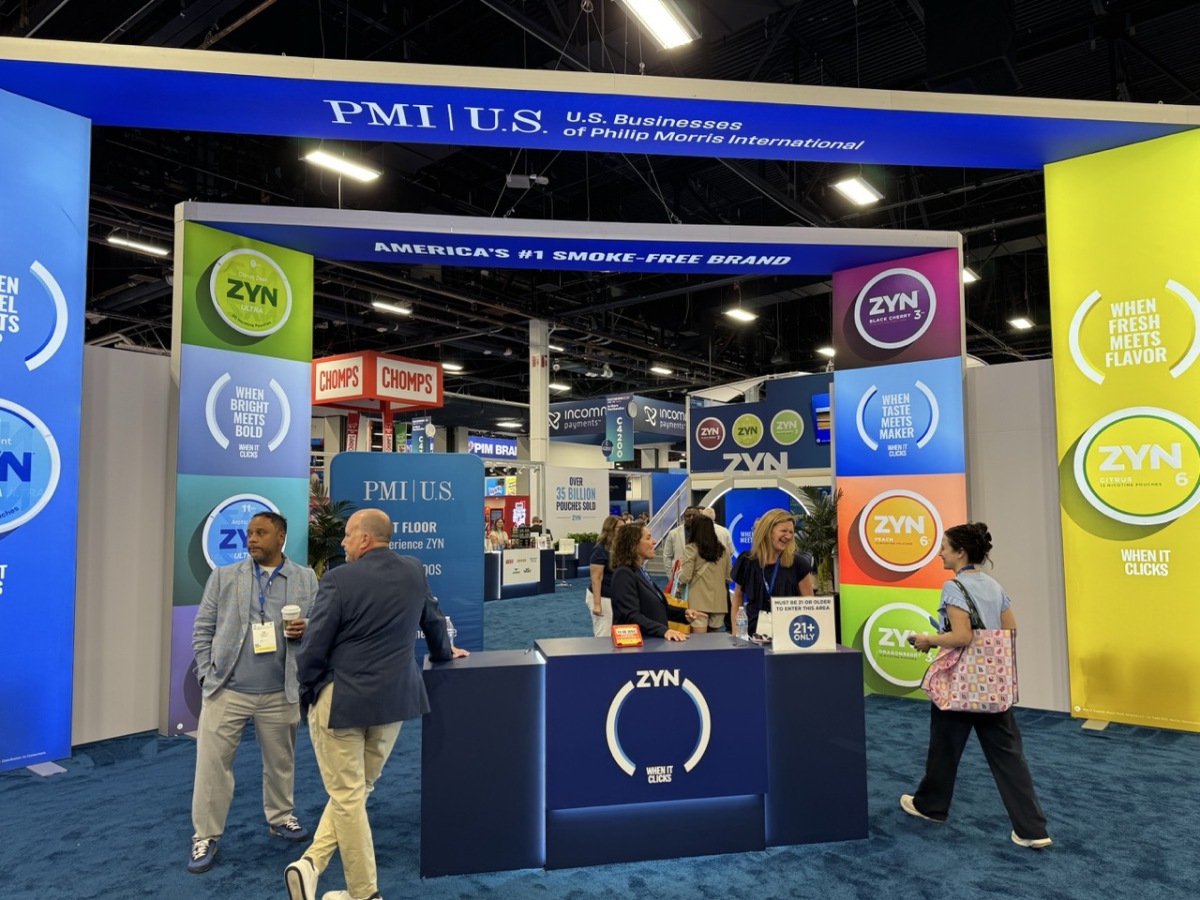
At the 2026 NACS Show in Las Vegas, Philip Morris International (PMI) showcased its ZYN nicotine pouches, IQOS heated tobacco products and U.S. investments. A 2Firsts review of FDA records found that several ZYN products displayed at the booth were not on the agency's marketing authorization list, including certain nicotine strengths and flavors. A PMI booth representative also confirmed that IQOS is currently sold in three U.S. states, while the newer IQOS ILUMA system remains under FDA review.
EXPO
Oct.10
Italy Proposes Earlier Vape and HTP Tax Hikes, New Rules for E-Liquid Pricing, Exclusive Deals and Distribution
Italy's proposed 2027–2029 budget would bring forward scheduled tax increases for e-cigarette liquids and heated tobacco products from January 1, 2028, to July 1, 2027. The consumption tax coefficient for nicotine-containing e-liquids would rise from 20% to 22%, that for nicotine-free liquids and applicable flavorings from 15% to 17%, and the heated-tobacco coefficient from 41% to 42%. The bill would also introduce official retail price schedules for e-liquids, restrict exclusive agreements between retailers and suppliers, and limit single-brand-dominated displays, sales incentives and bundled offers. Importing, authorized warehousing and retailer sourcing arrangements would also change. The proposals remain subject to parliamentary approval and subsequent implementing regulations.
Regulations
Nov.04