Key Points
- Belarus is preparing a new law that will centralize control of the vaping market, giving the state exclusive rights to import tobacco products and tightening licensing rules for companies handling disposable e-cigarettes and other nicotine products.
- About 77% of the disposable e-cigarette market in Belarus is supplied illegally, according to the government’s explanatory note, costing the state an estimated BRR 130 million ($24 million) in lost excise revenue each year.
- The draft law introduces strict measures, including licensing for import and wholesale, bans on online sales, bans on open in-store displays, excise stamp requirements, and even a prohibition on mixing vape liquids at home.
- Public consultations revealed significant pushback from consumers and vape retailers, who warn that the new rules—such as high capital requirements and warehouse obligations—could force up to 40% of vape shops to close and drive more sales to Telegram-based black markets.
- Belarusian lawmakers rejected a full vaping ban, opting instead for a controlled regulatory model aimed at reducing youth uptake while preventing the growth of illicit trade seen in other post-Soviet markets.
2Firsts, December 3, 2025(By Vladislav Vorotnikov) — Following a year of public discussions, Belarusian legislators have prepared a draft bill that will significantly tighten the regulation of the market of vapes and other nicotine-containing products.
Under the legislation published on a Belarusian website of legal acts, the state gets "an exclusive right for import of tobacco products and raw materials".
The lawmakers plan to limit the list of companies permitted to import and sell vapes and related products to only a few licensed companies. Strict restrictions will be imposed on advertising, in-store displays, and online sales. Movement and sales of vapes will be prohibited without the appropriate licenses and excise stamps. Remarkably, members of the Belarusian parliament plan to also ban mixing vape liquids at home.
The initiative faced a backlash from vape consumers. During the public hearings, quite a few citizens complained that the ban on online sales of vapes would make purchasing vapes challenging, especially in rural areas, where the largest supermarket chains are represented rather poorly.
The introduction of restrictions on the sale of vapes is a response to the demands of voters, especially parents, said Sergei Klishevich, a member of the Belarusian Parliament's Standing Committee on Education, Culture, and Science. Belarussian lawmakers, he explained, are particularly concerned that vaping is gaining popularity among the younger generation.
In addition, the Belarusian legislators hope the new system will help combat market fraud.
According to the explanatory note to the bill, about 77% of the disposable e-cigarette market is supplied illegally and sold without paying excise tax. As a result, the illicit market for disposable devices and e-liquids costs the Belarusian state budget around BRR 130 million ($24.1 million) in lost excise revenue each year.
A looming tax hike
In parallel, Belarus plans to raise taxes on vapes and conventional cigarettes, effective January 1, 2026.
Excise tax rates on filtered cigarettes will rise by 7% to 12% depending on the price category, and the rate on tobacco products intended for consumption by heating will climb by 3%, said Yuri Seliverstov, Belarusian Finance Minister, as quoted by the Belarusian state concern Belgospisheprom.
"Particular attention is being paid to vapes and liquids for electronic smoking systems, as well as non-tobacco nicotine-containing products. Here, we propose to increase tax rates by 20% in order to gradually reach the same level as regular cigarettes in terms of nicotine content," Seliverstov said.
Full ban is rejected
Belarussian legislators rejected the proposal to fully ban vapes alongside other tobacco products during a round of public discussions held between June 17 and June 27, Belgospisheprom said in a separate statement on its website in July 2025.
In addition, the legislators refrained from imposing heavy restrictions on the retail sale of vapes. Among other things, it was proposed to prohibit the sale of vapes in kiosks and stores with less than 100 m2 of shopping space.
Belarusian MP Elena Khilya explained that legislators avoided a complete ban on vapes to prevent fueling the black market, emphasizing the need for balanced regulation to address public health concerns while considering economic impacts.
"Of course, we're not talking about a complete ban today," Khilya told STV, a local state news channel. "We remember what happened when alcohol was banned. What were the consequences? It led to an increase in the amount of illegal alcohol produced, and there were a huge number of deaths because the quality wasn't checked".
Vape market regulation has become a topic of heated debates in Belarus in recent years.
Quite a few public organizations advocated for tight heavy restrictions or even a full ban, citing the growing popularity of e-cigarettes among the young population. Over the last five years, the number of smokers in the country dropped nearly fivefold. On the other hand, it is estimated that nearly 15% of school students in Belarus consume vapes, according to STV.
During a government meeting on November 5, Belarusian President Alexander Lukashenko tasked the government with closely examining the situation in the tobacco and alcohol markets.
The legal segment is in trouble
Belarussian lawmakers are confident that the new law will reduce illegal sales, as fly-by-night firms will not be able to obtain licenses to import vapes, but experts warn that enforcement may face challenges, especially with the rise of online channels like Telegram.
For example, one Belarusian citizen who participated in public discussions on the state website for legal acts warned that the licensing requirement could do more harm than good.
"The draft law is entirely aimed at destroying the legal market," he said. "The numerous companies that legally supply these products will be forced to leave the market, resulting in job losses, loss of earnings, and tax revenues for the state. Selling vapes illegally will become economically profitable, and consequently, the state will lose control over the circulation of such products."
During the June 2025 round of public hearings, vape shop owners also warned that the new rules could deal a heavy blow to retail.
"To sell a small bottle of e-liquid, a shop must obtain an import license and have a 1,000 square meter warehouse!" a vape shop owner complained.
According to a lawyer who took part in the discussions, the requirement for importers to have authorized capital of at least $50,000 will entirely cut off small businesses. As a result, the source estimated, nearly 40% of vape shops in the country will be closed, "and a black market will flourish on Telegram, where teenagers buy counterfeit products without supervision".
Like other countries in the post-Soviet region, Belarus has a well-developed network of Telegram channels selling vapes online.
Indeed, in other countries in the region, restrictions on vape consumption spurred the popularity of unofficial channels. There is a high chance that the same will happen in Belarus.
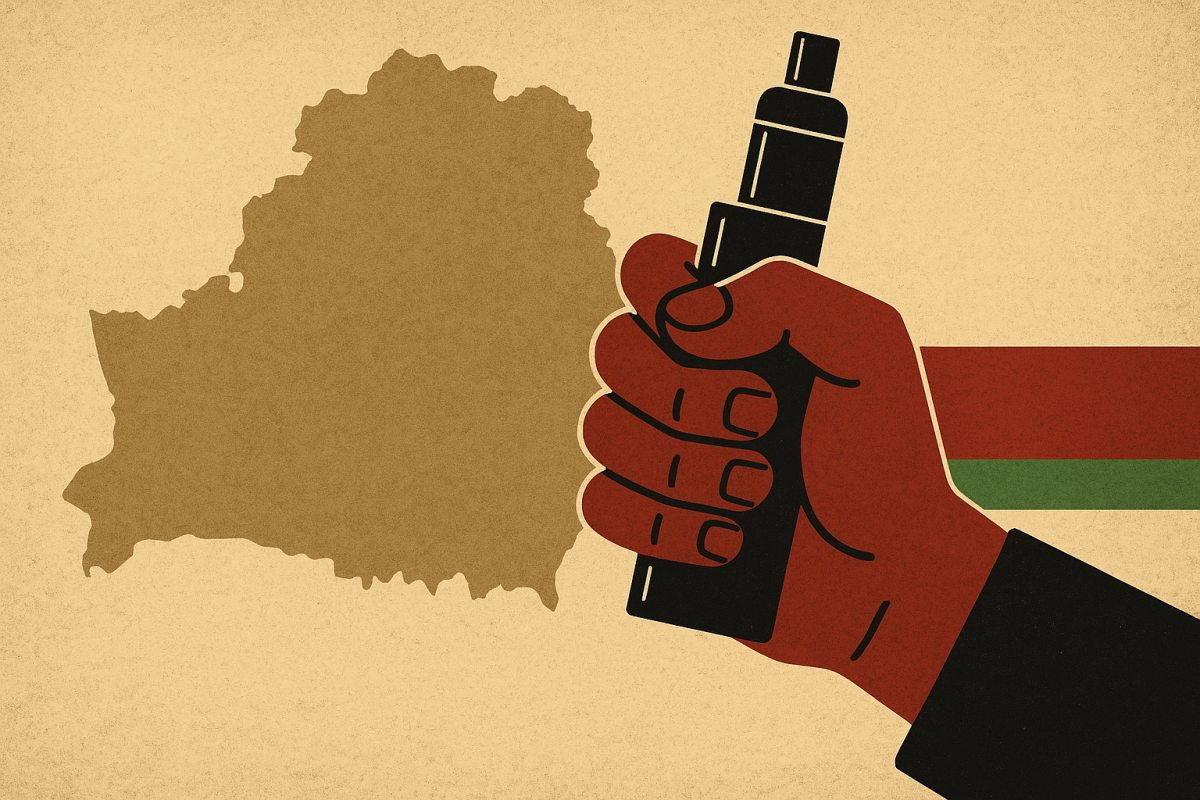
Cover image generated by ChatGPT.
Related articles