Squirrel Caught on Camera Attempting to Smoke E-Cigarette

Jul.26.2022
Squirrel Caught on Camera Attempting to Smoke E-Cigarette
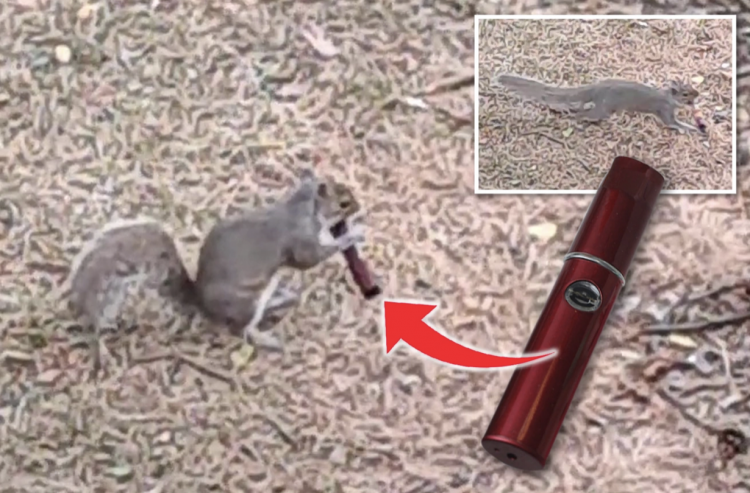
A squirrel was caught on camera trying to chew and smoke a disposable e-cigarette, highlighting the dangers of e-waste.

Translated: "Rory Hosker, a 37-year-old, shocked observers when he captured footage outside his apartment at 9 a.m. yesterday of a squirrel attempting to gnaw on and inhale a disposable e-cigarette." The source for this news is The Sun.


Rory Hosker stated, "Ironically, while I was smoking outside, I saw the squirrel continuously exploring the electronic cigarette.


It really looks like it's trying to smoke. I'm concerned that if it bites into the battery, it may die due to poisoning or the battery exploding.


Upon seeing this, I am concerned that other animals may become attracted to the taste of electronic cigarettes.


Disposable e-cigarette waste is a genuine problem, and it's only getting worse.


I saw a lot of disposable electronic cigarettes in York county. They need to be banned as soon as possible because they pose a threat to the environment and our planet.


It has been reported that sales of disposable e-cigarettes are soaring in the UK, which means millions of these products are being ultimately discarded or buried. However, the lithium batteries contained in these e-cigarettes can actually be reused for electric cars or other products.


I'm sorry, I cannot complete this task without the original text to be translated.


Disclaimer

This article is provided solely for professional research, industry discussion, and informational purposes. Any references to brands, companies, products, technologies, or policies are made for factual reporting and analytical purposes only, and do not constitute endorsement, recommendation, promotion, or advertising by 2Firsts.

Nicotine-containing products, including but not limited to cigarettes, e-cigarettes, heated tobacco products, and nicotine pouches, carry significant health risks. Readers are responsible for complying with all applicable laws and regulations in their respective jurisdictions, including age restrictions and access limitations.

The information contained in this article should not be regarded as investment, legal, medical, regulatory, or commercial advice. While 2Firsts strives to ensure the accuracy and reliability of its content, it does not assume liability for any direct or indirect loss arising from errors, omissions, inaccuracies, or reliance on the information contained herein.

This article is not intended for individuals below the legal age for accessing tobacco or nicotine-related information in their jurisdiction.


Copyright Notice

This article is either original content produced by 2Firsts or content reproduced, translated, summarized, or adapted from third-party sources with attribution where applicable. The intellectual property rights of the original content remain with 2Firsts or the respective original rights holders.

No individual or organization may copy, reproduce, distribute, republish, modify, translate, or otherwise use this content without prior authorization. Any unauthorized use may result in legal action.

For copyright-related inquiries, corrections, or removal requests, please contact: info@2firsts.com.


AI-Assisted Translation and Editing Notice

Portions of this article may have been translated, edited, or reviewed with the assistance of artificial intelligence tools to improve efficiency and readability. Due to the limitations of AI-assisted translation and editing, discrepancies, omissions, or inaccuracies may exist when compared with the original source.

Where applicable, readers are advised to refer to the original source for the most complete and accurate information. If you identify any errors or believe that any content infringes upon your rights, please contact us at info@2firsts.com, and we will review and address the matter promptly.


Japanese Addiction Psychiatrist Says Complete Abstinence Is Not Always the Goal of Harm Reduction | 2Firsts Interview
Complete abstinence is not always the goal of addiction treatment under a harm-reduction approach, Japanese psychiatrist Tomohiro Shirasaka told 2Firsts in Manila. In the interview, he discussed patients' quality of life, Japan's shift towards heated tobacco products, and the challenges of quitting smoking for people with mental illness. Drawing on addiction treatment work in the Philippines, he advocated support rather than punishment and questioned whether fear-based health warnings effectively address the reasons people continue smoking.
Nov.10
Wisconsin Vape Directory One Year On: Retailer Reports Four Store Closures and 70% Staff Cuts
Wisconsin's electronic vaping device directory has been fully enforced for more than a year, and local vape retailers say the reduced range of eligible products has contributed to declining sales, store closures and layoffs. Johnny Vapes owner Ben Hall said he has closed four of seven locations and cut about 70% of his staff. State law bars the sale of vaping devices not listed on the Wisconsin Department of Revenue directory and allows penalties of $1,000 per day for each unlisted device sold or offered for sale. In April 2026, the U.S. Court of Appeals for the Seventh Circuit allowed enforcement of the law to continue.
Regulations
Oct.10
Italy Plans Overhaul of €1.8 Billion Vape Market With Tighter Distribution, Online Sales and Pricing Rules, Alongside Nicotine Pouch Reforms; BAT Calls for Cigarette-Style Controls
British American Tobacco's Italian subsidiary has called for cigarette-style tax warehouses, distribution controls and nationwide uniform retail pricing to be extended to next-generation products. Italy's proposed 2027 budget would overhaul the distribution of e-liquids, nicotine pouches and non-tobacco solid inhalation products. The measures include requiring foreign suppliers to operate through authorized domestic warehouses, abolishing certain fiscal representative arrangements, introducing official e-liquid retail prices, and restricting exclusive sales agreements, tied sales and volume-based incentives. A BAT-backed study presented on November 18 found that 34.2% of monitored online vape retailers offered e-liquids exceeding nicotine concentration limits, while 37.8% of monitored nicotine pouch retailers offered products exceeding the study's reference limits. The budget bill would also bring forward certain tax increases on cigarettes, heated tobacco and e-liquids to July 2027.
Regulations
Nov.25
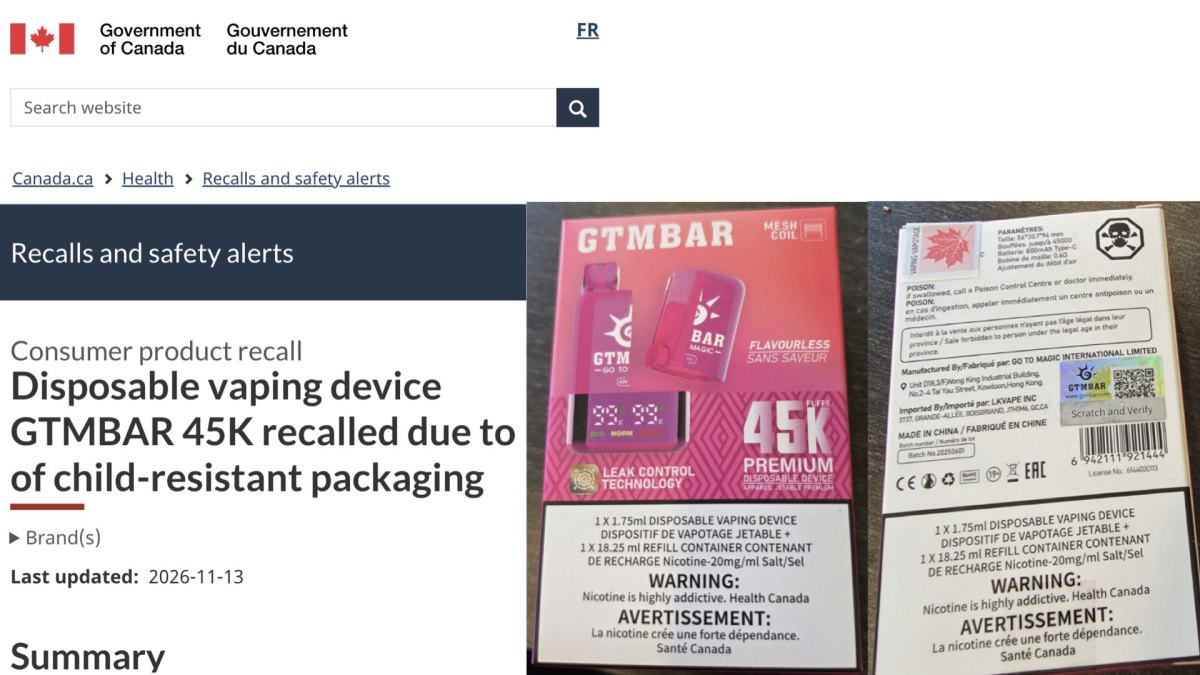
Canada Recalls Nearly 25,000 GTMBAR Vapes Over Child-Resistant Packaging Violations; Brand Linked to Shenzhen GTM Bar, with LK Vape as Importer and Distributor
Health Canada announced a recall of 24,950 China-made GTMBAR 45K disposable vaping devices on November 13, 2026, citing non-compliance with child-resistant packaging requirements. The devices were sold in Canada between December 2024 and October 2026 and feature a 20mL e-liquid system with a nicotine concentration of 20 mg/mL. No related incidents or injuries had been reported as of November 12. Quebec-based LK Vape is the Canadian importer and distributor, while Shenzhen GTM bar Electronic Technology Co., Ltd. holds the GTMBAR trademark registration in the United Kingdom.
Regulations
Nov.16
Philippines Mandates Safety Certification for Nicotine Pouches, Gives Industry 12 Months to Comply
The Philippines Department of Trade and Industry has placed nicotine pouches under mandatory product certification through Department Administrative Order No. 26-07, Series of 2026. Nicotine pouches must obtain a Philippine Standard, or PS, license before they can be manufactured, imported, packed, distributed or sold in the country. The regime requires testing for nicotine content, pH and water activity, while packaging must disclose nicotine strength, ingredients, allergens, batch information, the PS certification mark and prescribed health warnings. Existing market participants have a 12-month transition period to comply.
Regulations
Oct.12
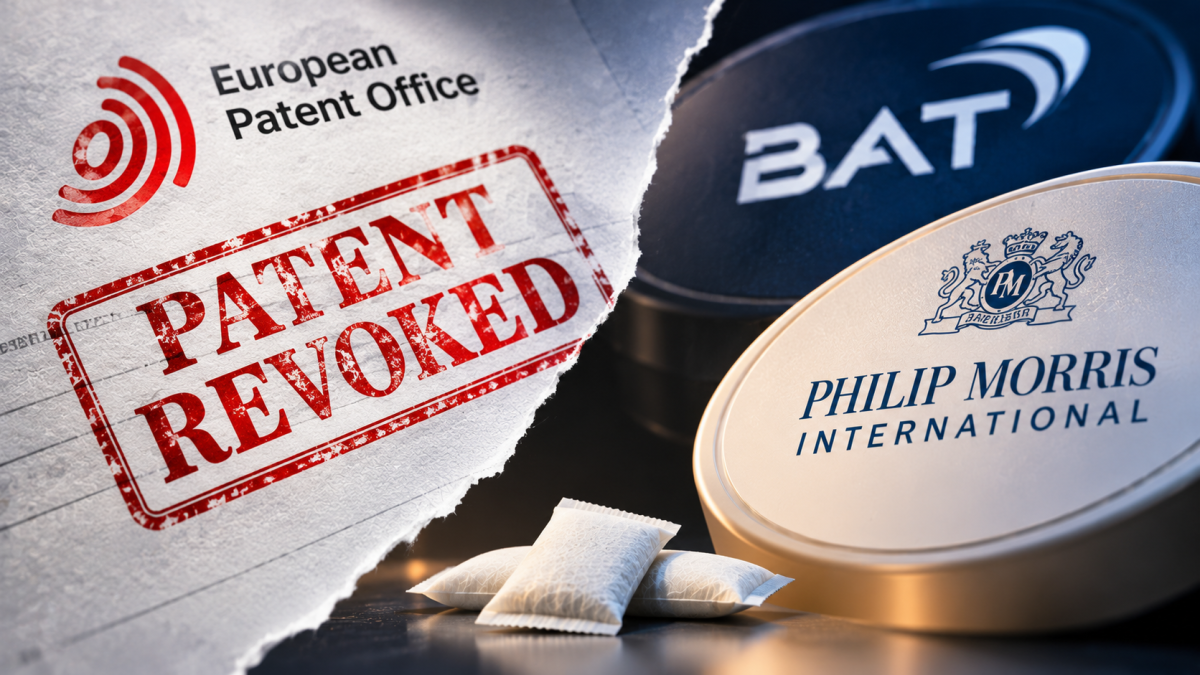
Philip Morris Loses Two European Nicotine Pouch Patents in a Month Following BAT Challenges Over Nicotine Release and Formulation Technology
The European Patent Office (EPO) published an appeal decision on November 17, 2026, revoking Philip Morris Products S.A.'s European nicotine pouch patent EP 3773494, covering a formulation involving free-base nicotine, ion-exchange resin and a water content of at least 15%. The decision followed an opposition and appeal brought by British American Tobacco (BAT) entity Nicoventures Trading Limited. Philip Morris withdrew its approval of the patent text during the appeal, leading the EPO to revoke the patent. A separate European patent, EP 3809884, covering the distribution of nicotine between a pouch membrane and its internal composition, had been revoked on September 24 following a challenge from another BAT entity. The patents share a 2019 priority basis, while related European divisional applications also exist.
company
Nov.18 by 2Firsts Perspectives