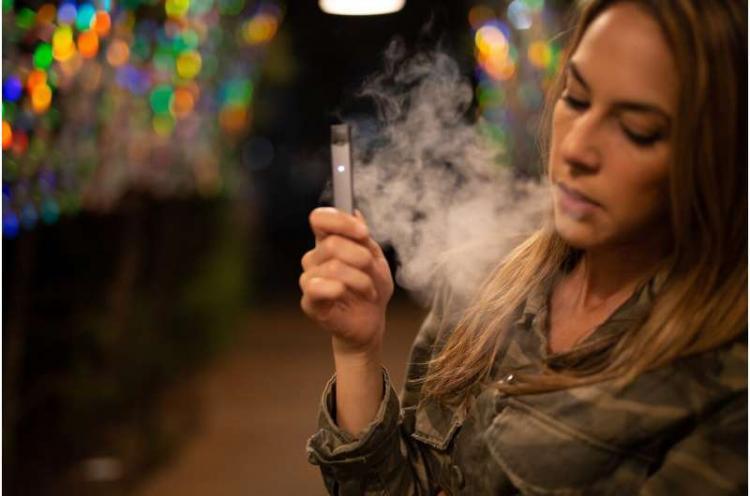
According to research presented at the European Respiratory Society International Congress in Barcelona, teenagers with smoking parents are 55% more likely to try electronic cigarettes. In a large-scale study of Irish teenagers, researchers also found that the proportion of those who have tried e-cigarettes is rapidly increasing. While boys are more likely to use e-cigarettes, girls' use is growing at a quicker rate.
Researchers emphasized the risks associated with nicotine addiction and called for more effective regulation to protect children and teenagers.
This study was conducted by a team from the Tobacco Free Research Institute (TFRI) in Dublin, Ireland. The team examined data from 6,216 children aged 17 and 18, including whether their parents smoked during their upbringing.
A study has shown that teenagers whose parents smoke are about 55% more likely to try e-cigarettes and about 51% more likely to try traditional cigarettes.
The team also utilized several Irish datasets, providing the most comprehensive analysis yet of electronic cigarette use among Irish youth, including data on over 10,000 Irish teenagers (aged 16 to 17) to examine the total number of teenagers attempting or regularly using e-cigarettes, and how this has changed over time. This indicates that the proportion of teenagers who have tried e-cigarettes has risen from 23% in 2014 to 39% in 2019.
The primary reasons that teenagers try e-cigarettes are curiosity (66%) and their friends using them (29%). Only 3% of people say it is to quit smoking. The proportion of people trying e-cigarettes for the first time who have never used tobacco has increased from 32% in 2015 to 68% in 2019.
According to Professor Luke Clancy, Director General of TFRI, "We have found that an increasing number of Irish teenagers are using e-cigarettes, a trend that is emerging in other parts of the world. People believe that e-cigarettes are a better alternative to smoking, but our research suggests this is not the case for teenagers who have not previously tried cigarettes. This indicates that for young people, vaping is a gateway to nicotine addiction.
Finally, researchers examined the data of 3,421 16-year-old children in detail to understand whether there were differences between boys and girls. Although boys were more likely to use e-cigarettes, researchers found that the percentage of girls using them increased more rapidly. In 2015, 23% of girls reported trying e-cigarettes, while in 2019 it was 39%.
Dr. Salome Sunday, a researcher, testified to Congress, "We can see that parents and friends have an influence on adolescents' decision to try e-cigarettes, and this is important because these are factors we can try to change. However, the government needs to play a role by enacting laws to protect children and young people. We have already done this with smoking, and we need to do the same with e-cigarettes.
Dr. Joan Hanafin, Chief Research Officer, commented, "We can see a rapid change in the number of young people using e-cigarettes, so we need to continue monitoring the situation in Ireland and around the world.
Professor Jonathan Grigg, chairman of the European Respiratory Society's tobacco control committee, was not involved in this study. He stated, "These findings are concerning, not only for young people in Ireland but for families worldwide. We already know that children of smoking parents are more likely to smoke themselves. This study suggests that young people are also influenced by parents who start using e-cigarettes and become addicted to nicotine.
He also stated, "We have found that electronic cigarettes can harm the lungs, blood vessels, and brains. We need to do more work to protect children and adolescents from these harms.
Declaration:
This article is compiled based on third-party information and is only intended for industry communication and learning purposes.
This article does not represent the views of 2FIRSTS and 2FIRSTS is unable to confirm the truthfulness or accuracy of the content. The compilation of this article is intended for industry exchange and research purposes only.
Due to limitations in translation capabilities, the translated article may not fully express the same meaning as the original text. Please refer to the original text for accuracy.
2FIRSTS fully aligns with the Chinese government in regards to any domestic, Hong Kong, Macau, Taiwan, or foreign-related statements and positions.
The copyright of the compiled information belongs to the original media and author, and if there is any infringement, please contact us for deletion.
Disclaimer
This article is provided solely for professional research, industry discussion, and informational purposes. Any references to brands, companies, products, technologies, or policies are made for factual reporting and analytical purposes only, and do not constitute endorsement, recommendation, promotion, or advertising by 2Firsts.
Nicotine-containing products, including but not limited to cigarettes, e-cigarettes, heated tobacco products, and nicotine pouches, carry significant health risks. Readers are responsible for complying with all applicable laws and regulations in their respective jurisdictions, including age restrictions and access limitations.
The information contained in this article should not be regarded as investment, legal, medical, regulatory, or commercial advice. While 2Firsts strives to ensure the accuracy and reliability of its content, it does not assume liability for any direct or indirect loss arising from errors, omissions, inaccuracies, or reliance on the information contained herein.
This article is not intended for individuals below the legal age for accessing tobacco or nicotine-related information in their jurisdiction.
Copyright Notice
This article is either original content produced by 2Firsts or content reproduced, translated, summarized, or adapted from third-party sources with attribution where applicable. The intellectual property rights of the original content remain with 2Firsts or the respective original rights holders.
No individual or organization may copy, reproduce, distribute, republish, modify, translate, or otherwise use this content without prior authorization. Any unauthorized use may result in legal action.
For copyright-related inquiries, corrections, or removal requests, please contact: info@2firsts.com.
AI-Assisted Translation and Editing Notice
Portions of this article may have been translated, edited, or reviewed with the assistance of artificial intelligence tools to improve efficiency and readability. Due to the limitations of AI-assisted translation and editing, discrepancies, omissions, or inaccuracies may exist when compared with the original source.
Where applicable, readers are advised to refer to the original source for the most complete and accurate information. If you identify any errors or believe that any content infringes upon your rights, please contact us at info@2firsts.com, and we will review and address the matter promptly.