Texas County Settles Lawsuit Against JUUL for $20 Million

Mar.23.2023
Texas County Settles Lawsuit Against JUUL for $20 Million
JUUL settles with Harris County for $20 million for marketing e-cigarettes to minors.

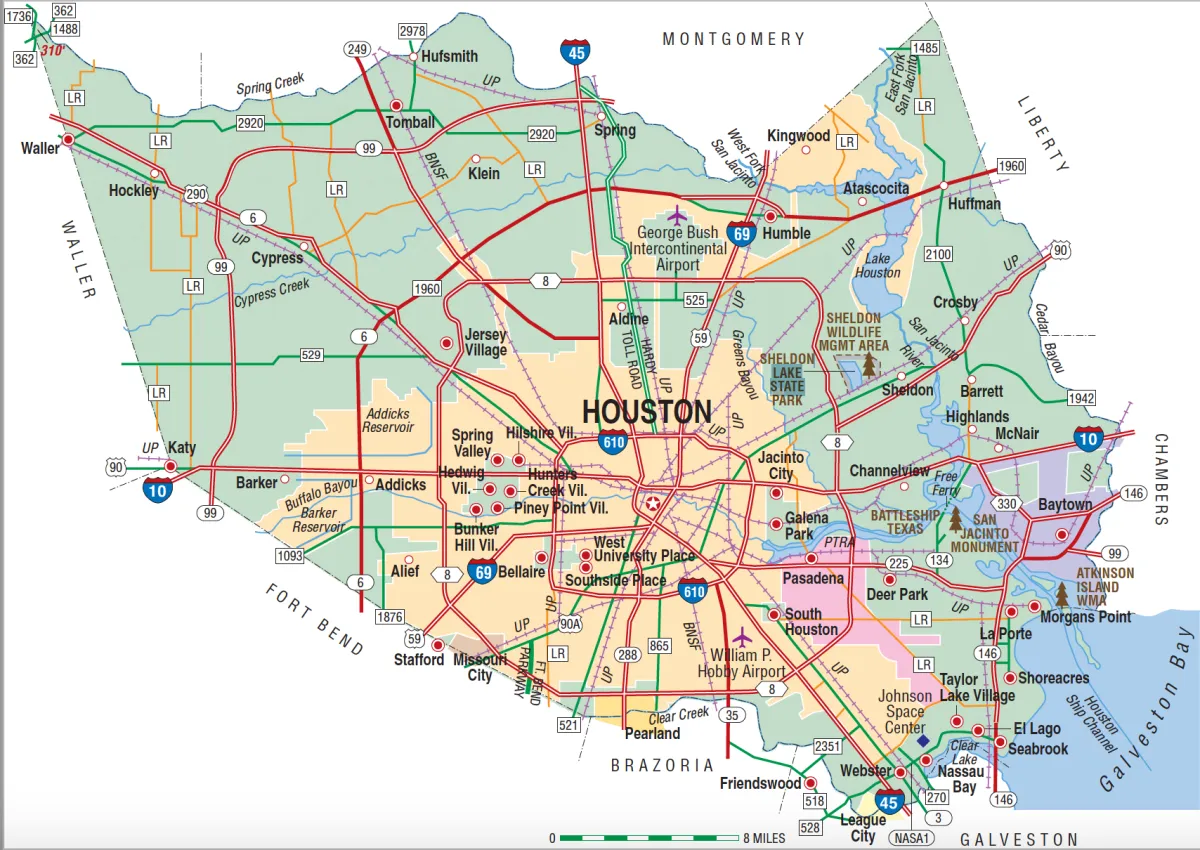
On March 22nd, Harris County in the state of Texas (hereinafter referred to as "Texas") announced that it had resolved its lawsuit with the e-cigarette company JUUL and would receive a settlement of $20 million.


According to reports, the county is the first government entity in Texas to file a lawsuit against JUUL in 2021. Harris County prosecutor Christian Menefee said that the county is accusing JUUL of marketing its electronic cigarettes to minors.


As the largest county in the state and the third largest in the country, we are very proud to be able to take a leadership role," he said.


JUUL gained notoriety for offering a variety of popular e-cigarette flavors, and the local settlement is part of a larger global settlement with JUUL. The total amount of the settlement in Texas is $42.8 million.


Menifee stated that the case was always about reducing nicotine addiction among youth in the community. "The settlement funds are intended to alleviate the impact of nicotine addiction among our young people, and we want to protect them.


In 2022, a study released by the Centers for Disease Control and Prevention (CDC) revealed that nearly half of the surveyed students had used e-cigarettes for 20 days or more in the past 30 days. Admission statistics from UT Health showed that 1 in 5 children in Houston had tried using e-cigarette products.


Harris County commissioners will decide how to use funds from reconciliation.


Further reading:


JUUL has spent $18.2 billion in search of a settlement. Here's a breakdown of the amounts and conditions of settlements reached with various states.


Orange County in the United States will purchase electronic cigarette detectors following Juul's payment of a $5.4 million settlement.


References:


Harris County has reached a settlement in a lawsuit against JUUL Labs, alleging that the vaping company engaged in deceptive marketing tactics aimed at children.


Disclaimer

This article is provided solely for professional research, industry discussion, and informational purposes. Any references to brands, companies, products, technologies, or policies are made for factual reporting and analytical purposes only, and do not constitute endorsement, recommendation, promotion, or advertising by 2Firsts.

Nicotine-containing products, including but not limited to cigarettes, e-cigarettes, heated tobacco products, and nicotine pouches, carry significant health risks. Readers are responsible for complying with all applicable laws and regulations in their respective jurisdictions, including age restrictions and access limitations.

The information contained in this article should not be regarded as investment, legal, medical, regulatory, or commercial advice. While 2Firsts strives to ensure the accuracy and reliability of its content, it does not assume liability for any direct or indirect loss arising from errors, omissions, inaccuracies, or reliance on the information contained herein.

This article is not intended for individuals below the legal age for accessing tobacco or nicotine-related information in their jurisdiction.


Copyright Notice

This article is either original content produced by 2Firsts or content reproduced, translated, summarized, or adapted from third-party sources with attribution where applicable. The intellectual property rights of the original content remain with 2Firsts or the respective original rights holders.

No individual or organization may copy, reproduce, distribute, republish, modify, translate, or otherwise use this content without prior authorization. Any unauthorized use may result in legal action.

For copyright-related inquiries, corrections, or removal requests, please contact: info@2firsts.com.


AI-Assisted Translation and Editing Notice

Portions of this article may have been translated, edited, or reviewed with the assistance of artificial intelligence tools to improve efficiency and readability. Due to the limitations of AI-assisted translation and editing, discrepancies, omissions, or inaccuracies may exist when compared with the original source.

Where applicable, readers are advised to refer to the original source for the most complete and accurate information. If you identify any errors or believe that any content infringes upon your rights, please contact us at info@2firsts.com, and we will review and address the matter promptly.

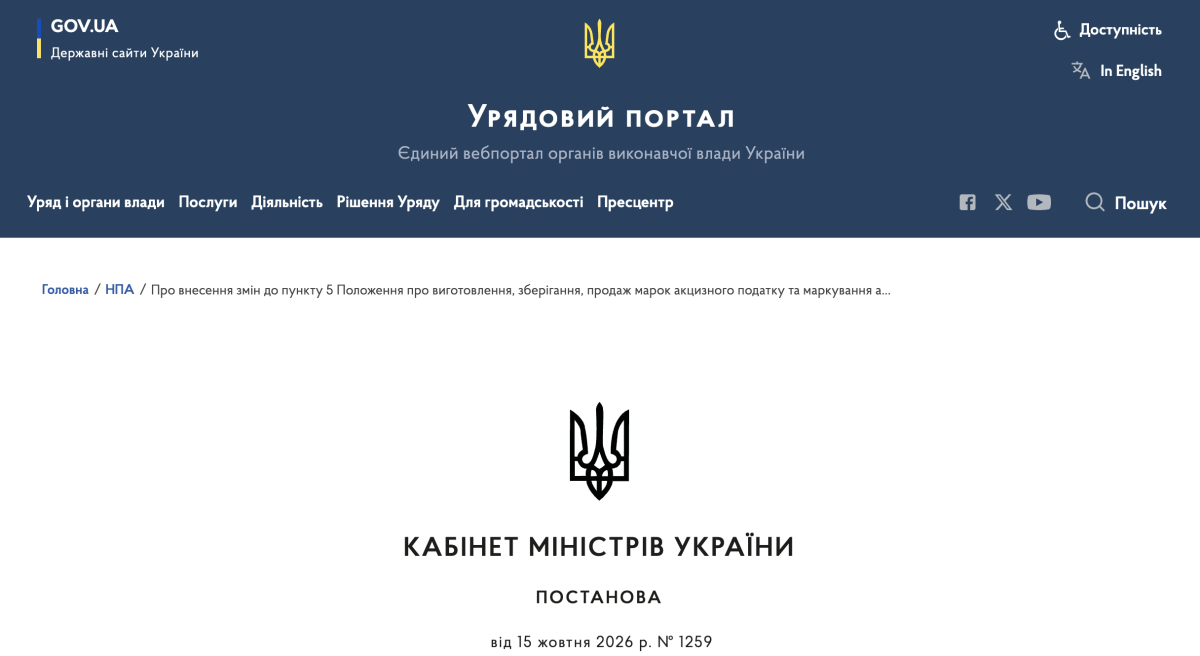
Ukraine Raises Excise Stamp Fees for Tobacco, Heated Tobacco and Vape Liquids by 30.5% as Parliament Backs E-Excise Delay to 2027
Ukraine's Cabinet of Ministers adopted Resolution No. 1259 on October 15, 2026, increasing excise stamp production fees for tobacco products and e-cigarette liquids by approximately 30.5%, from UAH 0.1643 to UAH 0.2144 per stamp. Fees for alcoholic beverages rose by about 30.2%. Separately, Ukraine's parliament passed Bill No. 15532 on October 13, proposing to postpone the full implementation of electronic excise stamps and traceability for alcohol, tobacco and e-cigarette liquids from November 1, 2026, to July 1, 2027. Parliament cited additional testing, configuration and integration requirements. The bill was sent to the president for signature on October 19.
Regulations
Oct.21
Special Report|From CrossBar 20K to 6-Methyl Nicotine KUMI: Two Routes Into U.S. State Vape Directories?
Several U.S. states have incorporated the September 9, 2020 PMTA filing deadline into eligibility rules for certain vaping products. CrossBar 20K drew attention after appearing on Pennsylvania's 163-entry directory. A broader 2Firsts investigation found that related registration businesses also listed KUMI and CROSSBAR SIX products, with 171 KUMI-related entries across Louisiana, Nebraska and Wisconsin. Corporate records link Scott Silverman to Blue Nine LLC and VR Products I LLC. PMTA compliance expert Mr. K said historical applications and nicotine-analogue products may offer two different approaches to state-directory access.
Regulations
Oct.26
Kumulus Vape2026 H1 Revenue Falls 8.3% but Profit Rises 24% as B2B Weakens and Consumer Channels Grow
French vaping company Kumulus Vape reported first-half 2026 revenue of €25.5 million, down 8.3% year over year, as its core B2B distribution business fell 11% to €21.6 million. B2C and store-network revenue rose 5.6% and 17.8%, respectively. Commercial margin increased to 26.3% from 21.7%, while net profit rose 24.1% to €0.8 million. The company attributed the profitability improvement to catalog optimization, logistics restructuring and the ramp-up of Labster, its in-house production unit for proprietary brands.
Market
Sep.17 by 2Firsts Perspectives
Hawaii's Largest Independent Vape Retailer and Wholesaler Volcano to Close All 13 Stores Ahead of 2027 Sales Rules
Hawaii-based vaping company Volcano eCigs plans to close all 13 physical retail stores on December 31, 2026, affecting approximately 56 employees. Volcano operates retail, wholesale, proprietary product and online sales businesses and has previously described itself in legislative testimony as Hawaii's largest independent vape retailer and wholesaler. Its operating company, Jocor Enterprises LLC, filed a formal closure notice on November 4, citing changes in the state's regulatory environment. From January 1, 2027, Hawaii will restrict the sale, acquisition and possession of vaping devices and e-liquids not listed in a state product directory, alongside separate restrictions on certain disposable devices. The closure concerns Volcano's physical retail network; the company has not announced the termination of wholesale or online operations.
Market
Nov.09
Italy Proposes Earlier Vape and HTP Tax Hikes, New Rules for E-Liquid Pricing, Exclusive Deals and Distribution
Italy's proposed 2027–2029 budget would bring forward scheduled tax increases for e-cigarette liquids and heated tobacco products from January 1, 2028, to July 1, 2027. The consumption tax coefficient for nicotine-containing e-liquids would rise from 20% to 22%, that for nicotine-free liquids and applicable flavorings from 15% to 17%, and the heated-tobacco coefficient from 41% to 42%. The bill would also introduce official retail price schedules for e-liquids, restrict exclusive agreements between retailers and suppliers, and limit single-brand-dominated displays, sales incentives and bundled offers. Importing, authorized warehousing and retailer sourcing arrangements would also change. The proposals remain subject to parliamentary approval and subsequent implementing regulations.
Regulations
Nov.04
Australia Adds 6-Methylnicotine to Schedule 9 Prohibited Substances, Effective October 1
Australia's Therapeutic Goods Administration published a final decision on September 25 to classify 6-methylnicotine as a Schedule 9 prohibited substance under the Poisons Standard, effective October 1, 2026. TGA said the chemical has been reported in e-cigarette liquids sold in Australia and marketed as nicotine-free or nicotine alternatives, while evidence also indicates its use in preparations such as oral pouches. The government originally proposed a Schedule 7 classification but ultimately adopted the stricter Schedule 9 designation, citing acute toxicity, dependence risk, use in unapproved consumer products and misleading marketing.
News
Sep.29 by 2Firsts Perspectives