
The Spanish Nicotine Pouches Association (ABN) is officially launched, calling for a clear regulatory framework grounded in scientific evidence

Dec.03.2025
The Spanish Nicotine Pouches Association (ABN) is officially launched, calling for a clear regulatory framework grounded in scientific evidence
The Spanish Nicotine Pouches Association (ABN) has launched in Madrid, uniting more than 40 companies to call for science-based, proportionate regulation. The group warns that a proposed 0.99 mg nicotine cap could amount to a de facto ban and introduces new voluntary industry standards in response.

Disclaimer

This article was submitted to 2Firsts by Mónica Andrade. The views expressed herein are solely those of the author and do not represent the position of 2Firsts. 2Firsts publishes this article to present diverse perspectives and promote constructive dialogue within the industry.


Key Points


● The Spanish Nicotine Pouches Association (ABN) has been officially presented in Madrid. The organization is also a member of the international GINN network (Global Institute for Novel Nicotine).


● With no tobacco, combustion or inhalation, these emerging products in Spain have significant growth potential among adult nicotine consumers.


● “We want to be part of the solution. This means self-regulation, corporate responsibility, and a full willingness to engage in dialogue with the Administration.”


Madrid, December 3, 2025 —The Spanish Nicotine Pouches Association (ABN) was officially launched today in Madrid. ABN is a newly created sectoral organisation listed in the European Union Transparency Register and brings together manufacturers and distributors of oral, smoke-free nicotine products operating in Spain. The association aims to represent the sector, promote best practices, and contribute to building a regulated, safe and responsible market.


This is the first association to unite more than 40 European manufacturers and distributors, including CLEW, Greatest, Denssi, Europouches, CAMO, Rush, Rebel, Mynt, Chemnovatic and Pouch Solutions.


A Call for Proportionate, Evidence-Based Regulation


During the event, ABN President Mónica Andrade emphasized the need for a proportionate regulatory framework aligned with the broader European context.


“Our message is clear: regulate rather than prohibit. Spain needs coherent regulation and information based on data, not ideology—ensuring that these products are accessible only to adults while giving the sector the legal certainty it needs to operate responsibly,” Andrade stated.

 

The Spanish Nicotine Pouches Association (ABN) is officially launched, calling for a clear regulatory framework grounded in scientific evidence
Event site| Source: Mónica Andrade


An Emerging Sector with Economic Potential Dependent on Future Regulation


Nicotine pouches are a rapidly growing category across Europe and the United States. Although still at an early stage in Spain, the category has notable growth potential in the coming years, offering an oral alternative to inhaled or combusted nicotine products and aimed exclusively at adult nicotine consumers. Tobacco-free and without combustion or inhalation, these products are used orally and release nicotine progressively over a short period of time.


Spain currently lacks a specific regulatory framework, and there is widespread misinformation—creating operational uncertainty for companies manufacturing and marketing these products, and increasing the risk of an uncontrolled market.


In this regard, the association expresses deep concern over the proposed amendment to Royal Decree 579/2017, put forward by the Ministry of Health, which seeks to limit nicotine content to 0.99 mg per pouch. According to the Ministry itself, such a limit would amount to a de facto ban of these products in Spain, while in the vast majority of countries, permissible levels are significantly higher.


A Sector-Led Framework for Self-Regulation


During the launch event, ABN presented its first set of voluntary industry standards, outlining commitments in areas such as youth protection, product quality and safety, responsible packaging, environmental practices, and commercial communication aimed strictly at adults.


“We want to be an active part of the solution. This means self-regulation, corporate responsibility and complete openness to dialogue with the Administration,” Andrade underscored.


About ABN


The Spanish Nicotine Pouches Association (ABN) is a newly established business organization representing independent nicotine pouch manufacturers worldwide with a presence in the Spanish market. ABN is a member of the international network GINN (Global Institute for Novel Nicotine).


With more than 40 member companies, ABN is committed to advancing science-based regulation, fostering innovation and promoting reduced-risk alternatives for adult smokers.


Contact for Media


Email: abn.prensa.es@gmail.com


Cover image: ABN President Mónica Andrade. | Source:Mónica Andrade


Read more:

Special Report | Battle Over Flavors: Spain’s flavor and pouch curbs spark Brussels showdown over the single market

Special Report | Battle Over Flavors: Spain’s flavor and pouch curbs spark Brussels showdown over the single market
 

India Duty-Free Nicotine Pouch Sales Face Regulatory Test as ZYN, FOX Classification Remains Open
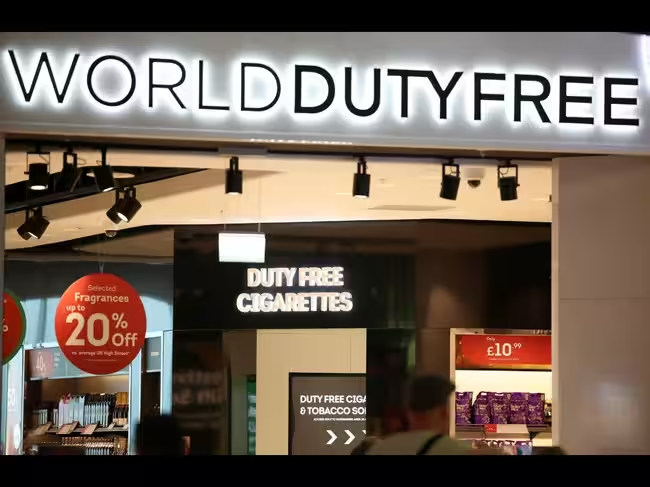
The Bombay High Court has ruled that airport duty-free shops are not exempt from India's domestic regulatory laws merely because they operate beyond the customs barrier, leaving in place a sales halt covering ZYN and FOX nicotine pouches at Mumbai's international airport. The court, however, did not determine that the products necessarily qualify as "drugs" under India's Drugs and Cosmetics Act. The retailers have four weeks to submit product information to the appropriate authorities, including CDSCO, which must complete its review within 30 days of receiving the submissions.
Sep.24
Smoke-Free Business Hits 42% of Q2 Net Revenue as PMI’s First TNFD Report Covers Single-Use Electronics, Critical Raw Materials and IQOS Repairs
Philip Morris International has published its first report aligned with the Taskforce on Nature-related Financial Disclosures, bringing its electronics supply chain and the use and end-of-life stages of smoke-free devices and consumables into its nature-related assessment. PMI said its smoke-free business accounted for about 42% of total net revenues in the second quarter of 2026. The report says non-circular electronic products, particularly single-use items, can increase consumption of limited natural resources and also details an IQOS repair pilot. A 2040 circularity scenario tests assumptions including a 50% reduction in product waste-related costs, 10% raw-material savings and a 25% substitution rate for refurbished products versus new products.
Sep.23
Huabao International Buys Indonesian HNB Manufacturer for RMB 90 Million, Adding OEM/ODM Capacity
Huabao International Holdings Limited will acquire 100% of PT Broad Far Indonesia through two wholly owned subsidiaries for approximately RMB 90 million. The Indonesian company manufactures and sells heat-not-burn tobacco sticks and provides OEM/ODM services. The sellers are part of a related-party group controlled by Huabao International Chair and controlling shareholder Zhu Linyao. PT Broad Far Indonesia generated $4.37 million in revenue and $177,000 in profit after tax in the first half of 2026, while net assets stood at about $326,000 at June-end. An independent valuer assessed the company’s equity at approximately RMB 93.06 million. Following completion, the HNB manufacturing operation will be consolidated into Huabao International.
News
Sep.29 by 2Firsts Perspectives
JUUL Purchasers Ask Ninth Circuit to Preserve Antitrust Classes in Case Over Altria’s $12.8 Billion Investment
Private antitrust litigation stemming from Altria's 2018 $12.8 billion investment for a 35% economic interest in JUUL is advancing before the U.S. Court of Appeals for the Ninth Circuit. Direct purchasers, indirect purchasers and indirect resellers of JUUL products filed answering briefs this week seeking to preserve class certifications granted by a California federal court in February. Altria and JUUL argue that individual consumers and large distributors differ too much in purchasing terms to remain in a single direct-purchaser class, while a separate dispute concerns whether California antitrust law can apply to indirect purchasers across 27 jurisdictions. A September trial has been put on hold during the appeal.
Sep.23
Spain Cigarette Volumes Fall 5.2% in August, BAT Drops 14.5%, JTI Gains Share; France Down 8.3% on Adjusted Basis
Spain's cigarette volumes declined 5.2% year over year in August 2026, according to government data cited by UBS and reported by Investing.com on October 7. British American Tobacco's volumes fell 14.5%, followed by Imperial Brands at 8.8%, Philip Morris International at 6.6% and Japan Tobacco at 4.6%. JTI was the only one of the four companies to gain cigarette market share, rising six basis points to 26.7%. In France, official customs data showed an unadjusted 3.7% decline in cigarette deliveries. Adjusting for the difference in delivery days produces a decline of approximately 8.3%, consistent with the UBS figure. The bank also estimated the earnings exposure of major tobacco companies to both markets.
Market
Oct.13
Special Report | Vape bans and tougher rules: the South Caucasus takes different paths
Azerbaijan's sweeping e-cigarette ban has raised concerns over enforcement errors and the emergence of illicit sales, while neighboring Armenia is tightening technical rules and preparing higher excise taxes. Georgia, meanwhile, has resisted calls for broader vape restrictions and introduced preferential taxes for some domestically produced cigarettes. The divergent approaches across the South Caucasus highlight a regional policy dilemma: how to curb nicotine use and protect public health without encouraging black markets or creating unintended economic consequences for businesses and consumers.
Nov.03