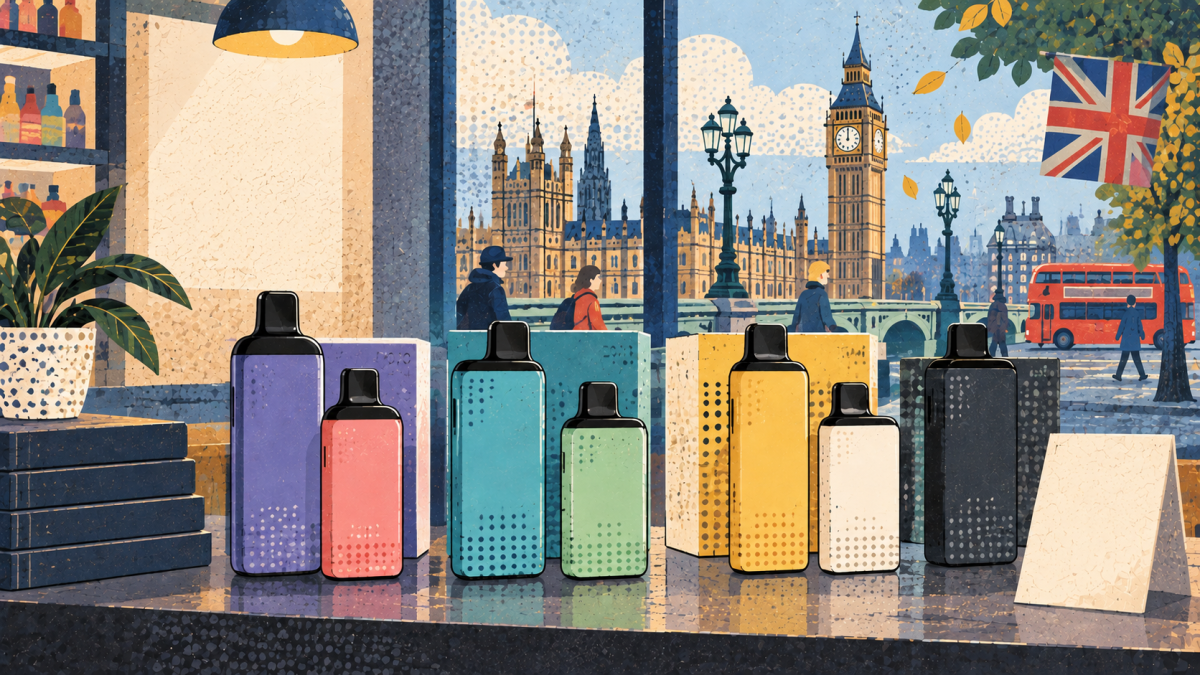
On March 22nd, the Electronic Cigarette Association of the UK announced that the withdrawal of ELFBAR and Lost Mary products with nicotine levels exceeding the legal limit demonstrated a "glaring failure" in the UK's electronic cigarette regulation framework.
John Dunne, the director general of UK Vaping Industry Association (UKVIA), has stated that it is now clear that approving e-cigarette products without compliance testing is not feasible, whether before or after approval.
He made the statement following a joint announcement from the Medicines and Healthcare products Regulatory Agency (MHRA) and the Chartered Trading Standards Institute (CTSI) in the UK. The products recalled include ELFBAR and Lost Mary brands.
Deng En stated, 'Although we are aware that mistakes may occur, we must do everything possible to ensure they happen as little as possible. Because, as we have seen in recent weeks, the reputation of the entire industry depends on it.'
During the MHRA approval process, there should be a testing plan in place for random sampling to ensure that products not only meet requirements upon initial market entry, but also maintain these standards over time.
We still need to see authorities taking swift and decisive action upon uncovering any violations of the law, in order to quickly correct mistakes and make it clear to manufacturers, distributors and retailers what actions they need to take.
He said that from the issue of excessive e-liquid to the announcement that non-compliant products must be taken down, these controversies have caused widespread confusion within the industry and among consumers.
Deng En noted that in order to maintain public confidence in the industry, retailers, distributors, and manufacturers must be aware that any non-compliant behavior will be taken seriously.
He added: "The MHRA should seriously consider the ECID numbers of products found to be non-compliant and suspend their authorization until the issue has been truly resolved.
This also highlights the need for a universal standard for compliance testing (such as e-cigarette e-liquid).
The UKVIA has obtained the independent test results of electronic cigarette products. Concerningly, conflicting results have been observed depending on the type of test conducted.
A recent joint statement by CTSI and MHRA has stated that on February 23, they advised law enforcement officers that, in accordance with Regulation 39 of the Tobacco and Related Products Regulations (TRPRs), all non-compliant E-Liquid Flavourings, Additives and Response products must be removed from sale.
There has been further communication between ElLFBAR and MHRA to update the corrective action plan and identify more affected batches, including some of the Lost Mary products.
CTSI and MHRA are pleased to note that compliant alternative products have now arrived in the country. We continue to expect all manufacturers to act responsibly and will promptly share any further information received with enforcement officials.
The joint statement additionally states that:
There is no evidence to suggest that using the ELFBAR or LostMary products, which have been overfilled with e-juice, poses a greater health risk during normal use.
The vigilance required in Article 39 is specifically applicable to non-compliant and unsafe products.
Products that do not meet requirements are not permitted to be sold to consumers.
If batches of products that do not meet requirements are still on the shelves, whether action should be taken is determined by the priorities, competitive demands, and available resources in the local area.
It said the affected batches are as follows:
Previous notice:
ELFBAR 600s with the following batch numbers: ep0i7693, ep020398, ep020250, ep019749, ep020257, ep019746, ep020120, ep020394, ep019893, ep019894.
Other Batches:
MaryBM600 has gone missing.
Taste: Watermelon, apple, kiwi, passionfruit, pomegranate, cotton candy ice cream, strawberry ice cream, blueberry sour raspberry.
Batch Numbers: LP017641, LP018253, LP019438, LP019923, LP020487, LP021149.
Mary QM600 has gone missing.
Taste: Grape and Cola.
Batch: LP017906 and LP016850.
Disclaimer
This article is provided solely for professional research, industry discussion, and informational purposes. Any references to brands, companies, products, technologies, or policies are made for factual reporting and analytical purposes only, and do not constitute endorsement, recommendation, promotion, or advertising by 2Firsts.
Nicotine-containing products, including but not limited to cigarettes, e-cigarettes, heated tobacco products, and nicotine pouches, carry significant health risks. Readers are responsible for complying with all applicable laws and regulations in their respective jurisdictions, including age restrictions and access limitations.
The information contained in this article should not be regarded as investment, legal, medical, regulatory, or commercial advice. While 2Firsts strives to ensure the accuracy and reliability of its content, it does not assume liability for any direct or indirect loss arising from errors, omissions, inaccuracies, or reliance on the information contained herein.
This article is not intended for individuals below the legal age for accessing tobacco or nicotine-related information in their jurisdiction.
Copyright Notice
This article is either original content produced by 2Firsts or content reproduced, translated, summarized, or adapted from third-party sources with attribution where applicable. The intellectual property rights of the original content remain with 2Firsts or the respective original rights holders.
No individual or organization may copy, reproduce, distribute, republish, modify, translate, or otherwise use this content without prior authorization. Any unauthorized use may result in legal action.
For copyright-related inquiries, corrections, or removal requests, please contact: info@2firsts.com.
AI-Assisted Translation and Editing Notice
Portions of this article may have been translated, edited, or reviewed with the assistance of artificial intelligence tools to improve efficiency and readability. Due to the limitations of AI-assisted translation and editing, discrepancies, omissions, or inaccuracies may exist when compared with the original source.
Where applicable, readers are advised to refer to the original source for the most complete and accurate information. If you identify any errors or believe that any content infringes upon your rights, please contact us at info@2firsts.com, and we will review and address the matter promptly.