Disclaimer: This article is intended solely for global industry research and does not constitute investment advice.
Key Points
- Revenue Growth: Q2 net revenues rose 14.8% year over year to RMB1.01 billion, while gross margin increased to 35.4%.
- International Focus: International business accounted for 68.5% of revenue, while the company offered no new outlook for mainland China.
- European Distribution: RLX took control of a Western European distributor, extending its presence into local distribution, retail and route-to-market infrastructure.
- Multi-Category Expansion: The company is scaling modern oral nicotine pouches and expanding into other smoke-free categories beyond e-vapor.
- Profit Divergence: Non-GAAP operating income rose 28.8%, while non-GAAP net income declined about 18%.
2Firsts
August 14, 2026
RLX Technology Inc. (NYSE: RLX) reported second-quarter net revenues of RMB1.01 billion ($148.9 million), up 14.8% from a year earlier, with international business accounting for 68.5% of revenue.
The company also disclosedthat in July it acquired a 51% equity interest and board control in a Western European distributor of next-generation smoke-free and fast-moving consumer goods products. The distributor will be consolidated into RLX's financial statements beginning in the third quarter.
The latest results follow an unusually strong first quarter, when revenue rose 96.2% year over year in part because of a one-time benefit related to a change in export regulation. Unlike in the first quarter, RLX's second-quarter release provided no new update on its mainland China business, while management's new strategic commentary centered on overseas distribution, retail execution and expansion beyond e-vapor into modern oral nicotine and other smoke-free categories.
Key Financials
- Net revenues: RMB1.01 billion, up 14.8% year over year.
- Gross profit: RMB357.8 million, up 47.8% year over year.
- Gross margin: 35.4%, compared with 27.5% a year earlier.
- U.S. GAAP income from operations: RMB130.4 million, up 234.7% year over year.
- Non-GAAP income from operations: RMB149.6 million, up 28.8% year over year.
- U.S. GAAP net income: RMB222.0 million, up 1.6% year over year.
- Non-GAAP net income: RMB238.8 million, compared with RMB291.2 million a year earlier, down about 18%.
- International business: 68.5% of quarterly net revenues.
Q2 Revenue Rises 14.8% After Q1 One-Time Benefit
RLX reported net revenues of RMB1.0105 billion in the second quarter, compared with RMB880.0 million a year earlier.
Gross profit rose 47.8% to RMB357.8 million, while gross margin increased to 35.4% from 27.5% in the same period of 2025.
U.S. GAAP income from operations increased 234.7% to RMB130.4 million. Non-GAAP income from operations rose 28.8% to RMB149.6 million.
Net profit showed a different pattern. U.S. GAAP net income increased 1.6% to RMB222.0 million, while non-GAAP net income declined to RMB238.8 million from RMB291.2 million a year earlier, a fall of about 18%.
Second-quarter revenue was below the RMB1.59 billion reported in the first quarter, when RLX recorded year-on-year growth of 96.2%.
Chief Financial Officer Chao Lu said the sequential moderation had been expected because the first quarter included a previously disclosed one-time benefit linked to a change in export regulation.
"As expected, revenues and gross profit moderated from the first quarter, which included a disclosed one-time benefit due to the change of export related regulation," Lu said.
The second-quarter figures offer a clearer view of performance after that one-time effect, although acquisitions remained part of reported growth.
RLX said the 14.8% year-on-year increase in revenue was driven primarily by international expansion and contributions from an acquisition completed in May 2025. The company did not disclose how much of the growth came from the acquired business and how much was generated organically.

International Business Accounts for 68.5% of Revenue
International business accounted for 68.5% of second-quarter net revenues, compared with 72.3% in the first quarter.
The two quarters are not directly comparable because the first-quarter revenue mix was affected by the export-related one-time benefit. International business nevertheless remained the largest part of RLX's revenue base, representing close to seven-tenths of quarterly sales.
RLX continues to provide limited detail on the geographic and product composition of its international business. It does not disclose revenue by major overseas market or by individual product category.
Europe, however, has become increasingly prominent in the company's disclosures.
RLX again said that an acquisition completed in May 2025 contributed to second-quarter revenue growth. The company has not identified that business in its earnings releases.
2Firsts previously reported, based on UK public filings, that British e-cigarette retailer Totally Wicked had come under the control of Wittyace UK Holding. The filings also showed appointments involving names matching RLX senior executives. 2Firsts noted at the time that RLX had not confirmed whether that transaction was the European acquisition referred to in its financial disclosures.
The July 2026 transaction is separate.
RLX said it acquired a 51% interest and board control in a Western European distributor of next-generation smoke-free and FMCG products. The company described the distributor as having a multi-channel logistics network, a proprietary B2B digital ordering platform and an established route-to-market across key European territories.
RLX said it plans to combine its global supply-chain capabilities and capital resources with the distributor's local infrastructure to pursue cost efficiencies and cross-selling opportunities.
The company did not disclose the distributor's name, the transaction value or the target's revenue and profit.
Its financial results will be consolidated into RLX's accounts beginning in the third quarter, making the distinction between organic and acquisition-led growth increasingly important in future comparisons.
Q2 Release Offers No New Update on Mainland China
RELX has long ranked first in China's regulated e-vapor market, with market estimates generally placing its share above 80%, giving the brand a dominant position in the domestic market.
Against that backdrop, the absence of a specific mainland China update in the latest earnings release is notable. In the first quarter, management still cited progress in its mainland China business when discussing growth. The second-quarter release provided no new assessment or outlook for the domestic market.
Instead, the company's newly disclosed strategic initiatives were concentrated overseas, including investment in European distribution and retail channels, greater channel autonomy, and expansion into additional smoke-free categories such as modern oral nicotine pouches.
This does not mean that RELX is scaling back its China business. However, the latest disclosure also suggests that management is not signaling any significant new change in the outlook for China's domestic e-vapor market, while its incremental growth initiatives and strategic investments are increasingly focused on international markets.
European Expansion Moves Further Into Distribution
RLX paired the acquisition disclosure with a stronger emphasis on retail execution and distribution.
Wang said competitive advantage in the industry is increasingly shaped not only by product innovation but also by "retail execution and shelf-space leadership."
She said RLX has adjusted its global route-to-market strategy accordingly, deepening store-level execution in Asia while pursuing a "dual-engine approach" in Europe that combines strategic investment in leading local partners with organic growth.
The July acquisition gives RLX control of a business with local logistics and B2B ordering infrastructure, extending its European presence further into distribution and retail-market execution.
The company also referred to greater "channel autonomy" as part of its broader growth strategy.
The direction builds on developments disclosed earlier this year. In the first quarter, RLX said it had integrated research and development, manufacturing and commercial operations into Nexus. 2Firsts previously reported that the operation is based in Shenzhen.
RLX's European strategy now combines investment in local businesses with its own operating growth. The July transaction adds a distribution asset to that structure, while the May 2025 acquisition continues to contribute to reported revenue.
The disclosures indicate that RLX's overseas expansion increasingly involves local route-to-market infrastructure alongside products and supply-chain capabilities.
RLX Says It Is Scaling Modern Oral Nicotine Pouches
The second major strategic signal in the quarter came from RLX's product portfolio.
Wang said the company is expanding beyond its e-vapor business into a broader range of smoke-free products, including the scaling of newly launched modern oral nicotine pouches and the development of other smokeless categories.
The statement builds on a product shift previously observed by 2Firsts.
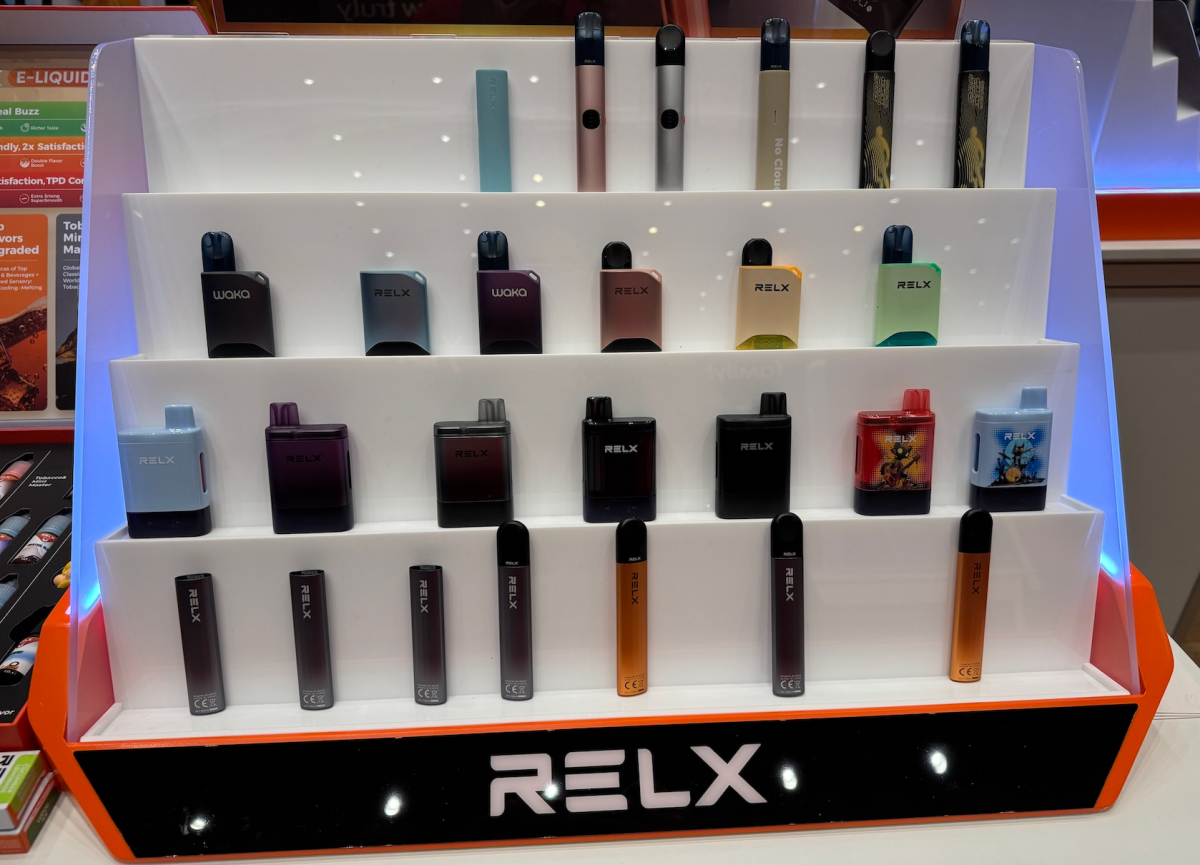
At EVO NXT 2026 in Prague, 2Firsts reported that RELX displayed vaping devices alongside RELX-branded e-liquids, oral nicotine products and a nasal product concept.
The second-quarter earnings release goes further by placing modern oral nicotine pouches explicitly within management's growth strategy.
RLX has not disclosed revenue, shipment volumes, market share or geographic contributions for its oral nicotine business. It has also not provided detailed financial information on other smoke-free categories.
The disclosures confirm that RLX is broadening its product strategy beyond e-vapor, although the financial scale of those newer categories remains unclear.
Gross Margin Improves as Profit Measures Diverge
RLX's gross margin rose to 35.4% in the second quarter from 27.5% a year earlier and 31.8% in the first quarter.
The company attributed the improvement primarily to a more favorable revenue mix and further supply-chain optimization.
Non-GAAP operating income increased 28.8%, outpacing revenue growth.
The improvement was not matched at the net-income level. Non-GAAP net income declined about 18% year over year, while GAAP net income increased only 1.6%.
Net interest income also declined to RMB109.1 million from RMB142.9 million a year earlier.
Selling expenses rose to RMB123.7 million from RMB84.6 million, an increase of about 46%. RLX attributed the rise mainly to higher salary and welfare expenses, branding costs and depreciation and amortization related to its May 2025 acquisition, partly offset by lower share-based compensation expenses.
General and administrative expenses fell to RMB74.4 million from RMB88.4 million, while research and development expenses were broadly stable at RMB29.4 million.
The figures show stronger gross margin and operating profitability alongside higher selling costs and weaker non-GAAP net income.
Competition Expands Beyond Products
RLX's second-quarter disclosures show a company combining product development with investment in distribution infrastructure and a broader smoke-free portfolio. Its European acquisitions, greater focus on retail execution and move into modern oral nicotine are becoming increasingly visible alongside its core e-vapor business.
RLX also provides one example of how competition in the global e-vapor industry is expanding beyond devices and consumables. Capital deployment, control of routes to market and multi-category portfolios are becoming more important alongside product innovation.
Follow 2Firsts for continued reporting on global tobacco and nicotine companies.
Cover image:RELX displays multiple vaping devices at EVO NXT. Photo by 2Firsts.
Disclaimer
This article is provided solely for professional research, industry discussion, and informational purposes. Any references to brands, companies, products, technologies, or policies are made for factual reporting and analytical purposes only, and do not constitute endorsement, recommendation, promotion, or advertising by 2Firsts.
Nicotine-containing products, including but not limited to cigarettes, e-cigarettes, heated tobacco products, and nicotine pouches, carry significant health risks. Readers are responsible for complying with all applicable laws and regulations in their respective jurisdictions, including age restrictions and access limitations.
The information contained in this article should not be regarded as investment, legal, medical, regulatory, or commercial advice. While 2Firsts strives to ensure the accuracy and reliability of its content, it does not assume liability for any direct or indirect loss arising from errors, omissions, inaccuracies, or reliance on the information contained herein.
This article is not intended for individuals below the legal age for accessing tobacco or nicotine-related information in their jurisdiction.
Copyright Notice
This article is either original content produced by 2Firsts or content reproduced, translated, summarized, or adapted from third-party sources with attribution where applicable. The intellectual property rights of the original content remain with 2Firsts or the respective original rights holders.
No individual or organization may copy, reproduce, distribute, republish, modify, translate, or otherwise use this content without prior authorization. Any unauthorized use may result in legal action.
For copyright-related inquiries, corrections, or removal requests, please contact: info@2firsts.com.
AI-Assisted Translation and Editing Notice
Portions of this article may have been translated, edited, or reviewed with the assistance of artificial intelligence tools to improve efficiency and readability. Due to the limitations of AI-assisted translation and editing, discrepancies, omissions, or inaccuracies may exist when compared with the original source.
Where applicable, readers are advised to refer to the original source for the most complete and accurate information. If you identify any errors or believe that any content infringes upon your rights, please contact us at info@2firsts.com, and we will review and address the matter promptly.