[By 2Firsts] In July 2025, the U.S. Food and Drug Administration (FDA) granted Marketing Granted Orders (MGOs) to five Juul products — the JUUL device and four tobacco-flavored pods (Menthol and Virginia Tobacco, 3.0% and 5.0%). This marks Juul’s official return to the FDA’s authorized list, nearly three years after the agency issued a marketing denial order (MDO) in 2022 that was later stayed for further review. Juul is now the fourth company — alongside Logic, NJOY, and Reynolds (Vuse) — with e-cigarettes approved under the FDA’s premarket review, raising the total number of authorized products from 34 to 39. Notably, this is the first MGO granted for an ENDS product in over a year — the last being for Vuse products in July 2024 — signaling a potential shift in the FDA’s regulatory approach to vapor products.
To better understand the significance of this regulatory decision and what it may indicate about the future direction of U.S. tobacco control policy, 2Firsts interviewed the leadership team at ARAC, a premier U.S.-based behavioral science research firm specializing in regulatory science and real-world impact across the nicotine and tobacco space. Dr. Jessica Zdinak, CEO & Chief Research Officer, and Sam Hampsher-Monk, VP of Global Regulatory Strategy & Client Operations, shared their insights in an exclusive interview with 2Firsts.
Key Takeaways from the Interview
● Juul’s Authorization Is a Milestone: After five years, Juul received an MGO, affirming that its products meet the “Appropriate for the Protection of Public Health” (APPH) standard.
● Adult Switching Evidence Was Key: FDA emphasized real-world switching data — not just cessation trials — marking a shift toward practical harm reduction evidence.
● More MGOs Possible, but Standards Are High: Companies must meet stringent toxicology, manufacturing, and population risk standards — especially through switching studies.
● FDA May Be Moving Toward Efficiency: Current leadership under the “Make America Healthy Again” agenda is pushing FDA to streamline its review timelines.
● Uncertainty Around Flavored ENDS Remains: While Juul’s case is promising, the outlook for non-tobacco flavored products remains unclear.
● FDA Assesses whether Real-World Evidence or "Gold Standard" Lab Trials are needed: The agency’s need for switching studies is clear — but whether longitudinal real-world studies are sufficient or more stringent "gold standard" experimental studies are needed depends on the risk to population-health (i.e., youth and non-user initiation).
Full Interview Transcript
2Firsts: What’s your view on the context or reasoning behind FDA’s approval of Juul?
Dr. Jessica Zdinak & Sam Hampsher-Monk (ARAC): As with all other MGOs, Juul — after 5 years — obtained marketing authorization stating that their products are deemed Appropriate for the Protection of Public Health (APPH). This is a remarkable achievement for a company who was at the forefront of innovation in Tobacco Harm Reduction.
As a first mover, Juul faced intense public and regulatory scrutiny, especially during a time of heightened concern over youth vaping. Certainly, mistakes were made early on — including youth-oriented marketing decisions — but Juul also proactively led on responsible innovation, voluntarily pulling flavored pods from the U.S. market before being required to do so by legislation enacted in 2020. They also created a product that we know has helped people who smoke quit combustible cigarettes… for good.
What’s important today is what the FDA emphasized in its decision: the legislatively mandated need to evaluate whether a product helps adults who smoke either completely switch to a less harmful product or significantly reduce their smoking. That’s exactly what Juul demonstrated through its switching studies.
This authorization reaffirms that FDA will support products that show strong real-world switching behavior — offering adults who smoke a demonstrably safer and familiar alternative. That’s good news for the health of the 28 million Americans who continue to use combustible cigarettes.
2Firsts: Do you think more companies will follow and get MGOs soon?
ARAC: It depends. What companies first must understand is that extensive “hard” scientific research must be conducted to demonstrate that the products, for example, have less toxicological risk than cigarettes; reduced levels of HPHC’s; have been produced to high manufactured standards; and tested for consistent shelf-life and stability. Applications that don’t “pass” these thresholds won’t have a chance of receiving an MGO, regardless of whether people who smoke adopt them or not.
Juul’s MGO, along with Zyn’s earlier this year, signals that FDA will continue authorizing products that can credibly demonstrate adult switching — a cornerstone of the APPH standard.
Importantly, FDA directly acknowledged the value of switching studies, not just cessation-focused RCTs. That’s a meaningful shift toward evidence rooted in real-world use and behavior, which is exactly the kind of research ARAC has been advocating and conducting for years.
If applicants have conducted studies following the PMTA Guidance on Product Design & Formulation, Toxicology and Harmful and Potentially Harmful Constituents (HPHCs), Manufacturing, Stability and Product and Aerosol/Emission Characterization etc., as well as assessing the Individual and Population Benefits and Risks – then, yes, we will see more MGOs soon. But if companies have only sought to demonstrate risk-benefit ratios based on ingredients and/or product properties without properly considering the Population-Level effects with Switching Studies, then the denials will continue.
2Firsts: What does this tell us about FDA’s regulatory direction now?
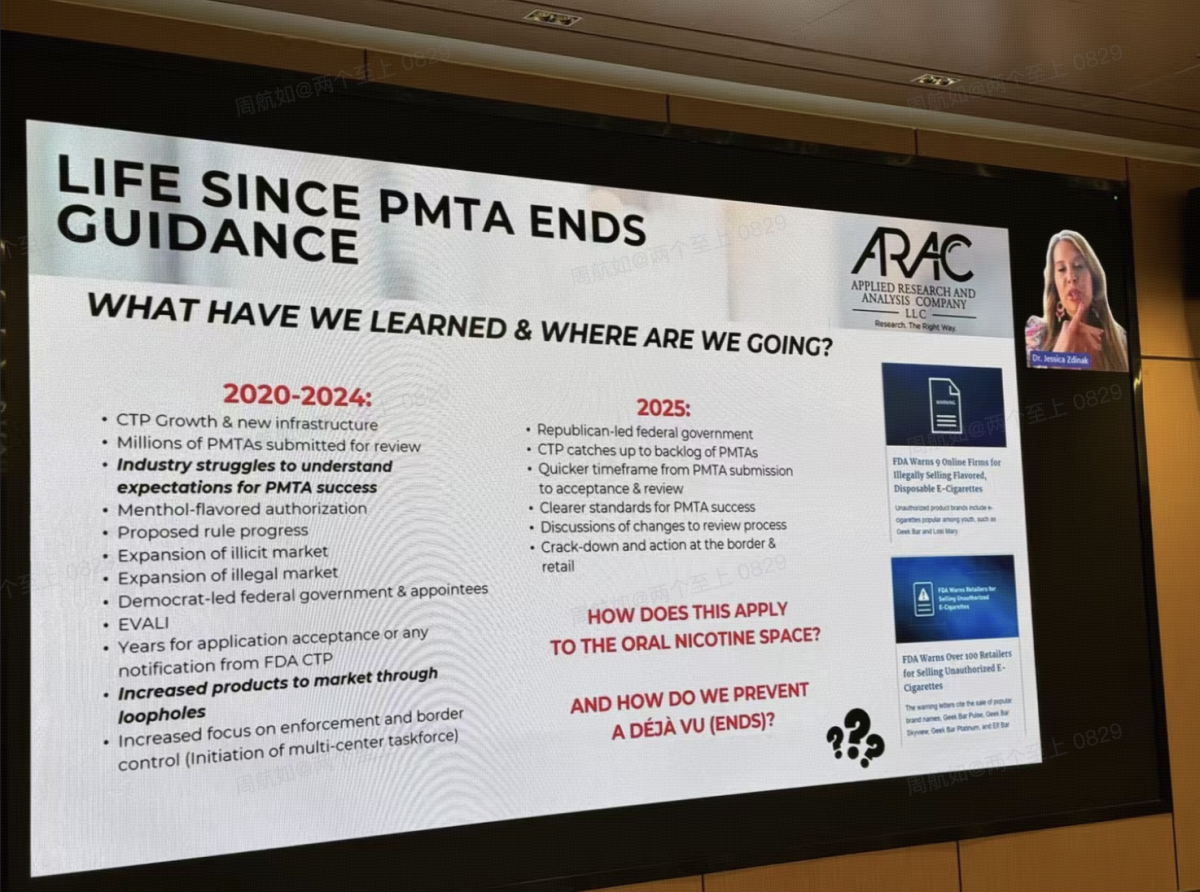
ARAC: Our speculation is that FDA and CTP has been receptive to President Trump and his selected leadership which has publicly emphasized the importance of efficiency and effectiveness. The plans to Make America Healthy Again announced by Robert F. Kennedy, Jr., U.S. Secretary for Health and Human Services (of which FDA is a key agency) include restructuring and consolidation efforts to reduce bureaucratic waste and offer the U.S. tax-payer value for money.
Despite cuts resulting from Reduction in Force orders, the Center for Tobacco Products is moving forward actively and swiftly. We believe FDA will be looking at strategies to fulfill their legislative requirement to review PMTA applications within 180 days of filing, perhaps prioritizing applicants according to market share etc.
2Firsts: Any takeaways or implications for other companies still waiting?
ARAC: Juul’s authorization sends a strong signal that the agency will approve applications backed by rigorous behavioral science — particularly those that demonstrate adult switching.
The emphasis FDA placed on switching as a central component of their mandate to consider population risks and benefits helps clarify for the entire industry that the provision of evidence of real-world harm reduction is not optional — it’s essential.
Still, questions remain about whether ENDS products with non-tobacco flavors will be authorized. But this decision gives confidence that products with strong switching data — regardless of category — will have a clearer path forward.
At ARAC, we’ve built our research programs specifically to align with this evidentiary standard. We’re ready to help companies design and execute the kinds of switching studies that meet FDA expectations and contribute to public health.
About Applied Research and Analysis Company (ARAC):
Applied Research and Analysis Company (ARAC) is a premier U.S.-based behavioral science research firm with global reach, specializing in regulatory science and real-world impact. ARAC designs and delivers high-quality, defensible studies that support regulatory submissions — including PMTAs, MRTPAs, and SEs — driving product development decisions across the nicotine and tobacco space.
Trusted by industry leaders and innovators, ARAC brings unmatched expertise in Modules 5 & 6, including label and claim development, comprehension testing, human factors/usability, and clinical-behavioral research such as actual use and switching studies. These studies generate the robust, real-world evidence needed to evaluate whether products are “Appropriate for the Protection of Public Health” (APPH) -- including randomized experimental longitudinal, actual use, cohort studies, and Tobacco Product Perceptions and Intentions (TPPI).
ARAC’s cross-functional team of scientists, clinicians, strategists, and regulatory experts collaborate with clients from concept to clearance — supporting innovation, advancing harm reduction, and building confidence in regulatory engagement. From global product development to post-market surveillance, ARAC delivers science that shapes policy, informs consumers, and helps manufacturers succeed in complex regulatory landscapes.
Learn more at ARACscience.com
As a global leader in tobacco harm reduction reporting and regulatory insight, 2Firsts will continue to monitor the evolving regulatory landscape for next-generation products in the U.S. and worldwide. For more expert insights, interviews, and data-backed analysis, please reach out: info@2firsts.com.
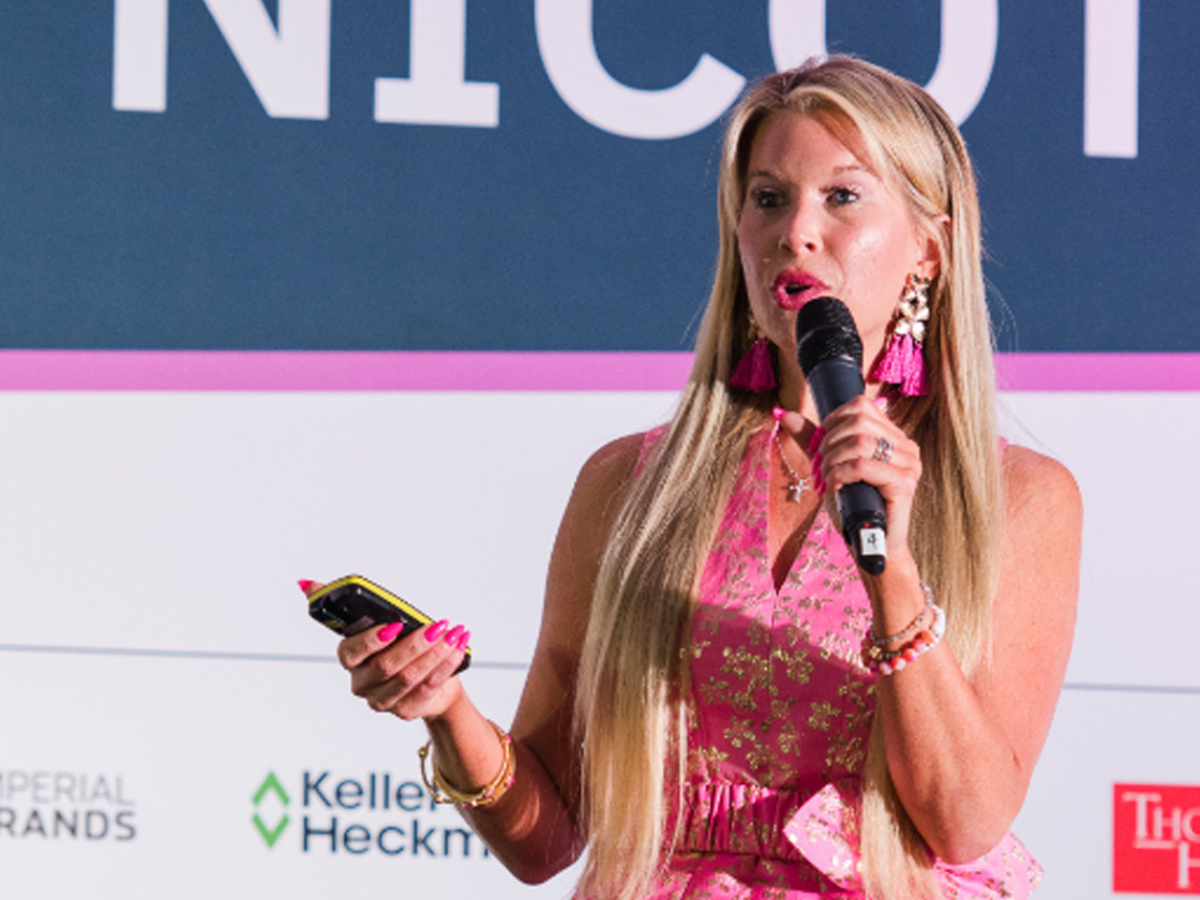
Cover image:Dr. Jessica Zdinak, CEO and Chief Research Officer of ARAC, speaks at an international forum | Image source: ARAC
We welcome news tips, article submissions, interview requests, or comments on this piece.
Please contact us at info@2firsts.com, or reach out to Alan Zhao, CEO of 2Firsts, on LinkedIn
Notice
1. This article is intended solely for professional research purposes related to industry, technology, and policy. Any references to brands or products are made purely for objective description and do not constitute any form of endorsement, recommendation, or promotion by 2Firsts.
2. The use of nicotine-containing products — including, but not limited to, cigarettes, e-cigarettes, nicotine pouchand heated tobacco products — carries significant health risks. Users are responsible for complying with all applicable laws and regulations in their respective jurisdictions.
3. This article is not intended to serve as the basis for any investment decisions or financial advice. 2Firsts assumes no direct or indirect liability for any inaccuracies or errors in the content.
4. Access to this article is strictly prohibited for individuals below the legal age in their jurisdiction.
Copyright
This article is either an original work created by 2Firsts or a reproduction from third-party sources with proper attribution. All copyrights and usage rights belong to 2Firsts or the original content provider. Unauthorized reproduction, distribution, or any other form of unauthorized use by any individual or organization is strictly prohibited. Violators will be held legally accountable.
For copyright-related inquiries, please contact: info@2firsts.com
AI Assistance Disclaimer
This article may have been enhanced using AI tools to improve translation and editorial efficiency. However, due to technical limitations, inaccuracies may occur. Readers are encouraged to refer to the cited sources for the most accurate information.
We welcome any corrections or feedback. Please contact us at: info@2firsts.com