Key Points
• Market growth alongside safety scrutiny: In 2025, nicotine pouches have expanded rapidly across the global supply chain and gained partial regulatory recognition, while their long-term oral health safety is increasingly becoming a focus of research and industry accountability.
• High prevalence of oral lesions: Multiple studies indicate that oral mucosal lesions, commonly referred to as “snus lesions,” are highly prevalent among users of nicotine pouches and snus, with reported rates ranging from 70% to 96%, and approximately 18% to 57% of users showing signs of irreversible gingival recession.
• Key mechanisms increasingly identified: Research widely points to pH levels above the natural range of the oral cavity as an important factor contributing to irritation and lesions. Some studies also suggest that specific flavorings, such as mint or menthol, may exert stronger irritative effects.
• Distinguishing reversible and irreversible damage: Studies indicate that mucosal lesions are generally reversible after cessation, while gingival recession represents permanent, non-regenerative damage. Long-term cohort research has found no increased risk of oral cancer associated with traditional Swedish snus use.
• Evidence gaps and emerging research: Most existing oral health data are based on studies of traditional tobacco snus conducted decades ago, leaving significant evidence gaps regarding modern tobacco-free nicotine pouches. Several longer-term clinical studies are now underway to address these gaps.
• Innovation and harm reduction explored in parallel: Physical barrier technologies, such as Protex®, have been associated in studies with reduced oral irritation and lesion severity. A peer-reviewed study published in May 2025 reported a marked reduction in moderate to severe oral lesions within the study period among users of products incorporating such structures.
• Public health insights from the Swedish experience: Public health data from Sweden show a clear inverse trend between rising nicotine pouch use and declining smoking rates among younger people. Bengt Wiberg interprets this pattern as a “gateway out” of smoking rather than a gateway in, arguing that harm reduction potential and oral risk research can advance in parallel.
2Firsts, January 6, 2026-In 2025, nicotine pouches have emerged as one of the most closely watched categories in the global novel tobacco market. Across manufacturing, branding, distribution and retail, the category has seen rapid expansion in multiple markets. Shortly before Christmas, the U.S. Food and Drug Administration (FDA) granted marketing authorization to six nicotine pouch products under Altria’s on! PLUS brand, a move that further underscored regulatory recognition of nicotine pouches as tobacco harm reduction products.
At the same time, some observers have noted that as a relatively new form of nicotine delivery, nicotine pouches warrant longer-term and more in-depth study of their safety and potential risks. Entering 2025, discussions around the possible effects of nicotine pouches on oral health have gained increasing attention, with concerns focusing in particular on gum irritation, oral lesions and longer-term changes to oral tissues.
Against this backdrop, 2Firsts interviewed Bengt Wiberg. Wiberg is the President and Founder of Stingfree AB and has long focused on oral health issues that may arise during snus and/or nicotine pouch use. In the interview, drawing on personal experience as well as studies and materials he referenced, he outlined his observations on oral health risks associated with nicotine pouches and described related research and industry practices.
Wiberg said that while nicotine pouches are commonly regarded as a lower-risk way of consuming nicotine compared with smoking, their potential effects on oral health still warrant more systematic examination within a harm reduction framework. The views and data cited in this article are based on Wiberg’s statements during the interview and on materials he provided.
1. How Oral Health Concerns First Emerged
In the interview, Bengt Wiberg said his attention to possible oral health issues linked to nicotine pouches initially stemmed from a personal experience. He recalled to 2Firsts that he sought urgent dental care after experiencing gum inflammation and severe oral lesions plus beginning of receding gum tissue, an episode that prompted him to begin examining the relationship between snus and nicotine pouches and oral health more closely.
According to Wiberg, during the course of treatment he realized that these issues went beyond temporary discomfort and involved noticeable changes to the gums and oral mucosa. His dentist strongly recommended him to stop pouch use completely. Refusing to return to smoking for his nicotine desire, he came up with the idea to place a patch (band aid) on the gum side of his pouches with surprising results. His oral lesions disappeared after a while and so did his gum inflammation and he carried on pouch use at the same rate as before still getting his flavor- and nicotine experience. He said this experience became the starting point for his subsequent efforts to better understand the issue and led him to consult research literature, as well as interviewing prominent odontology scientists, related to oral medicine and snus & nicotine pouch use.
Wiberg noted that as he continued to review academic studies and industry information, he increasingly observed that symptoms such as oral irritation, burning sensations and localized lesions were not uncommon among users of nicotine pouches and snus. This, he said, led him to compare his personal experience with broader user feedback and research data, shaping his longer-term focus on the issue.
2. Types of Oral Health Effects: From Irritation to Irreversible Gum Damage
In the interview, Bengt Wiberg provided a structured overview to 2Firsts of the types of oral health effects he has focused on in relation to nicotine pouch use. He said that based on his personal observations as well as the research and clinical materials he cited, these effects tend to present at varying degrees and stages.
Wiberg noted that more common early reactions include gum irritation and burning sensations at the site where nicotine pouches are placed. He said that in some users, such discomfort may further develop into oral lesions or ulcers, accompanied by gum inflammation (gingivitis).
In his view, a more concerning issue is the recession of gum tissue (gingival recession). Wiberg emphasized that unlike some other oral reactions, gingival recession represents irreversible damage, as gum tissue that has been lost cannot regenerate. He said this is one of the aspects he repeatedly highlights when discussing oral health risks associated with nicotine pouches. Scientifically, the only way to handle destroyed gum tissue is by costly dental plastic surgery. A method that cannot guarantee full success and that comes with a strong recommendation to cease all pouch use also after surgery.
Wiberg also stressed that when discussing oral health issues related to nicotine pouches and snus, it is important to distinguish between different types of risk. He noted that while mucosal lesions and gum damage merit attention, existing long-term research has not shown an association between traditional Swedish snus use and oral cancer risk. Wiberg cited a long-term cohort study conducted by the Karolinska Institute in Sweden, which followed more than 400,000 Swedish men over a 30-year period. According to his account, the study found no higher incidence of oral cancer among regular users of Swedish snus as compared to never-snus users, In his view, this constitutes an important background fact when discussing oral health risks related to nicotine pouches and snus within a tobacco harm reduction framework.
Wiberg further noted that in the studies he referenced, oral lesions and gingival recession do not represent the same category of health outcome, and that their severity and long-term implications differ.
3. Studies Point to a High Prevalence of Oral Lesions Among Users
In the interview, Bengt Wiberg cited multiple studies and industry materials to illustrate the occurrence of oral lesions and related issues among users of nicotine pouches and snus. He said that based on the data he has reviewed, such oral changes appear to be highly prevalent within the user population.
Wiberg referred to disclosures by Swedish tobacco company Swedish Match (PMI), which in materials on traditional Swedish snus reported that a mucosal change commonly known as “snus lesions” is found in “almost all snus users” at the site where the product is placed. Wiberg said, the industry’s core oral health data relies almost entirely on studies from the 1970s–90s involving traditional tobacco snus, leaving a 30-year scientific gap regarding modern tobacco-free nicotine pouches. As can be understood, tobacco free nicotine pouches are a relatively new product category and thus the number of scientific studies are relatively few as of yet but with the immense growth of the category more studies are emerging and several are already in progress.
Among specific studies he cited, Wiberg pointed to a 2023 Norwegian study showing that among daily snus users aged 18 to 20, approximately 79% were observed to have oral lesions, while about 18% exhibited gum tissue recession, at placement sites. Another Swedish study published in 2022 found that around 70% to 90% of participants had oral lesions, with approximately 54% to 57% experiencing permanent gingival retraction.
In addition, Wiberg cited an international study published in 2025 that focused on dentists who used nicotine pouches and/or snus. According to the results he described, 96% of participants had snus lesions and 39% showed signs of gingival recession. Wiberg said these findings suggest that oral lesions are not isolated cases but are relatively common among users, even among professional dentists
He added that the above figures are drawn from studies and materials he has reviewed or referenced and are intended to illustrate the occurrence of oral health changes across different countries and user groups.
4. Understanding the Mechanisms: pH Seen as a Key Factor
In the interview, Bengt Wiberg further outlined his understanding of the mechanisms through which nicotine pouches may cause oral discomfort and lesions. He said that based on the research he cited and prevailing views in oral medicine, such effects are typically not driven by a single factor, but rather by a combination of influences.
Wiberg referred to research and personal interviews conducted with Swedish oral health expert Professor Tony Axell, who has identified elevated pH levels, high concentrations of flavoring agents, and friction between the product and the gums as the main factors contributing to oral lesions. Among these, Wiberg said elevated pH is currently regarded as one of the most widely discussed and accepted contributing factors.
According to Wiberg, nicotine pouches typically create a highly alkaline environment, with pH levels significantly higher than the natural pH range of the oral cavity, which is around 7 i.e. neutral. He said that higher pH facilitates the release of an increased rate of free (unprotonated) nicotine, improving nicotine absorption efficiency, but at the same time increases irritation to the gums and oral mucosa.
Wiberg also noted that clinical research conducted by Professor Axell has found that even pouch products containing neither nicotine nor tobacco can cause oral lesions similar to those observed in snus users. In his view, this observation further supports the assessment that elevated pH is one of the primary contributing factors.
Building on this, Wiberg added that he has proposed an additional hypothesis that remains under discussion, namely that certain flavoring components may themselves be more aggressive in the oral environment. He said flavors such as mint, menthol, ginger and chili tend to be more intense from a sensory perspective and may therefore produce more pronounced irritation in the mouth. He emphasized that this view represents a supplementary interpretation based on existing research.
5. Reversibility and Long-Term Impact: Differences Among Oral Health Changes
In the interview, Bengt Wiberg also discussed differences in the reversibility of various oral health changes associated with nicotine pouch and snus use. He said that based on the studies and clinical observations he referenced, not all oral changes carry the same long-term implications.
Wiberg noted that oral lesions commonly observed among traditional Swedish snus users are generally considered reversible after cessation. He said research suggests that following a period without snus use, clinical and histological changes in the oral mucosa may gradually return to normal.
However, Wiberg added that new research on tobacco-free modern oral nicotine pouches indicates that these products may be more irritating to the oral cavity. He said that compared with traditional snus, oral lesions in some users may take longer to resolve after they stop using nicotine pouches.
A significant three-year clinical study involving approximately 300 young adult dental patients (aged 18–30) is currently under peer review and will soon be published in the scientific journal Oral Diseases. Conducted by the Public Dental Service (Folktandvården) in collaboration with the Karolinska Institute, the research is expected to draw international attention to the specific oral health impacts of nicotine pouches. According to Wiberg, who has maintained regular contact with one of the lead researchers of the study, these findings could prove pivotal for the global understanding of the category.
When discussing changes to gum tissue, Wiberg stressed the importance of distinguishing gingival recession from other oral reactions. He said that according to established principles in dental medicine, gum tissue lost due to recession cannot regenerate, and gingival recession is therefore regarded as an irreversible form of oral damage. He added that this is one of the long-term concerns he places particular emphasis on when discussing oral health risks related to nicotine pouches.
6. Industry Responses: Protex® as a Case Study
In the interview, Bengt Wiberg also described a number of technical approaches he has been involved in that aim to alleviate oral discomfort associated with snus and/or nicotine pouch use. He said these efforts are based on reducing direct contact between the pouch contents and the oral mucosa and gums, thereby lowering irritation and discomfort.
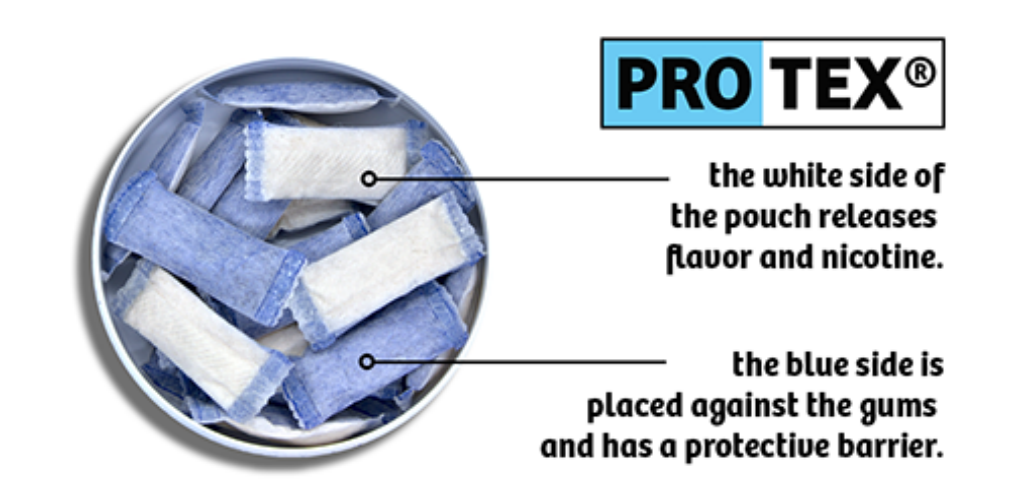
Protex® technology illustration
Note: The image illustrates the functional design of a nicotine pouch, with the white side releasing nicotine and flavor, and the blue side placed against the gums to provide a protective barrier. Source of all tables and images below: La Rosa et al., 'Self-reported oral health outcomes after switching to a novel nicotine pouch technology: a pilot study,' Acta Odontologica Scandinavica (2025). Licensed under CC-BY 4.0. (Provided by Bengt Wiberg)
According to Wiberg, his company Stingfree AB has developed Protex® technology, which incorporates an impermeable barrier layer into the structure of the nicotine pouch. He said the design is intended to physically prevent direct contact between the pouch contents and the gums and oral mucosa, thereby reducing the impact of a high-pH environment as well as high concentrations of flavoring agents on oral tissues.
Wiberg cited a peer-reviewed study published in Acta Odontologica Scandinavica in May 2025, which examined dentists who used Swedish snus and/or nicotine pouches. In the study, participants fully switched for a period of five weeks to a tobacco-free nicotine pouch product incorporating Protex® technology. Wiberg said the study recorded changes in indicators including the incidence of oral lesions, lesion severity and gum irritation. The participating pouch using dentists documented their common pouch placement site by using cameras at baseline as well as after the five weeks test period as well as a self-assessed oral health declaration.
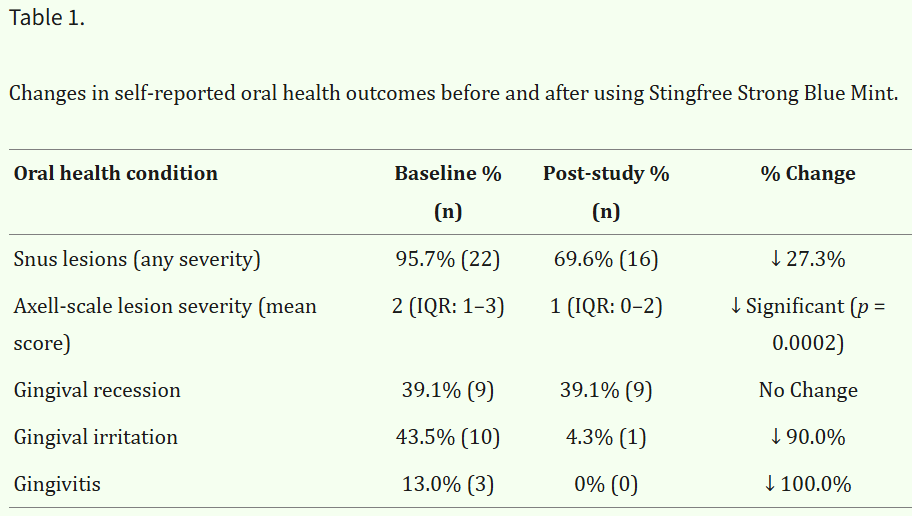
Changes in self-reported oral health outcomes before and after using Stingfree Strong Blue Mint for a period of five weeks.
Note: The table is based on a peer-reviewed study published in Acta Odontologica Scandinavica, comparing oral health outcomes reported by participants before and after switching to Stingfree Strong Blue Mint. Table source: La Rosa et al., 'Self-reported oral health outcomes after switching to a novel nicotine pouch technology: a pilot study,' Acta Odontologica Scandinavica (2025). Licensed under CC-BY 4.0. (Provided by Bengt Wiberg)
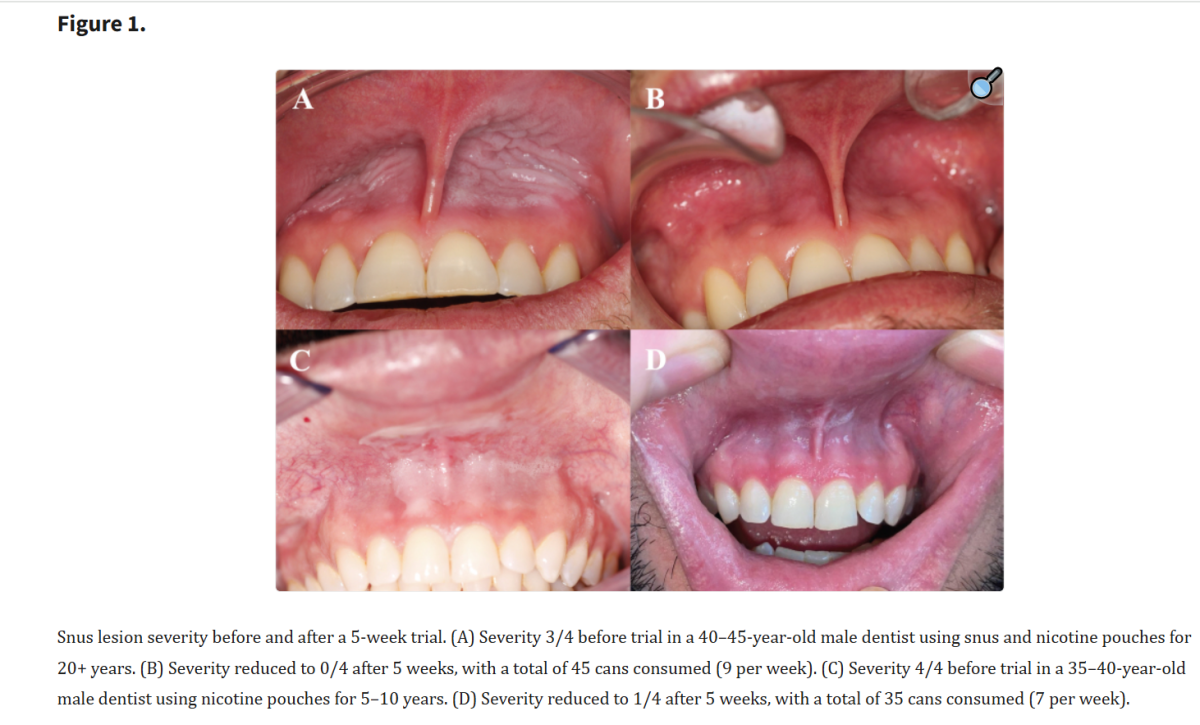
Example cases showing changes in snus lesion severity before and after a 5-week trial
Note: The images present illustrative cases from a 5-week study involving dentist participants. Panels A and B show a male dentist with over 20 years of snus and nicotine pouch use, with lesion severity decreasing from 3/4 at baseline to 0/4 after five weeks. Panels C and D show a male dentist with 5–10 years of nicotine pouch use, with lesion severity decreasing from 4/4 to 1/4. Photo source: La Rosa et al., 'Self-reported oral health outcomes after switching to a novel nicotine pouch technology: a pilot study,' Acta Odontologica Scandinavica (2025). Licensed under CC-BY 4.0. (Provided by Bengt Wiberg)
Quotes from the study results also showed that moderate- to severe oral lesions (3-4/4) reduced from 39.1% to 0% and no participant experiencing any clinical worsening condition. In addition to the scientific clinical trials described in the study above, Stingfree AB utilizes a Real-World Evidence (RWE) framework by collecting standardized survey data from consumers who have switched to the Protex® technology
7. Evidence Remains Limited, Long-Term Effects Yet to Be Fully Assessed
In the interview, Bengt Wiberg also addressed limitations in the current body of research on oral health issues related to nicotine pouches. He said that while some studies and practical explorations have been conducted, larger-scale and more rigorously designed research is still needed based on what he has reviewed. Wiberg also reflected on the tendency that industry financed oral health studies with oral nicotine products use mainly focus on comparing pouch use with that of smoking and missing out on what layman pouch users often worry about.
Wiberg noted that many existing studies are exploratory or pilot in nature, with limited sample sizes and relatively short study durations. From a scientific perspective, he said randomized controlled trials generally provide more robust evidence, yet such studies remain scarce in the field of nicotine pouch–related oral health. While larger trials are the gold standard, the scientific merit of this pilot lies in its cohort: licensed dental professionals. Unlike laypersons, dentists possess the clinical 'diagnostic literacy' to accurately identify early-stage mucosal changes and gingival recession—conditions they evaluate daily in their own patients. By establishing a professional baseline and using self-administered clinical photography within a dental environment, the study effectively replaces 'layman evidence' with expert observation. This professional self-assessment, verified by a blinded third party dental expert, provides a level of reliability that is not common in standard pilot studies.
“This is very clearly emphasized by the scientists in the pilot study, says Wiberg.”
He also pointed out that in one of the peer-reviewed studies he cited, changes across different oral health indicators were not uniform. Wiberg said the study found an association between the use of nicotine pouches with a barrier structure and reduced mucosal irritation, but did not observe improvement in gingival retraction.
Wiberg emphasized that according to established principles of dental medicine, gum tissue lost due to recession cannot regenerate, and as such gingival retraction was not an outcome the study sought to reverse. He added that the research did not claim to provide “total protection” of oral health, but rather reflected observations made under specific conditions and within a defined study period.
8. Limited Disclosure of Oral Health Issues, Variations in Industry Transparency
In the interview, Bengt Wiberg also shared his observations on the current state of industry disclosure regarding oral health issues associated with nicotine pouch use. He said that based on his understanding, publicly available information on oral health effects linked to nicotine pouches and snus remains relatively limited at the industry level.
“Oral irritation and lesions should not be accepted as an 'inevitable cost' of switching from cigarettes to nicotine pouches. If we can remove the localized tissue irritation and alkaline stinging through better design, we remove one of the final barriers to global harm reduction."
Wiberg noted that Swedish company Swedish Match had previously disclosed, in early research and related materials, the widespread occurrence of mucosal changes among snus users, describing them as “snus lesions.” He cited Swedish Match’s statement that such mucosal changes are found in almost all snus users at the site where the product is placed.
By contrast, Wiberg said that to his knowledge, relatively few companies currently disclose oral health issues related to nicotine pouches or snus. He said that disclosure practices vary across the industry with respect to observed effects such as gum irritation and oral lesions.
“While we await more formal clinical data, my frequent interactions with the oral nicotine community lead me to believe that for most users, what they see in the mirror every morning matters more than abstract health statistics. For someone who quit smoking years ago, the long-term benefit of avoiding cigarettes is a 'solved' problem, but the visible gum irritation they face today is a very real, immediate concern. It describes a well-known phenomenon in medical psychology called Salience bias, i.e. humans are hard-wired to focus on immediate, visible rather than delayed, invisible benefits, says Wiberg.
Wiberg added that from a consumer perspective, clearer disclosure would help users better understand the experiences and changes that may occur during product use. He said there remains room for further discussion and improvement at the industry level.
9. Risk Assessment Within a Harm Reduction Framework Remains Ongoing
At the conclusion of the interview, Bengt Wiberg placed oral health issues associated with nicotine pouches within the broader context of tobacco harm reduction. He said that compared with conventional smoking, nicotine pouches are generally regarded as a significantly lower-risk means of nicotine consumption, but that this does not mean their use is free of health effects that warrant attention.
Wiberg noted that nicotine, in itself, is not considered carcinogenic, a position acknowledged by organizations including the U.S. Food and Drug Administration (FDA) and the World Health Organization (WHO). However, he added that nicotine is addictive and may have effects on blood pressure, heart rate and vascular function, and therefore cannot be considered entirely risk-free.
In his view, discussions surrounding nicotine pouches should not be reduced to a binary judgment of being “safe” or “dangerous,” but should instead involve ongoing assessment of different health dimensions within a harm reduction framework, including oral health. He said that as user populations expand and product designs evolve, longer-term and more systematic research into potential risks remains relevant.
When discussing the broader public health implications of nicotine pouches, Wiberg cited Sweden as an example. Referring to data from the Public Health Agency of Sweden (Folkhälsomyndigheten), he said that between 2015 and 2024, daily smoking rates among people aged 16 to 29 declined markedly, while daily use of snus and nicotine pouches increased over the same period, showing a clear inverse trend. Wiberg said he tends to interpret this pattern as a “gateway out” of smoking rather than a “gateway in,” suggesting that nicotine pouches may provide an alternative pathway away from smoking for younger users. As per the same statistics database 2024 (Folkhälsomyndigheten), Sweden now has three smoke-free generations (16-44 year olds) with a daily smoking rate of less than 5% as is the WHO and EU goal for a smoke-free nation.
Wiberg emphasized that, in his view, the potential role of nicotine pouches in reducing smoking-related health risks is not in conflict with the need for further research into their oral health effects. He said discussion and research on these issues remain ongoing.
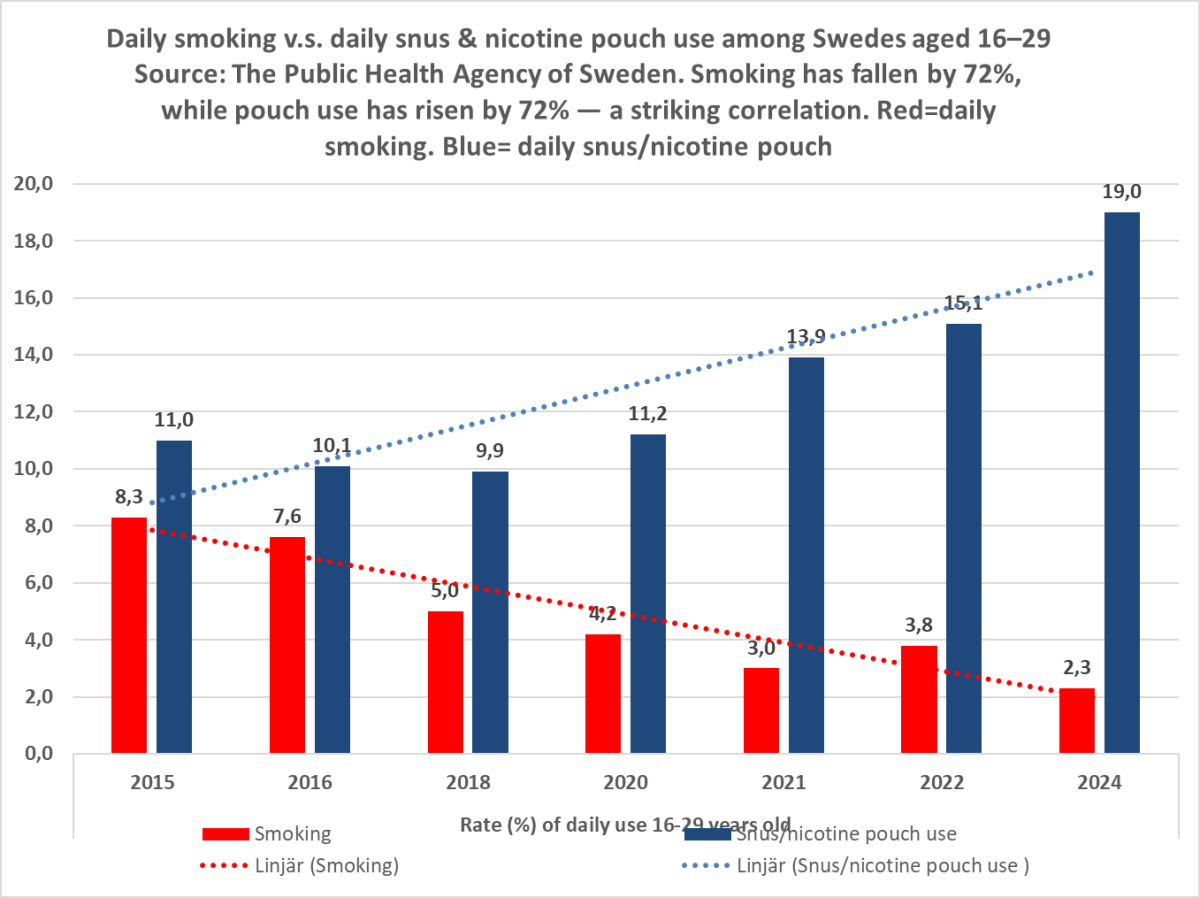
Trends in daily smoking and daily snus/nicotine pouch use among Swedes aged 16–29
Note: The figure presents trends in daily smoking and daily snus and nicotine pouch use among Swedes aged 16–29 between 2015 and 2024. Data source: The Public Health Agency of Sweden. Image provided by Bengt Wiberg.
2Firsts Editor’s Note
Because nicotine pouches show considerable potential within the field of tobacco harm reduction, their safety profile and associated risks warrant continued and strengthened scrutiny. Given a potential user base numbering in the tens of millions, even risks with a very low probability of occurrence could have meaningful implications at the population level.
2Firsts believes there remains scope to further deepen long-term safety and risk assessment research on nicotine pouches and other novel nicotine products. Regulators, the scientific community and industry stakeholders all have roles to play in this process.
2Firsts will continue to follow, publish and share the latest research findings related to the safety and risks of nicotine pouches. Researchers and institutions are welcome to contact Alan Zhao at alan@2firsts.com.