Key Points
- WS-23 tripled premature beats;
- Coolants may affect heart rhythm;
- Study published in AHA journal;
- Coolant vape sales rose 872.1%;
- Researchers urge regulatory review.
2Firsts
June 16, 2026 — According to Dong-A Science and Medical Xpress, a University of Louisville research team published a study in the American Heart Association journal Circulation: Arrhythmia and Electrophysiology suggesting that synthetic cooling agents widely used in e-cigarettes, including WS-23 and WS-3, may disrupt cardiac electrical activity and increase arrhythmia risk.
The study was led by Alex Carll, an associate professor of physiology at the University of Louisville School of Medicine. Researchers used animal experiments and lab-grown human heart cells to assess how vape cooling agents affect heart rhythm and cardiac electrical activity.
Cooling agents are commonly used to create an icy or cooling sensation in e-cigarette products. Unlike menthol, synthetic cooling agents such as WS-3 and WS-23 are typically colorless and have little or no distinct flavor or aroma, while reducing inhalation harshness and making the throat hit smoother.
Carll said synthetic coolants create a chilling sensation without a distinct flavor or aroma, which may keep them outside the scope of many e-cigarette regulations focused on “characterizing flavors.”
He said WS-3 and WS-23 have become popular in vape products partly because they reduce harshness and make inhalation feel smoother.
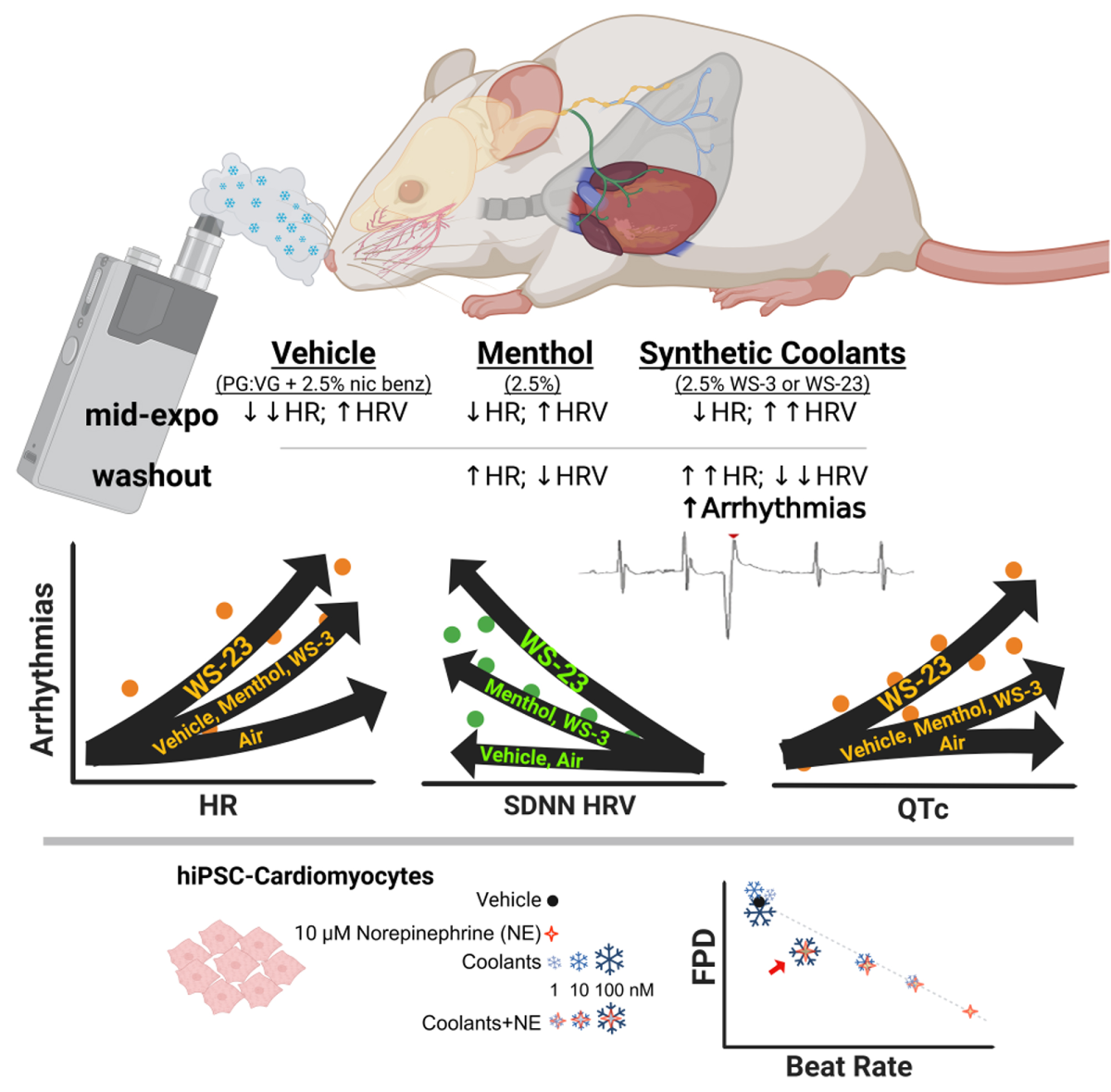
In the animal experiments, researchers exposed animals to nicotine-containing e-cigarette aerosols and compared cardiac responses with and without cooling agents.
The results showed that all tested cooling ingredients affected heart rate variability, a measure linked to stress responses, mistimed heartbeats and other cardiovascular risks.
WS-23 produced the most notable effect. Compared with e-cigarette aerosols containing only nicotine and solvents, aerosols containing WS-23 tripled the number of premature heartbeats in the animals.
The study also found that coolant exposure was associated with increased heart rate and slower electrical recharge between beats.
In lab-grown human heart cells, the coolants did not significantly alter normal resting rhythm or baseline recharge rates.
However, when researchers used norepinephrine to simulate hormonal stress, the coolants slowed the overall rhythm of the heart cells while accelerating electrical recharge between beats.
Carll said the findings suggest coolants may cause arrhythmias by making the heart electrically ready too early or too late for the next beat.
He added that WS-23 may ultimately increase the risk of arrhythmias and acute cardiac arrest.
The researchers said this is the first independent study to show that synthetic cooling agents in e-cigarettes may negatively affect heart health.
However, the study also noted several limitations. Animal findings cannot be directly equated with human outcomes, and the research mainly used male mice and lab-grown human cardiac cells, which do not fully represent real-world human exposure.
In addition, commercially available e-cigarette products often contain more complex mixtures of ingredients, including flavors, additives and solvents, meaning the short-term effects observed in the study require further long-term human research.
The study comes as cooling agents are rapidly expanding in the U.S. e-cigarette market.
According to a 2024 report from the CDC Foundation and Truth Initiative, U.S. sales of menthol-flavored e-cigarettes rose 175.8% from 2019 to 2023, increasing from 30.7 million units to 84.7 million units.
During the same period, sales of e-cigarettes containing synthetic cooling ingredients such as WS-3 or WS-23 rose 872.1% from 2020 to 2023.
Researchers said menthol and cooling-sensation products continue to grow in the market despite restrictions on some flavored e-cigarettes in the United States.
Medical Xpress reported that most U.S. states maintain exceptions for menthol and other ingredients that create a cooling sensation, while the FDA recently authorized certain flavored e-cigarettes for adults, raising new questions about how cooling agents, flavors and product design affect cardiovascular health and youth use.
Carll said some e-cigarette products contain cooling agents at very high levels, sometimes exceeding nicotine or other flavoring ingredients.
He said regulators should consider limits on cooling-agent concentrations in e-cigarettes if further studies confirm that such additives increase the harmful cardiac effects of vaping.
Jason J. Rose, chief of pulmonary, critical care and sleep medicine at the University of Maryland School of Medicine, said the research is timely because menthol and cooling flavors are becoming more popular.
He noted that FDA authorization of some specific flavored e-cigarettes for adults does not mean those products are safe to use.
Industry observers said the study may push vape cooling agents into regulatory focus alongside flavor restrictions, nicotine concentration rules and age-verification technologies.
Cover image:American Heart Association
Disclaimer
This article is provided solely for professional research, industry discussion, and informational purposes. Any references to brands, companies, products, technologies, or policies are made for factual reporting and analytical purposes only, and do not constitute endorsement, recommendation, promotion, or advertising by 2Firsts.
Nicotine-containing products, including but not limited to cigarettes, e-cigarettes, heated tobacco products, and nicotine pouches, carry significant health risks. Readers are responsible for complying with all applicable laws and regulations in their respective jurisdictions, including age restrictions and access limitations.
The information contained in this article should not be regarded as investment, legal, medical, regulatory, or commercial advice. While 2Firsts strives to ensure the accuracy and reliability of its content, it does not assume liability for any direct or indirect loss arising from errors, omissions, inaccuracies, or reliance on the information contained herein.
This article is not intended for individuals below the legal age for accessing tobacco or nicotine-related information in their jurisdiction.
Copyright Notice
This article is either original content produced by 2Firsts or content reproduced, translated, summarized, or adapted from third-party sources with attribution where applicable. The intellectual property rights of the original content remain with 2Firsts or the respective original rights holders.
No individual or organization may copy, reproduce, distribute, republish, modify, translate, or otherwise use this content without prior authorization. Any unauthorized use may result in legal action.
For copyright-related inquiries, corrections, or removal requests, please contact: info@2firsts.com.
AI-Assisted Translation and Editing Notice
Portions of this article may have been translated, edited, or reviewed with the assistance of artificial intelligence tools to improve efficiency and readability. Due to the limitations of AI-assisted translation and editing, discrepancies, omissions, or inaccuracies may exist when compared with the original source.
Where applicable, readers are advised to refer to the original source for the most complete and accurate information. If you identify any errors or believe that any content infringes upon your rights, please contact us at info@2firsts.com, and we will review and address the matter promptly.