Al Fakher Partners with Cannabis Brand Cookies to Launch New Hookah Line Featuring Five Flavors, Including Blueberry Caviar

Aug.18.2025
Al Fakher Partners with Cannabis Brand Cookies to Launch New Hookah Line Featuring Five Flavors, Including Blueberry Caviar
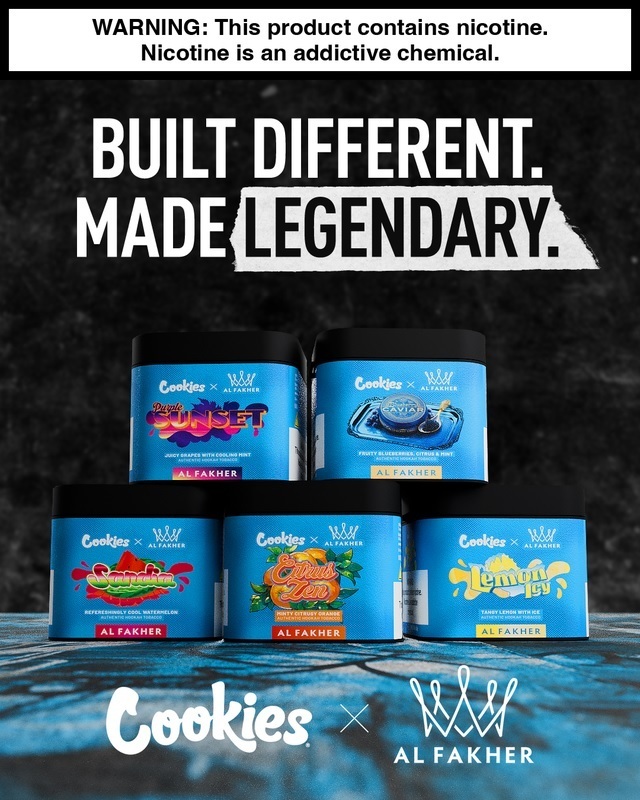
Hookah brand Al Fakher has teamed up with international lifestyle brand Cookies to release a co-branded hookah flavor series, marking Cookies’ first entry into the hookah industry. The collaboration introduces five innovative flavors and officially launched on June 25, 2025, through select retail and online channels.

Key Points:

  • Al Fakher and Cookies collaborate to launch five innovative hookah flavors.
  • This marks Cookies’ debut in the hookah category, with the products jointly developed by both teams.
  • The co-branded line became available on June 25, 2025, aiming to reach a broader audience.


According to citybuzz (August 15), the new Al Fakher × Cookies series includes: Blueberry Caviar, Citrus Zen, Purple Sunset, Watermelon, and Icy Lemon.


Cookies co-founder and CEO Berner highlighted that the partnership allows Cookies to expand its influence into the hookah market. The series features co-branded packaging that blends Cookies’ iconic blue identity with Al Fakher’s mark of quality.


Al Fakher Marketing Director Ashley Bock described the collaboration as a cross-industry initiative that both respects hookah tradition and introduces it to a wider audience.


We welcome news tips, article submissions, interview requests, or comments on this piece.

Please contact us at info@2firsts.com, or reach out to Alan Zhao, CEO of 2Firsts, on LinkedIn


Notice

1.  This article is intended solely for professional research purposes related to industry, technology, and policy. Any references to brands or products are made purely for objective description and do not constitute any form of endorsement, recommendation, or promotion by 2Firsts.

2.  The use of nicotine-containing products — including, but not limited to, cigarettes, e-cigarettes, nicotine pouchand heated tobacco products — carries significant health risks. Users are responsible for complying with all applicable laws and regulations in their respective jurisdictions.

3.  This article is not intended to serve as the basis for any investment decisions or financial advice. 2Firsts assumes no direct or indirect liability for any inaccuracies or errors in the content.

4.  Access to this article is strictly prohibited for individuals below the legal age in their jurisdiction.


Copyright


This article is either an original work created by 2Firsts or a reproduction from third-party sources with proper attribution. All copyrights and usage rights belong to 2Firsts or the original content provider. Unauthorized reproduction, distribution, or any other form of unauthorized use by any individual or organization is strictly prohibited. Violators will be held legally accountable.

For copyright-related inquiries, please contact: info@2firsts.com


AI Assistance Disclaimer


This article may have been enhanced using AI tools to improve translation and editorial efficiency. However, due to technical limitations, inaccuracies may occur. Readers are encouraged to refer to the cited sources for the most accurate information.

We welcome any corrections or feedback. Please contact us at: info@2firsts.com

JUUL Purchasers Ask Ninth Circuit to Preserve Antitrust Classes in Case Over Altria’s $12.8 Billion Investment
Private antitrust litigation stemming from Altria's 2018 $12.8 billion investment for a 35% economic interest in JUUL is advancing before the U.S. Court of Appeals for the Ninth Circuit. Direct purchasers, indirect purchasers and indirect resellers of JUUL products filed answering briefs this week seeking to preserve class certifications granted by a California federal court in February. Altria and JUUL argue that individual consumers and large distributors differ too much in purchasing terms to remain in a single direct-purchaser class, while a separate dispute concerns whether California antitrust law can apply to indirect purchasers across 27 jurisdictions. A September trial has been put on hold during the appeal.
Sep.23
Imperial Brands Sees Double-Digit NGP Growth as Sixth Year of Tobacco Revenue Gains Backs £1.5 Billion Buyback
Imperial Brands reaffirmed its FY26 guidance in its October 8 pre-close trading update, forecasting double-digit net revenue growth in next-generation products and share gains across heated tobacco, vape and modern oral. Tobacco net revenue is expected to grow at a low-single-digit rate, marking a sixth consecutive year of growth. The company has completed its £1.45 billion FY26 share repurchase and announced a £1.5 billion buyback for FY27. Group adjusted operating profit is expected to increase 3% to 5%, while free cash flow is forecast to exceed £2.2 billion.
Oct.09
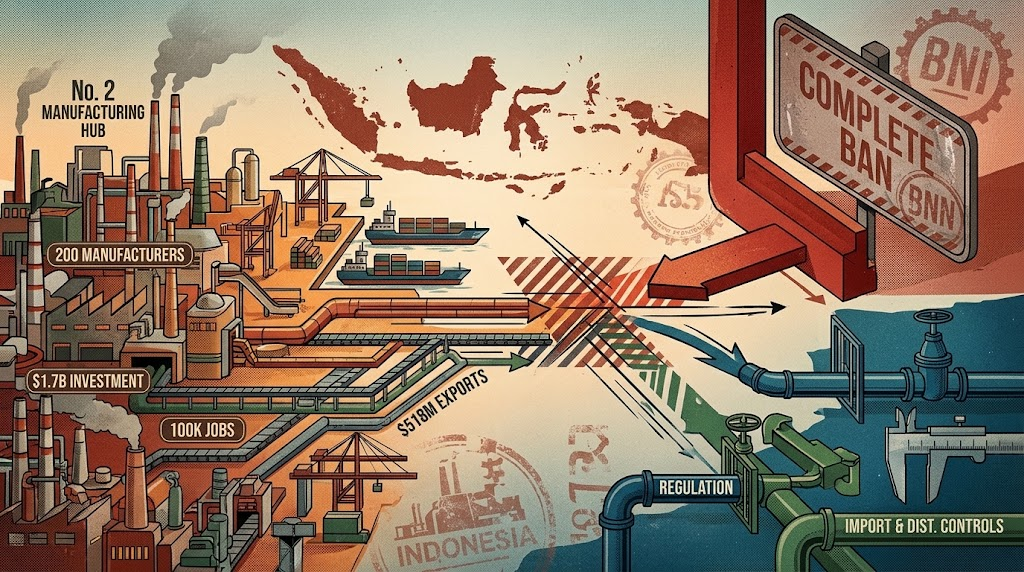
Special report|Indonesia's Vape Industry Has 200 Manufacturers and $1.7 Billion in Investment. Could a Regulatory Divide Derail Its Rise as the World's No. 2 Manufacturing Hub After Shenzhen?
Indonesia's Ministry of Industry said at a November 3, 2026, policy forum that the country has about 200 electronic cigarette companies, Rp31 trillion (approximately $1.71 billion) in cumulative industry investment and around 100,000 jobs across the supply chain. The National Narcotics Agency is seeking a comprehensive ban on vape use and circulation, while the industry ministry favors tighter import, product-standard and distribution controls. Indonesia exported approximately $518 million in vaping products in 2025, and Chinese manufacturers including Smoore, GEEKVAPE and Jinjia Group have established local operations. An international logistics specialist interviewed by 2Firsts said more Chinese vape companies began production in Indonesia from the second half of 2025, accompanied by increased shipments of manufacturing equipment and investment in logistics facilities. The regulatory debate comes as Indonesia expands its role in international vaping manufacturing.
Special Report
Nov.05
Russia Expands Temporary Administration of JTI Assets in Second Round: From Four to All Seven Russian Entities, With Approximately $9.5 Billion in Related Assets
Japan Tobacco Inc. (JT) confirmed on November 9, 2026, that all seven of its Russian entities had been placed under temporary administration after a second presidential decree added three companies to the four designated a day earlier. The additional entities are associated with importing, management, holdings and the former supply of Ploom heated-tobacco devices. JT disclosed approximately ¥1.5 trillion in Russian business-related assets as of September 30, including ¥360 billion in cash and deposits, and approximately ¥200 billion in liabilities. Under its revised FY2026 forecast, Russia accounts for about 25% of adjusted operating profit. JT said operations in Russia were continuing, while the financial impact remained under assessment.
company
Nov.09
Reynolds Puts Nearly 183,000 U.S. Contracted Outlets Under Age-Verification Rules, Covering 94% of Volume — Can It Shift an Unauthorized Vape Market?
Reynolds American says nearly 183,000 U.S. retail outlets are under contract, with its Retail Marketing Plan Contract covering about 94% of company volume and requiring point-of-sale age verification. The company combines those contracts with We Card, TruAge, NACS-linked infrastructure and POS integration, while enhanced Vuse Pro retail rules add ID scanning, purchase limits and stronger underage-sales accountability. The initial Vuse Pro rollout targets about 50,000 stores. The system is taking shape as unauthorized vapor products remain dominant in parts of the U.S. market: a 2026 study estimated they accounted for 69.4% of tracked brick-and-mortar e-cigarette dollar sales in December 2025.
Special Report
Oct.15
STIIIZY Redesign Fails to Escape PAX Labs Patent Import Ban as Section 337 Case Also Involves China ALD
U.S. Customs and Border Protection ruled that STIIIZY had not shown that the redesigned cannabis-vape products covered by its latest request fall outside an ITC limited exclusion order tied to PAX Labs patents. CBP accepted some of STIIIZY’s claim-construction and non-infringement arguments, but the company did not address two additional claims in the same patent. Earlier STIIIZY redesigned cartridges and certain associated components imported with them had received separate CBP clearance.
Sep.16