Alaska Senate Passes Bill to Tax E-cigarettes Statewide

May.18.2023
Alaska Senate Passes Bill to Tax E-cigarettes Statewide
Alaska increases tax to 25% on retail e-cigarettes and raises legal age of purchase to 21 to combat youth nicotine addiction.

On May 16, according to a report by the Juneau Empire, the Alaska State Senate passed a bill on e-cigarette taxation with 14 votes in favor and 6 against. The bill imposes a 25% tax on retail e-cigarette products across the state. The bill was introduced by Gary Stevens, the Republican Senate President and will now be presented to the House for review.


Taxation and Enforcement of Fines


The bill not only imposes a 25% tax but also aligns Alaska's regulations with the 2019 federal law, raising the legal minimum age for purchasing, selling, or distributing these products to 21 years old, which is two years higher than Alaska's current legal age.


The proposed legislation to update the legal age will ensure the implementation of the national enforcement plan, meaning that individuals found to possess nicotine products under the age of 21 may face fines of up to $150. However, this amount has been reduced from the originally proposed $500 fine.


This measure aims to reduce the problem of nicotine addiction among young people in order to protect public health and safety. Supporters of the bill state that this is a response to the rapidly growing issue of youth nicotine use and emphasize the necessity of taking these measures.


Opposing views/voices


However, some lawmakers have different opinions on the bill. Republican Senator Shelley Hughes believes that imposing a 25% tax and reducing fines to $125 has not achieved enough results, and she voted against it.


She stated that she would not approve any tax before it goes through the Senate and believes:


A fine of $500 carries more deterrent value for high school students than a few dollars in taxes.


Regarding the impact of this bill, a clerk at an e-cigarette store in downtown Alaska stated that even with an increase in taxes, it is unlikely that young people’s desire to purchase the products will be deterred.


He stated that he has been smoking since he was a teenager and despite the rising cost and taxes on nicotine, he still continues to smoke.


If you are addicted to something and you want it, you will get it.


He believes that prevention is the best method to keep young people away from nicotine products, and increasing taxes does not help to solve the problem.


Currently, this bill will be submitted to the House for further discussion and review.


Reference:


The Senate has approved a measure to levy a state-wide tax on electronic cigarettes.


Disclaimer

This article is provided solely for professional research, industry discussion, and informational purposes. Any references to brands, companies, products, technologies, or policies are made for factual reporting and analytical purposes only, and do not constitute endorsement, recommendation, promotion, or advertising by 2Firsts.

Nicotine-containing products, including but not limited to cigarettes, e-cigarettes, heated tobacco products, and nicotine pouches, carry significant health risks. Readers are responsible for complying with all applicable laws and regulations in their respective jurisdictions, including age restrictions and access limitations.

The information contained in this article should not be regarded as investment, legal, medical, regulatory, or commercial advice. While 2Firsts strives to ensure the accuracy and reliability of its content, it does not assume liability for any direct or indirect loss arising from errors, omissions, inaccuracies, or reliance on the information contained herein.

This article is not intended for individuals below the legal age for accessing tobacco or nicotine-related information in their jurisdiction.


Copyright Notice

This article is either original content produced by 2Firsts or content reproduced, translated, summarized, or adapted from third-party sources with attribution where applicable. The intellectual property rights of the original content remain with 2Firsts or the respective original rights holders.

No individual or organization may copy, reproduce, distribute, republish, modify, translate, or otherwise use this content without prior authorization. Any unauthorized use may result in legal action.

For copyright-related inquiries, corrections, or removal requests, please contact: info@2firsts.com.


AI-Assisted Translation and Editing Notice

Portions of this article may have been translated, edited, or reviewed with the assistance of artificial intelligence tools to improve efficiency and readability. Due to the limitations of AI-assisted translation and editing, discrepancies, omissions, or inaccuracies may exist when compared with the original source.

Where applicable, readers are advised to refer to the original source for the most complete and accurate information. If you identify any errors or believe that any content infringes upon your rights, please contact us at info@2firsts.com, and we will review and address the matter promptly.


Wall Street Journal: U.S. FDA Plans Faster Vape and Nicotine Pouch Reviews, Revisit of 2021 PMTA Rule
The Trump administration is preparing changes intended to accelerate FDA market authorization reviews for e-cigarettes and nicotine pouches, according to The Wall Street Journal. The FDA is expected to revisit its 2021 PMTA rule and may simplify some scientific study requirements and shorten review times. The agency has not formally announced the changes. Over the past year, the FDA has already accelerated nicotine-pouch reviews, expanded ENDS authorizations and upgraded its CTP Portal NextGen application system. As of August 2026, 43 nicotine pouch products and 48 e-cigarette products had received FDA marketing authorization.
Sep.24
Sweden Finds ZYN Ingredient Labels Noncompliant Over Generic Flavoring Disclosure, Swedish Match Faces SEK 2 Million Monthly Penalty
Sweden's Public Health Agency has found ingredient labels on ZYN nicotine pouches sold by Philip Morris International subsidiary Swedish Match to be noncompliant, according to Dagens industri. The products' packaging listed 10 to 13 ingredients, compared with 11 to 42 in regulatory submissions, with multiple flavoring ingredients grouped under the generic term "aromer." The agency ordered corrective action, warning of a conditional penalty of SEK 2 million per month for noncompliance. The order applies only to products manufactured after the decision becomes legally effective and does not require recalls. Swedish Match disputes the agency's interpretation and plans to appeal.
PMI
Oct.22
Smoore Seeks to Toss CCELL Price-Fixing Claim as Court Weighs Vertical Distribution Versus Horizontal Conspiracy
Smoore and four authorized U.S. CCELL distributors are asking a California federal court to permanently dismiss a core antitrust claim brought by direct purchasers. Plaintiffs allege that Smoore coordinated minimum wholesale prices, customer allocation and limits on price competition among distributors, amounting to a per se unlawful horizontal conspiracy. The defendants say the alleged conduct reflects ordinary vertical relationships between a manufacturer and its distributors. The court previously dismissed a similar claim, and the latest dispute centers on whether the second amended complaint adds sufficient facts to establish a horizontal agreement.
Sep.14
India Steps Up Nicotine Pouch Enforcement as ZYN, White Fox Circulate and Drug Panel Urges Halt to New Nicotine Formulations
India's Ministry of Health and Family Welfare has directed states to step up enforcement against nicotine pouch sales, citing increased availability through online and offline channels and concern about nicotine exposure among children. Reuters reported that international brands including ZYN and White Fox are being sold in India. A study led by ICMR-NICPR found pouches in seven of 10 surveyed locations and identified 68 brands and 445 flavors online. Separately, India's Drugs Technical Advisory Board recommended in August that no new nicotine formulation be approved.
Regulations
Sep.28 by 2Firsts Perspectives
Product | FOGER Introduces Switch Pro 30K Nixodine Pod in U.S. Retail, Bringing 6-MN Related Formulation to High-Capacity Pod Platform
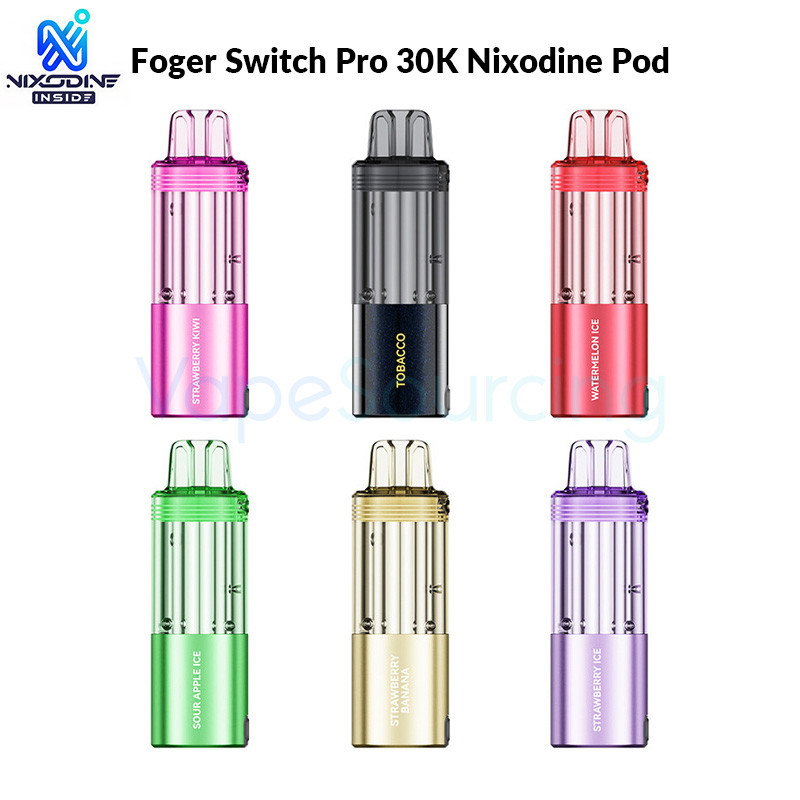
FOGER has introduced the Switch Pro 30K Nixodine Pod in U.S. retail channels, bringing a 6-methylnicotine (6-MN)-related formulation into its reusable Switch Pro 30K pod ecosystem. The product retains the existing reusable dock and magnetic replacement pod architecture, featuring a 19ml prefilled pod, dual-mesh heating and Normal/Boost modes. The Nixodine version is labeled nicotine-free in terms of conventional nicotine but uses a 5% Nixodine-related formulation. The product has appeared in U.S. retail and wholesale channels, with some listings indicating Kentucky-only availability.
Aug.28
Reynolds Puts Nearly 183,000 U.S. Contracted Outlets Under Age-Verification Rules, Covering 94% of Volume — Can It Shift an Unauthorized Vape Market?
Reynolds American says nearly 183,000 U.S. retail outlets are under contract, with its Retail Marketing Plan Contract covering about 94% of company volume and requiring point-of-sale age verification. The company combines those contracts with We Card, TruAge, NACS-linked infrastructure and POS integration, while enhanced Vuse Pro retail rules add ID scanning, purchase limits and stronger underage-sales accountability. The initial Vuse Pro rollout targets about 50,000 stores. The system is taking shape as unauthorized vapor products remain dominant in parts of the U.S. market: a 2026 study estimated they accounted for 69.4% of tracked brick-and-mortar e-cigarette dollar sales in December 2025.
Special Report
Oct.15