
Analysis of China's E-cigarette Export to Germany in October 2023

Nov.27.2023
Analysis of China's E-cigarette Export to Germany in October 2023
China's e-cigarette exports to Germany in October 2023 dropped by 17.07% compared to the previous month, according to customs data.

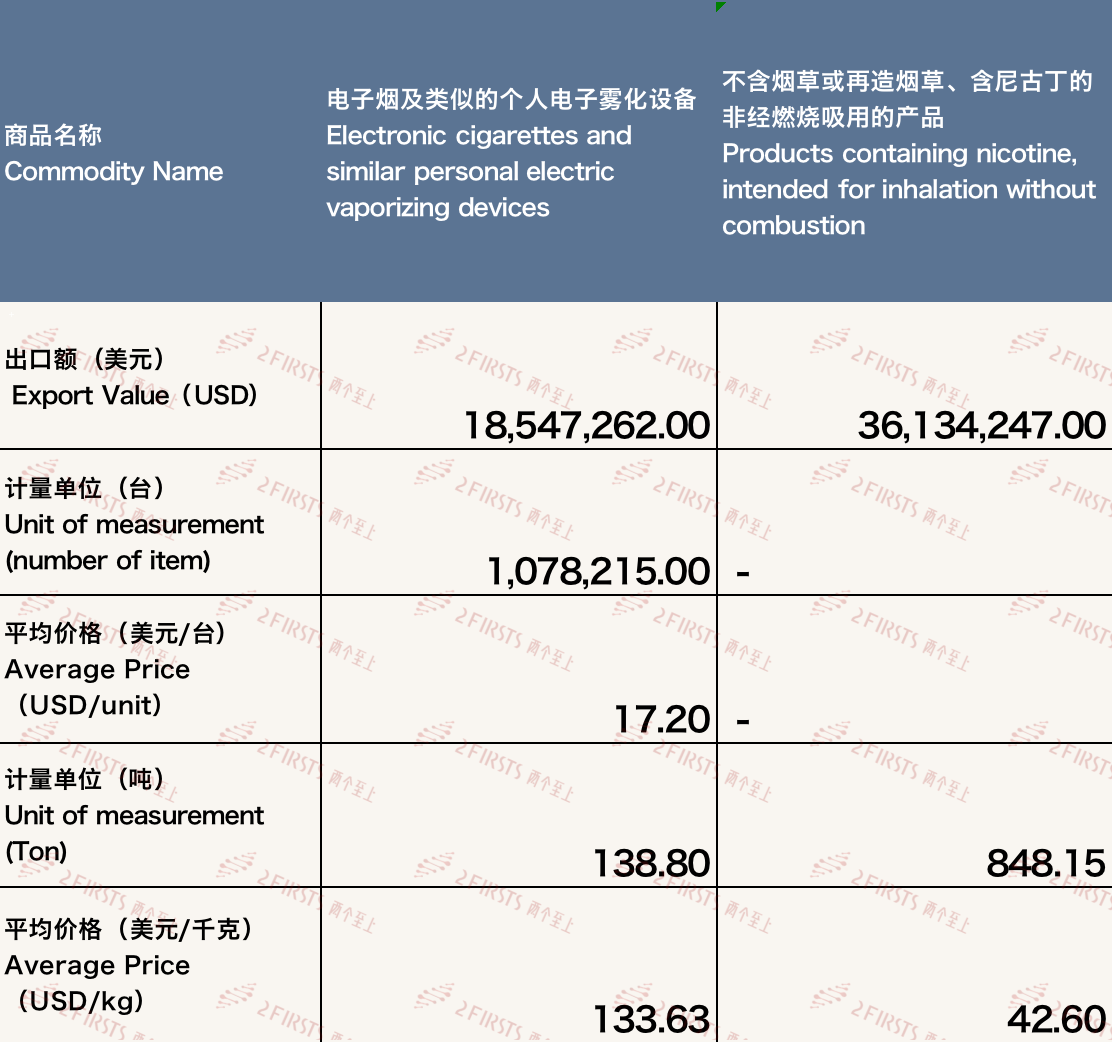
According to updated trade data from the General Administration of Customs of the People's Republic of China, 2FIRSTS has compiled statistics on e-cigarette exports from China to Germany in October 2023. The details are as follows:
Analysis of China's E-cigarette Export to Germany in October 2023


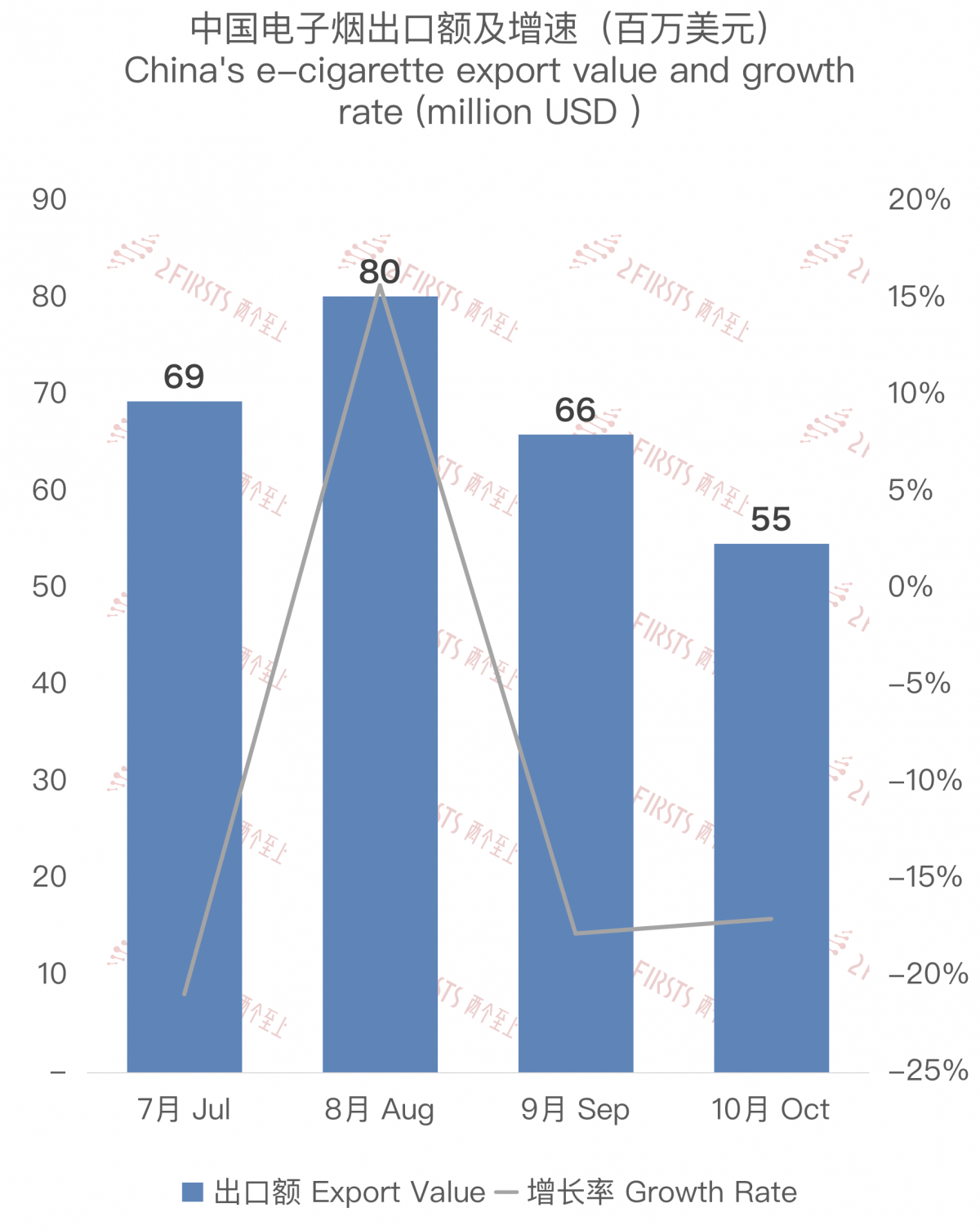
The export amount was approximately 54.68 million US dollars, with a month-on-month decrease of 17.07% and a year-on-year decrease of 31.05%.
Analysis of China's E-cigarette Export to Germany in October 2023
Image source: 2FIRSTS (Mincy graphic design)


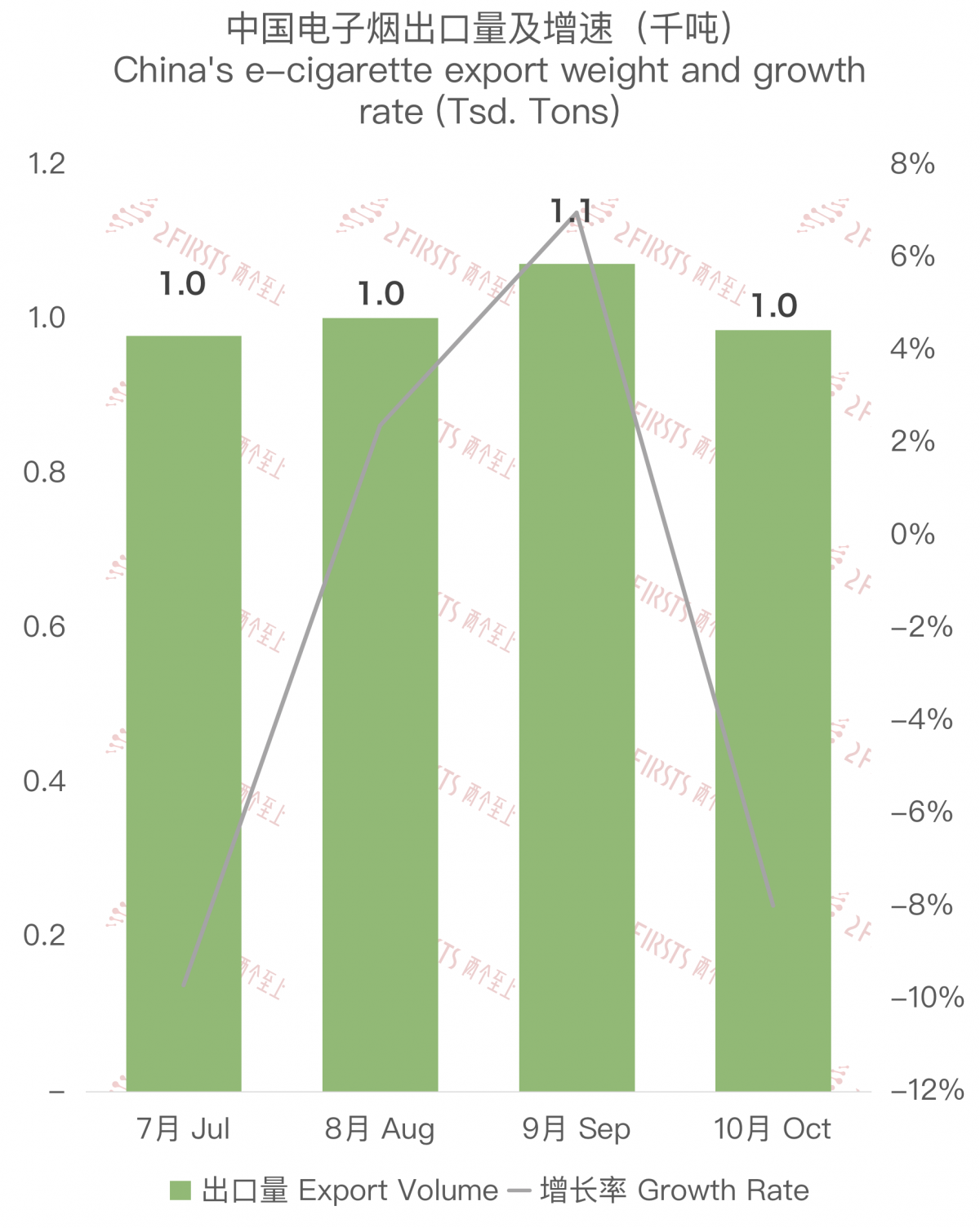
The export volume amounted to approximately 987 tons, showing a decrease of 7.98% compared to the previous period, but a growth of 27.10% compared to the same period last year.
Analysis of China's E-cigarette Export to Germany in October 2023
Image source: 2FIRSTS (Chart made by Mincy)


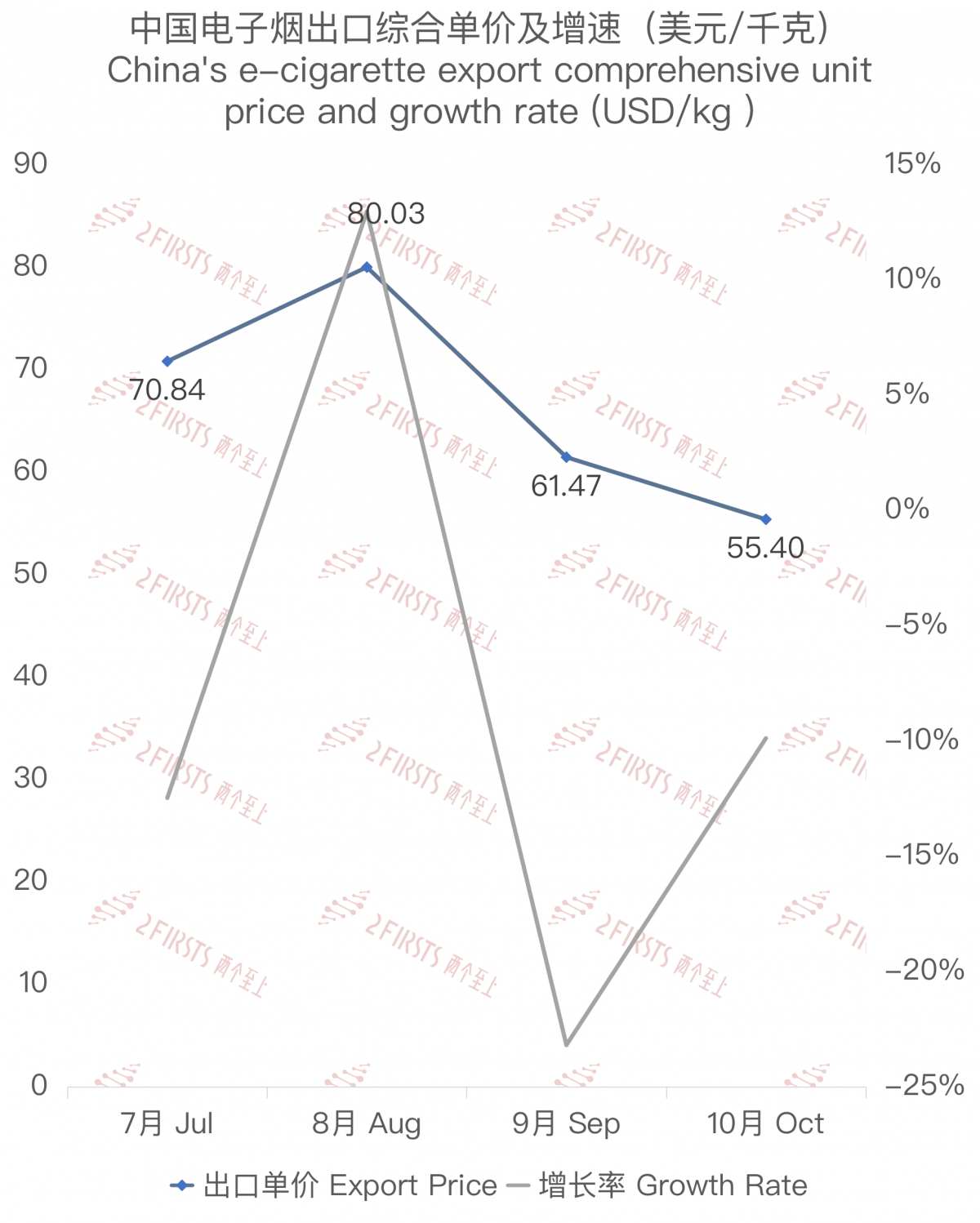
The export unit price decreased by 9.87% compared to the previous period and dropped by 45.75% compared to the same period last year. The average price for "e-cigarettes and similar personal electronic vaporizers" is $17.20 per unit.
Analysis of China's E-cigarette Export to Germany in October 2023
Image source: 2FIRSTS (created by Mincy)


Among them, "e-cigarettes and similar personal electronic vaporizers" accounted for 33.92% of the export categories, while "non-combustible products containing nicotine, without tobacco or reconstituted tobacco" accounted for 66.08%.

Analysis of China's E-cigarette Export to Germany in October 2023
Image source: 2FIRSTS (Graph by Mincy)


According to data from Statista, the e-cigarette market in Germany is expected to generate $1.1 billion in revenue by 2023. The market is projected to have an annual growth rate of 0.85% (2023-2028 compound annual growth rate). Considering the total population, the per capita e-cigarette consumption in Germany is estimated to be $15.15 in 2023. The popularity of e-cigarettes in Germany is significantly increasing, with more and more smokers opting to use these devices as a less harmful alternative to traditional tobacco products.


We welcome news tips, article submissions, interview requests, or comments on this piece.

Please contact us at info@2firsts.com, or reach out to Alan Zhao, CEO of 2Firsts, on LinkedIn


Notice

1.  This article is intended solely for professional research purposes related to industry, technology, and policy. Any references to brands or products are made purely for objective description and do not constitute any form of endorsement, recommendation, or promotion by 2Firsts.

2.  The use of nicotine-containing products — including, but not limited to, cigarettes, e-cigarettes, nicotine pouchand heated tobacco products — carries significant health risks. Users are responsible for complying with all applicable laws and regulations in their respective jurisdictions.

3.  This article is not intended to serve as the basis for any investment decisions or financial advice. 2Firsts assumes no direct or indirect liability for any inaccuracies or errors in the content.

4.  Access to this article is strictly prohibited for individuals below the legal age in their jurisdiction.


Copyright


This article is either an original work created by 2Firsts or a reproduction from third-party sources with proper attribution. All copyrights and usage rights belong to 2Firsts or the original content provider. Unauthorized reproduction, distribution, or any other form of unauthorized use by any individual or organization is strictly prohibited. Violators will be held legally accountable.

For copyright-related inquiries, please contact: info@2firsts.com


AI Assistance Disclaimer


This article may have been enhanced using AI tools to improve translation and editorial efficiency. However, due to technical limitations, inaccuracies may occur. Readers are encouraged to refer to the cited sources for the most accurate information.

We welcome any corrections or feedback. Please contact us at: info@2firsts.com

CCPIT Says Trade Friction Index for China-Related Electronics Sector Remains High, With Vape Products Among Areas of Focus
China Council for the Promotion of International Trade (CCPIT) held its July regular press conference on July 31, 2026, releasing the May 2026 Global Economic and Trade Friction Index. CCPIT spokesperson Yang Fan said the global trade friction index stood at 95 in May, remaining at a medium-to-high level. By industry, the electronics sector recorded the highest trade friction index among 13 monitored industries. In China-related trade frictions, the index stood at 93, with electronics products including drones, chips and vape products among areas where friction remained elevated.
Aug.03
PMI Oral Products Chief Says Lack of Rules May Push Nicotine Pouch Market Into Illicit Trade
Nick Ricketts, President of Oral Products at Philip Morris International (PMI), told Logos Press that nicotine pouches should be brought under clear regulatory frameworks covering nicotine limits, flavor rules, age verification, sales controls and marketing standards, arguing that the absence of clear rules or blanket bans may push consumer demand into illegal or semi-legal channels.
Jul.06
Bringing Tax and Insurance Into Nicotine Regulation: Insights From a Tobacco Harm-Reduction Report
A smoke-free nicotine policy report argues that tobacco harm reduction should move beyond product bans and health warnings into tax policy, insurance pricing and risk-based regulation. While some projections remain open to debate, the report highlights a wider challenge: nicotine products, technologies and consumer behavior have changed sharply over the past decade, and regulatory systems may need new tools to better align tobacco control with harm-reduction goals.
Jun.08
UK Disposable Vape Ban Marks One Year as Adult Use Falls to 8% and Youth Use to 13%
One year after the UK ban on single-use disposable vapes took effect, YouGov data commissioned by Action on Smoking and Health shows that 13% of 11-17-year-old vapers and 8% of adult vapers now mainly use disposable products.
Jun.18
Vape Industry Group Loses Alabama Court Fight as State Tightens Rules on Imported Products
The Alabama Supreme Court affirmed a lower court’s refusal to issue a preliminary injunction blocking the state’s 2025 electronic nicotine delivery systems law, allowing rules requiring covered products to be U.S.-made or FDA-authorized to remain in effect.
Jul.10
Product | SKE Launches FRESA PRO in the U.S., Introducing Fresh Lock Technology for E-Liquid Management in High-Capacity Vapes
Shenzhen SKE Technology has launched the FRESA PRO in the United States, a high-capacity rechargeable disposable vape featuring Fresh Lock electromagnetic valve supply control technology. The device combines a claimed capacity of up to 40,000 puffs, dual mesh coils, dual output modes and a transparent tank design. The launch reflects the high-capacity disposable vape segment’s shift from puff-count competition toward improved e-liquid management and device-level experience.
Aug.03