Key points:
- Scenario-based CCE places students in real dilemmas (peer requests, family pressure) to practise refusal, problem-solving and supportive conversations.
- Science updates explain device mechanics and juice constituents, adding etomidate risks; the drug became Class C on Sept 1, alongside tougher penalties for vape abuse/supply.
- MOE emphasises addiction science and practical refusal guidance; teachers report peer-driven misinformation, addressed through myth-busting quizzes.
- Peer-support approach scales up: HPB has trained 250+ ambassadors in 35 schools to run ground campaigns and link peers to cessation support.
- Student reflections highlight imperfect information around vaping risks and note relationships and health can suffer; discussions encourage values-based decisions.
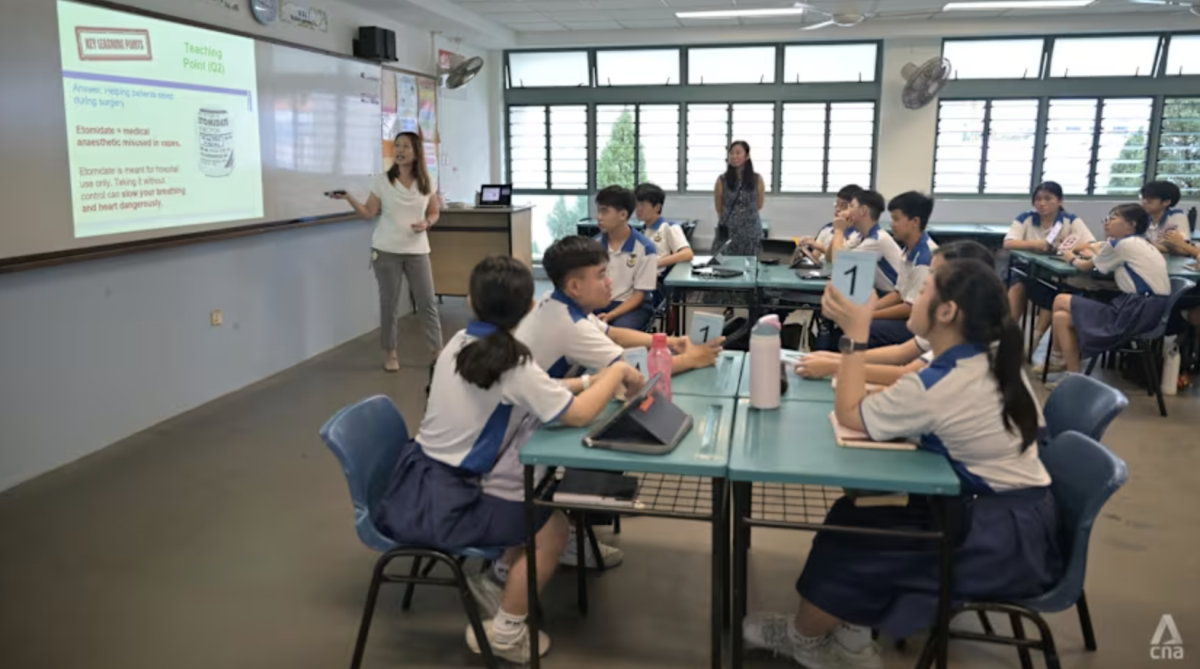
2Firsts, October 22, 2025 — According to CNA, Singapore is strengthening school-based anti-vaping education by integrating scenario practice into CCE and evidence-based content into science lessons. In one observed class at Presbyterian High School, Secondary 3 students discussed what to do if a friend asked them to hide a vape during a random bag check; many chose to refuse, check on their friend’s wellbeing and point them to help.
Since September, schools have received new materials covering vape device mechanics and vape-juice constituents, with updated information on etomidate—the anaesthetic found in drug-laced vapes like “Kpods”—which was listed as a Class C drug on Sept 1, when harsher penalties for abusers and suppliers also took effect. MOE said the curriculum adds the science behind addiction and practical refusal skills.
Student Muhammad Harith Firas Ismael (15) said he once thought vaping and smoking were equally harmful but realised vaping can be worse due to misinformation; he was shocked that vapes could contain etomidate causing hallucinations, drowsiness and loss of control.
Student Anag Zoanne Sarah Ordonio (15) noted vaping can damage relationships and prefers supportive conversations over flat refusals.
Heng Hui Peng, head of science at Presbyterian High, observed that students tend to follow peers when unsure—hence the focus on teaching correct facts. Ms Hshieh Szu An, subject head for CCE, said lessons push students to reflect on influences and make values-based choices, while learning how to support others.
Since Sept 1, at least 60 people have been placed on rehabilitation programmes via IMH, HPB and social service agencies. The HPB has trained over 250 student ambassadors across 35 schools through a two-hour online course on regulation, harms, youth trends and marketing tactics, plus project-management skills for outreach and cessation referral.
Image Source: CNA
We welcome news tips, article submissions, interview requests, or comments on this piece.
Please contact us at info@2firsts.com, or reach out to Alan Zhao, CEO of 2Firsts, on LinkedIn
Notice
1. This article is intended solely for professional research purposes related to industry, technology, and policy. Any references to brands or products are made purely for objective description and do not constitute any form of endorsement, recommendation, or promotion by 2Firsts.
2. The use of nicotine-containing products — including, but not limited to, cigarettes, e-cigarettes, nicotine pouchand heated tobacco products — carries significant health risks. Users are responsible for complying with all applicable laws and regulations in their respective jurisdictions.
3. This article is not intended to serve as the basis for any investment decisions or financial advice. 2Firsts assumes no direct or indirect liability for any inaccuracies or errors in the content.
4. Access to this article is strictly prohibited for individuals below the legal age in their jurisdiction.
Copyright
This article is either an original work created by 2Firsts or a reproduction from third-party sources with proper attribution. All copyrights and usage rights belong to 2Firsts or the original content provider. Unauthorized reproduction, distribution, or any other form of unauthorized use by any individual or organization is strictly prohibited. Violators will be held legally accountable.
For copyright-related inquiries, please contact: info@2firsts.com
AI Assistance Disclaimer
This article may have been enhanced using AI tools to improve translation and editorial efficiency. However, due to technical limitations, inaccuracies may occur. Readers are encouraged to refer to the cited sources for the most accurate information.
We welcome any corrections or feedback. Please contact us at: info@2firsts.com