Analysis of China's E-cigarette Exports to the Philippines in March 2024

Industry Insight by 2FIRSTS
May.13.2024
Analysis of China's E-cigarette Exports to the Philippines in March 2024
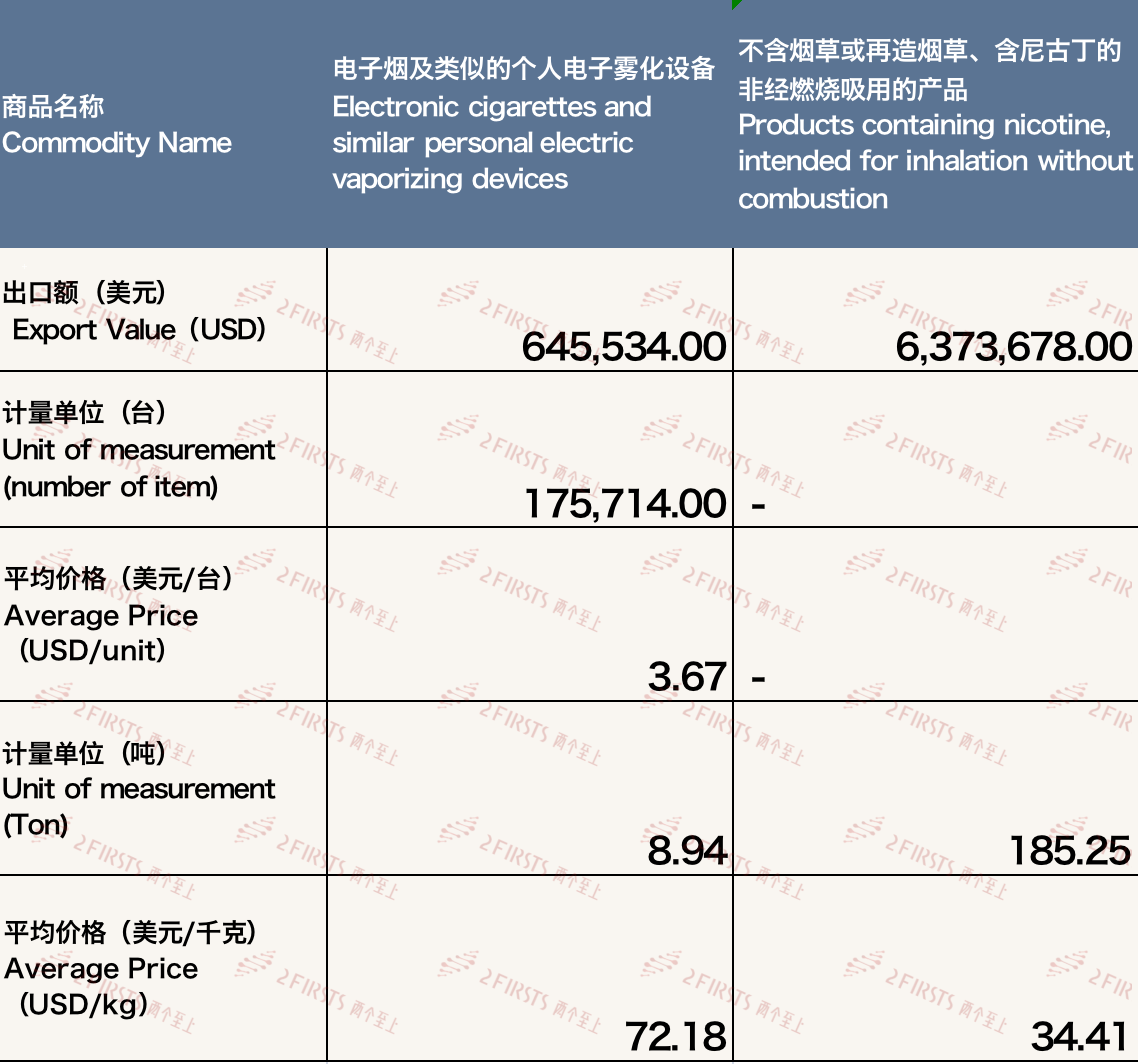
China's e-cigarette exports to the Philippines in March 2024 declined by 82.37%, reaching $7.01 million USD.

According to the updated trade data from the General Administration of Customs, 2FIRSTS has compiled the e-cigarette export data from China to the Philippines in March 2024. The details are as follows:
Analysis of China's E-cigarette Exports to the Philippines in March 2024
Image source: 2FIRSTS


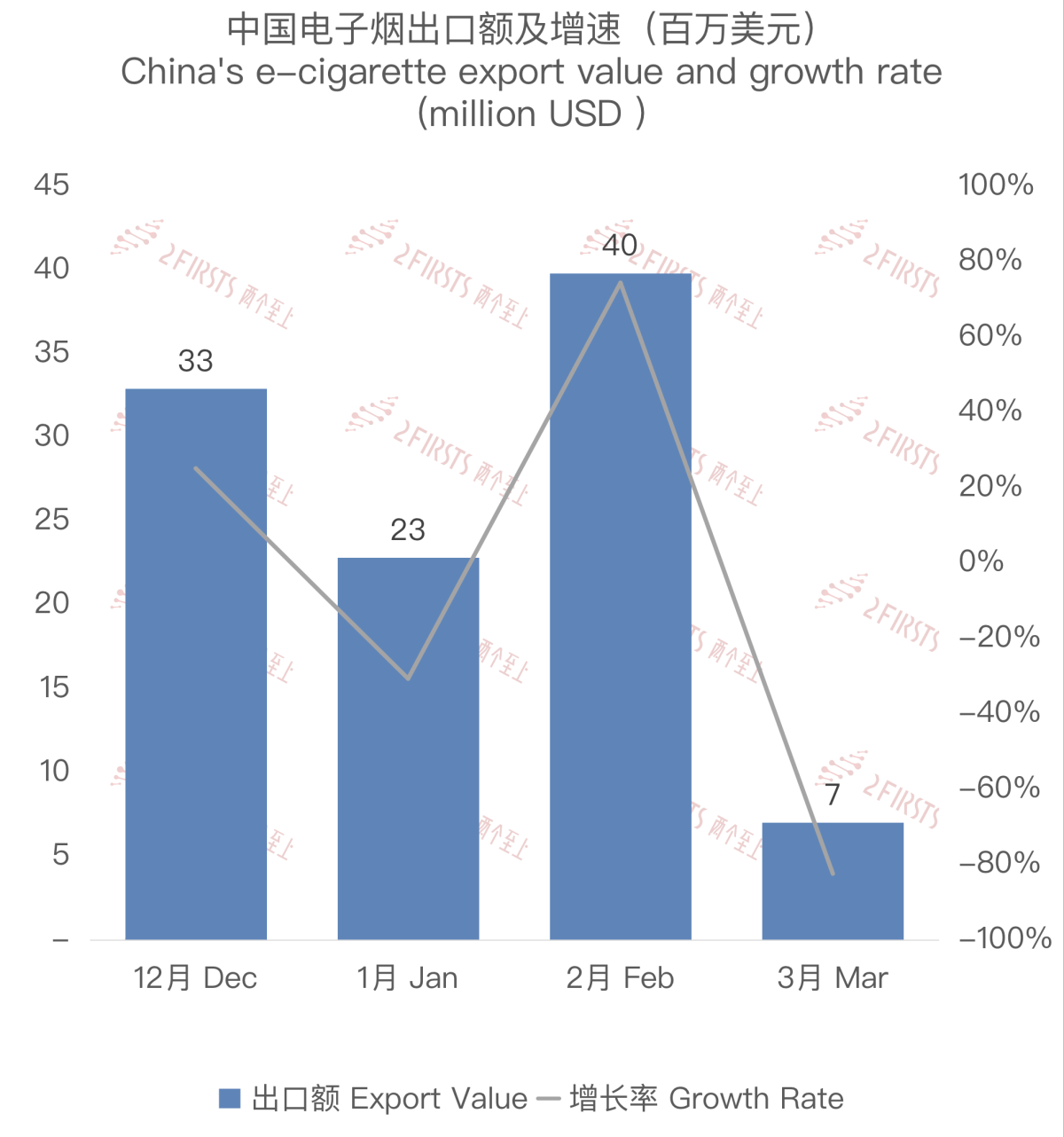
The export volume is approximately 7.01 million US dollars, with a month-on-month decrease of 82.37% and a year-on-year decrease of 51.53%.
Analysis of China's E-cigarette Exports to the Philippines in March 2024
Image source: 2FIRSTS


The export volume is approximately 194 tons, a decrease of 80.73% on a month-on-month basis and a decrease of 36.84% year-on-year.

Analysis of China's E-cigarette Exports to the Philippines in March 2024
Image source: 2FIRSTS


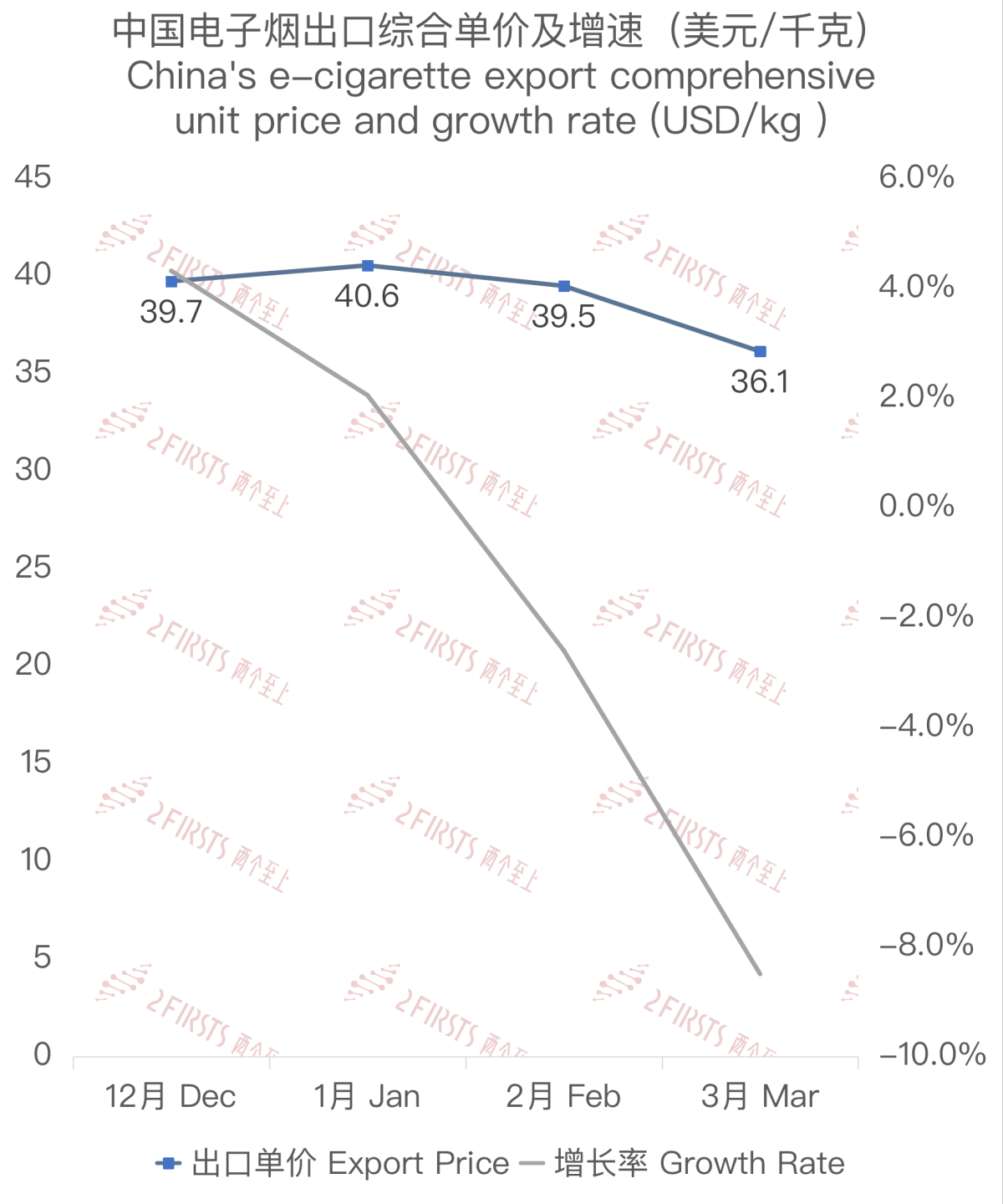
The export unit price is $36.14 per kilogram, a month-on-month decrease of 8.5% and a year-on-year decrease of 23.27%; the average price of "e-cigarettes and similar personal electronic vapor devices" is $3.67 per unit.
Analysis of China's E-cigarette Exports to the Philippines in March 2024
Image source: 2FIRSTS


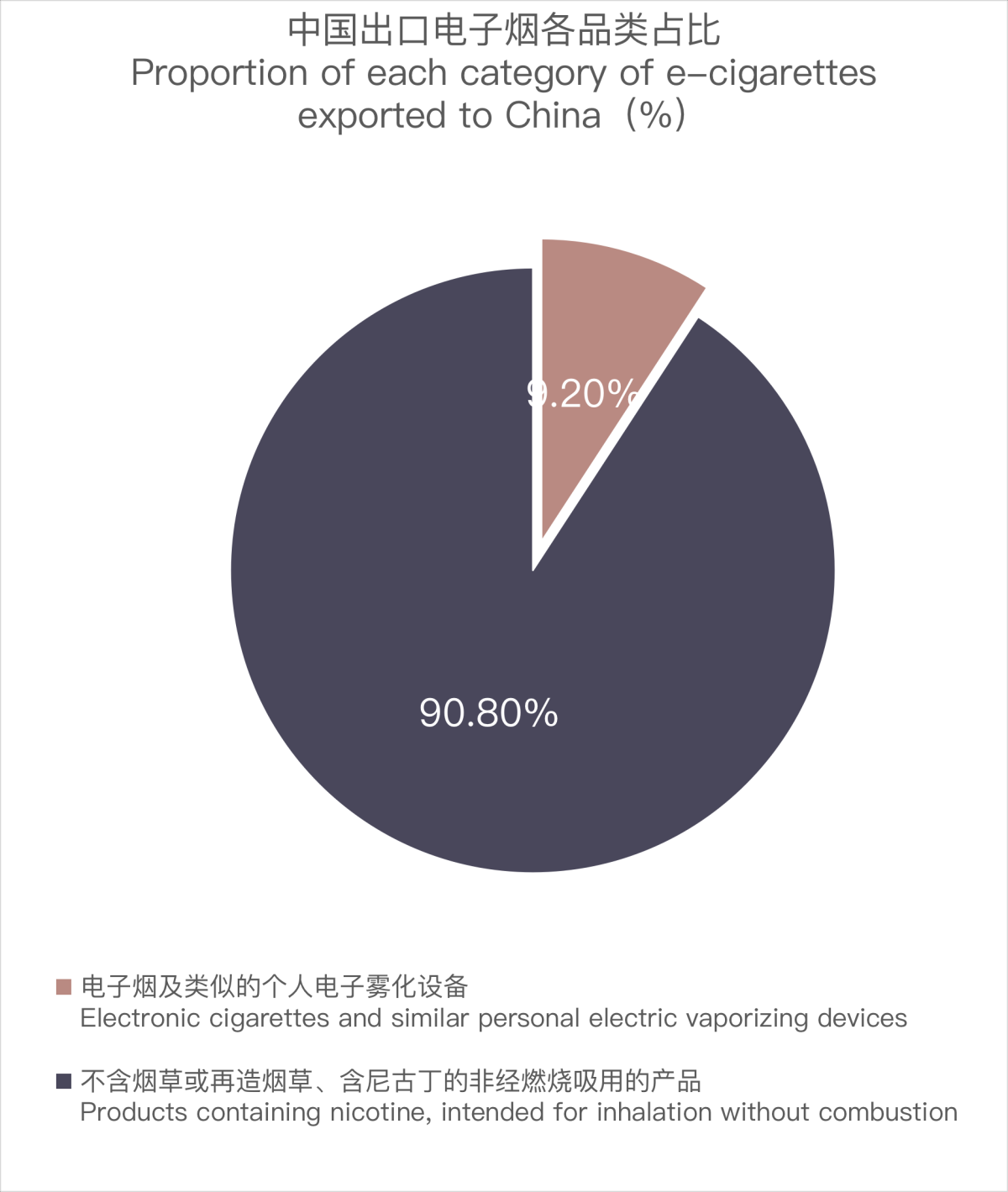
Among them, "e-cigarettes and similar personal electronic vaporizing devices" account for 9.2% of the export category, while "non-combustible nicotine-containing products that do not contain tobacco or reconstituted tobacco" account for 90.8%.
Analysis of China's E-cigarette Exports to the Philippines in March 2024
Image source: 2FIRSTS


We welcome news tips, article submissions, interview requests, or comments on this piece.

Please contact us at info@2firsts.com, or reach out to Alan Zhao, CEO of 2Firsts, on LinkedIn


Notice

1.  This article is intended solely for professional research purposes related to industry, technology, and policy. Any references to brands or products are made purely for objective description and do not constitute any form of endorsement, recommendation, or promotion by 2Firsts.

2.  The use of nicotine-containing products — including, but not limited to, cigarettes, e-cigarettes, nicotine pouchand heated tobacco products — carries significant health risks. Users are responsible for complying with all applicable laws and regulations in their respective jurisdictions.

3.  This article is not intended to serve as the basis for any investment decisions or financial advice. 2Firsts assumes no direct or indirect liability for any inaccuracies or errors in the content.

4.  Access to this article is strictly prohibited for individuals below the legal age in their jurisdiction.


Copyright


This article is either an original work created by 2Firsts or a reproduction from third-party sources with proper attribution. All copyrights and usage rights belong to 2Firsts or the original content provider. Unauthorized reproduction, distribution, or any other form of unauthorized use by any individual or organization is strictly prohibited. Violators will be held legally accountable.

For copyright-related inquiries, please contact: info@2firsts.com


AI Assistance Disclaimer


This article may have been enhanced using AI tools to improve translation and editorial efficiency. However, due to technical limitations, inaccuracies may occur. Readers are encouraged to refer to the cited sources for the most accurate information.

We welcome any corrections or feedback. Please contact us at: info@2firsts.com

2Firsts Feature | The “Pink Tax” in Vaping: How Women-Centric Design and Pricing Are Recasting the Competitive Landscape
Overseas e-cig brands are embracing “for her” designs, turning devices into fashion accessories. 2Firsts notes a new “pink tax” emerging through design and pricing, reflecting shifting gender and branding strategies.
Oct.20
HSSP INTL signs agreement with COTY to expand e-cigarette business in Middle East and Australia
HSSP INTL(03626.HK) partners with COTY to establish e-cigarette venture in UAE, expand distribution of Heaven Gifts brand.
Oct.30 by 2FIRSTS.ai
Philip Morris International to Boost Investment in the Philippines, Aiming to Make It a Smoke-Free Products Export Hub
PMI to make the Philippines a smoke-free export hub, citing strong regulation; upgrading local plants, expanding affordable supply; $14bn invested globally.
Oct.11 by 2FIRSTS.ai
U.S. FDA Includes Cytisinicline for Vaping Addiction in National Priority Voucher Program, Shortens Review to 1–2 Months
The U.S. Food and Drug Administration (FDA) has added Cytisinicline, a plant-based therapy developed by Achieve Life Sciences for nicotine vaping addiction, to its new National Priority Voucher (CNPV) program. The initiative shortens drug review timelines from 10–12 months to just 1–2 months, expediting approval for treatments that address major public health needs.
Oct.20 by 2FIRSTS.ai
Tyumen Regional Parliament in Russia Reviewing Bill to Impose Total Ban on E-Cigarette Sales
Russia's Tyumen Council is considering a bill to ban e-cigarettes and vaping products, sparking concerns about potential risks.
Oct.13 by 2FIRSTS.ai
Report: Smoking Rates Remain Unchanged Despite Kazakhstan’s Vape Ban
According to Exclusive.KZ, Kazakhstan’s Strategy Public Foundation released a study finding that strict tobacco and vape bans have not reduced smoking rates, which remain at 18–20%. The report calls for harm reduction approaches based on international best practices.
Nov.06 by 2FIRSTS.ai