Analysis of E-Cigarette Export Data from China to Malaysia

Industry Insight by 2FIRSTS
Apr.30.2024
Analysis of E-Cigarette Export Data from China to Malaysia
China's e-cigarette exports to Malaysia in March 2024 increased by 23.21% month-on-month but decreased by 27.12% year-on-year.

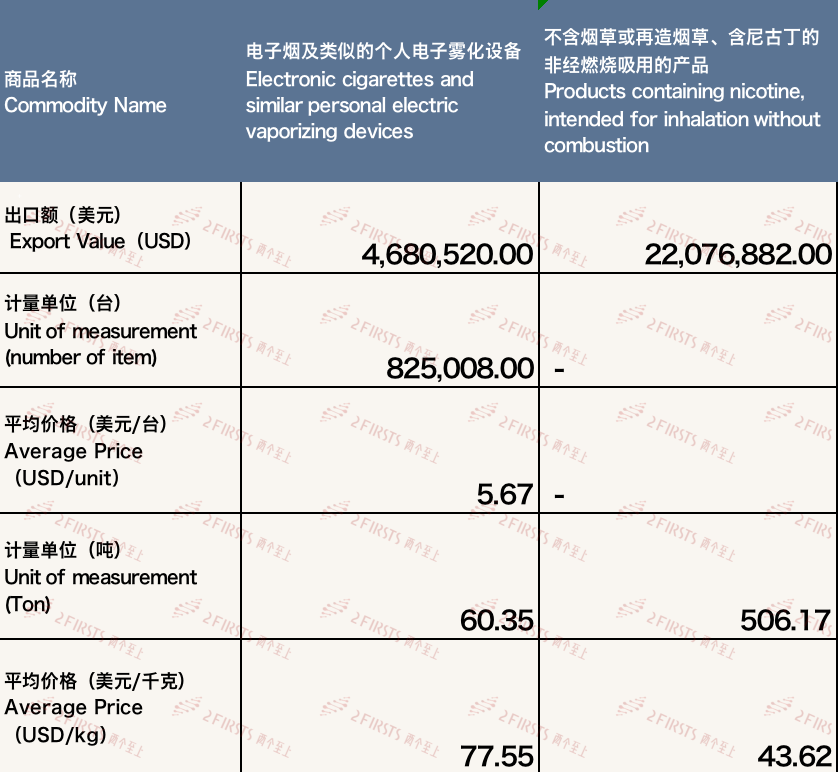
According to the latest trade data from the General Administration of Customs of China, 2FIRSTS has compiled the e-cigarette export data from China to Malaysia in March 2024. The specific data is as follows:
Analysis of E-Cigarette Export Data from China to Malaysia
Mapping: 2FIRSTS


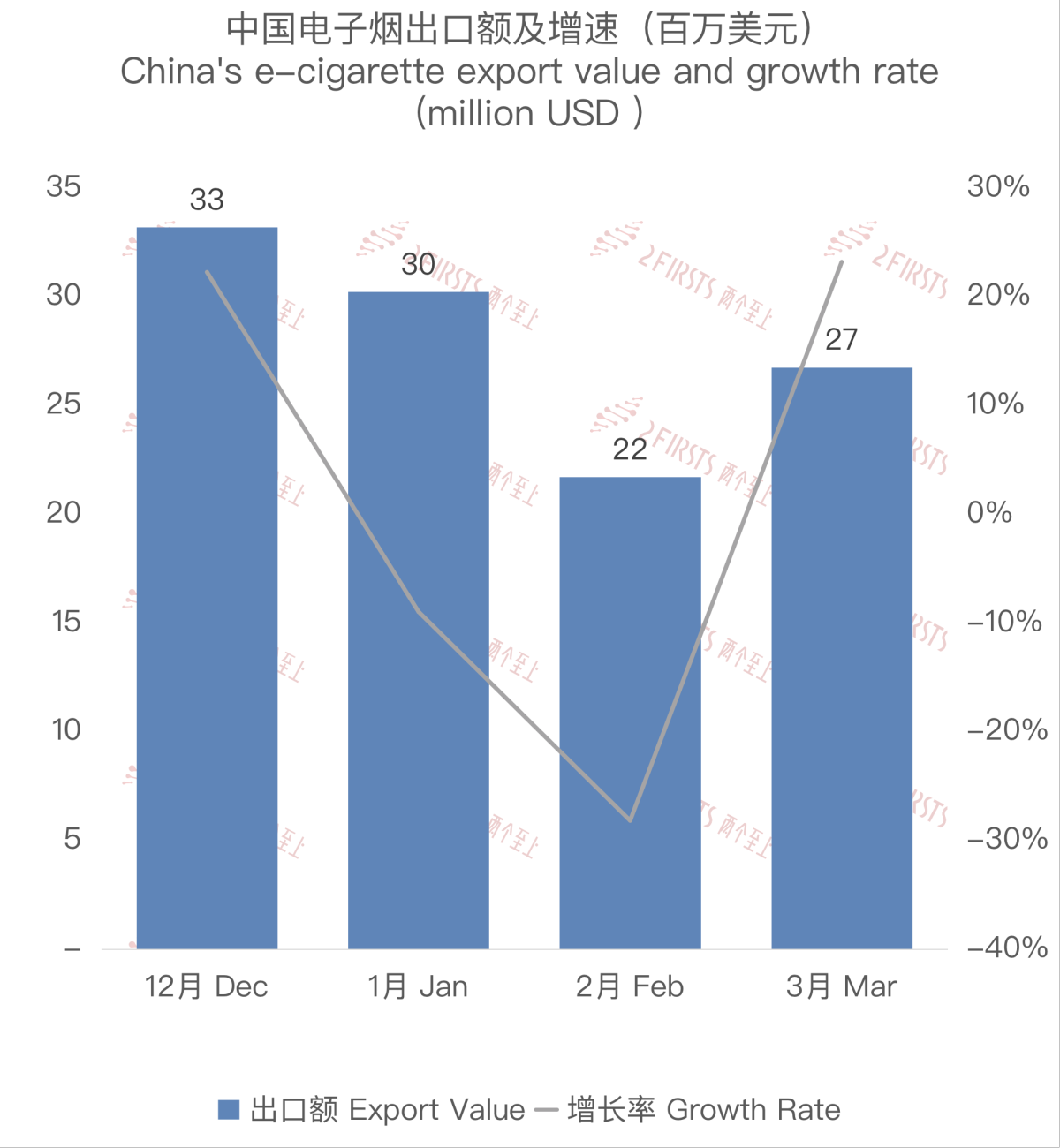
Exports reached approximately $26.76 million, increasing by 23.21% compared to the previous period, but decreasing by 27.12% year-on-year.
Analysis of E-Cigarette Export Data from China to Malaysia
Mapping: 2FIRSTS


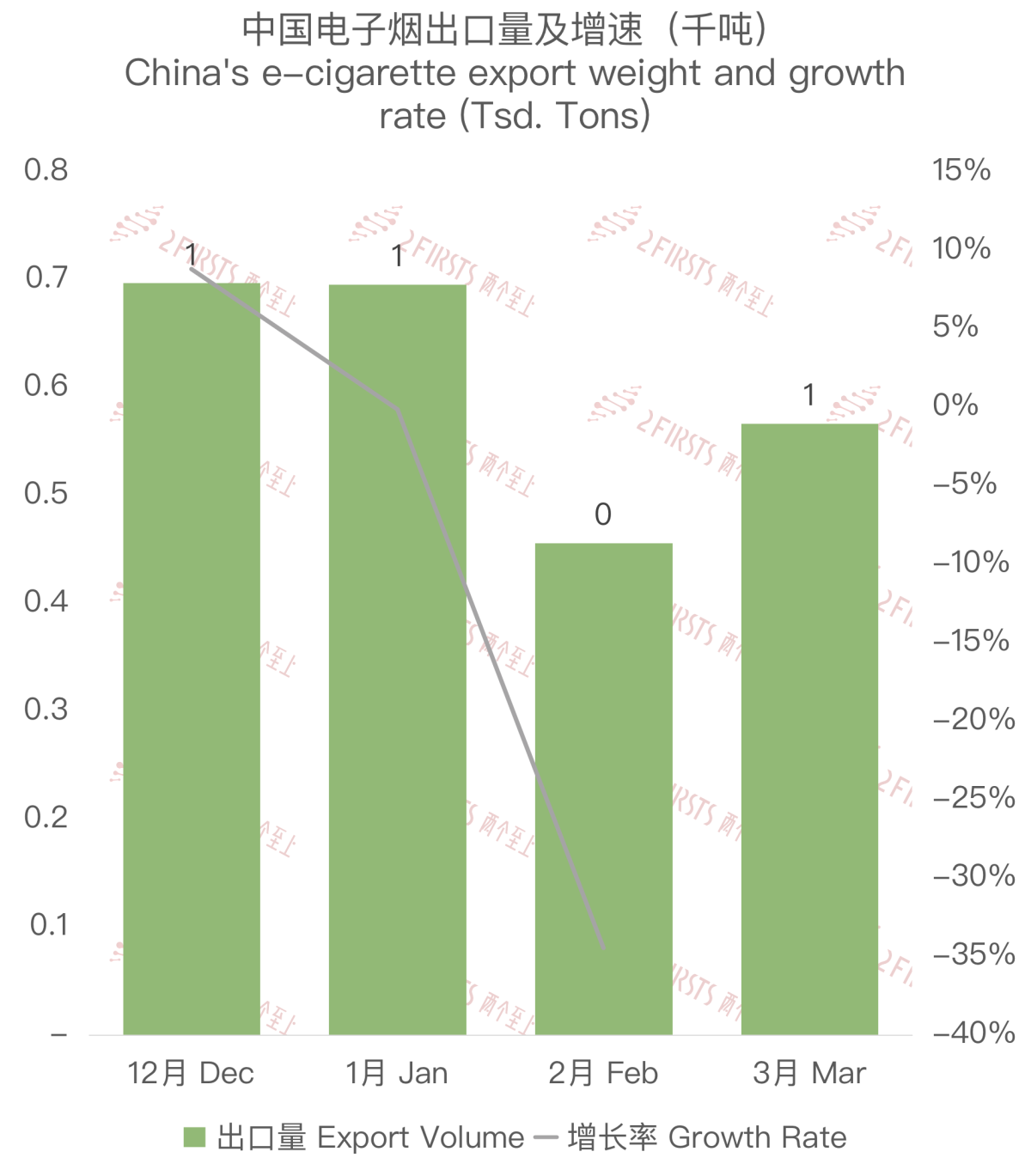
The export volume is approximately 566 tons, increasing by 24.28% compared to the previous period, but decreasing by 26.03% year-on-year.
Analysis of E-Cigarette Export Data from China to Malaysia
Mapping: 2FIRSTS


The export unit price of $47.23 per kilogram decreased by 0.86% on a monthly basis and 1.48% year-on-year; the average price of "e-cigarettes and similar personal electronic atomization devices" is $5.67 per unit.

Analysis of E-Cigarette Export Data from China to Malaysia
Mapping: 2FIRSTS


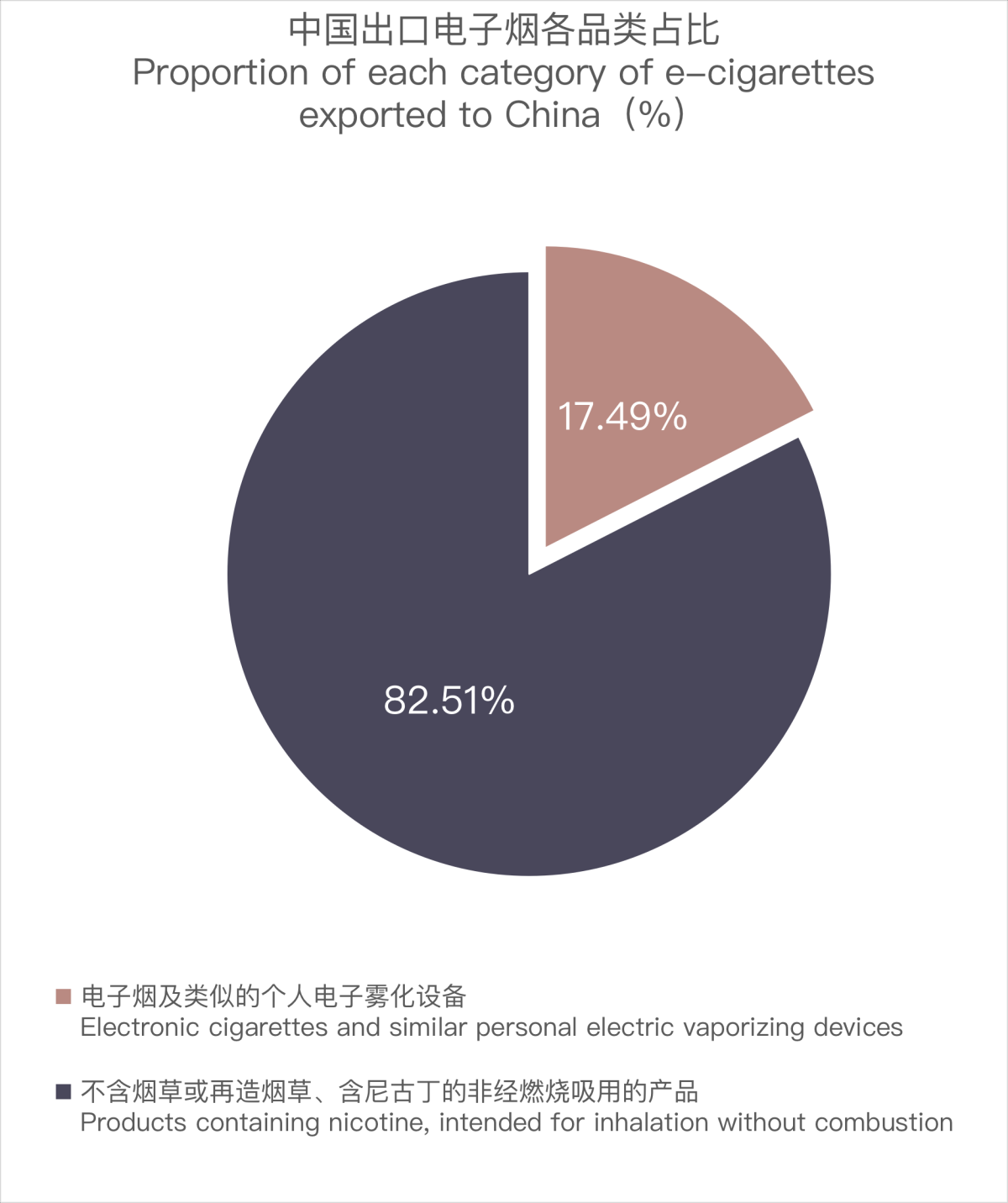
Among them, "e-cigarettes and similar personal electronic vaporization devices" account for 17.49% of the export category; while "products not containing tobacco or reconstituted tobacco, containing nicotine for non-combustible oral use" account for 82.51%.
Analysis of E-Cigarette Export Data from China to Malaysia
Mapping: 2FIRSTS


We welcome news tips, article submissions, interview requests, or comments on this piece.

Please contact us at info@2firsts.com, or reach out to Alan Zhao, CEO of 2Firsts, on LinkedIn


Notice

1.  This article is intended solely for professional research purposes related to industry, technology, and policy. Any references to brands or products are made purely for objective description and do not constitute any form of endorsement, recommendation, or promotion by 2Firsts.

2.  The use of nicotine-containing products — including, but not limited to, cigarettes, e-cigarettes, nicotine pouchand heated tobacco products — carries significant health risks. Users are responsible for complying with all applicable laws and regulations in their respective jurisdictions.

3.  This article is not intended to serve as the basis for any investment decisions or financial advice. 2Firsts assumes no direct or indirect liability for any inaccuracies or errors in the content.

4.  Access to this article is strictly prohibited for individuals below the legal age in their jurisdiction.


Copyright


This article is either an original work created by 2Firsts or a reproduction from third-party sources with proper attribution. All copyrights and usage rights belong to 2Firsts or the original content provider. Unauthorized reproduction, distribution, or any other form of unauthorized use by any individual or organization is strictly prohibited. Violators will be held legally accountable.

For copyright-related inquiries, please contact: info@2firsts.com


AI Assistance Disclaimer


This article may have been enhanced using AI tools to improve translation and editorial efficiency. However, due to technical limitations, inaccuracies may occur. Readers are encouraged to refer to the cited sources for the most accurate information.

We welcome any corrections or feedback. Please contact us at: info@2firsts.com

IQOS Japan Introduces Multiple Pastel-Style UV-Printed Designs for ILUMA i, Available Until April 20
The official IQOS Japan Instagram account posted that IQOS ILUMA i has introduced multiple exterior designs featuring pastel-style UV prints (a UV-curing printing process), adding spring colors to the regular device lineup, with limited-time sales at IQOS Stores through April 20.
Apr.10 by 2FIRSTS.ai
Australian police seize tobacco and vape products in roadside stop: goods valued at A$784,950
Australian police say that during a roadside inspection in southern New South Wales, they seized 293,200 cigarettes, 265kg of hard-pressed tobacco leaf and 2,290 vape products from a van bearing Victorian number plates, with an estimated street value of A$784,950.
Feb.26 by 2FIRSTS.ai
BAT France Confirms Full Compliance as France Implements Nicotine Pouch Ban on April 1from April 2026
BAT France said that, under the decree of September 5, 2025 that entered into force on April 1, 2026, it has stopped commercialising its nicotine pouch products in France from that date.
Apr.03 by 2FIRSTS.ai
Virginia Restricts Vape Sales to Products Listed in State Directory From April 1
From April 1, vape shops in Virginia may sell only liquid nicotine and vapor products listed in the state directory. The Office of the Attorney General has recommended that commonwealth attorneys begin enforcing the 2024 law.
Apr.02 by 2FIRSTS.ai
Special Report|Reynolds’ 337 Patent Case Ends, but a Harsher 337 Compliance Battle Now Targets the Entire Vape Supply Chain
The U.S. International Trade Commission (ITC) has terminated Investigation 337-TA-1410 after invalidating key vape patent claims asserted by R.J. Reynolds Vapor Company, removing the immediate risk of import bans for dozens of companies. However, a new case—337-TA-1486—has already opened a more consequential legal front, shifting the focus from patent disputes to regulatory compliance across the vape supply chain, including PACT Act reporting, tax compliance, and FDA marketing authorization.
BAT
Mar.11
IMF Article Sets Out Three Principles: Cover All Harmful Products, Match Tax Rates to Harm, Improve Cross-Border Coordination
A March 2026 article in Finance & Development, “Taxing Harmful Habits,” argues that taxes on harmful products such as tobacco, alcohol and sugary drinks should better reflect the health harm they cause. The authors propose three principles: capture all harmful products, align tax rates with health harm, and strengthen cross-border coordination to reduce evasion and smuggling.
Mar.24 by 2FIRSTS.ai