Argentina Bans Heated Tobacco Products, Halts PMI's Investment Plan

Mar.30.2023
Argentina Bans Heated Tobacco Products, Halts PMI's Investment Plan
Argentina bans heated tobacco products, causing Philip Morris International to suspend a $300 million investment plan.

On March 29th, Argentine media outlet Clarin reported that Philip Morris International (PMI) subsidiary Massalin Particulares has announced the suspension of a $300 million investment plan to produce IQOS in Argentina. This decision comes in response to Argentina's recent ban on heated tobacco products, which came into effect on March 27th.


Massalin Particulares has expressed that the Argentine Department of Health's order to prohibit the sale and promotion of heated tobacco products (PTCs) is incomprehensible and contrary to global trends. Instead of prohibition, regulation should be implemented.


According to reports, PMI operates under the name Massalin Particulares in Argentina and holds a 65% share of the cigarette market. However, PMI's heat-not-burn product IQOS has not yet officially entered the Argentine market.


As previously reported, PMI had expressed its desire for Argentina to replace traditional cigarettes with less harmful devices, such as heated non-burning devices.


Before the ban was announced, PMI had planned to invest $300 million to introduce IQOS in Argentina. Currently, PMI is only able to suspend its investment.


Tobacco company Massalin Particulares has stated that the ban on the sale of heated non-combustible products means that over 7 million adult smokers in the country will no longer have access to alternatives.


References:


【1】Philip Morris plans to stop selling cigarettes: they will be replaced by tobacco heaters. 【2】The Ministry of Health has banned the import and sale of tobacco heaters.


A multinational company has suspended a multimillion-dollar investment in the country.


Further reading:


Argentina is set to completely ban heated tobacco products.


Disclaimer

This article is provided solely for professional research, industry discussion, and informational purposes. Any references to brands, companies, products, technologies, or policies are made for factual reporting and analytical purposes only, and do not constitute endorsement, recommendation, promotion, or advertising by 2Firsts.

Nicotine-containing products, including but not limited to cigarettes, e-cigarettes, heated tobacco products, and nicotine pouches, carry significant health risks. Readers are responsible for complying with all applicable laws and regulations in their respective jurisdictions, including age restrictions and access limitations.

The information contained in this article should not be regarded as investment, legal, medical, regulatory, or commercial advice. While 2Firsts strives to ensure the accuracy and reliability of its content, it does not assume liability for any direct or indirect loss arising from errors, omissions, inaccuracies, or reliance on the information contained herein.

This article is not intended for individuals below the legal age for accessing tobacco or nicotine-related information in their jurisdiction.


Copyright Notice

This article is either original content produced by 2Firsts or content reproduced, translated, summarized, or adapted from third-party sources with attribution where applicable. The intellectual property rights of the original content remain with 2Firsts or the respective original rights holders.

No individual or organization may copy, reproduce, distribute, republish, modify, translate, or otherwise use this content without prior authorization. Any unauthorized use may result in legal action.

For copyright-related inquiries, corrections, or removal requests, please contact: info@2firsts.com.


AI-Assisted Translation and Editing Notice

Portions of this article may have been translated, edited, or reviewed with the assistance of artificial intelligence tools to improve efficiency and readability. Due to the limitations of AI-assisted translation and editing, discrepancies, omissions, or inaccuracies may exist when compared with the original source.

Where applicable, readers are advised to refer to the original source for the most complete and accurate information. If you identify any errors or believe that any content infringes upon your rights, please contact us at info@2firsts.com, and we will review and address the matter promptly.

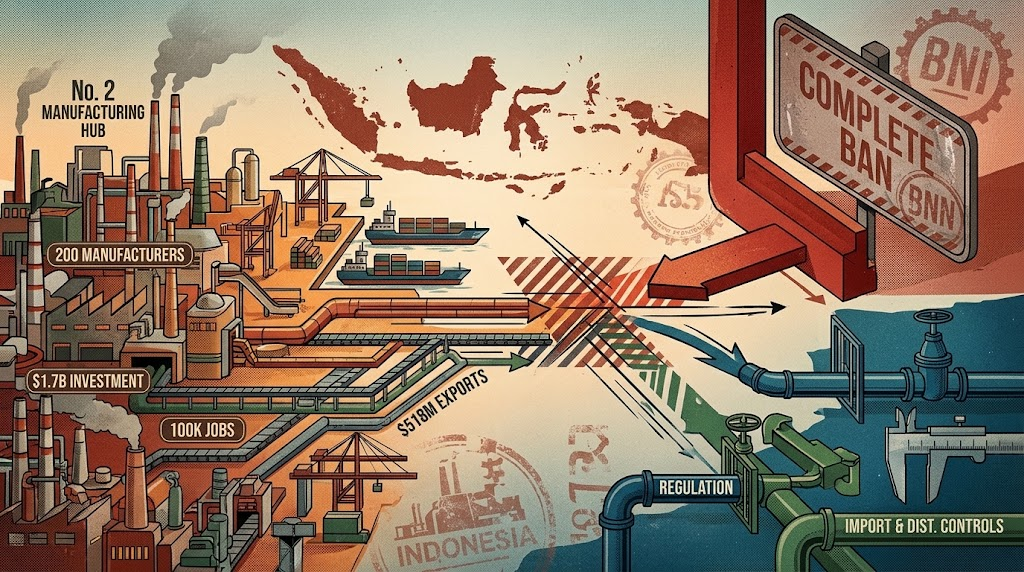
Special report|Indonesia's Vape Industry Has 200 Manufacturers and $1.7 Billion in Investment. Could a Regulatory Divide Derail Its Rise as the World's No. 2 Manufacturing Hub After Shenzhen?
Indonesia's Ministry of Industry said at a November 3, 2026, policy forum that the country has about 200 electronic cigarette companies, Rp31 trillion (approximately $1.71 billion) in cumulative industry investment and around 100,000 jobs across the supply chain. The National Narcotics Agency is seeking a comprehensive ban on vape use and circulation, while the industry ministry favors tighter import, product-standard and distribution controls. Indonesia exported approximately $518 million in vaping products in 2025, and Chinese manufacturers including Smoore, GEEKVAPE and Jinjia Group have established local operations. An international logistics specialist interviewed by 2Firsts said more Chinese vape companies began production in Indonesia from the second half of 2025, accompanied by increased shipments of manufacturing equipment and investment in logistics facilities. The regulatory debate comes as Indonesia expands its role in international vaping manufacturing.
Special Report
Nov.05
German Customs Seize 115,800 Vapes in €1.4 Million Tax Case
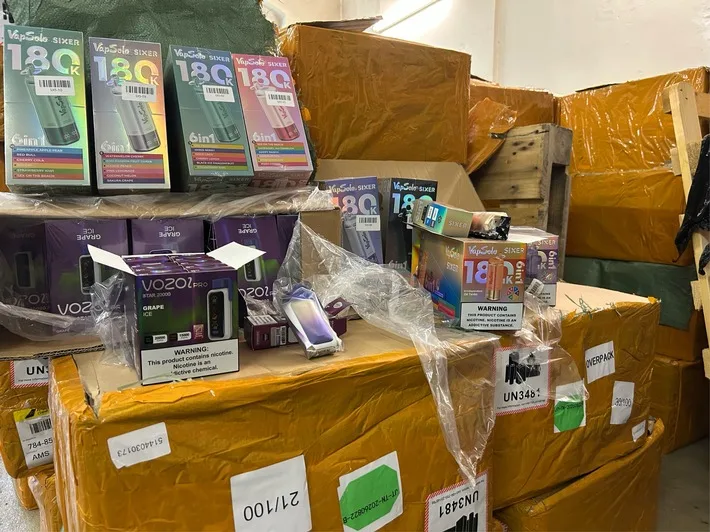
Germany's Magdeburg Main Customs Office seized 115,800 untaxed e-cigarettes containing a combined 4.366 million mL of e-liquid during four truck inspections between August 10 and September 4, 2026. The seizures prevented an estimated €1.397 million in tax losses and set a record for the customs office's jurisdiction. Criminal proceedings have been initiated against four truck drivers. The case follows a separate German investigation involving more than 7.6 million illicit vapes and an estimated €33.3 million in excise-tax losses.
Enforcement
Oct.13
Virginia Tobacco Retail Permit Takes Effect October 1, Covering Vapes as More Than 3,000 Businesses Apply in September
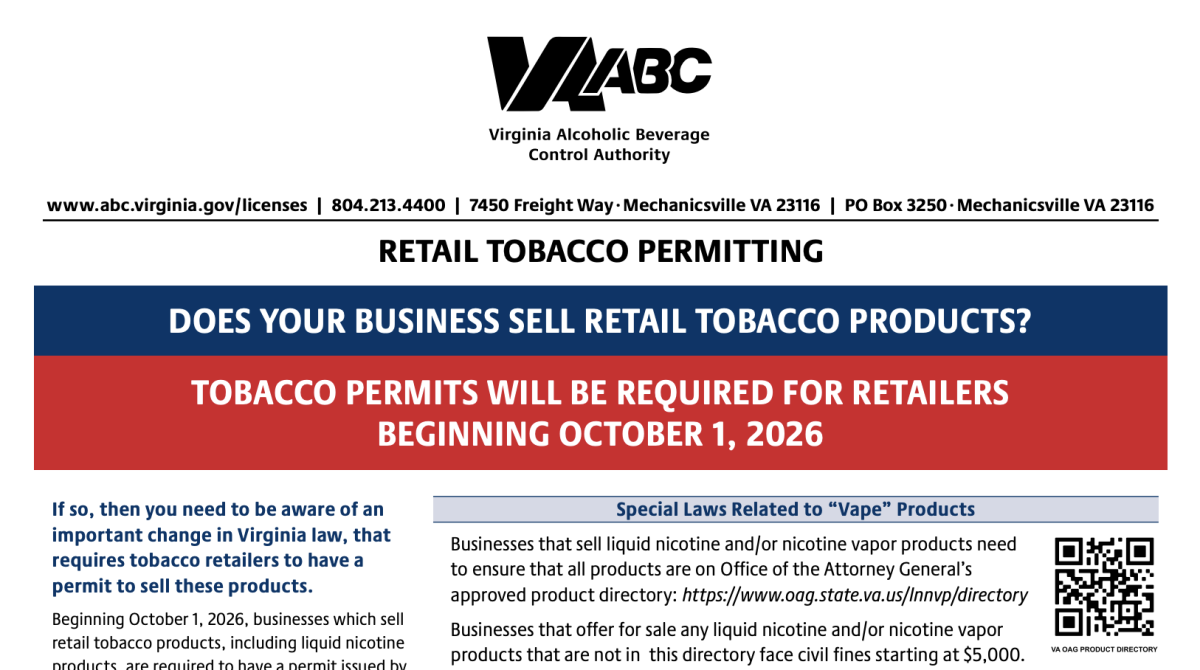
Virginia's new retail tobacco permit system took effect October 1, requiring sellers of vapes, nicotine products and related devices and accessories to obtain a Retail Tobacco Permit for each business location. Virginia ABC said more than 3,000 businesses applied in September alone, creating a processing backlog. Qualifying applicants that filed before October 1 may temporarily operate under a Letter of Authorization. The new store-level permit also sits alongside Virginia's existing vape product directory, where sales of unlisted liquid nicotine or nicotine vapor products can trigger civil penalties starting at $5,000.
Regulations
Oct.03
Iowa Sets November 16 Vape Directory Launch: Unlisted Products Face Sales Ban, Manufacturers $1,000 Daily Fines per Product
Iowa plans to publish its first vapor products directory on November 16, 2026, after which products not listed will be prohibited from sale or offer for sale in the state. The Department of Revenue expects to begin penalty enforcement on December 17, following an initial 21-business-day period focused on compliance education. Under House File 2677, retailers, distributors and wholesalers selling unlisted products face civil penalties of $300 per product per day, while manufacturers face $1,000 per product per day. Eligibility extends to FDA-authorized products and certain products meeting historical marketing and pending PMTA requirements. The directory program resumed after a federal appeals court vacated a preliminary injunction in July 2026.
Regulations
Nov.05
JUUL Purchasers Ask Ninth Circuit to Preserve Antitrust Classes in Case Over Altria’s $12.8 Billion Investment
Private antitrust litigation stemming from Altria's 2018 $12.8 billion investment for a 35% economic interest in JUUL is advancing before the U.S. Court of Appeals for the Ninth Circuit. Direct purchasers, indirect purchasers and indirect resellers of JUUL products filed answering briefs this week seeking to preserve class certifications granted by a California federal court in February. Altria and JUUL argue that individual consumers and large distributors differ too much in purchasing terms to remain in a single direct-purchaser class, while a separate dispute concerns whether California antitrust law can apply to indirect purchasers across 27 jurisdictions. A September trial has been put on hold during the appeal.
Sep.23
Special Report | Vape bans and tougher rules: the South Caucasus takes different paths
Azerbaijan's sweeping e-cigarette ban has raised concerns over enforcement errors and the emergence of illicit sales, while neighboring Armenia is tightening technical rules and preparing higher excise taxes. Georgia, meanwhile, has resisted calls for broader vape restrictions and introduced preferential taxes for some domestically produced cigarettes. The divergent approaches across the South Caucasus highlight a regional policy dilemma: how to curb nicotine use and protect public health without encouraging black markets or creating unintended economic consequences for businesses and consumers.
Nov.03