Key Points
- Regulatory Focus: Child safety and accidental nicotine exposure are drawing greater attention from regulators as nicotine pouches expand across global markets.
- Packaging Challenge: For products already developed, manufactured or under PMTA review, changing the primary package can trigger additional testing, manufacturing and regulatory work.
- External Approach: Safeguard seeks to separate the child-resistant function from the existing primary package, potentially reducing changes to established cans and production systems.
- Case-by-Case Validation: “Universal” does not mean one component fits every can; customer-specific configurations still require adaptation and testing, while PMTA treatment remains application-specific.
2Firsts
September 19, 2026
As nicotine pouches expand across global markets, accidental exposure among children and the design of child-resistant packaging are becoming more prominent safety concerns for regulators in multiple jurisdictions.
In the United States, the Food and Drug Administration in September 2025 called on nicotine pouch manufacturers to use child-resistant packaging after reported exposure cases to U.S. Poison Centers rose over a three-year period. About 72% of the reported cases involved children under five, the agency said. Manufacturers with pending nicotine pouch premarket tobacco product applications, or PMTAs, that planned to add child-resistant packaging were advised to contact FDA through their assigned Regulatory Health Project Manager.
The issue extends beyond the United States. The governments of the four UK nations are consulting on proposals to extend child-resistant and tamper-evident packaging requirements to nicotine products, including nicotine pouches. Australia's Therapeutic Goods Administration has also identified the lack of child-resistant packaging and adequate risk warnings as safety concerns associated with nicotine pouches.
For manufacturers, the issue becomes more complicated when a product, its packaging and its production system have already been developed — particularly in the United States, where the product may already be under FDA review.
In a written interview with 2Firsts, Safeguard and Chemular described Safeguard Mark I as an external child-resistant packaging platform designed to fit around an existing nicotine pouch can rather than replace the primary container. Safeguard operates as a separate entity affiliated with regulatory consultancy Chemular and was established to focus on developing and commercializing the packaging platform while drawing on Chemular's regulatory, scientific, product-development and manufacturing expertise.
Safeguard remains at an early commercial stage. Chemular did not identify any manufacturer already using the system in commercial production or confirm that it has been incorporated into a pending PMTA. The company also did not disclose any Safeguard-specific FDA feedback.

When a packaging change becomes a regulatory issue
Chemular told 2Firsts that the problem it encountered through its PMTA and product-development work was more complex than finding a child-resistant can.
Manufacturers may have already spent substantial time and money developing and validating their existing packaging. A can included in a PMTA may have undergone stability testing, product-contact material assessments, extractables and leachables testing and other packaging-related work. Replacing or materially changing that primary package can therefore add development, testing, manufacturing and regulatory work, Chemular said.
Existing child-resistant packaging technologies and related intellectual property can add another constraint, according to the company.
Safeguard was developed around a different design choice: retain the existing can and add a separate external structure.
Mark I fits around the individual product package and has no direct contact with the nicotine pouches themselves, Chemular said. The transparent structure is intended to leave the existing label, branding and barcode visible, while a spring-based locking mechanism provides the child-resistant function.
Chemular says the external design is intended to reduce the scientific and regulatory impact associated with replacing the primary can.
For a product already under FDA review, however, the regulatory treatment would depend on the individual application.
2Firsts asked whether Chemular had discussed Safeguard specifically with FDA and what feedback it could disclose. The company did not identify any Safeguard-specific FDA feedback, but said it was evaluating how technical information could be provided to customers, potentially through a Tobacco Product Master File, or TPMF, or by adding the information directly to an applicant's PMTA.
TPMFs are voluntary FDA submissions that can contain confidential commercial or technical information and may be referenced by authorized parties preparing tobacco product submissions.
FDA has separately told manufacturers with pending nicotine pouch applications that intend to add child-resistant packaging or other measures to reduce accidental exposure to contact the agency through their assigned Regulatory Health Project Manager.
There is no public FDA determination specific to Safeguard establishing that adding the platform would leave an existing PMTA unaffected.
Chemular cited FDA regulatory interpretations and litigation concerning when packaging or labeling changes may result in a new tobacco product. The company argues that an external component that does not alter the product-contacting package should be distinguished from a change to the physical properties of the primary container.
That is Chemular's regulatory interpretation as applied to Safeguard, rather than a Safeguard-specific FDA determination.
A Safeguard Mark I illustration shows how the transparent external child-resistant component is designed to fit around an existing nicotine pouch can. Source: safeguardcans.com
"Universal" means adaptable, not one-size-fits-all
Safeguard has described Mark I as a universal platform compatible with virtually any nicotine pouch can. In the written interview with 2Firsts, Chemular gave a more specific definition of what it means by "universal."
The company described Safeguard as "a universally adaptable platform, rather than a single one-size-fits-all component."
Where can and closure geometries are identical or sufficiently similar, the same configuration could theoretically be used across several products. Chemular said, however, that it expects each customer to receive a configuration tailored to its specific can and closure design.
Each final customer-specific configuration would then need to undergo child-resistance and adult-accessibility testing, according to the company.
Chemular said the first Mark I configuration was tested with a generic, commercially representative nicotine pouch can by BirdDog Marketing Group under U.S. Consumer Product Safety Commission and Poison Prevention Packaging Act testing protocols, including 16 CFR 1700.15 and 16 CFR 1700.20.
The tested configuration passed both the child-resistance and adult-use portions of the test, Chemular said. But the company also said each final commercial configuration must be tested again after being adapted to the customer's package.
Under the Poison Prevention Packaging Act framework, special packaging is intended to be significantly difficult for children under five to open while remaining usable by adults, with testing procedures set out in 16 CFR Part 1700. The Consumer Product Safety Commission states that it does not approve, certify or endorse individual packaging designs or testing firms.
Safeguard is therefore an adaptable engineering platform rather than a standardized shell that can be added to any existing can without further development or validation.
Chemular said its pending patent applications seek protection across the broader technology platform, including elements of its actuation and locking mechanisms, accessory and integrated configurations, and applications across different package geometries. It did not disclose specific patent application details.
Manufacturing changes are concentrated at the end of the line
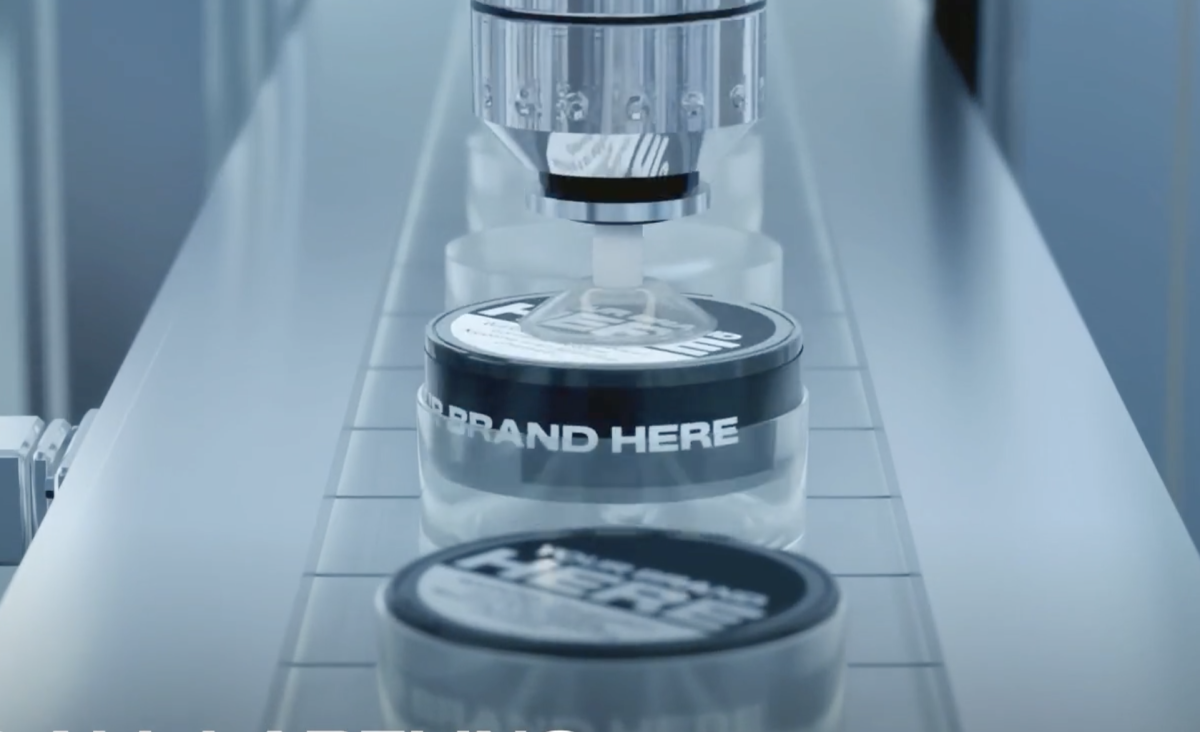
Chemular is working with equipment manufacturers to develop low-speed and high-speed application systems designed to be installed near the end of an existing nicotine pouch production line, before final secondary packaging.
The equipment would apply and secure Mark I to the finished can.
The approach is intended to avoid changes to multiple upstream machines already designed around a manufacturer's existing can format.
Chemular said the main cost elements would include the customer-specific Safeguard components, required tooling and application equipment appropriate to the required line speed. Pricing would vary according to can geometry, production volume, line speed and final configuration.
The company did not provide a per-can cost, application-equipment price or indicative price range.
Chemular said it expects the overall economics to be competitive with, and potentially more favorable than, moving to an entirely new can and closure system when mold costs, tooling, line modifications, engineering work and other capital expenditure are included.
That cost comparison remains a company estimate; Chemular did not provide figures that would allow 2Firsts to independently compare the two approaches.
Asked by 2Firsts whether any nicotine pouch manufacturer had already adopted Safeguard for commercial production or incorporated it into a pending regulatory submission, Chemular did not identify such a case.
The company said it is in discussions with a number of manufacturers and industry partners at different stages of evaluation. It declined to identify the companies or programs, citing confidentiality, and described those it is working with as prospective customers evaluating applications and implementation requirements.
Child resistance moves further into U.S. regulatory scrutiny
FDA's focus on child-resistant packaging for nicotine pouches has become more visible since 2025.
When the agency called on manufacturers to use child-resistant packaging in September 2025, it said all 20 nicotine pouch products it had authorized at that point used such packaging. Later that month, FDA launched a nicotine pouch PMTA pilot program aimed at streamlining reviews and said manufacturers should incorporate child-resistant packaging or other measures to reduce accidental exposure among young children.
The issue also appears in later FDA authorization decisions. In its authorization of six on! PLUS nicotine pouch products, FDA noted that the products' primary packaging consisted of a certified child-resistant can and safety lid. The agency also stressed that marketing authorization applied only to the specific products reviewed and did not mean the products were safe or "FDA approved."
FDA reinforced its focus on child-resistant packaging in May 2026 guidance covering enforcement priorities for unauthorized e-cigarette and nicotine pouch products.
Under that policy, FDA said it would consider whether a product presents a public health or safety concern greater than that generally presented by nicotine pouch or other tobacco products. Among the factors listed was a lack of child-resistant packaging in accordance with the Child Nicotine Poisoning Prevention Act of 2015. FDA also said treatment under the enforcement policy has no bearing on whether a product is likely to receive premarket authorization.
The May document is enforcement guidance, not a new binding packaging rule. FDA states that its guidance documents describe the agency's current thinking and do not establish legally enforceable responsibilities unless specific statutory or regulatory requirements are cited.
The UK is moving through a different process. Its current consultation proposes extending existing child-resistant and tamper-evident requirements for vaping products to nicotine products more broadly, including nicotine pouches. The proposal has not yet become a final packaging requirement.
Australia follows a different regulatory model again, but its regulator has also listed the absence of child-resistant packaging among the safety concerns associated with nicotine pouches.
The United States, UK and Australia are taking different regulatory approaches, but child safety has emerged as a common issue in how authorities assess the category.
Safeguard’s broader significance lies in the problem it is trying to address. As regulators place greater emphasis on protecting children from accidental nicotine exposure, manufacturers face a practical challenge: how to strengthen child-resistant packaging without unnecessarily reopening product development, manufacturing systems and regulatory work that may already be well advanced.
Safeguard offers one possible way of approaching that challenge by separating the child-resistant function from the existing primary package. Whether that model ultimately gains broad commercial adoption will depend on regulatory treatment, implementation costs and manufacturer acceptance. But the underlying question is real and increasingly relevant to the nicotine pouch industry. For that reason, both Safeguard’s regulatory progress and its commercial development merit continued attention.
For the latest developments in the global nicotine pouch market, continue to follow 2Firsts.
Cover image:A Safeguard demonstration shows the Mark I external child-resistant component being fitted around an existing nicotine pouch can. Source: safeguardcans.com
References
- U.S. Food and Drug Administration. FDA Urges Nicotine Pouch Manufacturers To Use Child-Resistant Packaging Following Increasing Reports of Accidental Exposure. September 2, 2025.
- U.S. Food and Drug Administration. FDA Launches Program to More Efficiently Review Nicotine Pouch Applications. September 18, 2025.
- U.S. Food and Drug Administration. FDA Authorizes 6 Nicotine Pouch Products, Completing Review in Record Time.
- U.S. Food and Drug Administration. Enforcement Priorities for Certain New Tobacco Products Marketed Without Premarket Authorization. Final Guidance, May 2026.
- U.S. Food and Drug Administration. Submit and Reference Tobacco Product Master Files.
- U.S. Consumer Product Safety Commission. Special Packaging (PPPA) FAQs.
- Electronic Code of Federal Regulations. 16 CFR § 1700.15 — Poison Prevention Packaging Standards and 16 CFR § 1700.20 — Testing Procedure for Special Packaging.
- UK Department of Health and Social Care. Tobacco and Vapes: Packaging, Appearance and Display. Open consultation, 2026.
- Australian Therapeutic Goods Administration. Nicotine Pouches.
Disclaimer
This article is provided solely for professional research, industry discussion, and informational purposes. Any references to brands, companies, products, technologies, or policies are made for factual reporting and analytical purposes only, and do not constitute endorsement, recommendation, promotion, or advertising by 2Firsts.
Nicotine-containing products, including but not limited to cigarettes, e-cigarettes, heated tobacco products, and nicotine pouches, carry significant health risks. Readers are responsible for complying with all applicable laws and regulations in their respective jurisdictions, including age restrictions and access limitations.
The information contained in this article should not be regarded as investment, legal, medical, regulatory, or commercial advice. While 2Firsts strives to ensure the accuracy and reliability of its content, it does not assume liability for any direct or indirect loss arising from errors, omissions, inaccuracies, or reliance on the information contained herein.
This article is not intended for individuals below the legal age for accessing tobacco or nicotine-related information in their jurisdiction.
Copyright Notice
This article is either original content produced by 2Firsts or content reproduced, translated, summarized, or adapted from third-party sources with attribution where applicable. The intellectual property rights of the original content remain with 2Firsts or the respective original rights holders.
No individual or organization may copy, reproduce, distribute, republish, modify, translate, or otherwise use this content without prior authorization. Any unauthorized use may result in legal action.
For copyright-related inquiries, corrections, or removal requests, please contact: info@2firsts.com.
AI-Assisted Translation and Editing Notice
Portions of this article may have been translated, edited, or reviewed with the assistance of artificial intelligence tools to improve efficiency and readability. Due to the limitations of AI-assisted translation and editing, discrepancies, omissions, or inaccuracies may exist when compared with the original source.
Where applicable, readers are advised to refer to the original source for the most complete and accurate information. If you identify any errors or believe that any content infringes upon your rights, please contact us at info@2firsts.com, and we will review and address the matter promptly.