Australian Border Force Seizes over 390,000 Illegal Disposables, Record High in This Year

Regulations by 2FIRSTS.ai
May.27.2024
Australian Border Force Seizes over 390,000 Illegal Disposables, Record High in This Year
Australian Border Force intercepts over 390,000 e-cigarettes worth $12.4 million in Sydney, largest seizure since new laws enacted.

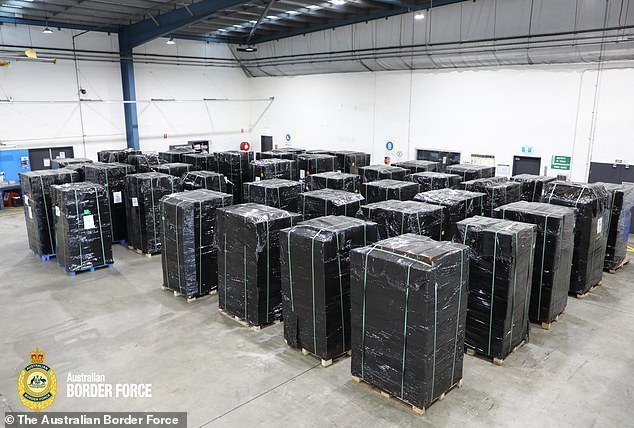
According to Australian media 9 News, in less than a week, the Australian Border Force (ABF) has intercepted nearly 400,000 disposable e-cigarettes entering Australia, with a total value exceeding $12.4 million Australian dollars ($8.22 million US dollars).


On Monday through Thursday, border security personnel conducting inspections on containers in Sydney discovered abnormal goods and confiscated nearly 400,000 e-cigarettes from three containers.


The Australian Border Force (ABF) reported on Monday that a total of 37,800 units of disposable e-cigarette products were found during a cargo inspection. Authorities also discovered a second container containing 18 pallets, with a total of 174,960 units of disposable e-cigarettes inside.


On Thursday, officials discovered 177,120 disposable e-cigarettes in the third container.


The total number of e-cigarettes seized in this operation reached 389,880, with an estimated black market value exceeding 12.4 million Australian dollars (8.22 million US dollars).


The Australian Border Force (ABF) has stated that the three shipping containers all originated from Asia. In a statement, the ABF said this was the largest interception of disposable e-cigarettes at the "border" since new laws targeting imported e-cigarette products came into effect in Australia on January 1st of this year. Asha Patwardhan, acting ABF Trade Commander, stated that border forces will continue to take strong proactive enforcement and interception measures to prioritize the health and safety of the Australian community.


We welcome news tips, article submissions, interview requests, or comments on this piece.

Please contact us at info@2firsts.com, or reach out to Alan Zhao, CEO of 2Firsts, on LinkedIn


Notice

1.  This article is intended solely for professional research purposes related to industry, technology, and policy. Any references to brands or products are made purely for objective description and do not constitute any form of endorsement, recommendation, or promotion by 2Firsts.

2.  The use of nicotine-containing products — including, but not limited to, cigarettes, e-cigarettes, nicotine pouchand heated tobacco products — carries significant health risks. Users are responsible for complying with all applicable laws and regulations in their respective jurisdictions.

3.  This article is not intended to serve as the basis for any investment decisions or financial advice. 2Firsts assumes no direct or indirect liability for any inaccuracies or errors in the content.

4.  Access to this article is strictly prohibited for individuals below the legal age in their jurisdiction.


Copyright


This article is either an original work created by 2Firsts or a reproduction from third-party sources with proper attribution. All copyrights and usage rights belong to 2Firsts or the original content provider. Unauthorized reproduction, distribution, or any other form of unauthorized use by any individual or organization is strictly prohibited. Violators will be held legally accountable.

For copyright-related inquiries, please contact: info@2firsts.com


AI Assistance Disclaimer


This article may have been enhanced using AI tools to improve translation and editorial efficiency. However, due to technical limitations, inaccuracies may occur. Readers are encouraged to refer to the cited sources for the most accurate information.

We welcome any corrections or feedback. Please contact us at: info@2firsts.com

Special Report|South Korean Lawmaker Queries China Tobacco Regulator Over Synthetic Nicotine as Export-Rule Gaps Emerge
A South Korean lawmaker has asked China’s tobacco regulator to clarify rules for e-cigarettes containing synthetic nicotine amid questions over product declarations and possible tax losses. The dispute exposes gaps between Chinese export requirements and destination-market rules, while underscoring the global impact of China’s licensing and traceability policies.
Jul.10
Exclusive Analysis | Smoore H1 Revenue Rises 19.9% Amid Growth Concentration, Profit Pressure and Slowing Momentum
Smoore’s first-half 2026 revenue rose 19.9%, but the results revealed growing structural risks beneath the headline growth. Heat-not-burn contributed about 61% of incremental revenue and remains driven largely by one core customer, while traditional vaping markets diverged, own-brand growth slowed and China enterprise revenue declined further. Gross profit and adjusted profit lagged revenue growth, while second-quarter revenue growth slowed to about 1.9%, putting greater focus on the quality, concentration and sustainability of Smoore’s expansion.
Capital Markets
Aug.20
China’s Zhengzhou Tobacco Research Institute develops end-to-end heated tobacco analysis to trace aerosol compound origins
The Zhengzhou Tobacco Research Institute of China National Tobacco Corporation has filed a patent application for an end-to-end method to analyze the migration and transformation of chemical compounds in heated tobacco products. Using GC-Orbitrap/MS non-targeted analysis, the method compares tobacco substrate and aerosol samples to distinguish compounds transferred directly from the substrate from those newly formed during heating, while also calculating transfer rates. In an example involving nine heated tobacco products, the patent identified 17 newly formed thermal decomposition compounds and 38 transferred compounds.
Aug.13
Germany Expands Take-Back Rules for Disposable Vapes From July 1
Germany has expanded take-back obligations for disposable vapes from July 1, 2026, requiring consumers to be able to return used devices at stores that sell such products, including kiosks, petrol stations and vape shops, as e-cigarette regulation extends from sales to waste management and lithium-battery safety.
Market
Jul.06 by 2Firsts Perspectives
Malaysia Police Plan Saliva Tests at Roadblocks to Detect Synthetic Drugs Mixed Into Vape Liquids
Malaysian police plan to use saliva test kits at roadblocks to detect drivers using synthetic liquid drugs marketed as “Piu Piu” and “Magic Mushroom,” substances that authorities say are mixed into vape liquids and inhaled through e-cigarette devices, raising road-safety concerns and adding pressure on vape regulation.
Jun.29
From Border-Logistics Insiders to Retail Service Stations, Australia Mounts a Sweeping Crackdown on the Illicit Nicotine Trade as iGET Vapes Surface in A$80 Million Crime Networks
Australian authorities have disclosed two major enforcement actions that go beyond product seizures and retail closures to examine how illicit tobacco and vape networks operate. On Aug. 14, the Multi Agency Strike Team said seven people had been charged and two criminal networks were valued by authorities at a combined A$80 million, or about US$56.8 million. Investigators allege the groups used bonded warehouses, freight businesses and “trusted insiders” in legitimate industries to circumvent border controls. In a separate operation on Aug. 11, more than 100 service stations were targeted as authorities sought information on illicit tobacco importation, distribution networks and the movement of sales proceeds.
Aug.17