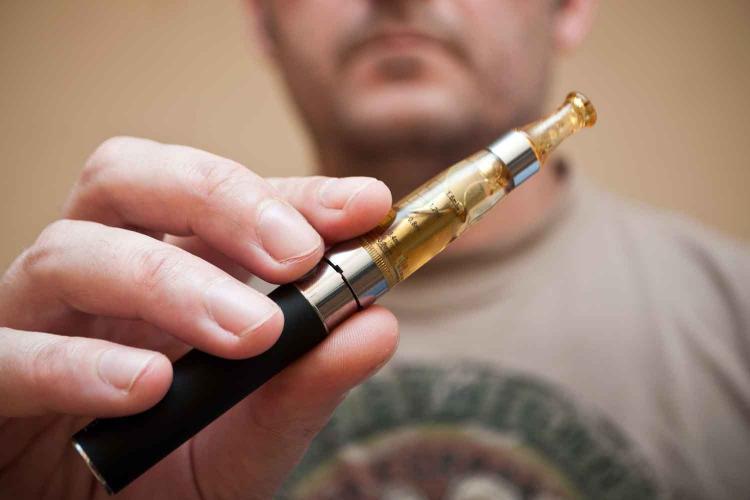
The National Health and Medical Research Council (NHMRC) has recently released a statement from its CEO regarding electronic cigarettes, offering guidance for public health decision-makers in 2022.
According to the Asia Pacific Advocates for Tobacco Harm Reduction Alliance (CAPHRA), a recent document falsely claimed that e-cigarettes were not effective smoking cessation tools, but rather a gateway to smoking. The document also asserted that most e-cigarette users became dual users, and that e-cigarettes increased the risk of smoking relapse. CAPHRA stated that the National Health and Medical Research Council (NHMRC) overemphasized the negative health effects, toxicity, and explosion risks of e-cigarettes, while failing to compare toxins and potential harm to smoking in a fair manner.
Nancy Loucas, coordinator for CAPHRA, stated that the latest government document regarding e-cigarettes contains outrageous false statements that will only lead to more Australian smokers losing their lives.
It is absurd that the Chief Medical Officer of Australia considers e-cigarettes to be the next biggest health issue after COVID-19. Has he not heard that smoking kills over 20,000 Australians each year? This 18-page document is a complete joke, filled with statements that can easily be debunked by international scientific and human evidence, says Loucas.
CAPHRA has stated that Australia's aggressive approach against e-cigarettes is increasingly out of sync with other Asia-Pacific countries. The Philippines, Malaysia, and Thailand are set to lift their bans on e-cigarettes. Furthermore, New Zealand has implemented a regulatory framework in Tasman, which has resulted in a decrease in smoking rates.
Loucas stated, "This shocking document is not something that should be put in writing, but it is now considered the bible for public health guidance in Australia and its surrounding regions.
Selling, supplying, or possessing nicotine e-cigarette products is illegal in Australia, the only western democracy that requires a prescription to use e-cigarettes. Shockingly, 2.3 million Australians continue to use traditional cigarettes.
Last year, the Australian Therapeutic Goods Administration expanded its prescription-only mode, and customs cracked down on individuals importing nicotine e-cigarette oil from overseas websites at the borders.
This article contains excerpts or reproductions of content sourced from third-party information, and the copyright belongs to the original media and authors. If there is any infringement, please contact us to delete it. Any organization or individual who wishes to repost it should contact the author instead of reposting it directly.
Disclaimer
This article is provided solely for professional research, industry discussion, and informational purposes. Any references to brands, companies, products, technologies, or policies are made for factual reporting and analytical purposes only, and do not constitute endorsement, recommendation, promotion, or advertising by 2Firsts.
Nicotine-containing products, including but not limited to cigarettes, e-cigarettes, heated tobacco products, and nicotine pouches, carry significant health risks. Readers are responsible for complying with all applicable laws and regulations in their respective jurisdictions, including age restrictions and access limitations.
The information contained in this article should not be regarded as investment, legal, medical, regulatory, or commercial advice. While 2Firsts strives to ensure the accuracy and reliability of its content, it does not assume liability for any direct or indirect loss arising from errors, omissions, inaccuracies, or reliance on the information contained herein.
This article is not intended for individuals below the legal age for accessing tobacco or nicotine-related information in their jurisdiction.
Copyright Notice
This article is either original content produced by 2Firsts or content reproduced, translated, summarized, or adapted from third-party sources with attribution where applicable. The intellectual property rights of the original content remain with 2Firsts or the respective original rights holders.
No individual or organization may copy, reproduce, distribute, republish, modify, translate, or otherwise use this content without prior authorization. Any unauthorized use may result in legal action.
For copyright-related inquiries, corrections, or removal requests, please contact: info@2firsts.com.
AI-Assisted Translation and Editing Notice
Portions of this article may have been translated, edited, or reviewed with the assistance of artificial intelligence tools to improve efficiency and readability. Due to the limitations of AI-assisted translation and editing, discrepancies, omissions, or inaccuracies may exist when compared with the original source.
Where applicable, readers are advised to refer to the original source for the most complete and accurate information. If you identify any errors or believe that any content infringes upon your rights, please contact us at info@2firsts.com, and we will review and address the matter promptly.