BAT Korea Ramps Up Its Glo Recycling Campaign

Industry Insight
Jul.20.2022
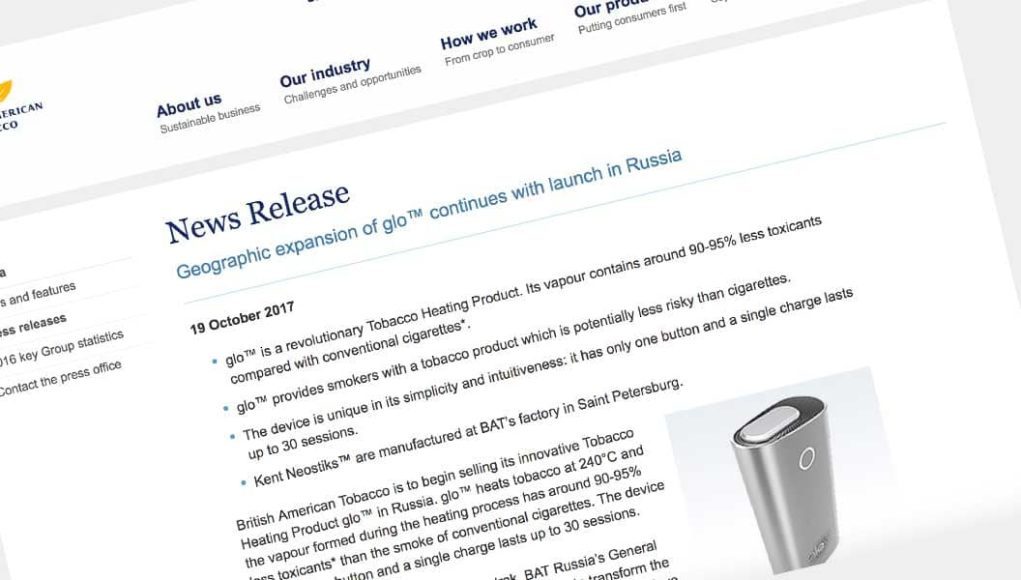
The branch of British American Tobacco (BAT) in Korea, manufacturer and distributor of tobacco heating device Glo, is reviving its recycling campaign and urging people to return rather than throw away their used Glo devices.

Towards the end of last year, the Seoul office of BAT, announced that it had installed return bins for Glo tobacco heating devices at 50 convenience stores in cities across Korea and that more were to be added throughout this year.
BAT Korea Ramps Up Its Glo Recycling Campaign

Glo users are now able to either go to a 7-Eleven, CU or GS25 convenience store to return their used Glo devices, and they will receive 2,000 won discount coupons for a Glo Pro Slim, BAT’s latest edition in the Glo series.


Apart from the recycling program, BAT has made efforts to go green in other ways throughout the entire life cycle of its products, from production to packaging and disposal. For example, its 16,000-square-meter tobacco production plant in Sacheon, South Gyeongsang Province, is partially powered by solar panels, and strategies to reduce water usage have been implemented throughout the company’s production plants.


In fact BAT Rothmans has been striving to acquire the International Alliance for Water Stewardship certification, a global standard given to firms who show commitment toward ensuring sustainable water management. While with regards to packaging, BAT has reduced the size of its Glo boxes by 30 percent since 2021, and has replaced plastic materials in the packaging with environmentally friendly substitutes.


Efforts by Big tobacco to be (or appear) more sustainable


Other tobacco companies are also aiming to be more sustainable. Philip Morris has been trying to reduce plastic materials, such as tape and buffers used in their Iqos packaging, while Japan’s JTI has been introducing green energy to its production and logistics facilities while similarly efforting to reduce water usage.


The content excerpted or reproduced in this article comes from a third-party, and the copyright belongs to the original media and author. If any infringement is found, please contact us to delete it. Any entity or individual wishing to forward the information, please contact the author and refrain from forwarding directly from here.

Switzerland Tightens Vape Checks as Only 3 of 32 Tested Products Meet New Tobacco Rules
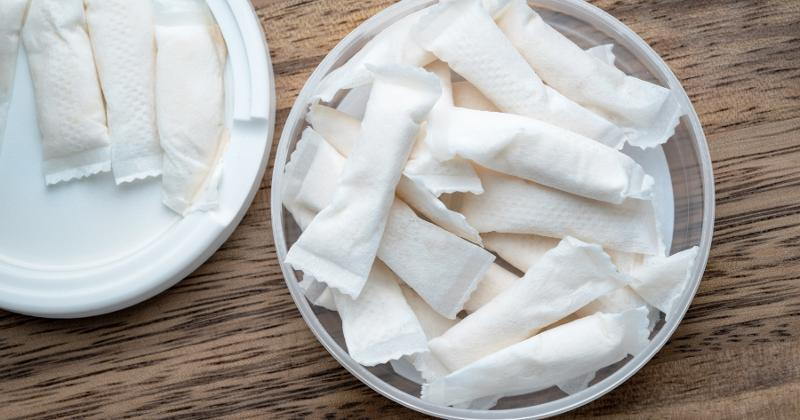
According to Swiss media outlet Blick, local authorities are strengthening compliance checks on vape products, nicotine pouches and other tobacco-related products following the implementation of Switzerland’s revised Tobacco Products Act. A Basel laboratory tested 32 disposable vapes and e-liquids, with only three meeting regulatory requirements and 21 products banned from sale. Swiss authorities are also expanding retail inspections, laboratory testing and youth purchase checks to enforce the new tobacco and nicotine product rules.
Aug.12
China’s HTP Exports Fell 14.3% in H1 2026 as Russia and Belarus Accounted for 76% Lead
In H1 2026, China’s HS 24041100 exports stood at $1.32 million, down 14.3% YoY, with volume falling 17.2% to 55.33 tons. Market distribution shifted drastically amid overall export drops. Exports to Russia and Belarus totaled $1 million, taking 76.0% of all shipments versus 29.5% in H1 2025. Belarus became the top destination with export value jumping 177.5%, while the Philippines, Singapore and Indonesia’s combined share slumped from 49.3% to 11.2%.Domestically, Yunnan led exporter registrations; Jiangsu and Shanghai were key suppliers, yet Anhui and Sichuan had no exports. Heavy concentration means order or declaration changes for Russia/Belarus greatly affect national aggregate data. The data shows customs entry points (not end markets), covering tobacco consumables only, excluding heating equipment and the complete HTP supply chain.
Aug.11
Malaysia Liquid Nicotine Returns to Poisons List, Leaving Vape Retail and RM354 Million Tax Collection in Legal Uncertainty
Malaysia’s withdrawal of its appeal in a landmark liquid-nicotine case has left a High Court ruling that struck down the 2023 nicotine exemption in force, bringing liquid and gel nicotine used in vaping products back under the Poisons Act 1952. At the same time, the Control of Smoking Products for Public Health Act 2024 continues to provide a regulatory framework for vaping products, creating uncertainty over retail sales, taxation and existing inventory. MPs are calling for nicotine vape sales and excise collection to stop, including refunds of more than RM354 million collected since 2023, while industry and consumer groups are asking the government to clarify the current legal position.
Sep.04
U.S. Customs Plan to Require Foreign Export Declarations Could Deal ‘Devastating’ Blow to China’s Vape Exports, Logistics gl Expert Says
A U.S. Customs and Border Protection proposal to collect foreign export declarations and other overseas customs documents could expose discrepancies in the value, classification and description of China-made vape shipments entering the United States. A veteran Chinese logistics professional told 2Firsts that the measure, if implemented, could undermine the all-inclusive shipping model used by some unauthorized vape exporters and push parts of the trade toward costlier underground channels. The risk extends beyond higher duties: accurately declared products may also be more readily identified as unauthorized e-cigarettes subject to FDA enforcement.
Special Report
Sep.07
New Zealand Associate Health Minister Casey Costello Warns on Illicit Cigarettes as Legal Tobacco Sales Halve Over Decade
New Zealand Associate Health Minister Casey Costello said legal tobacco sales in the country have fallen by more than half over the past decade, with sales declining more than 20% in 2025 compared with the previous year. She warned that the decline may not fully reflect lower smoking rates, as increased availability of illicit cigarettes could also be contributing. The government said it would continue strengthening tobacco and vape retail enforcement while monitoring the impact of illicit tobacco on public health and tax revenue.
Aug.26
China Tobacco Hubei explores staged nicotine pouch delivery, using dynamic membranes to slow early release and gradient particles to sustain later delivery
China Tobacco Hubei Industrial Co., Ltd. disclosed several oral nicotine-related patent applications in August 2026, including two that approach staged nicotine release from different directions. One uses a high-viscosity membrane that forms inside the pouch after contact with saliva to slow rapid early release, while the other uses gradient particles with a faster-disintegrating outer layer and a slower core to create a fast-to-sustained release profile. Together, the filings explore how nicotine pouches could balance initial delivery with release later in use.
Sep.03