Belarus plans to tighten licensing for e-cigarette and e-liquid trade; Lukashenko expresses support

Feb.06
Belarus plans to tighten licensing for e-cigarette and e-liquid trade; Lukashenko expresses support
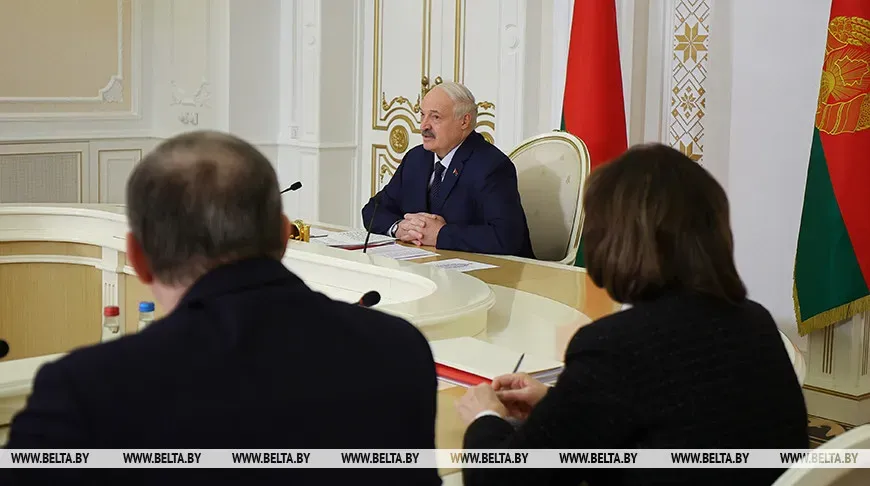
A report says Belarus plans to tighten, at the legislative level, the licensing of trade in electronic cigarettes and related mixtures (e-liquids). The draft law was discussed at a meeting chaired by President Alexander Lukashenko with the leadership of the Council of Ministers, according to a BelTA correspondent.


Key Takeaways


  • Legislative plan: tighten licensing for trade in e-cigarettes and related mixtures (e-liquids)
  • Venue: draft law discussed at a meeting between Lukashenko and the Council of Ministers leadership (BelTA correspondent)
  • Rationale cited: doctors’ concerns over rising youth usage among students and schoolchildren
  • Risk raised: possibility of underground trade and cross-border inflows given “no borders” with Russia
  • Next step: Lukashenko says experts will explain details before an official decision is taken


2Firsts, Feb 6 2026

According to BelTA correspondent, Belarus plans to tighten, at the legislative level, the licensing of trade in electronic cigarettes and related mixtures (e-liquids). The draft law was discussed at a meeting chaired by Belarusian President Alexander Lukashenko (Александр Лукашенко) with the leadership of the Council of Ministers.


The report quotes Lukashenko as saying doctors are “sounding the alarm” over the growing popularity of e-cigarettes, especially among young people—students and schoolchildren—and that calls are increasingly being heard to restrict and even totally ban their production and circulation.


Lukashenko also pointed to what he described as the other side of the issue, asking whether the measures could create underground trade. He recalled that when electronic smoking devices were introduced, Russia already had the problem, and Belarus has “no borders” with Russia; he said that even if Belarus did not introduce them, goods could be brought in, and that they had already been imported in whatever quantities were wanted or needed. He said the new draft law raised the question of making a decision on “to be or not to be.”


The report also quotes Lukashenko as saying he does not understand smoking products or alcohol well and wanted specialists—those who smoke or have studied the topic—to explain what e-cigarettes are. He said some claim they are worse than tobacco and that he would listen and then make an appropriate decision. He added that he is categorically opposed to both alcohol and smoking and said doctors already know that smoking is the primary cause of lung cancer.


At the start of the meeting, Lukashenko said they would try to find a balance, discuss the issue, and make an appropriate decision.


Image Source: virtualbrest.ru

We welcome news tips, article submissions, interview requests, or comments on this piece.

Please contact us at info@2firsts.com, or reach out to Alan Zhao, CEO of 2Firsts, on LinkedIn


Notice

1.  This article is intended solely for professional research purposes related to industry, technology, and policy. Any references to brands or products are made purely for objective description and do not constitute any form of endorsement, recommendation, or promotion by 2Firsts.

2.  The use of nicotine-containing products — including, but not limited to, cigarettes, e-cigarettes, nicotine pouchand heated tobacco products — carries significant health risks. Users are responsible for complying with all applicable laws and regulations in their respective jurisdictions.

3.  This article is not intended to serve as the basis for any investment decisions or financial advice. 2Firsts assumes no direct or indirect liability for any inaccuracies or errors in the content.

4.  Access to this article is strictly prohibited for individuals below the legal age in their jurisdiction.


Copyright


This article is either an original work created by 2Firsts or a reproduction from third-party sources with proper attribution. All copyrights and usage rights belong to 2Firsts or the original content provider. Unauthorized reproduction, distribution, or any other form of unauthorized use by any individual or organization is strictly prohibited. Violators will be held legally accountable.

For copyright-related inquiries, please contact: info@2firsts.com


AI Assistance Disclaimer


This article may have been enhanced using AI tools to improve translation and editorial efficiency. However, due to technical limitations, inaccuracies may occur. Readers are encouraged to refer to the cited sources for the most accurate information.

We welcome any corrections or feedback. Please contact us at: info@2firsts.com

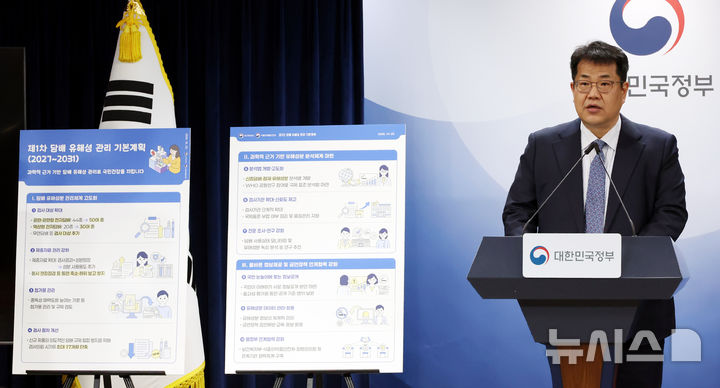
South Korea's Tobacco Plan Excludes 6-Methyl Nicotine as Customs Tightens Import Controls and Analog Liquid Imports Fall 83%
South Korea's government unveiled its first Tobacco Harm Management Basic Plan for 2027–2031 on October 29, 2026, proposing broader testing of vaping and heated tobacco products while excluding nicotine analogs such as 6-methyl nicotine. Synthetic nicotine came under tobacco regulation on April 24, and a June investigation found 6-methyl nicotine in 12 liquid inhalation products marketed as nicotine-free. Customs data released in September showed that imports of nicotine analog solutions fell 83.3%, from 12 metric tons in January–April to 2 metric tons in May–August. By September 20, imports had reached approximately 15 metric tons for the year, with 99.99% originating from China. Customs authorities have tightened pre-clearance testing and supply-chain documentation requirements, while the MFDS expects to complete its assessment of nicotine analog hazards by the end of 2026.
Regulations
Nov.04
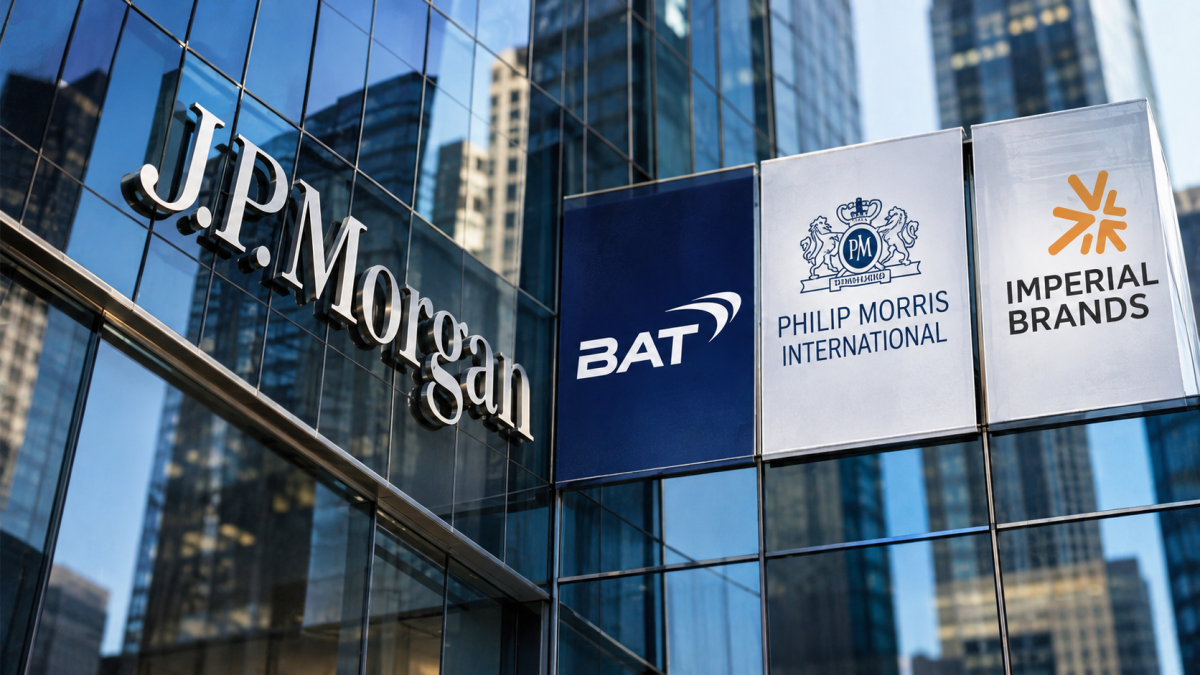
Why Does JPMorgan Favor BAT Over Philip Morris Despite Forecasting Slower Growth of 3.9% Versus 6.2%?
JPMorgan resumed equity research coverage of British American Tobacco (BAT), Philip Morris International (PMI) and Imperial Brands in November 2026, assigning BAT an Overweight rating and the other two companies Neutral ratings. The bank forecasts like-for-like sales growth of 3.9% for BAT and 6.2% for PMI in 2027, but estimates the two companies will trade at approximately 11 times and 21 times 2027 earnings, respectively. JPMorgan cited BAT's improving position in US nicotine pouches and vaping products as a driver of its investment outlook. BAT reported a 220% constant-currency increase in US modern oral nicotine revenue in the first half of 2026, while PMI's ZYN US shipments returned to growth in the third quarter. Imperial expects NGPs to represent 4% to 5% of sales and has expanded its oral portfolio through acquisitions.
Capital Markets
Nov.12
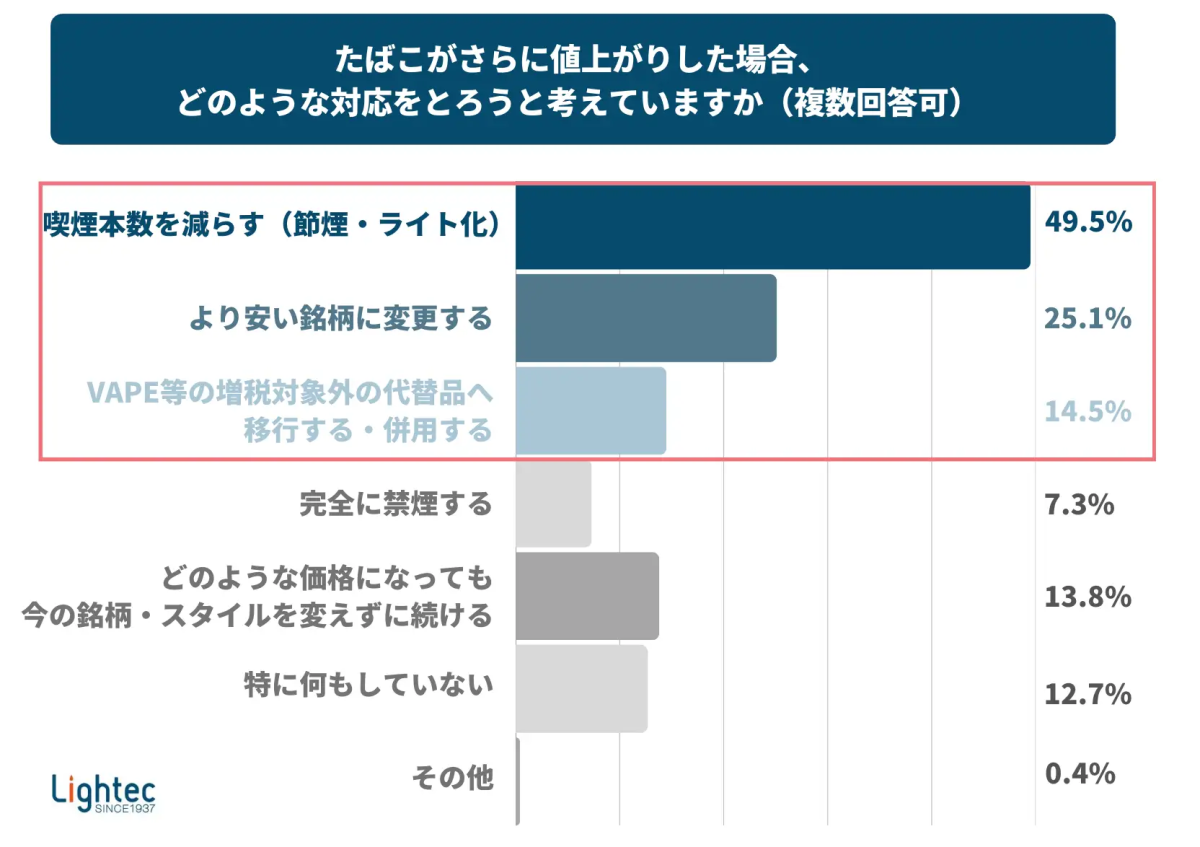
Japan Survey Finds 49.5% Would Cut Tobacco Use if Prices Rise, 64.6% Show Interest in Nicotine-Free Alternatives
A September online survey commissioned by Japanese smoking-accessories company Lightec found that 49.5% of respondents would consider reducing tobacco use if prices rose further, while 25.1% would consider switching to cheaper brands and 14.5% would consider using or combining alternatives such as vapes and nicotine-free herbal sticks. Another 64.6% expressed some level of interest in such alternatives. The survey covered 1,088 respondents aged 20 to 70 and was conducted by a company that sells NICOLESS nicotine-free vaping and herbal-stick products, meaning its findings should not be treated as representative of Japan's smoking population.
DATA
Oct.12
Imperial Brands Sees Double-Digit NGP Growth as Sixth Year of Tobacco Revenue Gains Backs £1.5 Billion Buyback
Imperial Brands reaffirmed its FY26 guidance in its October 8 pre-close trading update, forecasting double-digit net revenue growth in next-generation products and share gains across heated tobacco, vape and modern oral. Tobacco net revenue is expected to grow at a low-single-digit rate, marking a sixth consecutive year of growth. The company has completed its £1.45 billion FY26 share repurchase and announced a £1.5 billion buyback for FY27. Group adjusted operating profit is expected to increase 3% to 5%, while free cash flow is forecast to exceed £2.2 billion.
Oct.09
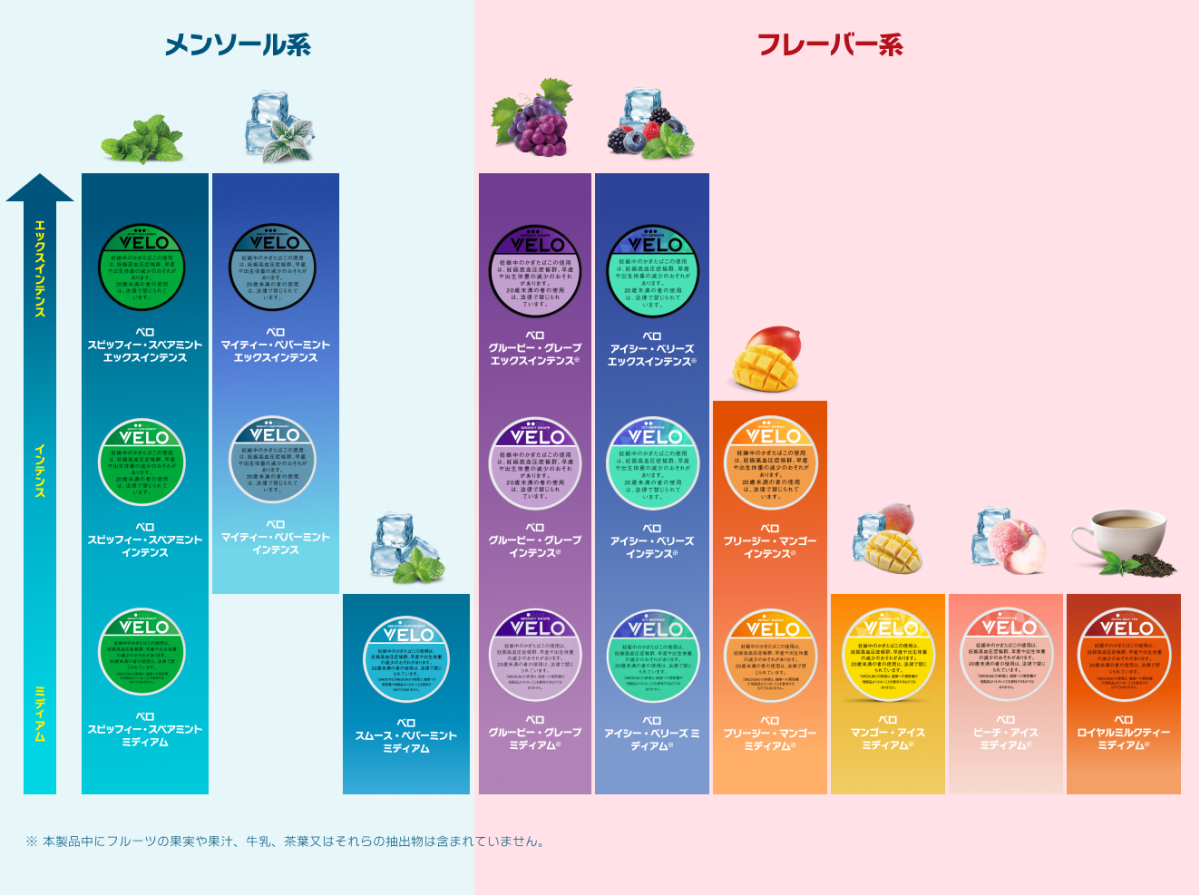
Product | BAT Revises Japan's VELO Convenience Store Lineup, Adding ¥380 Mango Pouches as Selected SKUs Exit
British American Tobacco's Japanese subsidiary, BAT Japan, launched VELO Mango Ice Medium on November 2, 2026, with distribution expanding to selected 7-Eleven, FamilyMart, NewDays and Seicomart stores from November 3. The new oral tobacco product contains 15 pouches per can and retails for ¥380, featuring a mango and cooling flavor profile at Medium intensity. At the same time, BAT Japan raised prices on multiple existing VELO products from ¥360 to ¥380 per can and withdrew selected SKUs from convenience store distribution without discontinuing them entirely. The changes affect product assortment, pricing and retail channel allocation.
product
Nov.04
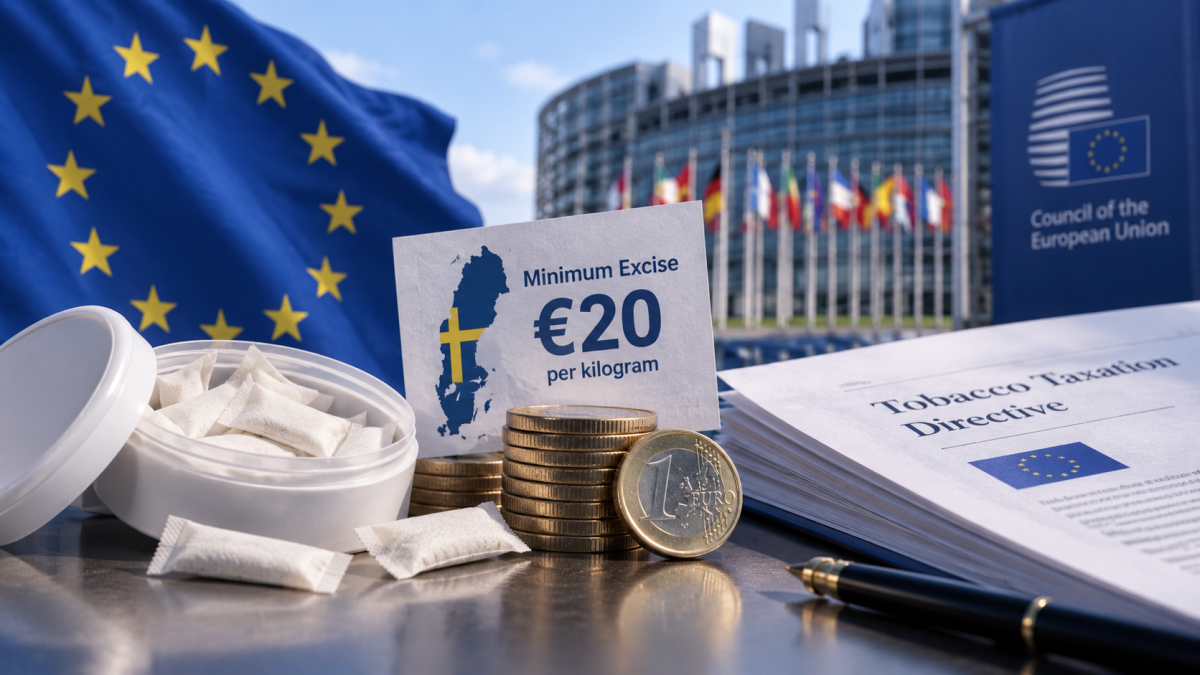
EU Tobacco Tax Reform Targets November Push as Sweden Holds Nicotine-Pouch Minimum at €20 per Kilogram
The Irish presidency of the Council of the European Union is using bilateral talks to push the bloc’s Tobacco Taxation Directive toward a political agreement in November. According to Law360, citing an EU official, Sweden is unwilling to accept a minimum excise threshold above €20 per kilogram for nicotine pouches. Council negotiations have already lowered the European Commission’s original proposal, but a May 2026 presidency compromise still set the minimum at 10% of the tax-inclusive retail price or €30 per kilogram in 2028-29, with higher levels later.
Market
Sep.17 by 2Firsts Perspectives