Key Points
- Zyn faces Velo Plus pressure;
- US pouch market grows 20%;
- Velo Plus reaches 10% share;
- Zyn Ultra awaits FDA review.
2Firsts
May 22, 2026
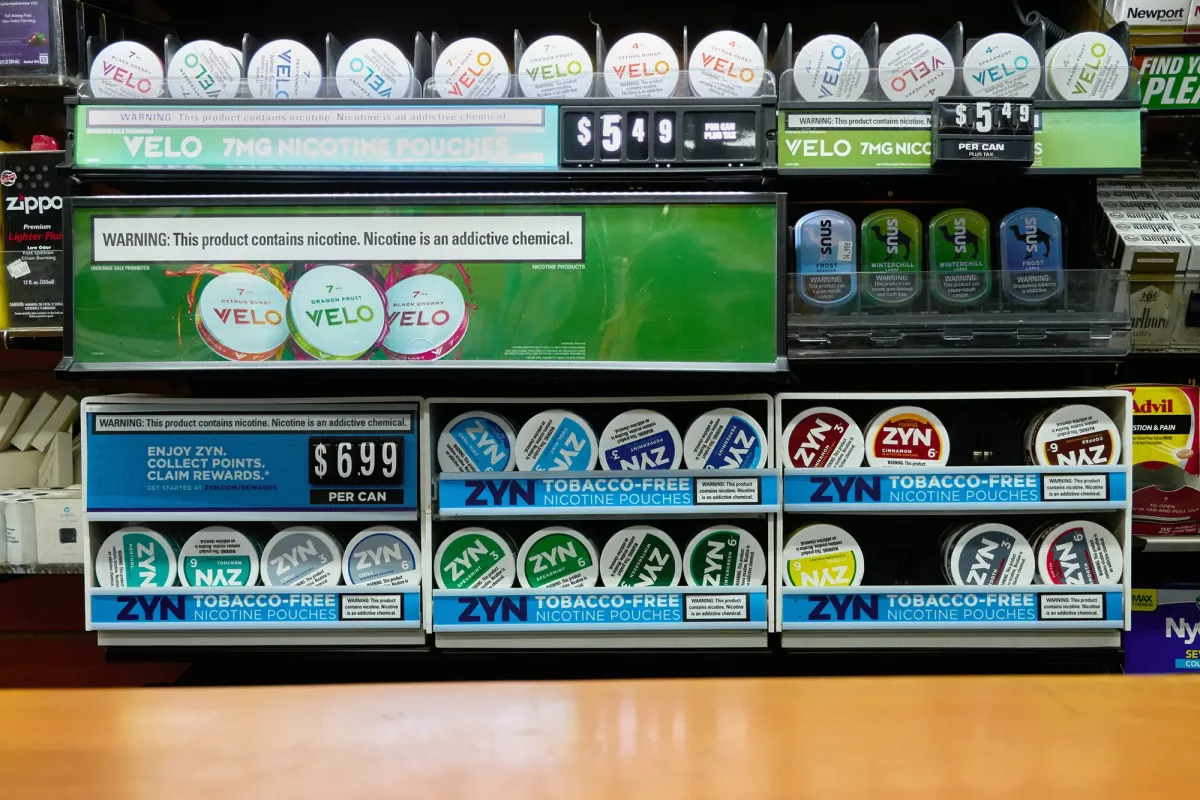
According to Bloomberg, Philip Morris International’s (PMI) nicotine pouch brand Zyn is facing growing competitive pressure from British American Tobacco’s Velo Plus as competition intensifies in the U.S. nicotine pouch market.
The report said some consumers have switched away from Zyn after experiencing severe dry mouth and toward moister nicotine pouch alternatives.
Abdul Jafarawi, a 31-year-old convenience store operator in Connecticut, said he initially used Zyn to improve focus and energy while working, but later experienced significant dry-mouth symptoms before switching to Velo Plus.
“I was hooked on Zyn,” Jafarawi said, adding that Velo Plus had been “a godsend.”
Bloomberg noted that Zyn remains central to PMI’s broader smoke-free transformation strategy.
However, many consumers increasingly prefer moist nicotine pouches because they:
- reduce dry mouth;
- deliver nicotine faster;
- and provide stronger flavor experiences.
By comparison, Zyn products often require saliva to moisten the pouch before nicotine delivery becomes more noticeable.
Market data showed U.S. nicotine pouch sales reached approximately $6.6 billion in the 12 months through early March 2026, representing 20% year-on-year growth.
Meanwhile, the broader U.S. tobacco market, valued at around $74 billion, continues to decline.
Bloomberg said nicotine pouches are becoming one of the tobacco industry’s most important growth categories in the United States.
Zyn entered the U.S. market in 2014 as a cleaner alternative to traditional snuff products.
Unlike conventional oral tobacco, Zyn uses nicotine salts, sweeteners, and flavoring ingredients without tobacco leaf material, allowing users to consume nicotine discreetly without spitting.
That cleaner and more discreet experience has appealed to younger adult consumers.
In 2022, PMI acquired Zyn parent company Swedish Match for $16 billion as part of efforts to reduce dependence on traditional cigarettes.
PMI’s smoke-free business now generates approximately $17 billion in annual revenue, accounting for around 40% of total company sales.
Driven partly by smoke-free growth, PMI’s stock price has surged nearly 90% over the past two years.
However, competitive pressure is increasing.
Bloomberg cited Circana data showing Velo Plus has captured approximately 10% of the U.S. smokeless nicotine category since entering the market in 2024.
Meanwhile, Zyn’s market share has declined in recent months, although it still controls roughly one-third of the market.
PMI said Zyn purchases at U.S. retailers rose 10% year-on-year in the latest quarter.
The report also noted that PMI has developed a moist pouch product called Zyn Ultra for the U.S. market.
However, the product has remained under FDA regulatory review since 2021.
Bloomberg said the FDA once faced a backlog of as many as 26 million nicotine product applications, significantly slowing review timelines.
Analysts said regulatory delays initially benefited Zyn by limiting competitor access to the U.S. market, but are now affecting PMI’s own product upgrades.
Jefferies analyst Andrei Andon-Ionita said PMI is losing “significant share” to Velo Plus, while Zyn Ultra could help the company “compete more effectively.”
At the same time, the Trump administration has recently adopted a more flexible regulatory approach toward next-generation nicotine products.
The FDA recently stated that certain products with completed PMTA applications would not face enforcement action before final review is completed.
Citi analysts said this policy could allow some nicotine products to remain legally available without full market authorization.
However, global regulators remain cautious.
The World Health Organization (WHO) warned last week that without stronger restrictions on flavors, advertising, and age verification, youth nicotine pouch use could increase.
The latest FDA data show youth nicotine pouch usage in the United States remains relatively low.
(Cover Image:Zyn and Velo nicotine pouches displayed for sale at a convenience store in New York./Image source:Bloomberg)