Caixin Reports: Yiling’s Atomizer Sparks Public Concern as Experts Call for Stronger Oversight

Jul.31.2025
Caixin Reports: Yiling’s Atomizer Sparks Public Concern as Experts Call for Stronger Oversight
Caixin reports that a Yiling Pharmaceutical subsidiary’s atomizer, resembling an e-cigarette, has sparked public concern. Experts classify herbal atomizers as e-cigarettes and call for stricter oversight. China’s tobacco regulator has confirmed such products fall under e-cigarette rules and pledged to maintain strict enforcement.

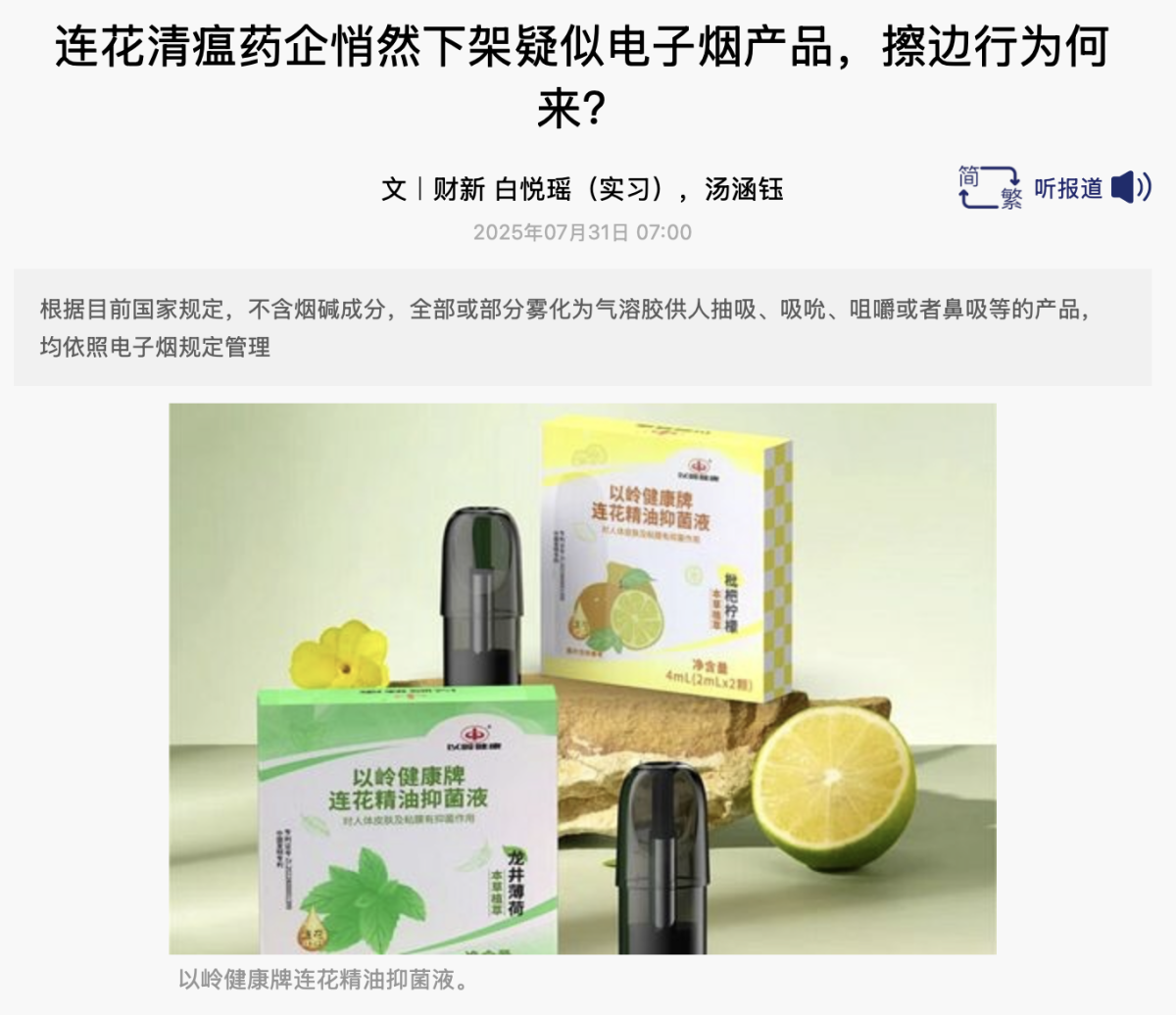
[2Firsts]According to a July 31 report by Caixin, Yiling Health Technology Co., Ltd., a subsidiary of Shijiazhuang Yiling Pharmaceutical Co., Ltd., has come under public scrutiny after launching the “Lianhua Essential Oil Antibacterial Solution,” which is packaged with an atomizer device resembling an e-cigarette. On July 4, a video blogger released a review questioning whether the product was a “disguised e-cigarette,” noting that the atomizer’s appearance and usage were the same as that of conventional e-cigarettes. On July 16, the blogger stated that the video had been taken down following a complaint from Yiling Pharmaceutical. Caixin journalists contacted the company’s customer service, who confirmed that the product was indeed produced by Yiling Health. As of mid-July, it was still available for purchase on some Taobao stores, but these listings have since been removed.


Caixin reported that the product is made from a mixture of plant-based essential oils and does not contain forsythia or honeysuckle. The instructions state that it can be applied directly to the skin or mucous membranes for antibacterial purposes, or inhaled after atomization. Under current Chinese regulations, even if a product contains no nicotine, as long as it is inhaled through atomization, it is subject to e-cigarette regulations.


The report quoted Li Enze, Deputy Director-General and Secretary-General of the Public Welfare Legal Committee of the Tobacco Control and Health Association, as saying that such “herbal atomizers” are essentially e-cigarettes. He stressed that even if these products are registered as drugs or medical devices, stricter supervision is needed. He called for clearer responsibilities for operators, stricter sales restrictions, and measures to avoid inducing minors. He expressed concern that such products could spark minors’ curiosity about e-cigarettes.


Caixin also noted that similar herbal atomization products have become increasingly common in recent years. In 2025, regulators canceled the registration category of “medical heating atomizers” as medical devices. As a long-established traditional Chinese medicine company, Yiling Pharmaceutical, facing a sharp decline in performance in 2024, attempted to launch such products, but these products have now been quietly removed from the market.


2Firsts also noted that in May 2025, the State Tobacco Monopoly Administration (STMA) held a press conference on e-cigarette regulation. In response to media questions about the regulation of herbal atomizers, the STMA stated: “…Herbal atomizers that are produced and sold under the guise of registration or filing as medical devices, do not contain nicotine, and are used by atomizing all or part of the liquid into aerosols for inhalation, sucking, chewing, or sniffing, fall under the category of e-cigarettes.”


The STMA emphasized that for such products, on the one hand, it will deepen interdepartmental collaboration and strengthen source control. In 2025, the Center for Medical Device Standards Management of the National Medical Products Administration revised the 2020–2021 Compilation of Medical Device Classification Results, annulling Item 254 regarding “medical heating atomizers,” thereby eliminating the possibility of herbal atomizers obtaining medical device registration from the source. On the other hand, it will maintain a high-pressure enforcement stance, resolutely clean up and rectify these products, and continue strict crackdowns on herbal atomizer e-cigarettes.


Cover photo: Screenshot of Caixin report

FIFA Bans Vaping in 2026 World Cup Stadiums, Putting Nicotine Rules in Event Compliance Focus
FIFA’s 2026 World Cup stadium rules prohibit smoking, vaping and the use of any tobacco products or electronic smoking devices inside stadiums, including inner and outer perimeters, while electronic smoking devices, tobacco products, lighters and matches are listed as prohibited items, bringing nicotine-product management, venue compliance and cross-border legal differences into focus at a major global sporting event.
Jul.06
U.S. Military Nicotine Policy Sparks Debate as Nicotine Pouches Enter Discussion
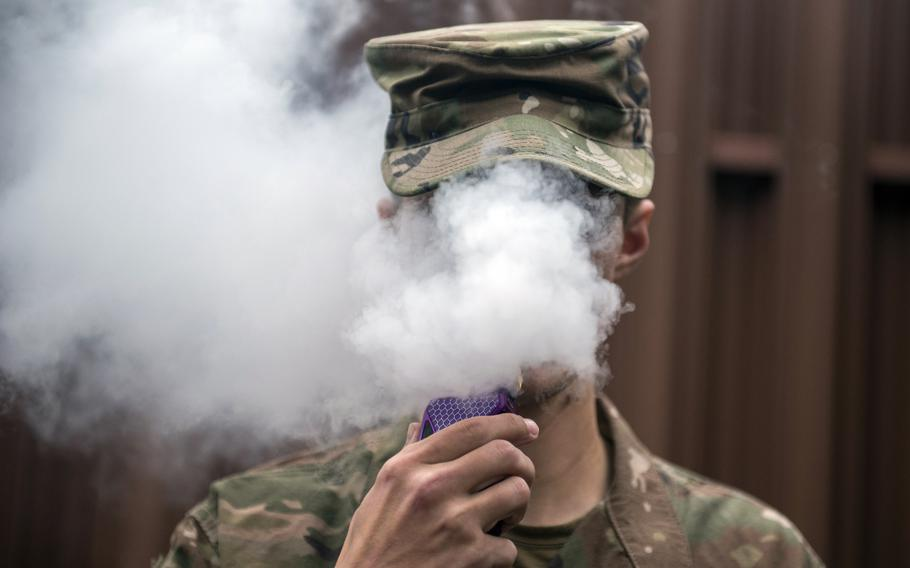
An opinion article published by Stars and Stripes argued that the Pentagon’s January nicotine clinical guidelines overemphasize abstinence, fail to reflect the reality that about 30% of active-duty personnel use nicotine, and do not address nicotine pouches as potential harm-reduction products.
Industry Insight
Jun.08
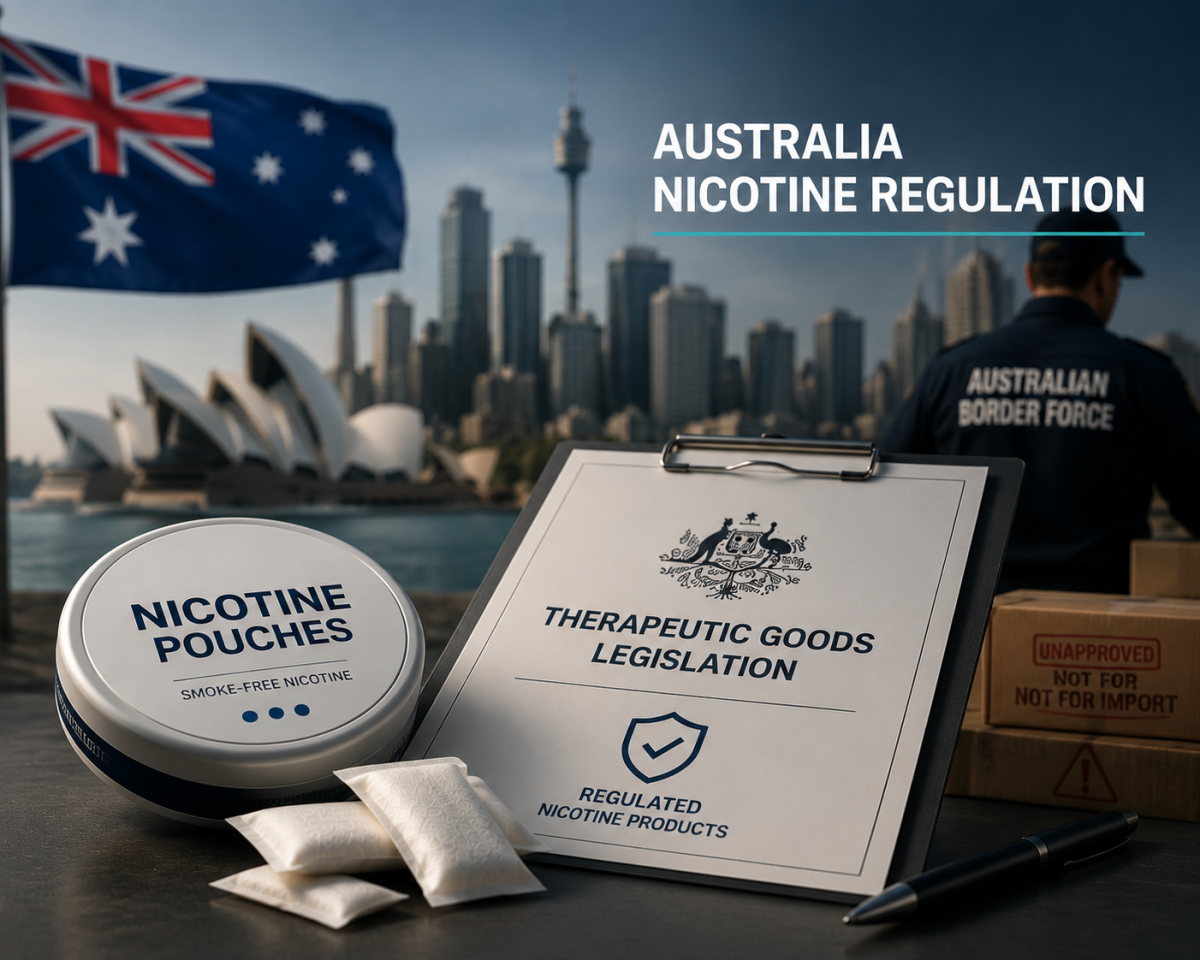
Australia’s TGA Places Nicotine Pouches Under Therapeutic Goods Rules From July 24, Blocking Imports of Unapproved Products
Australia is strengthening controls on nicotine pouches under its existing therapeutic goods regulatory framework. According to the Therapeutic Goods Administration (TGA), nicotine pouch products must meet regulatory requirements, and unapproved products cannot be legally imported. The move follows Australia’s broader approach of maintaining strict oversight of nicotine products, including nicotine-containing vapes. As nicotine pouches expand globally, Australia’s regulatory approach highlights growing differences in how countries manage emerging smoke-free nicotine products.
Regulations
Jul.27
UK HMRC Plans 30,000 Retail Enforcement Actions as Illegal Tobacco and Vape Sellers Face Tougher Crackdown
The UK government has announced that HM Revenue & Customs (HMRC) will carry out more than 30,000 interventions targeting businesses and retail premises during the 2026-2027 financial year. The actions will focus on tax fraud, illegal goods sales and businesses involved in unlawful activities through retail channels. The government said illegal tobacco and illegal vape sales remain areas of concern. The move shows that UK enforcement against illegal nicotine products is expanding from import and supply channels toward retail-level oversight, alongside the upcoming introduction of the Vaping Products Duty.
Jul.24
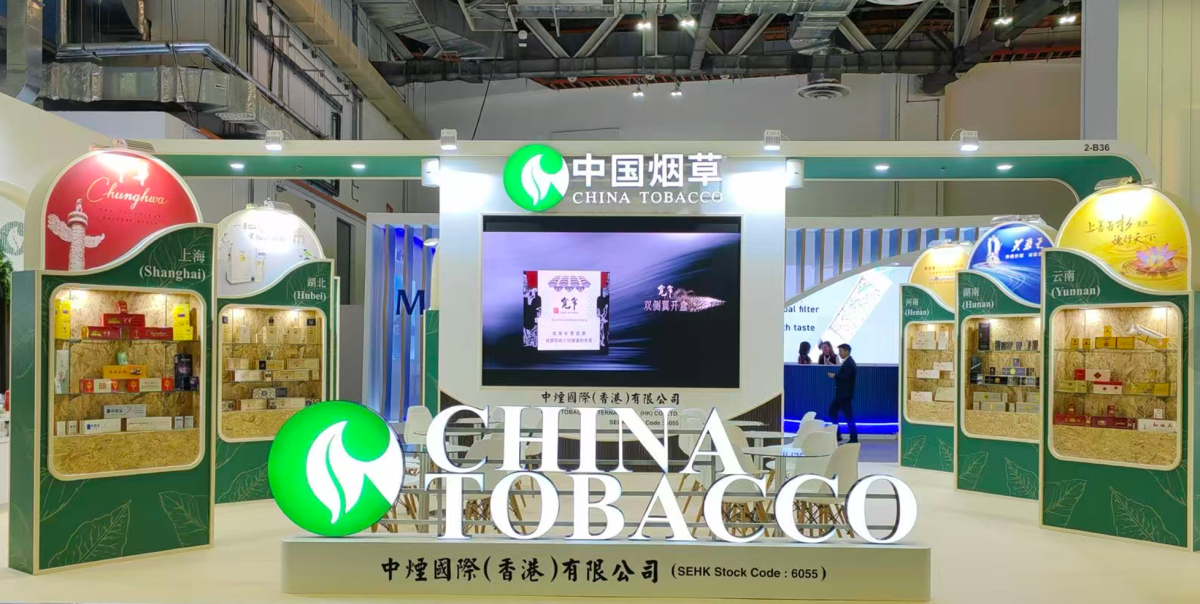
China Tobacco International HK Warns First-Half Revenue May Fall 25%-30%, Tobacco Leaf and Duty-Free Exposure Highlight Reliance on Traditional Tobacco
CTIHK expects first-half 2026 revenue to fall 25%-30%, mainly due to lower tobacco leaf imports and delayed cigarette shipments to China’s domestic duty-free market. Its 2025 revenue mix—nearly 90% from tobacco leaf-related businesses and less than 1% from new tobacco products—shows continued exposure to traditional supply chains and trade variables.
Jun.18
IQOS Global Flagship Space to Open in Tokyo Ginza as PMI Expands Consumer Experience Strategy
Philip Morris Japan (PMJ) announced that it will open “IQOS Flagship Ginza” in Tokyo on September 4, 2026. The location will become the first global flagship space for PMI’s IQOS brand. PMJ said the venue will target adult smokers aged 20 and above and combine product experiences, community engagement and local cultural elements. The design will incorporate Japanese natural aesthetics and traditional craftsmanship. The launch reflects PMI’s broader strategy of strengthening consumer engagement through experiential retail and brand spaces. The existing IQOS Store Ginza is scheduled to close on August 30, 2026.
Jul.21