Statement:
1. This article is analyzed based on public information. All content should be verified by relevant official announcements.
2. Due to the limited nature of public information, it is not possible to verify the relevant facts. However, the emergence of e-cigarette manufacturing in more countries, as reflected in this news, is worth paying attention to and analyzing, which is also the main focus of this article.
3. This article was first published on the website 2Firsts.com.
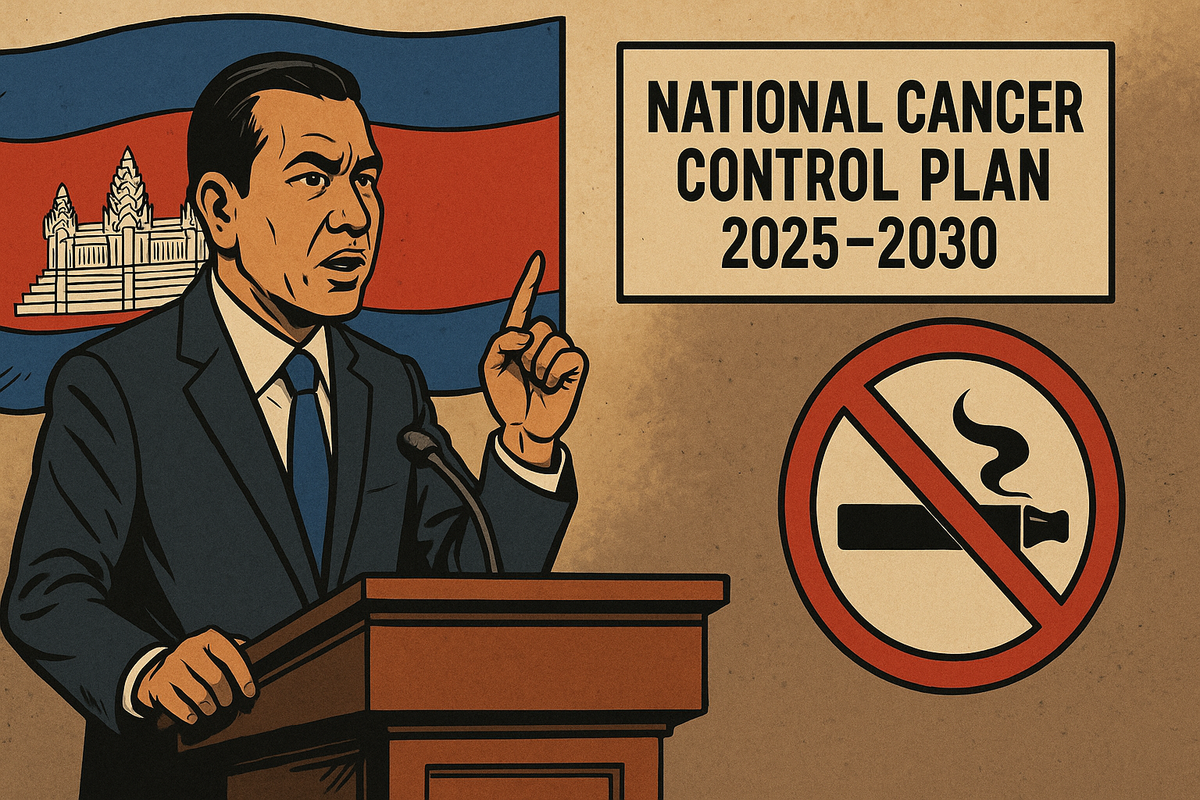
[By 2Firsts] On May 5, 2025, Prime Minister Hun Manet of Cambodia publicly announced at the launch ceremony of the "2025-2030 National Cancer Prevention and Control Plan" that the government has rejected a proposal from foreign investors to establish an e-cigarette manufacturing facility in Cambodia. He stated at the event that a ministerial-level official from a certain country had recently met with Cambodia's Minister of Commerce Cham Nimul to propose setting up a factory to produce e-cigarettes in Cambodia, but the Cambodian government has rejected the investment application. Hun Manet emphasized that Cambodia does not welcome investment projects involving e-cigarettes.(Foreign Officials Propose E-Cigarette Factory in Cambodia; PM Rejects Any Investment)

Hun Manet did not disclose which country the investment came from, but this public statement stands out against the backdrop of Cambodia's generally open attitude towards foreign investment.
So, which country did the rejected e-cigarette investment come from? And why choose Cambodia as the production country for e-cigarettes? Although Hun Manet did not name names, from Cambodia's current diplomatic relations, the global layout of the e-cigarette industry, and regional policy trends, there are three possible countries that Hun Manet may have been referring to.
China: The Spillover Logic of E-Cigarette Supply Chain Center
After Cambodia's rejection of e-cigarette investments, there are opinions suggesting that the rejected investment may likely come from China, as China has practical considerations for this investment.
As the world's largest producer of e-cigarettes, China controls over 90% of the global e-cigarette supply chain, particularly concentrated in cities like Shenzhen and Dongguan. Despite facing increasing regulations in export markets in recent years, Chinese e-cigarette manufacturers are still looking to expand internationally by establishing production lines overseas to bypass policy barriers in European and American markets.
Official data shows that in just the first two months of 2025, China accounted for nearly 80% of the total foreign investment in Cambodia. Not only do the two countries have a significant trade volume, exceeding $15 billion in 2024, but there is also frequent high-level interaction between them. In April 2025, the Chinese government signed 37 agreements with the Cambodian government covering areas such as investment, economic, and trade.
According to information obtained from public sources by 2Firsts, companies such as Geekvape, Smoore, Jinjia and others have already opened factories in Indonesia to manufacture e-cigarettes. Additionally, Cambodia also located in Southeast Asia and geographically close to China, has a long history of Chinese investment, with a plentiful supply of young labor.

In light of recent high tariffs imposed by the US on products made in China and increased scrutiny on products imported from other Asian countries, Chinese companies are motivated to relocate their production lines to neighboring Southeast Asian countries to bypass trade barriers. Cambodia appears to be a potential overflow destination for the e-cigarette industry.
However, 2Firsts believes that upon further investigation into the policies and regulatory logic of the tobacco industry in China, it will be discovered that the Chinese authorities are unlikely to actively promote such highly sensitive overseas investment activities.
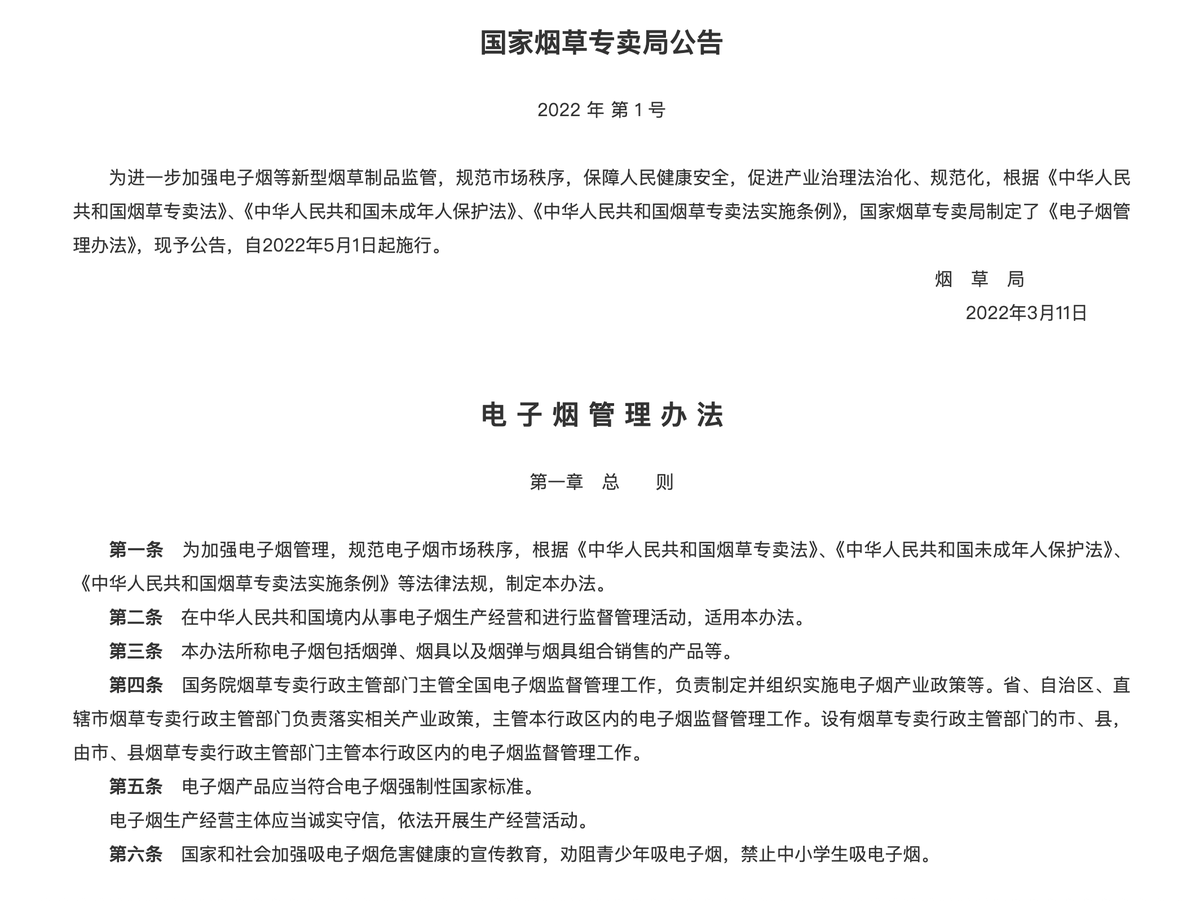
The State Tobacco Monopoly Administration has strict management measures in place for new tobacco products such as e-cigarettes, which cover areas such as nicotine raw materials, equipment manufacturing, export and import, and product export standards. Against this backdrop, if officials proactively engage with other countries and allow large-scale spillover of the entire production line, it will weaken the government's regulatory capacity and control over the industry.
Furthermore, the concept of "ministerial level" officials mentioned by Hun Manet is quite broad. 2Firsts was unable to find useful information in recent public records and it cannot be ruled out that Hun Manet may have limited knowledge of the hierarchy of Chinese officials, which may have led to confusion between ministerial levels and provided incorrect information about the individuals met.
However, assuming that this individual claims to be a "minister-level" figure to high-ranking Cambodian officials such as Hun Manet, their identity is more likely to be a professional in the industry, a business representative, or a liaison for a relevant industry association. It cannot be ruled out that they are a "shell company" based overseas or a Chinese team packaged by foreign investors, communicating in a "third party" capacity.
However, considering long-term interests, mainstream e-cigarette companies in China are unlikely to choose to enter the Cambodian market in this way, and it is even less likely that the Chinese government would intervene.
Taking into account the points mentioned above, 2Firsts believes that the "investment application" referenced by Hun Manet can be largely ruled out as being official from the Chinese government. However, if it involves Chinese companies, it is more likely to be an informal business contact that may not be entirely formal.
Vietnam: Numerous Possible Sources of Conflict
Next is Vietnam, Cambodia's important neighbor and economic partner, as well as the third largest source of foreign investment (accounting for 8%). In recent years, Vietnam's investments in Cambodia have been gradually increasing.
In 2025, Vietnam will officially implement a comprehensive ban on electronic cigarette products, including manufacturing, sale, and use.
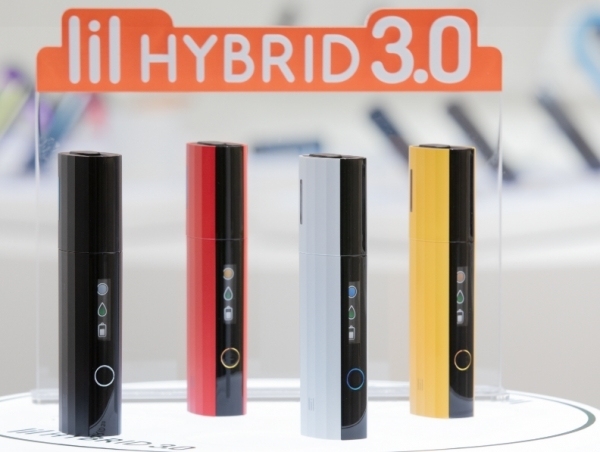
This policy, implemented by the Vietnamese Ministry of Health, aims to curb the rising trend of teenage smoking. Under this policy direction, how Vietnam will handle e-cigarette orders from foreign companies has become a concern. For example, in February of this year, KT&G (Korea Tobacco & Ginseng Corporation) suspended its orders for the heating tobacco device "Lil Hybrid 3.0" in Vietnam due to the ban on e-cigarettes and heated tobacco products. This policy has resulted in the local heating tobacco assembly factory shutting down, and it is expected that the unstable supply situation may continue until June 2025.
Currently, the definition of new tobacco products is still unclear in Vietnam's Law on Prevention and Control of Tobacco Harms and related regulations. A meeting convened by the Vietnamese Ministry of Justice concluded that a ban on the production, sale, import, distribution, transportation, and use of new tobacco products will take effect on January 1, 2025. However, relying solely on this decision could pose significant challenges for law enforcement agencies during implementation.
The Department of Justice believes that these definitions should be revised and expanded in legal texts to encompass new types of tobacco products on the market, ensuring comprehensive and complete regulation of the law.
Vietnam's investment regulations have categorized tobacco production as a industry subject to conditional restrictions, but not yet completely prohibited. In this scenario, it is possible that capital behind local factories in Vietnam may be communicating with government departments in Vietnam to bypass strict regulations on new types of tobacco, such as e-cigarettes, by constructing new factories in Cambodia.
Another piece of evidence comes from a news report by the Vietnam News Agency. On the afternoon of April 28, Vietnamese Prime Minister Phạm Minh Chính met with Cambodian Minister of Commerce Cham Nimul at the government headquarters in Vietnam.
Cham Nimul stated that she had a very successful meeting with the Vietnamese Minister of Trade; both sides agreed to establish a bilateral trade cooperation committee between Vietnam and Cambodia to promote trade between the two countries, especially border trade cooperation.
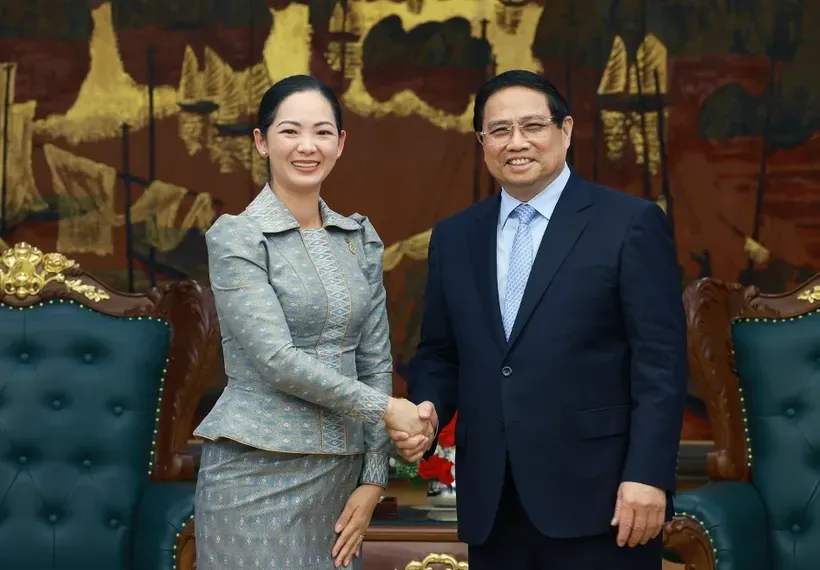
It is worth noting that if the official mentioned by Hun Manet is the Vietnamese Minister of Industry and Trade, then the meeting indeed qualifies as a meeting of "ministerial-level officials."
According to VNA news, Minister Phạm Minh Chính highly praised the signing of the "Vietnam-Cambodia Government's 2025-2026 Bilateral Trade Promotion Agreement" with the Cambodian Minister of Commerce and the Vietnamese Minister of Industry and Trade, considering it an important legal document. He believes that this agreement will facilitate trade through tariff preferences, leverage the economic complementarity between the two countries, strengthen supply chain connections, and lay the foundation for achieving the goal of reaching $200 billion in bilateral trade between the two countries.
Third Countries: "Investment Channels" Not Made in China
Apart from China and Vietnam, other countries in Southeast Asia have also entered the e-cigarette industry, such as Malaysia, the Philippines, and Indonesia. These countries have not banned the circulation of e-cigarettes like Cambodia, and in recent years, the market size and number of e-cigarette users have been increasing. However, their economic ties and diplomatic involvement with Cambodia are lower, and local e-cigarette brands are deeply connected to the Chinese industry chain, so there is currently no need to transfer the industry chain abroad.
While there is a framework for collaborative investment within ASEAN, these countries face difficulties in matching the diplomatic levels of China and Vietnam. Therefore, even though they have the capacity to establish manufacturing plants, their likelihood is much lower compared to the latter two countries.
However, a significant possibility that cannot be ignored is that some multinational e-cigarette brands may establish e-cigarette factories in Cambodia with a "non-Chinese background" through offshore financial and industrial transit centers such as Hong Kong and Singapore, bypassing regulations using the identity of a "third country".
In the e-cigarette industry, some brands have chosen to register and export through Hong Kong companies to more flexibly enter overseas markets and avoid the policy or public relations risks associated with directly labeling their products as "Made in China." In this scenario, the "third country" may not necessarily be the actual dominant investor, but rather just a "investment channel" used for identity masking.
Unattributed diplomatic insinuation
Why did Prime Minister Hun Manet not publicly mention the name of the country?
The reason may lie in the close relationship between the two countries, as excessive exposure could lead to diplomatic embarrassment. From the timeline perspective, it is highly likely that after negotiations, the Cambodian side chose to refuse due to domestic public health, safety, and policy coherence factors.
The Ministry of Health in Cambodia has previously stated its explicit ban on the sale and distribution of e-cigarette products. Introducing manufacturing projects on top of this would not only contradict the policy, but also pose a threat to the country's social image and the health of young people.
Currently, the global shift of the e-cigarette industry is testing the trade-offs that governments around the world must make between health policies and attracting investment. From Indonesia to Malaysia, and now involving Cambodia, countries are all facing the same question: How to draw the line between foreign investment, job opportunities, and public health?
In the future, it remains to be seen whether a balance can be achieved that maximizes the benefits of all three factors, or whether Cambodia's current tough stance is merely a temporary measure.
We welcome news tips, article submissions, interview requests, or comments on this piece.
Please contact us at info@2firsts.com, or reach out to Alan Zhao, CEO of 2Firsts, on LinkedIn
Notice
1. This article is intended solely for professional research purposes related to industry, technology, and policy. Any references to brands or products are made purely for objective description and do not constitute any form of endorsement, recommendation, or promotion by 2Firsts.
2. The use of nicotine-containing products — including, but not limited to, cigarettes, e-cigarettes, nicotine pouchand heated tobacco products — carries significant health risks. Users are responsible for complying with all applicable laws and regulations in their respective jurisdictions.
3. This article is not intended to serve as the basis for any investment decisions or financial advice. 2Firsts assumes no direct or indirect liability for any inaccuracies or errors in the content.
4. Access to this article is strictly prohibited for individuals below the legal age in their jurisdiction.
Copyright
This article is either an original work created by 2Firsts or a reproduction from third-party sources with proper attribution. All copyrights and usage rights belong to 2Firsts or the original content provider. Unauthorized reproduction, distribution, or any other form of unauthorized use by any individual or organization is strictly prohibited. Violators will be held legally accountable.
For copyright-related inquiries, please contact: info@2firsts.com
AI Assistance Disclaimer
This article may have been enhanced using AI tools to improve translation and editorial efficiency. However, due to technical limitations, inaccuracies may occur. Readers are encouraged to refer to the cited sources for the most accurate information.
We welcome any corrections or feedback. Please contact us at: info@2firsts.com