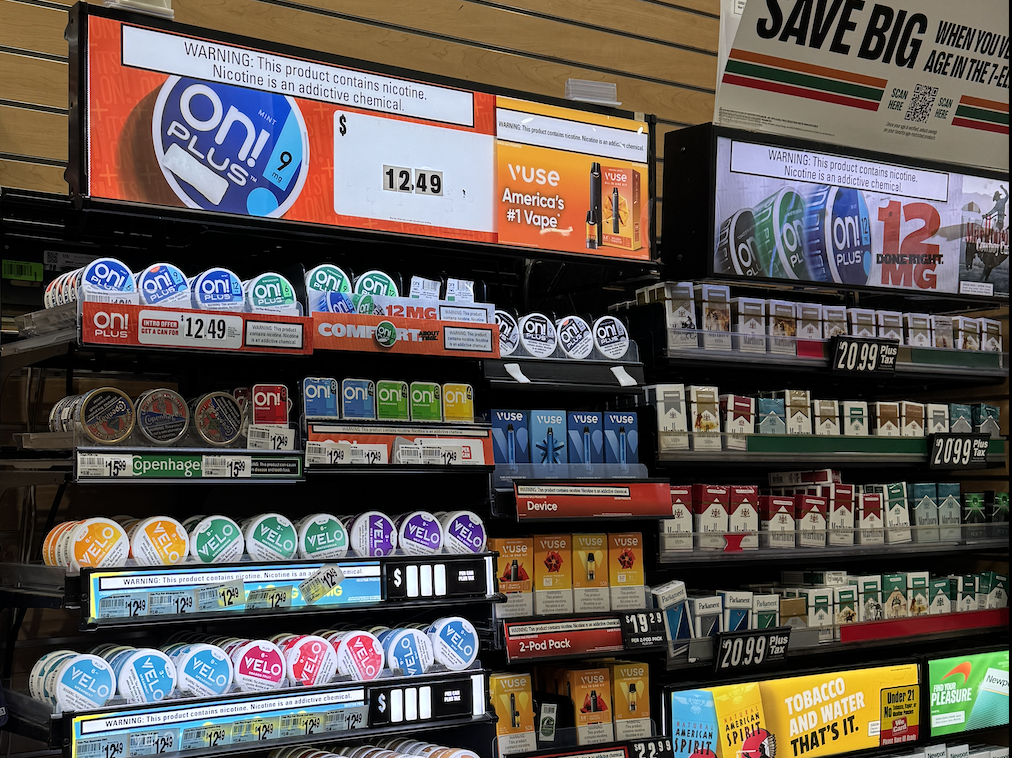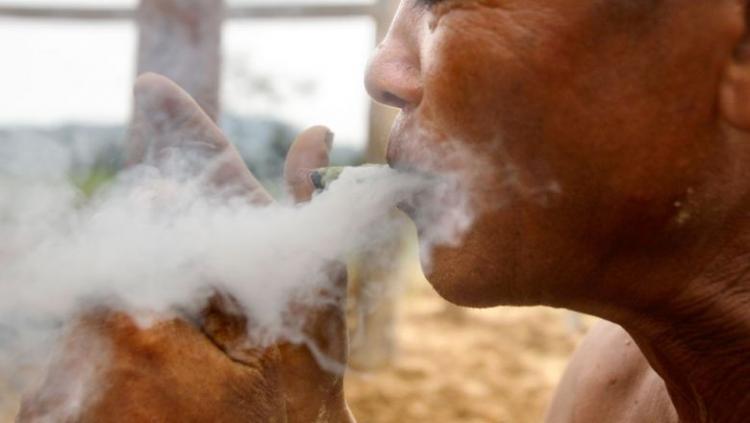
According to a report by the Phnom Penh Post, Mom Kong, the executive director of the Cambodia Movement for Health (CMH), has stated that tobacco use has been decreasing in Cambodia. The Cambodian Ministry of Health's survey shows that the rate of young smokers has dropped from 32% in 2014 to 28% in 2022, but over 150,000 people still die from smoking-related illnesses each year.
Mom Kong stated that the decrease in smoking rates is the result of the efforts made by relevant institutions in Cambodia such as promoting scientific education, implementing a ban on tobacco advertisements, and prohibiting smoking in public places.
He claims that tobacco and electronic cigarettes are different because electronic cigarettes were created as a new product to replace cigarettes and tobacco. However, he believes that people will gradually stop using them as they become aware of the dangers and effects surrounding electronic cigarettes.
He believes that "the most effective measure we can take is to increase the tax rate on tobacco products, making it similar to our neighboring countries, in order to reduce the number of deaths in Cambodia due to smoking.
He added that measures to strengthen the implementation of regulations on e-cigarettes must be taken in order for the government to ensure that advertising of e-cigarettes online and their sales in Cambodia are prohibited.
Two rounds of crackdowns on e-cigarettes and related products.
According to information obtained by 2FIRSTS through a search of publicly available media reports, Cambodia has been cracking down on new tobacco products such as e-cigarettes. The Cambodian authorities have issued bans on e-cigarettes in 2014 and 2021 respectively.
In February 2014, the Cambodian National Authority for Combating Drugs (NACD) ordered an immediate ban on the importation, use, and sale of hookah tobacco, pipes, and electronic cigarettes nationwide.
The ban, however, did not go as far as the government anticipated. In March 2022, the Cambodian National Authority for Combating Drugs issued another ban that will prohibit electronic nicotine delivery systems (ENDS), e-cigarettes, and heated tobacco products (HTP) nationwide.
In August 2022, the National Anti-Drug Authority in Cambodia arrested over 60 individuals on charges related to the sale and use of electronic cigarettes. Additionally, in the same month, the authority raided three locations in the province of Sihanoukville where illegal e-cigarettes were being sold, resulting in the arrest of three individuals and the detention of 40 others. In January 2023, authorities burned 288 boxes of e-cigarettes, equivalent to 7,200 packs, at a landfill in the capital city of Phnom Penh.
Related Reading:
Cambodian police intensify efforts to regulate electronic cigarettes.
Cambodian officials burn 288 boxes of UOLO e-cigarettes.
Cambodia busts illegal sale of electronic cigarettes, detains 40 people.
Reference(s):
The rate of tobacco use has decreased by four percent.
A new tobacco device has been prohibited.
Cambodia bans smoking of shisha and e-cigarettes.
Disclaimer
This article is provided solely for professional research, industry discussion, and informational purposes. Any references to brands, companies, products, technologies, or policies are made for factual reporting and analytical purposes only, and do not constitute endorsement, recommendation, promotion, or advertising by 2Firsts.
Nicotine-containing products, including but not limited to cigarettes, e-cigarettes, heated tobacco products, and nicotine pouches, carry significant health risks. Readers are responsible for complying with all applicable laws and regulations in their respective jurisdictions, including age restrictions and access limitations.
The information contained in this article should not be regarded as investment, legal, medical, regulatory, or commercial advice. While 2Firsts strives to ensure the accuracy and reliability of its content, it does not assume liability for any direct or indirect loss arising from errors, omissions, inaccuracies, or reliance on the information contained herein.
This article is not intended for individuals below the legal age for accessing tobacco or nicotine-related information in their jurisdiction.
Copyright Notice
This article is either original content produced by 2Firsts or content reproduced, translated, summarized, or adapted from third-party sources with attribution where applicable. The intellectual property rights of the original content remain with 2Firsts or the respective original rights holders.
No individual or organization may copy, reproduce, distribute, republish, modify, translate, or otherwise use this content without prior authorization. Any unauthorized use may result in legal action.
For copyright-related inquiries, corrections, or removal requests, please contact: info@2firsts.com.
AI-Assisted Translation and Editing Notice
Portions of this article may have been translated, edited, or reviewed with the assistance of artificial intelligence tools to improve efficiency and readability. Due to the limitations of AI-assisted translation and editing, discrepancies, omissions, or inaccuracies may exist when compared with the original source.
Where applicable, readers are advised to refer to the original source for the most complete and accurate information. If you identify any errors or believe that any content infringes upon your rights, please contact us at info@2firsts.com, and we will review and address the matter promptly.