CEO of BAT: Significant Losses from Selling Russian Business

BAT by Sophia
Dec.11.2023
CEO of BAT: Significant Losses from Selling Russian Business
Tadeu Marroco, CEO of British American Tobacco (BAT), stated that BAT has suffered significant losses in selling its Russian and Belarusian assets.

According to a Reuters report on December 6th, Tadeu Marroco, the CEO of British American Tobacco (BAT), stated that BAT suffered significant losses in selling its assets in Russia and Belarus.


In a trading update on December 6th, Marroco mentioned that the revenue BAT received represented only a small fraction of the true value of its business in Russia and Belarus.


BAT CEO Tadeu Marroco poses in a handout photo
Tadeu Marroco, the CEO of British American Tobacco (BAT)


In September of the previous year, BAT sold these assets to a consortium led by a local Russian management team, concluding an 18-month process of exiting the world's fourth-largest cigarette market, prompted by Russia's invasion of Ukraine.


At the time, BAT did not disclose the sale price and did not reveal whether the deal included terms for the company to repurchase the business at a later date.


Marroco pointed out that due to restrictions imposed by Russian authorities, the company is unlikely to exercise the buy-back option in the sales contract.


The company had already confirmed impairment and associated costs of £629 million ($792 million) related to the sale when the transaction was announced.

We welcome news tips, article submissions, interview requests, or comments on this piece.

Please contact us at info@2firsts.com, or reach out to Alan Zhao, CEO of 2Firsts, on LinkedIn


Notice

1.  This article is intended solely for professional research purposes related to industry, technology, and policy. Any references to brands or products are made purely for objective description and do not constitute any form of endorsement, recommendation, or promotion by 2Firsts.

2.  The use of nicotine-containing products — including, but not limited to, cigarettes, e-cigarettes, nicotine pouchand heated tobacco products — carries significant health risks. Users are responsible for complying with all applicable laws and regulations in their respective jurisdictions.

3.  This article is not intended to serve as the basis for any investment decisions or financial advice. 2Firsts assumes no direct or indirect liability for any inaccuracies or errors in the content.

4.  Access to this article is strictly prohibited for individuals below the legal age in their jurisdiction.


Copyright


This article is either an original work created by 2Firsts or a reproduction from third-party sources with proper attribution. All copyrights and usage rights belong to 2Firsts or the original content provider. Unauthorized reproduction, distribution, or any other form of unauthorized use by any individual or organization is strictly prohibited. Violators will be held legally accountable.

For copyright-related inquiries, please contact: info@2firsts.com


AI Assistance Disclaimer


This article may have been enhanced using AI tools to improve translation and editorial efficiency. However, due to technical limitations, inaccuracies may occur. Readers are encouraged to refer to the cited sources for the most accurate information.

We welcome any corrections or feedback. Please contact us at: info@2firsts.com

California Lawmakers Pass Disposable Nicotine Vape Ban, With Sales Prohibition Set for 2028
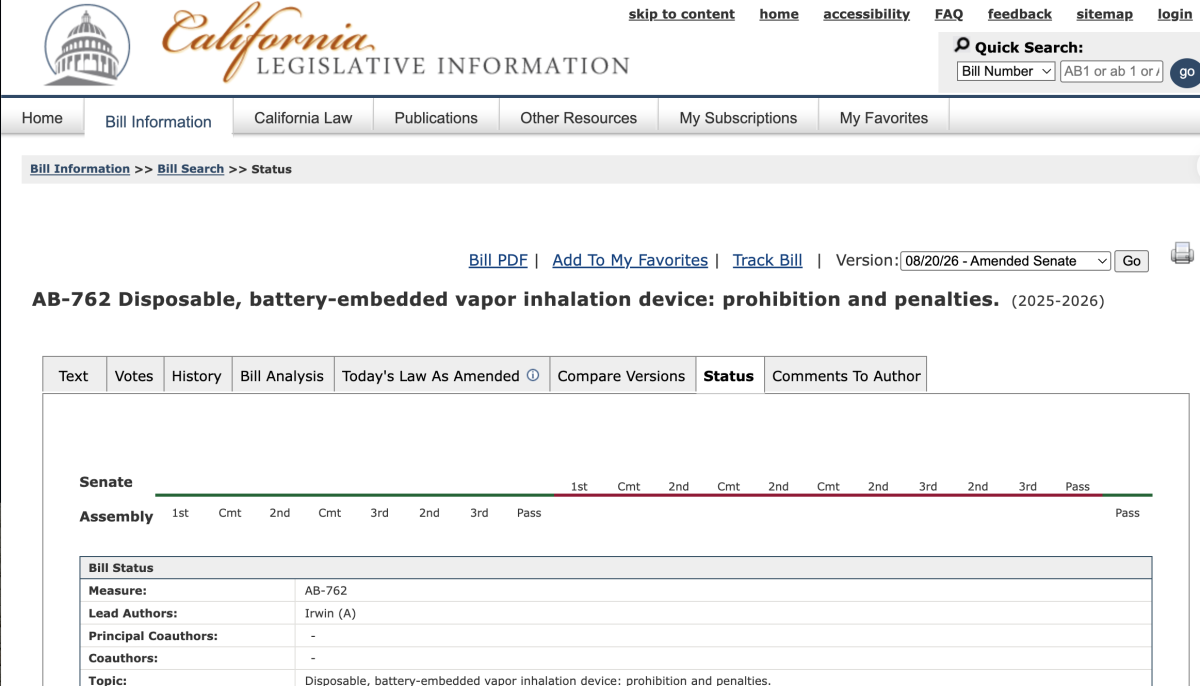
According to CBS Los Angeles on August 27, 2026, California lawmakers have passed Assembly Bill 762, which would phase out disposable, battery-embedded nicotine vapes in the state. If signed by Governor Gavin Newsom, manufacturing and importation of the covered products would be prohibited beginning January 1, 2027, followed by a sales ban on January 1, 2028. Driven primarily by concerns over electronic waste, lithium-battery fires and environmental pollution, the legislation would further shift California’s legal vape market toward rechargeable, refillable or replaceable-pod devices.
Aug.28
PMI Q2 Revenue Rises 10.4% as IQOS and VEEV Expand, U.S. ZYN Growth Slows
Philip Morris International’s second-quarter net revenues rose 10.4% to a record $11.19 billion, as heated tobacco and e-vapor expanded across international markets. IQOS remained the main smoke-free growth engine, while VEEV shipments jumped 55.1%. In the United States, however, ZYN shipments increased just 1.8% and consumer offtake was broadly flat to slightly higher. Cigarette volumes also rose, showing that PMI’s transformation is advancing, but growth is becoming increasingly uneven across categories and markets.
PMI
Jul.22
Australia’s One Nation Proposes 75% Tobacco Tax Cut, Says Lower Prices Could Hit Illicit Market
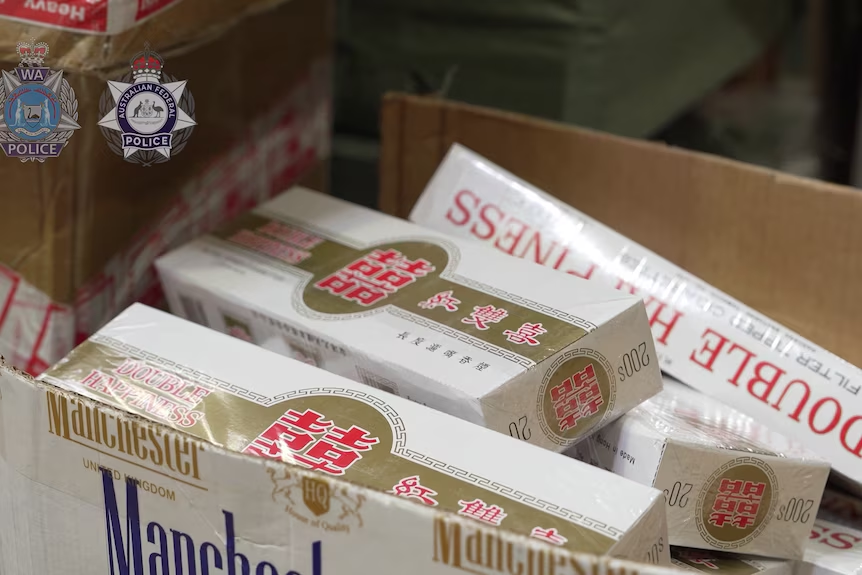
Australia’s One Nation party has proposed cutting tobacco excise by 75%, arguing that lower legal cigarette prices could narrow the gap with illicit tobacco and reduce demand for black-market products. The proposal comes as Australia continues expanding enforcement against illicit tobacco supply chains through border controls, retail inspections and organised-crime investigations. Supporters argue high taxes have contributed to illicit-market growth, while opponents warn that lower tobacco prices could undermine public-health goals. The proposal is a party policy position and has not been adopted by the Australian government.
Aug.18
Philippine Local Governments Urge Marcos to Prioritize Smoke- and Vape-Free Bill
The League of Municipalities of the Philippines (LMP) has urged President Ferdinand Marcos Jr. to prioritize the Smoke- and Vape-Free Bill, seeking a nationwide legal framework for tobacco and vape regulation. Local government leaders said national legislation would help standardize enforcement and strengthen public health measures. The proposal remains at the advocacy stage and has not yet become law.
Jul.29
U.S. Fifth Circuit Vacates NicQuid Vape MDO, Says FDA Comparative-Efficacy Standard Violated APA Procedures
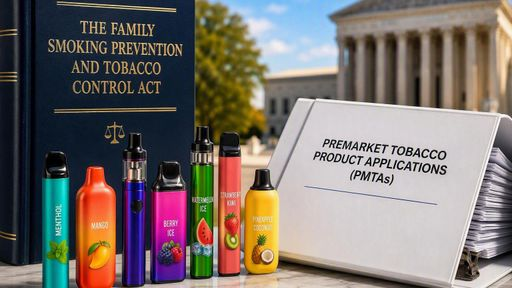
According to VitalLaw on August 27, 2026, the U.S. Court of Appeals for the Fifth Circuit vacated an FDA marketing denial order (MDO) against NicQuid LLC, ruling that the agency’s comparative-efficacy standard for electronic nicotine delivery system (ENDS) applications had become a substantive rule requiring notice-and-comment rulemaking under the Administrative Procedure Act (APA). The court did not reject FDA’s authority to compare the public health benefits and risks of flavored vapes, but held that the agency could not establish a broadly binding standard through informal adjudications. The case was remanded to FDA for further proceedings.
Aug.28
Product | BAT Launches glo Hyper pro+ in Japan, Upgrading the Hyper Platform With Faster Start and Smart Device Management
British American Tobacco Japan (BAT Japan) has introduced glo Hyper pro+, an upgraded device within the existing glo Hyper platform. The device adds QuickStart™ rapid heating technology, an EasyView™ display and maintenance notification features to improve daily usability. Launched in Japan on July 13, 2026, glo Hyper pro+ maintains compatibility with existing Hyper-format tobacco sticks, including neo, Lucky Strike and KENT.
Jul.30