
China's E-cigarette Export Data to Canada in March 2024

Industry Insight by 2FIRSTS
May.11.2024
China's E-cigarette Export Data to Canada in March 2024
China's e-cigarette exports to Canada in March 2024 totaled $17.45 million, with a 15.88% monthly increase and 47.55% yearly decrease.

According to the updated trade data from the General Administration of Customs, 2FIRSTS has compiled e-cigarette export data from China to Canada for March 2024. The details are as follows:
 

3月中国出口加拿大电子烟约万美元 环比增长15.88%
 

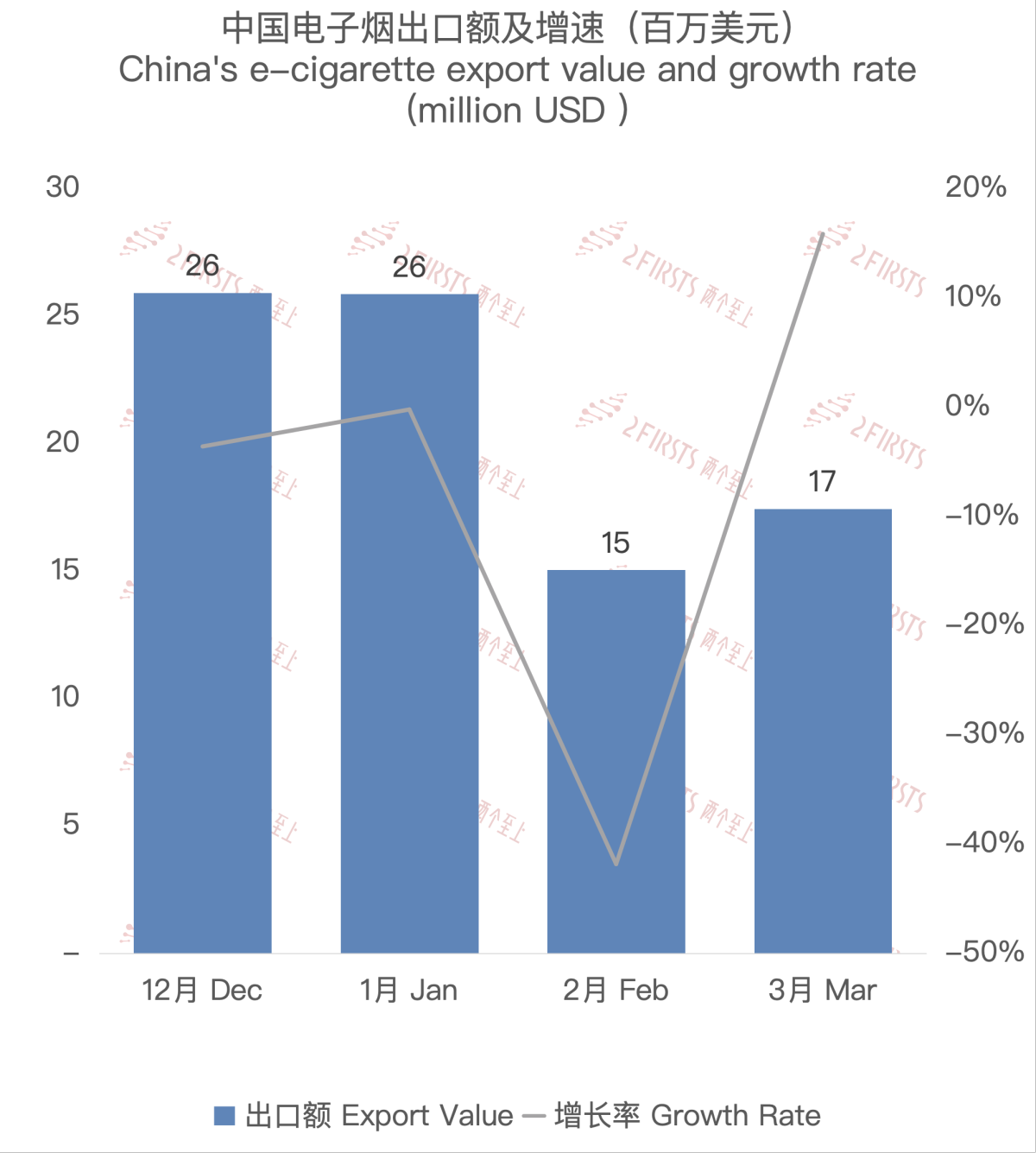
The export volume reached approximately $17.45 million, showing a sequential increase of 15.88% but a year-on-year decline of 47.55%.
 

3月中国出口加拿大电子烟约万美元 环比增长15.88%
 

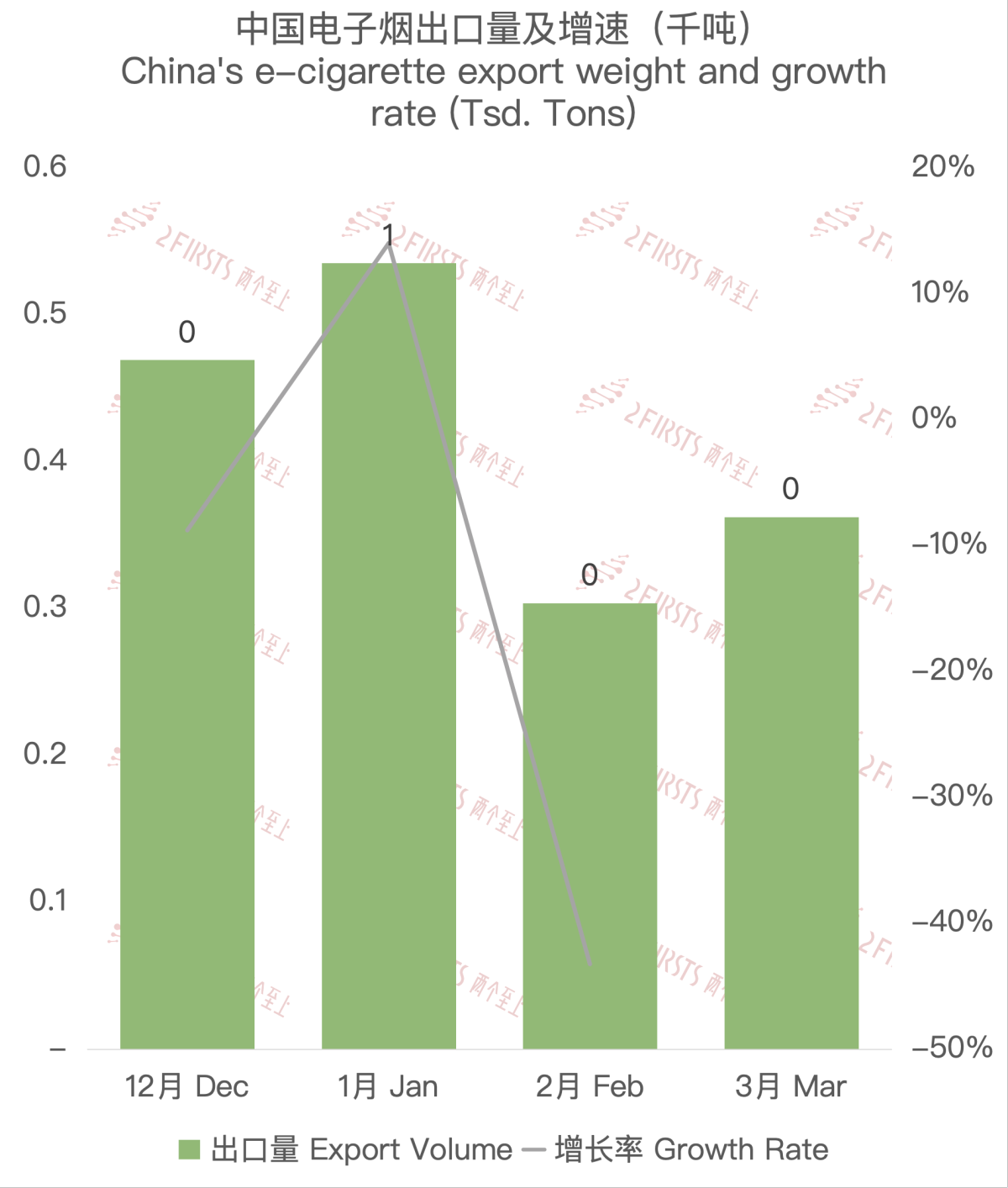
The export volume is approximately 363 tons, with a sequential increase of 19.32% and a year-on-year decrease of 33.56%.
 

3月中国出口加拿大电子烟约万美元 环比增长15.88%
 

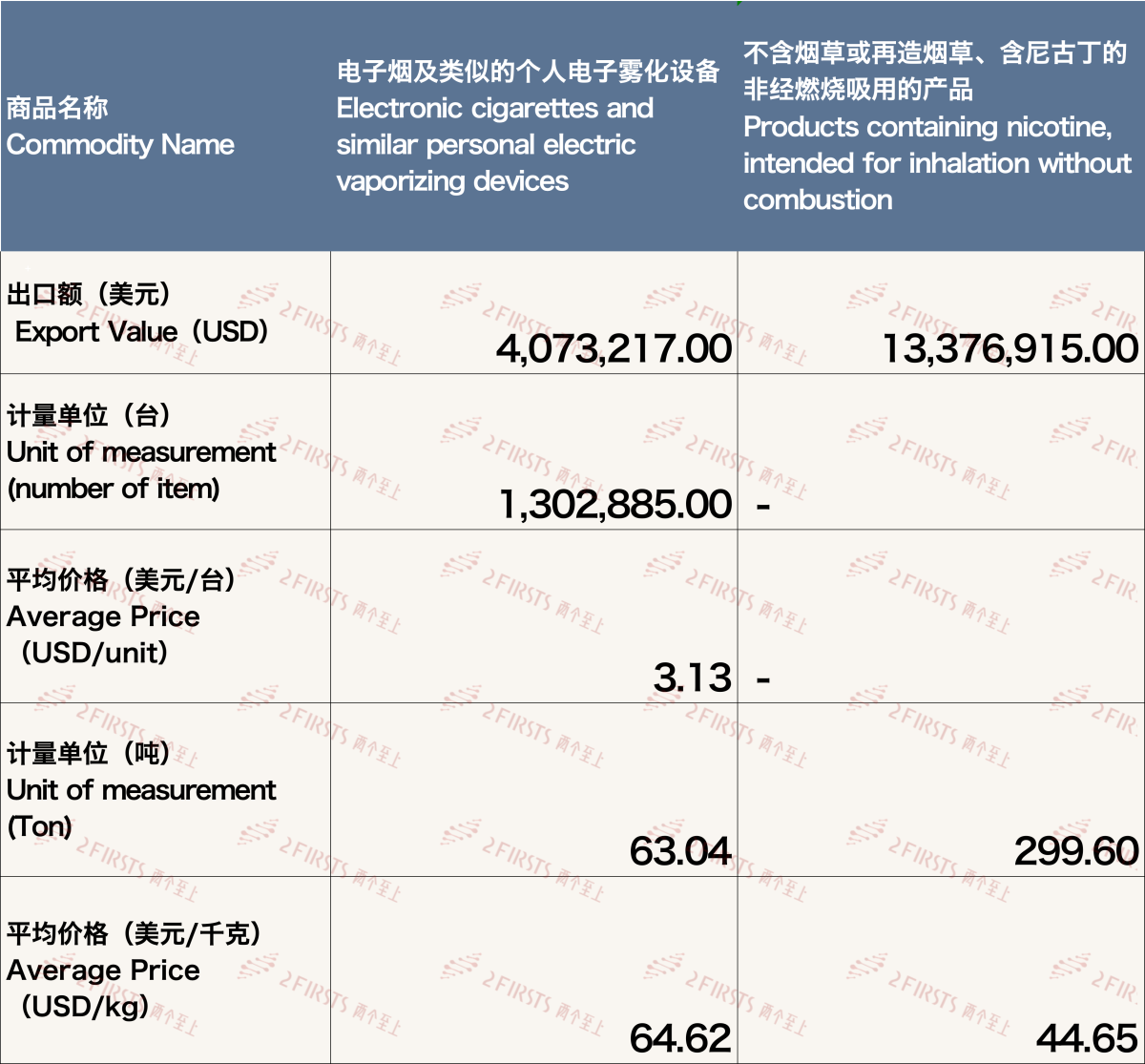
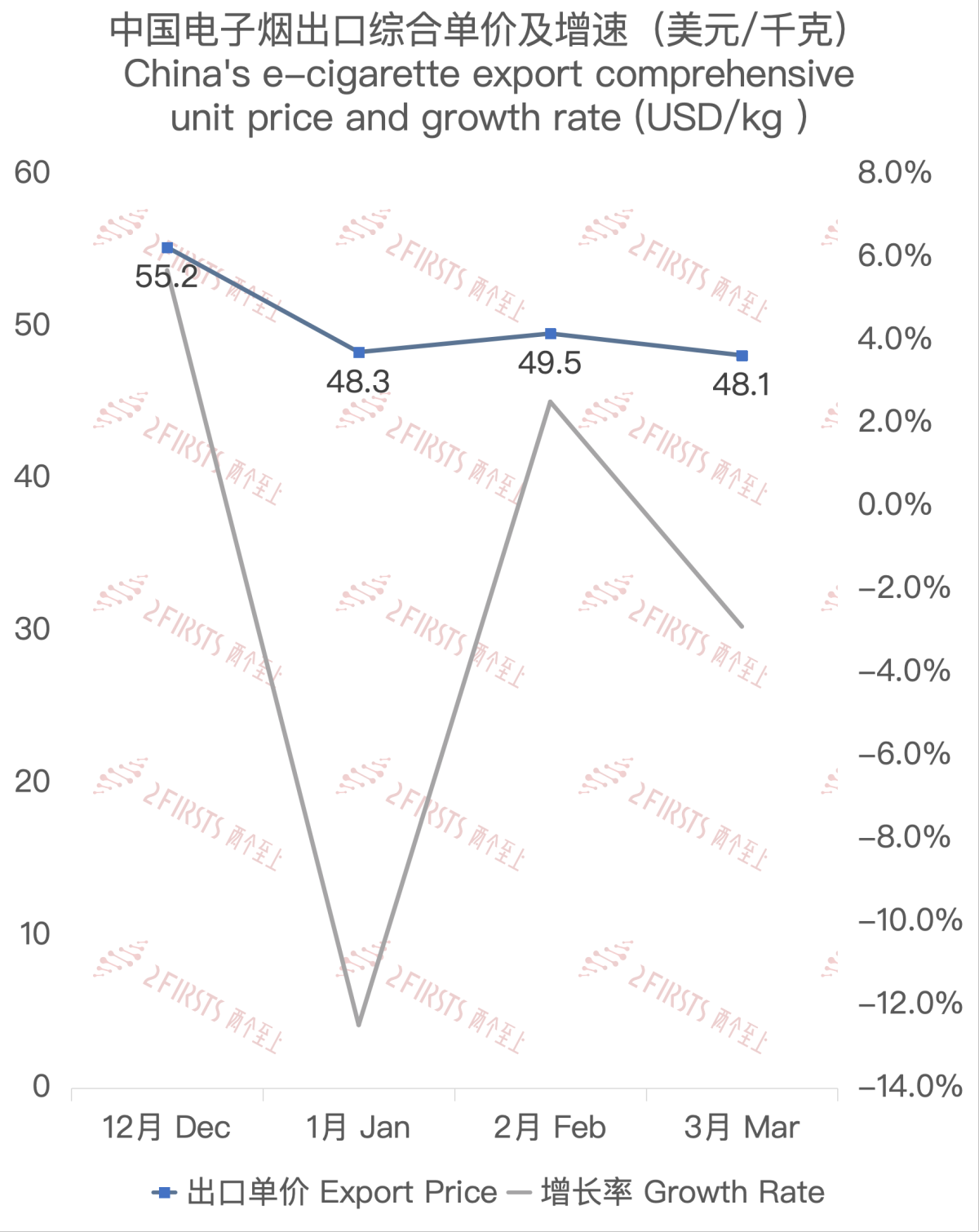
The export unit price is $48.12 per kilogram, down 2.88% month-on-month and 21.06% year-on-year; the average price of "e-cigarettes and similar personal electronic vapor devices" is $3.13 per unit.

3月中国出口加拿大电子烟约万美元 环比增长15.88%


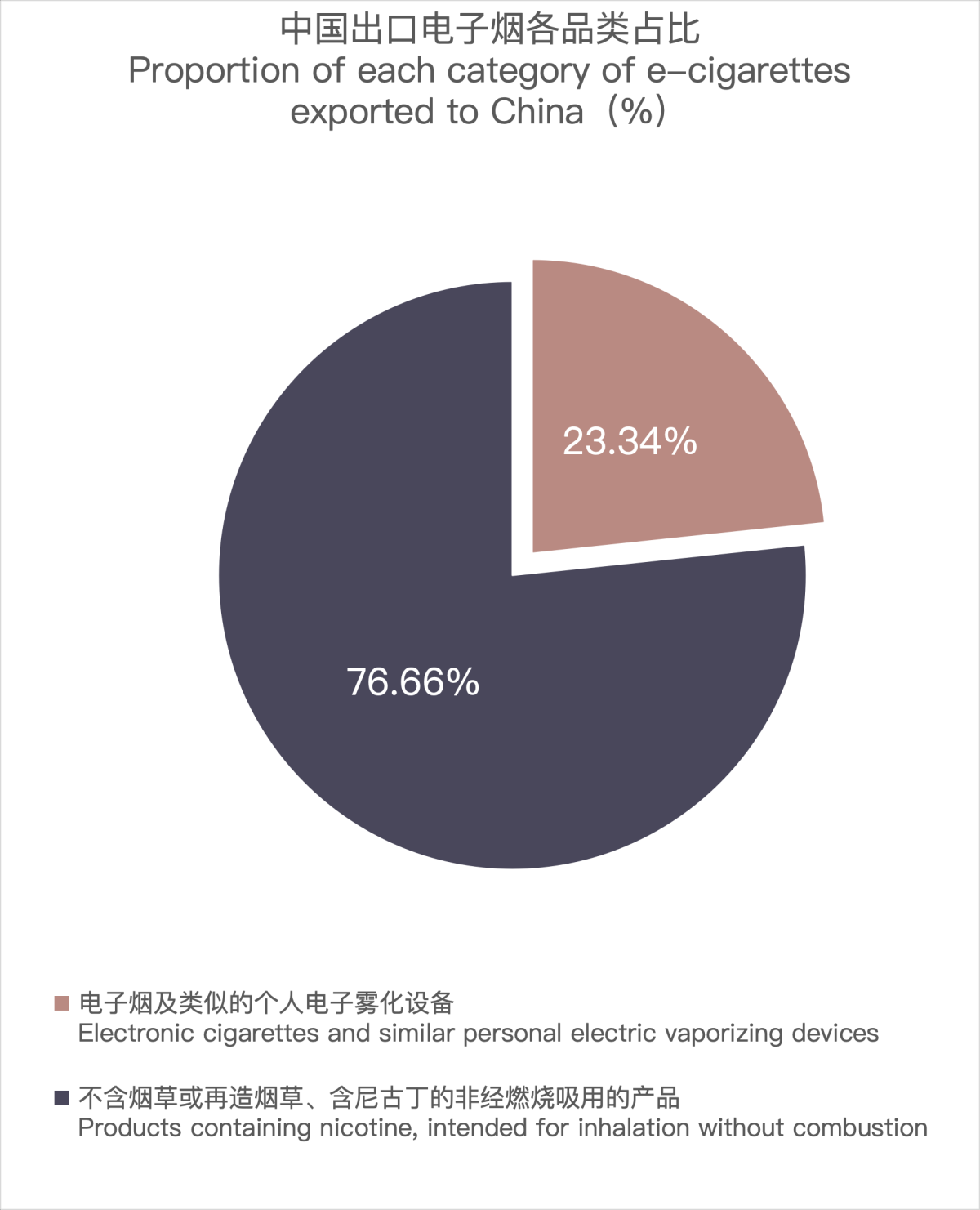
Among them, "e-cigarettes and similar personal electronic vaporization devices" account for 23.35% of the export category, while "products containing nicotine that do not contain tobacco or reconstituted tobacco and are not intended for combustion use" account for 76.66%.
 

3月中国出口加拿大电子烟约万美元 环比增长15.88%


We welcome news tips, article submissions, interview requests, or comments on this piece.

Please contact us at info@2firsts.com, or reach out to Alan Zhao, CEO of 2Firsts, on LinkedIn


Notice

1.  This article is intended solely for professional research purposes related to industry, technology, and policy. Any references to brands or products are made purely for objective description and do not constitute any form of endorsement, recommendation, or promotion by 2Firsts.

2.  The use of nicotine-containing products — including, but not limited to, cigarettes, e-cigarettes, nicotine pouchand heated tobacco products — carries significant health risks. Users are responsible for complying with all applicable laws and regulations in their respective jurisdictions.

3.  This article is not intended to serve as the basis for any investment decisions or financial advice. 2Firsts assumes no direct or indirect liability for any inaccuracies or errors in the content.

4.  Access to this article is strictly prohibited for individuals below the legal age in their jurisdiction.


Copyright


This article is either an original work created by 2Firsts or a reproduction from third-party sources with proper attribution. All copyrights and usage rights belong to 2Firsts or the original content provider. Unauthorized reproduction, distribution, or any other form of unauthorized use by any individual or organization is strictly prohibited. Violators will be held legally accountable.

For copyright-related inquiries, please contact: info@2firsts.com


AI Assistance Disclaimer


This article may have been enhanced using AI tools to improve translation and editorial efficiency. However, due to technical limitations, inaccuracies may occur. Readers are encouraged to refer to the cited sources for the most accurate information.

We welcome any corrections or feedback. Please contact us at: info@2firsts.com

PMI’s Japan unit to raise IQOS ILUMA stick prices; TEREA and SENTIA to increase from April
Japan will adjust tobacco taxes from April 1, 2026, prompting Philip Morris International (PMI) to lift prices for its IQOS ILUMA tobacco sticks TEREA and SENTIA. Both products are set to rise by 40 yen per pack (about $0.3).
Jan.21 by 2FIRSTS.ai
Morocco rolls out compulsory rules for e-cigarettes, muassel and nicotine pouches
Starting February 2026, Morocco will apply its first mandatory standard governing “smoke-free” products—covering e-cigarettes, muassel and nicotine pouches. Drafted by IMANOR, the standard introduces detailed requirements on composition, labelling, traceability and safety, and will apply to imported products. Consumer advocates say clear labelling and traceability are essential, while urging stronger public-awareness efforts and resources.
Feb.03 by 2FIRSTS.ai
Pakistan Senate bill seeks strict control of vapes and e-cigarettes in Islamabad, including under-18 sales ban
Following approval by the Senate Standing Committee on National Health Services, the Electronic Nicotine Delivery Systems (Regulation) Bill is set to be tabled in the Senate to impose strict controls on the sale, marketing and use of vapes and e-cigarettes in Islamabad.
Jan.08 by 2FIRSTS.ai
Estonia warns of a booming illicit vape market, raising risks for minors and legitimate trade
Estonia’s Chamber of Commerce and Industry and the Tax and Customs Board are urging the government to address a thriving illicit vape market that undermines fair competition and makes vapes easily accessible to minors.
Feb.04 by 2FIRSTS.ai
Russia’s Volgograd fines retailer 300,000 rubles for unlabelled nicotine products, orders confiscation and destruction
Volgograd, Russia say a retailer was caught selling unlabelled nicotine products, including electronic nicotine delivery devices flagged in the national “Honest Sign” tracking system as already withdrawn from circulation. A local court fined the entrepreneur 300,000 rubles and ordered 41 confiscated items to be destroyed, with the decision now in effect.
Feb.05 by 2FIRSTS.ai
The Volume Illusion: Measuring the Future of Nicotine with the Tools of the Past
As next-generation nicotine products become economically central rather than marginal, traditional volume-based metrics are increasingly unable to explain consumption, risk, and value. Units designed for a cigarette-based economy struggle to describe systems defined by delivery speed, pharmacokinetics, and adaptive user behavior. Drawing on financial reporting, regulation, and nicotine science, a fundamental question: can the future of nicotine still be measured using the tools of its past?
Feb.09 by Alan Zhao | 2Firsts Perspectives