ITCAN Launches Public Awareness Campaign for Zonnic Nicotine Pouches

Business by 2FIRSTS.ai
Apr.16.2024
ITCAN Launches Public Awareness Campaign for Zonnic Nicotine Pouches
ITCAN launches public campaign to educate about Zonnic nicotine pouches, aiming to dispel misunderstandings and promote smoking reduction in Canada.

According to a statement released by Imperial Tobacco Canada (ITCAN), the company has launched a public awareness campaign to broaden the public's knowledge of Zonnic nicotine pouches. The company stated that the goal of the campaign is to dispel misconceptions and provide accurate scientific information about nicotine replacement therapy (NRT) and how Zonnic can reduce tobacco use in Canada.


ITCAN President and CEO Frank Silva stated in a declaration, "Our new Zonnic advertising campaign affirms the statements about Zonnic nicotine pouches and reflects our dedication to reducing tobacco harm and commitment to helping Canada decrease smoking rates." The company pointed out that since Zonnic was launched in October last year, anti-tobacco lobbying groups and the federal health department have been making accusations and incorrect descriptions about it.


Silva stated: "Our goal is very clear; we want to help those who want to quit smoking, as long as they are willing to quit."


According to him, this initiative begins with the release of innovative and unique alternatives, ensuring that these products are readily available to adults while also preventing minors from accessing any form of nicotine products, including NRTs. Our stance includes the belief that any form of NRT should require age verification before purchase and be stored in a way that minors cannot access them in retail locations.


Silva said, "We have tried to meet with Minister Herland, our doors are always open to him, but he has not responded to our calls. We are very willing to have a fair, fact-based discussion to keep NRT available to adult smokers and prevent nicotine products from falling into the hands of teenagers. By working together, we can achieve the goals of your department, goals that we share."


We welcome news tips, article submissions, interview requests, or comments on this piece.

Please contact us at info@2firsts.com, or reach out to Alan Zhao, CEO of 2Firsts, on LinkedIn


Notice

1.  This article is intended solely for professional research purposes related to industry, technology, and policy. Any references to brands or products are made purely for objective description and do not constitute any form of endorsement, recommendation, or promotion by 2Firsts.

2.  The use of nicotine-containing products — including, but not limited to, cigarettes, e-cigarettes, nicotine pouchand heated tobacco products — carries significant health risks. Users are responsible for complying with all applicable laws and regulations in their respective jurisdictions.

3.  This article is not intended to serve as the basis for any investment decisions or financial advice. 2Firsts assumes no direct or indirect liability for any inaccuracies or errors in the content.

4.  Access to this article is strictly prohibited for individuals below the legal age in their jurisdiction.


Copyright


This article is either an original work created by 2Firsts or a reproduction from third-party sources with proper attribution. All copyrights and usage rights belong to 2Firsts or the original content provider. Unauthorized reproduction, distribution, or any other form of unauthorized use by any individual or organization is strictly prohibited. Violators will be held legally accountable.

For copyright-related inquiries, please contact: info@2firsts.com


AI Assistance Disclaimer


This article may have been enhanced using AI tools to improve translation and editorial efficiency. However, due to technical limitations, inaccuracies may occur. Readers are encouraged to refer to the cited sources for the most accurate information.

We welcome any corrections or feedback. Please contact us at: info@2firsts.com

Indonesia's Vape Ban Case Advances, With 200 Industrial Companies and $518 Million in Annual Exports Facing Uncertainty; Five Government Agencies to Address Court on December 2
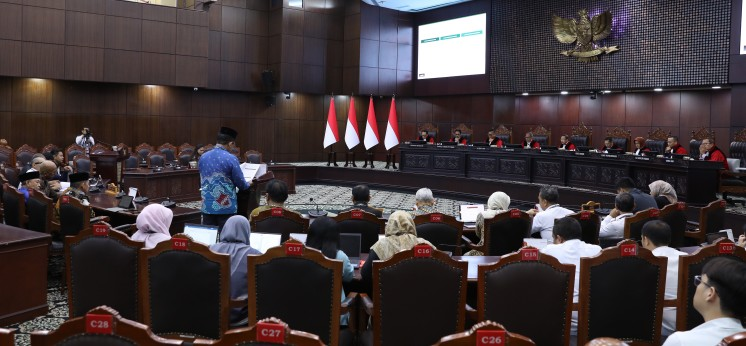
Indonesia's Constitutional Court held its fifth hearing on November 25 in a case seeking a comprehensive ban on e-cigarettes. Three vaping industry associations challenged the proposed ban, citing existing excise duties, local tobacco taxes and business licensing regulations, while the Indonesian Ulema Council (MUI) called for ending the legal distribution of e-cigarettes. The Ministry of Health previously defended the constitutionality of the existing Health Law on behalf of the government but did not rule out tighter restrictions or a comprehensive ban in the future. According to the Ministry of Industry, Indonesia has approximately 200 companies in the e-cigarette manufacturing sector, with exports reaching $518.28 million in 2025, more than triple their 2022 level. Five government agencies, including the ministries of industry and trade, are scheduled to present their views on December 2.
Regulations
Nov.27
Latest UK ONS Data: Vaping Rate Edges Down to 9.9% in 2025, a Year After Overtaking Cigarette Smoking
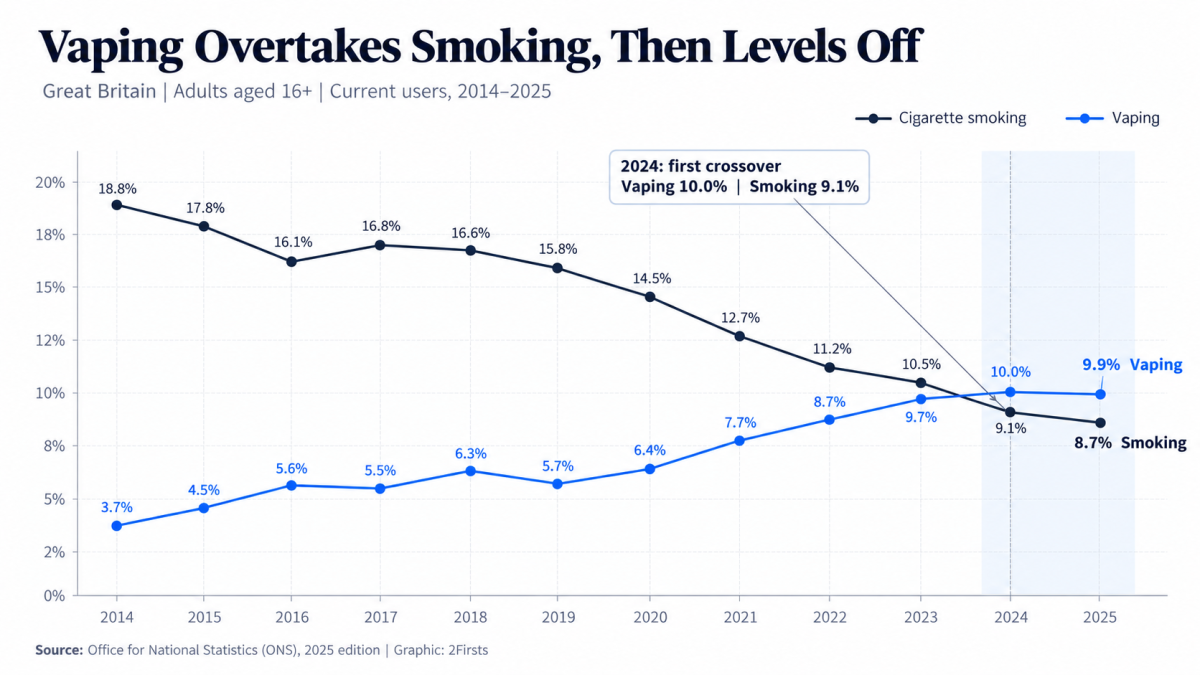
Vaping prevalence in Great Britain edged down to 9.9% in 2025 from 10.0% in 2024, with the number of adult users holding at approximately 5.4 million for a second consecutive year, according to the Office for National Statistics (ONS). E-cigarette use had risen from 6.4% in 2020 to 10.0% in 2024, when it exceeded cigarette smoking prevalence for the first time. Cigarette smoking continued to decline to 8.7% in 2025, widening the gap to 1.2 percentage points. Daily vaping declined slightly, while usage among adults aged 25–34 increased despite falling rates in other age groups.
DATA
Oct.14
Special Report|Japan Tobacco Buys CLEW: Can Its 160,000-Store Cigarette Network Help It Vie for U.S. Nicotine Pouch Share Against PMI and BAT?
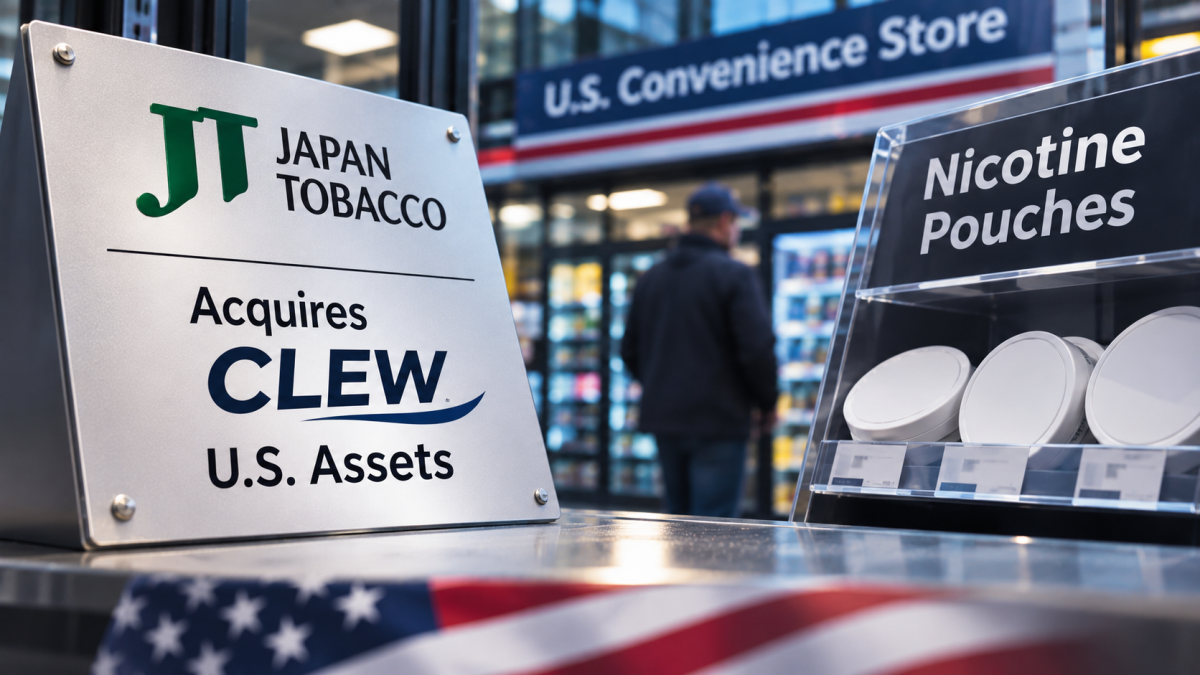
Japan Tobacco Inc. (JT) announced on November 12, 2026, that it had acquired the U.S. assets of nicotine pouch brand CLEW from Nevcore Innovations Inc., including trademarks, intellectual property, product formulations and a Premarket Tobacco Product Application (PMTA). CLEW, currently distributed through selected outlets in 13 U.S. states, will immediately join the JTI LIGGETT portfolio. The transaction follows JT's approximately $2.4 billion acquisition of U.S. cigarette maker Vector Group in 2024. JTI LIGGETT says its existing cigarette brands reach more than 160,000 U.S. retail stores. During the 2026 NACS Show in October, JTI LIGGETT booth staff told 2Firsts that the company had not yet launched nicotine pouches in the United States. Although Nevcore previously announced FDA acceptance of CLEW's PMTA, the brand is absent from the agency's current list of authorized nicotine pouch products. JT has not disclosed a retail expansion plan for CLEW.
Business
Nov.12
German Customs Seize 115,800 Vapes in €1.4 Million Tax Case
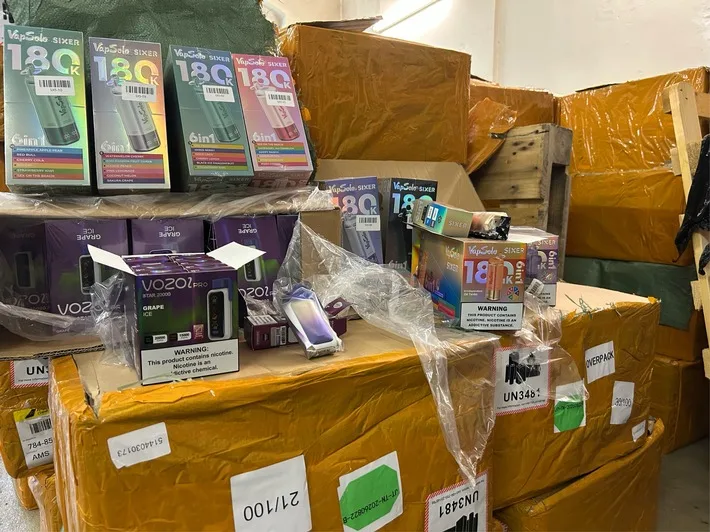
Germany's Magdeburg Main Customs Office seized 115,800 untaxed e-cigarettes containing a combined 4.366 million mL of e-liquid during four truck inspections between August 10 and September 4, 2026. The seizures prevented an estimated €1.397 million in tax losses and set a record for the customs office's jurisdiction. Criminal proceedings have been initiated against four truck drivers. The case follows a separate German investigation involving more than 7.6 million illicit vapes and an estimated €33.3 million in excise-tax losses.
Enforcement
Oct.13
Hungary Moves to End BAT-Backed Tobacco Supply Monopoly Eight Years Early After $200 Million in Profits, With No Compensation Planned
Hungary's government announced on November 18, 2026, plans to terminate the exclusive tobacco retail supply concession held by Országos Dohányboltellátó (ODBE) on June 1, 2027, approximately eight years before the contract's scheduled expiry in 2035. ODBE is owned 49% by a Hungarian subsidiary of British American Tobacco (BAT) and 51% by Tabán Trafik. It has served as the exclusive supplier to Hungary's licensed tobacco retail network since 2015. The proposed legislation would end the concession without compensation and allow other qualified suppliers and tobacco wholesalers to serve retailers directly. ODBE generated HUF 67.3 billion (approximately $200 million) in after-tax profit between 2015 and 2025 and distributed nearly HUF 64 billion ($191 million) in dividends. The bill also proposes changes to retail margins, inventory rules, payment arrangements and procurement penalties, including those affecting heated tobacco products.
company
Nov.19 by 2Firsts Perspectives
GAO Audit Finds Nearly 132,000 FDA Tobacco Applications Waiting an Average 1,266 Days as Nicotine Pouch Pilot Practices Move Into Vape PMTA Reviews
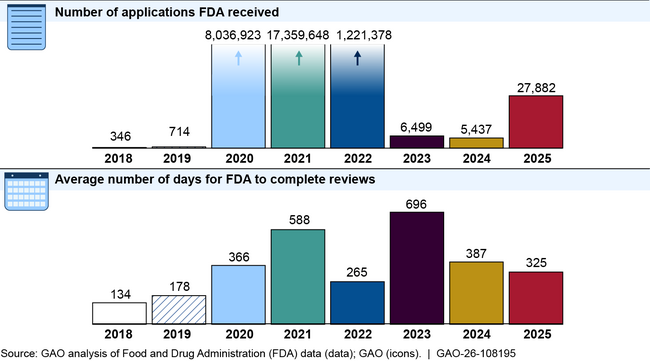
A U.S. Government Accountability Office audit found that 131,915 tobacco product applications submitted to the FDA since 2018 remained without a final review as of December 31, 2025, with pending applications waiting an average of 1,266 days. GAO also found FDA lacks the data needed to systematically determine whether scientific reviews meet applicable timelines. HHS agreed to upgrade the agency's tracking systems. At the same time, FDA has begun applying lessons from its nicotine pouch PMTA pilot to e-cigarette reviews, while changes to enforcement policy and electronic submissions are making the specific stage of a PMTA increasingly relevant to market access.
FDA
Oct.03