China's E-cigarette Export Data to South Korea in May 2024

Jun.26.2024
China's E-cigarette Export Data to South Korea in May 2024
Chinese e-cigarette exports to South Korea in May 2024 reached $71.21 million, with a 63.3% year-on-year increase.

According to updated trade data from the General Administration of Customs, 2FIRSTS has compiled the e-cigarette export data from China to South Korea in May 2024. Specifically, the details are as follows:
China's E-cigarette Export Data to South Korea in May 2024


Graphic: 2FIRSTS


The export volume is approximately 71.21 million US dollars, a decrease of 4.8% compared to the previous period, and an increase of 63.3% year-on-year.


Caption: 2FIRSTS has created the following graphic.


The export volume was approximately 2,863 tons, representing a decrease of 4.73% compared to the previous period and an increase of 53.20% year-on-year.


Map: 2FIRSTS


The export unit price is $24.87 per kilogram, remaining stable compared to the previous period and increasing by 6.6% year-on-year; the average price of "e-cigarettes and similar personal electronic vapor devices" is $58.2 per unit.


Mapping: 2FIRSTS


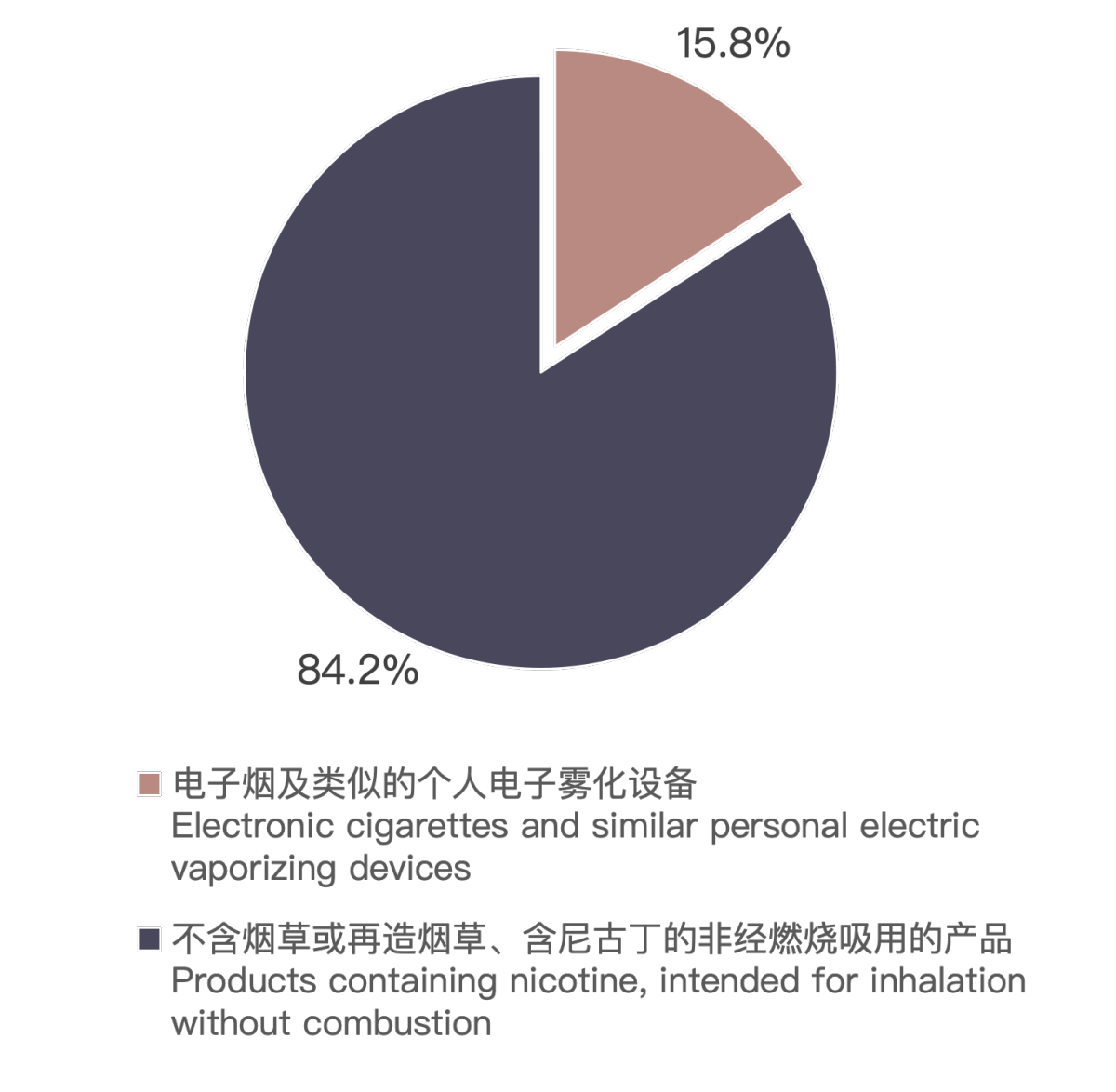
Among them, "e-cigarettes and similar personal electronic vaporization devices" account for 15.8% of the export categories, while "products containing nicotine that do not contain tobacco or reconstituted tobacco and are not intended for combustion use" account for 84.2%.


Mapping: 2FIRSTS


We welcome news tips, article submissions, interview requests, or comments on this piece.

Please contact us at info@2firsts.com, or reach out to Alan Zhao, CEO of 2Firsts, on LinkedIn


Notice

1.  This article is intended solely for professional research purposes related to industry, technology, and policy. Any references to brands or products are made purely for objective description and do not constitute any form of endorsement, recommendation, or promotion by 2Firsts.

2.  The use of nicotine-containing products — including, but not limited to, cigarettes, e-cigarettes, nicotine pouchand heated tobacco products — carries significant health risks. Users are responsible for complying with all applicable laws and regulations in their respective jurisdictions.

3.  This article is not intended to serve as the basis for any investment decisions or financial advice. 2Firsts assumes no direct or indirect liability for any inaccuracies or errors in the content.

4.  Access to this article is strictly prohibited for individuals below the legal age in their jurisdiction.


Copyright


This article is either an original work created by 2Firsts or a reproduction from third-party sources with proper attribution. All copyrights and usage rights belong to 2Firsts or the original content provider. Unauthorized reproduction, distribution, or any other form of unauthorized use by any individual or organization is strictly prohibited. Violators will be held legally accountable.

For copyright-related inquiries, please contact: info@2firsts.com


AI Assistance Disclaimer


This article may have been enhanced using AI tools to improve translation and editorial efficiency. However, due to technical limitations, inaccuracies may occur. Readers are encouraged to refer to the cited sources for the most accurate information.

We welcome any corrections or feedback. Please contact us at: info@2firsts.com

Special Report | China’s New Five-Year Plan Highlights “Health-First” Strategy, Providing Policy Context for Tobacco Sector
China’s 2026 “Two Sessions” reviewed the draft Outline of the 15th Five-Year Plan, which proposes implementing a health-first development strategy and strengthening the effectiveness of the Patriotic Health Campaign. Although the document does not address specific industries, this public-health governance framework provides a new policy context for observing the future regulation, product strategies, and market development of China’s tobacco and next-generation nicotine sectors.
Industry Insight
Mar.08
BAT CEO Says 2026 Return to Growth Hinges on U.S. Enforcement, Highlights Oral Leadership
British American Tobacco said 2026 will mark a return to its mid-term growth algorithm, but CEO Tadeu Marroco stressed that deliverywill depend heavily on enforcement against illicit vapour products in the United States. Speaking at the FY2025 results call, he positioned Modern Oral as the company’s primary structural growth engine, reframed accelerating cigarette declines through “poly-usage,” and reinforced capital discipline with an expanded share buyback plan.
Feb.12
Belarus opts for stricter regulation instead of full e-cigarette ban
Belarus rejects full e-cigarette ban, opts for stricter regulation. Officials plan to restrict wholesaling and strengthen import and production permits.
Mar.04 by 2FIRSTS.ai
Product | Vaporesso lists Vibe SE 2 on official site, offering leather/plated versions and a 1,400mAh battery
Vaporesso has recently listed the Vibe SE 2, a new device in its Vibe series, on the brand’s official website. The product is positioned as an entry-level MTL device and features a 1,400mAh built-in battery with Type-C 1A charging. It is available in two finishes—Leather and Plated—while listings on online retail channels show prices of around $17.99 and £22.99.
Jan.30 by 2FIRSTS.ai
DTI drafts administrative order proposing an open-pod and e-liquid ban and opens it for public consultation
Department of Trade and Industry’s (DTI) proposed move to restrict harmful vape products to protect young people, but said only a total ban on all vaping and novel tobacco products would effectively safeguard public health. The group warned that limiting rules to certain products such as open pods and e-liquids could create a “dangerous behavioral loophole,” leading users—especially youth—to switch to disposable or closed-system alternatives instead of quitting.
Feb.10 by 2FIRSTS.ai
Fiscal benefit, not health, strongest indicator for vape bans – Contributed by Samrat Chowdhery
Data shows 75% of nations with state stakes in tobacco trade ban modern substitutes compared to 10% in the free-market group. What is driving these divergent regulations?
Feb.04