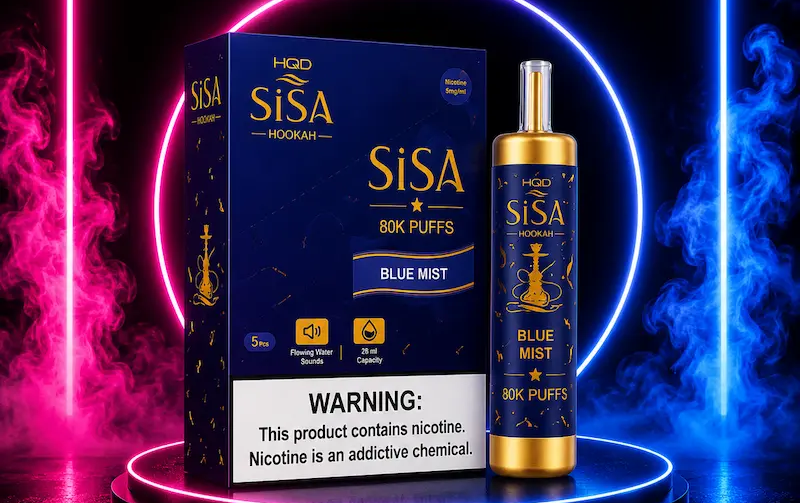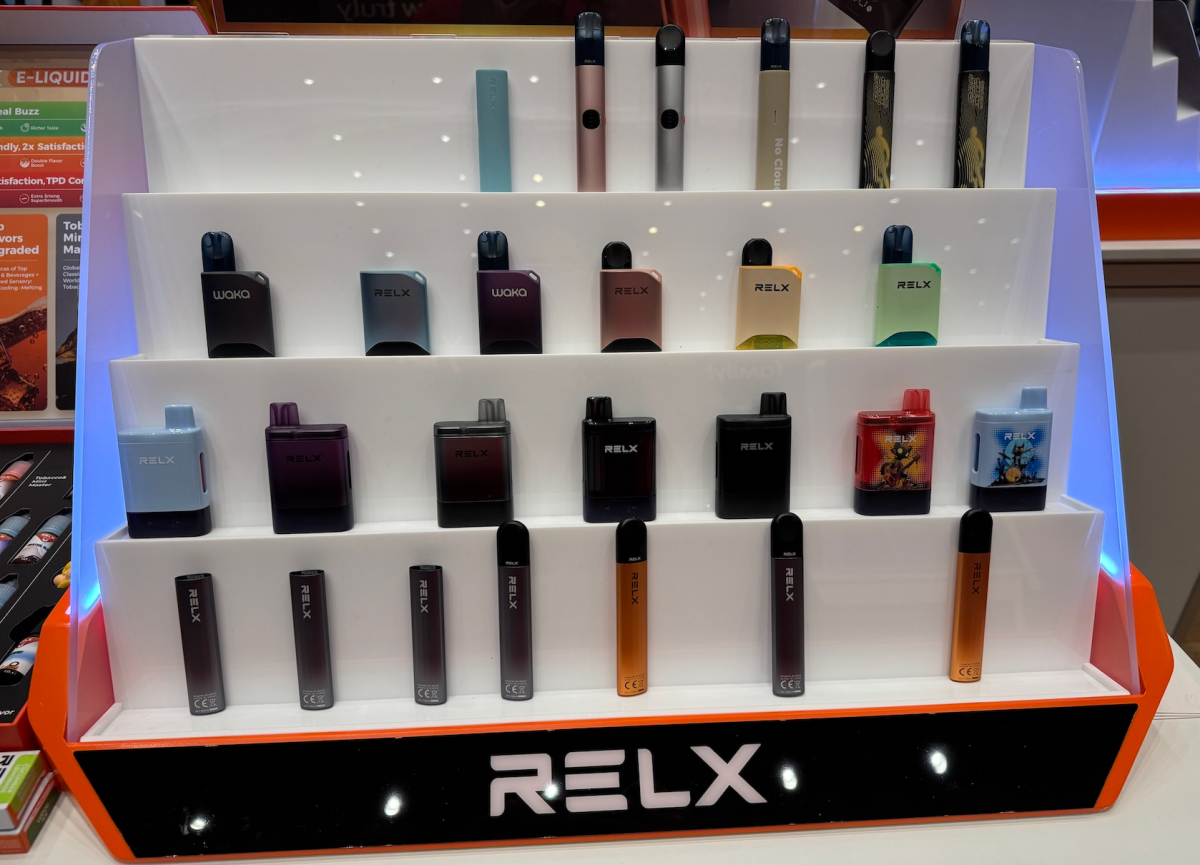
On October 1st, 2022, the regulation of electronic cigarettes in China completed the "transitional period" and officially came into effect. This signifies a new era of compliant development for the electronic cigarette industry in China. Since the invention of electronic cigarettes in China in 2002, the industry has undergone 20 years of development. According to the "2022 Blue Book of Electronic Cigarette Exports" jointly released by 2FIRSTS and ECCC, the global electronic cigarette market size will exceed 108 billion US dollars in 2022, and China's electronic cigarette exports will reach 186.7 billion yuan, with a growth rate of around 35%.
Shenzhen is the epicenter of the global aerosol supply chain and manufacturing, with 90% of electronic cigarettes produced there. However, as with other electronic manufacturing industries, the pursuit of cost advantages through globalized consumption and manufacturing has also given rise to the beginnings of a globalized layout for China's electronic cigarette industry.
China's e-cigarette industry has expanded outside of Shenzhen, with Southeast Asia being the top choice, and Indonesia being considered a "priority.
The IECIE International Electronic Cigarette Exhibition used to be the world's largest e-cigarette exhibition. Due to domestic regulatory policies, the 2022 IECIE exhibition was moved overseas and held in Jakarta, Indonesia, as the first stop. This exhibition attracted more than 300 exhibitors, with the presence of numerous Chinese e-cigarette manufacturers visible throughout the exhibition hall.
Source: 2FIRSTS. Image from the 2022 IECIE exhibition.
A group of news also confirms China's "preference" for Indonesia in its manufacturing.
Chinese company, Jingjia Corporation, has a production base in Indonesia capable of providing integrated electronic cigarette services. Smoore Technology Indonesia (STI) has invested 80 million US dollars in setting up an electronic cigarette factory in Indonesia. Smoore is one of the largest electronic cigarette manufacturers in the world. The highly precise Indonesian factory for electronic cigarette parts suppliers has been put into operation in 2022.
Why are many e-cigarette companies choosing Indonesia as their overseas manufacturing base? 2FIRSTS sent a research team to Indonesia to investigate the situation on the ground.
Indonesia's advantages
During a public speech at the IECIE Exhibition in Jakarta, Garindra Kartasasmita, the Secretary-General of the Indonesian E-cigarette Association (APVI), stated that the country's e-cigarette market has been growing at a rate of approximately 50% annually since 2013. However, due to the pandemic, the market experienced a 7% decline in 2021. It is expected to rebound this year with an anticipated growth of 50%.
Garindra Kartasasmita, the President of the Indonesian Vaping Association (APVI), gave a public speech at the IECIE Jakarta exhibition. Image source: 2FIRSTS.
Indonesia is emerging as the preferred destination for many manufacturers of e-cigarettes to expand their overseas operations. In addition to the conventional cost factors like land and labor, there are several unique advantages that the country offers.
The Benefits of Integrating Production and Sales
First, there is the "production and sales integration" dividend brought about by the population. Indonesia has a huge population of nearly 280 million, accounting for nearly 40% of the entire Southeast Asian population, making it the fourth most populous country in the world. Moreover, Indonesia has 70.2 million smokers, accounting for 34% of the total population, making it the world leader in terms of smoking rates. Indonesia's demographic structure provides fertile soil for e-cigarettes, with 40% of the country's population under the age of 35. This youthful population is more receptive to e-cigarettes and represents ample market potential. E-cigarettes produced in Indonesian factories have market potential in the local market, eliminating the various costs associated with transporting them to other countries.
The map of Indonesia, photo credit: http://www.shijieditu.net/Indonesia/
In addition, Indonesia has relatively lenient regulations when it comes to the marketing of electronic cigarettes. It is the only country in Southeast Asia that allows television and media to advertise tobacco products. Electronic cigarette bloggers also have a presence in Indonesia, particularly in vertical fields such as beauty and skincare. In fact, the number of Instagram posts sharing e-liquid and other related products in Indonesia ranks second globally.
Encouragement and support for the manufacture of e-cigarettes.
In Indonesia, the sale and import of electronic cigarettes are only allowed with the recommendation of the Minister of Health, the National Agency of Drug and Food Control (BPOM), and the Minister of Industry, as well as obtaining the Indonesian National Standard (SNI) certification. However, overall, the policy towards Chinese e-cigarette manufacturers is relatively favorable.
According to a report by the Indonesian International Daily, the country's Minister of Investment and Chairman of the Investment Coordinating Board, Bahlil, publicly stated the need for cooperation and job creation when commenting on Smoore's decision to set up a factory in Indonesia. He emphasized the importance of providing opportunities for the Indonesian people to become masters of their own country. Smoore Indonesia's CEO, Clayton Shen, expressed gratitude for the Indonesian government's support, particularly the tax exemption policy on the company's imported machines extended by the Ministry of Investment.
The challenges of venturing into Indonesia's waters.
Although the Indonesian market is a huge opportunity for Chinese manufacturers, it is not easy to succeed. They face numerous challenges.
A well-known domestic electronic cigarette manufacturer with intentions of building a factory in Indonesia has disclosed to 2FIRSTS that logistics is a major issue for manufacturers with no good solutions currently available. If the products are assembled in China and shipped to Indonesia, it is impossible to control the amount of time they will spend at customs. "I had a shipment stuck at customs since the end of last month and it still hasn't been released as of the 20th of this month. However, if the products are assembled in Indonesia and shipped from there to other areas within Indonesia, the difference in logistics and distribution speed between China and Indonesia is not as significant.
dock logistics, image source: Unsplash container.
Next is the lack of machinery. Another well-known domestic e-cigarette manufacturer with plans to establish factories in Indonesia stated, "There is a shortage of tools in Indonesia's local machinery that can keep up with production lines. If a factory is to be built, transportation from the home country is necessary, and this is a problem that needs to be overcome. Many people believe that machinery is not a big issue, and metals are the real problem, but this is a misconception.
The differences among industrial workers cannot be ignored. Along with overcoming cultural and regional barriers in worker training, changing work habits is also a major issue. An electronic cigarette manufacturer who has a strong presence in Indonesia remarked, "Indonesians have a tendency to be late, which has caused me a lot of headaches. I have established many standards for my employees and now I reward them if they do not show up late or leave early. This is very different from the work habits of Chinese workers.
Relocation or Overflowing
Looking at the electronics manufacturing industry, the globalization of the industry's layout is the result of a certain level of industrial technology and concentration. The expansion of China's e-cigarette industry from Shenzhen to Indonesia is not so much "relocation" as it is "spillover".
The biggest advantage of the electronic cigarette industry in Shenzhen comes from the industry cluster and synergy. Guo Xiaoyu, the co-founder and COO of 2FIRSTS, stated in a media interview that years of development have not only resulted in multiple electronic cigarette companies in Shenzhen's Bao'an district, but also attracted supporting companies such as industrial design, mold, and battery manufacturers. "Here, there's an electronic cigarette 'two-hour traffic circle,' and the entire industry chain is closely cooperating. When manufacturers and customers exchange ideas, new creative ideas can turn into products in less than two hours.
Source: "Vaporized for 20 years" documentary film, image of an electronic cigarette production workshop.
In the short term, the position of Shenzhen as the center of electronic cigarette manufacturing remains unchallenged, but this does not mean that the layout of manufacturing is set in stone. In fact, over the past five years, the electronic cigarette industry has undergone a round of "spillover" into the Greater Bay Area of China, specifically the area bordering Shajing in Bao'an District of Shenzhen and Dongguan. This spillover has not hindered the development of the Chinese electronic cigarette industry. In fact, it has been a period of rapid industry growth and upgrading over the past five years.
Therefore, the overflow of China's electronic cigarette industry to Indonesia can also be seen as a demonstration of China's absorption and utilization of manufacturing resources. This has broken the boundaries of the Greater Bay Area and extended to a wider region in the Asia-Pacific.
Author: Song Yutong; Image Design: Xing Zhiyeli
1. This article is intended solely for internal industry discussions and exchanges, and does not serve as any promotion or recommendation for any brand or product. 2. Smoking is harmful to health. Minors are prohibited from reading this article.
This article is an original piece written by 2FIRSTS Technology Co., Ltd. in Shenzhen. The company holds copyright and licensing rights, and any unauthorized copying, reposting, or other infringements will be subject to legal action.
Shenzhen
Disclaimer
This article is provided solely for professional research, industry discussion, and informational purposes. Any references to brands, companies, products, technologies, or policies are made for factual reporting and analytical purposes only, and do not constitute endorsement, recommendation, promotion, or advertising by 2Firsts.
Nicotine-containing products, including but not limited to cigarettes, e-cigarettes, heated tobacco products, and nicotine pouches, carry significant health risks. Readers are responsible for complying with all applicable laws and regulations in their respective jurisdictions, including age restrictions and access limitations.
The information contained in this article should not be regarded as investment, legal, medical, regulatory, or commercial advice. While 2Firsts strives to ensure the accuracy and reliability of its content, it does not assume liability for any direct or indirect loss arising from errors, omissions, inaccuracies, or reliance on the information contained herein.
This article is not intended for individuals below the legal age for accessing tobacco or nicotine-related information in their jurisdiction.
Copyright Notice
This article is either original content produced by 2Firsts or content reproduced, translated, summarized, or adapted from third-party sources with attribution where applicable. The intellectual property rights of the original content remain with 2Firsts or the respective original rights holders.
No individual or organization may copy, reproduce, distribute, republish, modify, translate, or otherwise use this content without prior authorization. Any unauthorized use may result in legal action.
For copyright-related inquiries, corrections, or removal requests, please contact: info@2firsts.com.
AI-Assisted Translation and Editing Notice
Portions of this article may have been translated, edited, or reviewed with the assistance of artificial intelligence tools to improve efficiency and readability. Due to the limitations of AI-assisted translation and editing, discrepancies, omissions, or inaccuracies may exist when compared with the original source.
Where applicable, readers are advised to refer to the original source for the most complete and accurate information. If you identify any errors or believe that any content infringes upon your rights, please contact us at info@2firsts.com, and we will review and address the matter promptly.