Key Points
- Since 2022, Estonia has banned the sale of many sweet/flavored e-cigarettes
- Estimates suggest over 50% of vapes consumed in Estonia may be illegal
- A Nicorex Baltic OÜ “empty pack” study found 52% of disposable vapes failed to meet any local requirement
- Estonia’s Environment Agency (Aug 2023) estimated about 80% of vapes found in waste were undeclared and non-compliant
- Youth findings: around 50% of 15–16-year-olds have tried vaping; 65% say vapes are easy to get; 70% started at 12–14; 25% vape almost daily; 68% used banned flavor
2Firsts, Feb 4, 2026
According to BNS, Estonia’s Chamber of Commerce and Industry and the Estonian Tax and Customs Board have warned the government that a thriving black market for e-cigarettes is damaging the country’s transparent economic environment and responsible trade practices, while making vaping products more accessible to minors.
Chamber Director General Mait Palts said the issue extends beyond any single sector or agency and should be treated as a broader societal challenge requiring shared responsibility across the state, businesses and civil society. He added that legal trade protects both honest businesses and minors, who may otherwise gain access to prohibited products of unknown origin and composition. Palts also warned that young people who buy from the black market today could become more susceptible to other forms of unlawful behavior in the future.
The statement referenced multiple studies and surveys. A waste analysis — an “empty pack” study — conducted by Nicorex Baltic OÜ found that 52% of disposable e-cigarettes did not comply with any of Estonia’s current requirements. In the same research, 60% of surveyed consumers said they regularly used products with banned flavors, pointing to widespread illicit distribution. Separately, an Environment Agency report published in August 2023 estimated that about 80% of e-cigarettes found in waste were not declared in Estonia and did not meet local standards.
On youth access, research by the National Institute for Health Development among school students found that about one in two 15–16-year-olds had tried e-cigarettes and 65% believed they were easy to obtain. Among students who had used e-cigarettes, 70% started at ages 12–14. The study also found that roughly one in four vaped almost daily, and 68% of users admitted using products with banned flavors.
Tax and Customs Board Director General Raigo Uukkivi said curbing the illicit vape trade requires broader public condemnation and understanding that black-market goods pose risks to both the economy and consumers. The agency reiterated that only products meeting Estonia’s requirements may be sold: flavors are limited to menthol and tobacco, nicotine content must not exceed 20 mg/ml, and liquid volume must not exceed 2 ml. Legal products can be recognized by an Estonian excise stamp on the packaging, indicating oversight checks and lawful distribution.
Palts said the current situation benefits only illegal traders and called for continued development of a cooperative oversight system, especially at the prevention stage, alongside stronger public awareness and reporting of smuggling and illicit sellers.
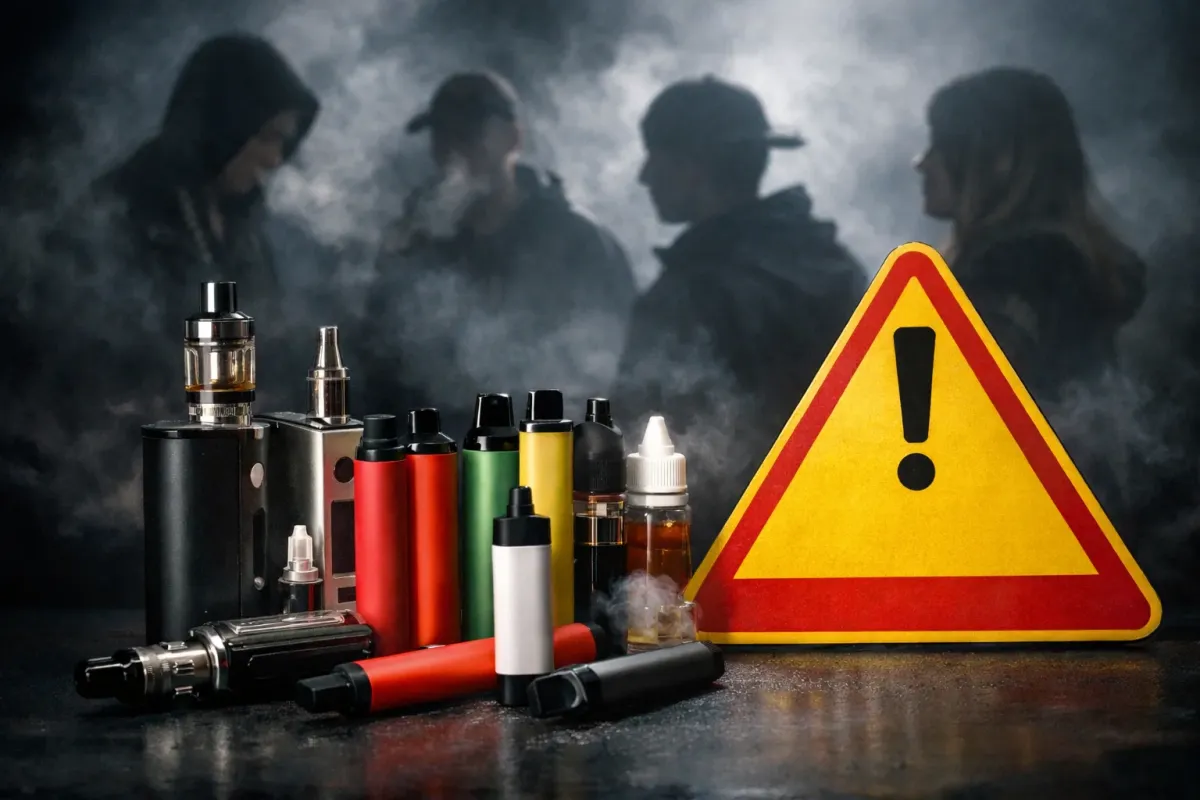
Image source: BNS
We welcome news tips, article submissions, interview requests, or comments on this piece.
Please contact us at info@2firsts.com, or reach out to Alan Zhao, CEO of 2Firsts, on LinkedIn
Notice
1. This article is intended solely for professional research purposes related to industry, technology, and policy. Any references to brands or products are made purely for objective description and do not constitute any form of endorsement, recommendation, or promotion by 2Firsts.
2. The use of nicotine-containing products — including, but not limited to, cigarettes, e-cigarettes, nicotine pouchand heated tobacco products — carries significant health risks. Users are responsible for complying with all applicable laws and regulations in their respective jurisdictions.
3. This article is not intended to serve as the basis for any investment decisions or financial advice. 2Firsts assumes no direct or indirect liability for any inaccuracies or errors in the content.
4. Access to this article is strictly prohibited for individuals below the legal age in their jurisdiction.
Copyright
This article is either an original work created by 2Firsts or a reproduction from third-party sources with proper attribution. All copyrights and usage rights belong to 2Firsts or the original content provider. Unauthorized reproduction, distribution, or any other form of unauthorized use by any individual or organization is strictly prohibited. Violators will be held legally accountable.
For copyright-related inquiries, please contact: info@2firsts.com
AI Assistance Disclaimer
This article may have been enhanced using AI tools to improve translation and editorial efficiency. However, due to technical limitations, inaccuracies may occur. Readers are encouraged to refer to the cited sources for the most accurate information.
We welcome any corrections or feedback. Please contact us at: info@2firsts.com