Chuck Schumer Urges Federal Action to Combat "Zyn" Nicotine Pouches

Regulations by 2FIRSTS.ai
Jan.23.2024
Chuck Schumer Urges Federal Action to Combat "Zyn" Nicotine Pouches
Chuck Schumer, the US Senate Majority Leader, is urging federal action to combat the danger posed by "Zyn" nicotine pouches.

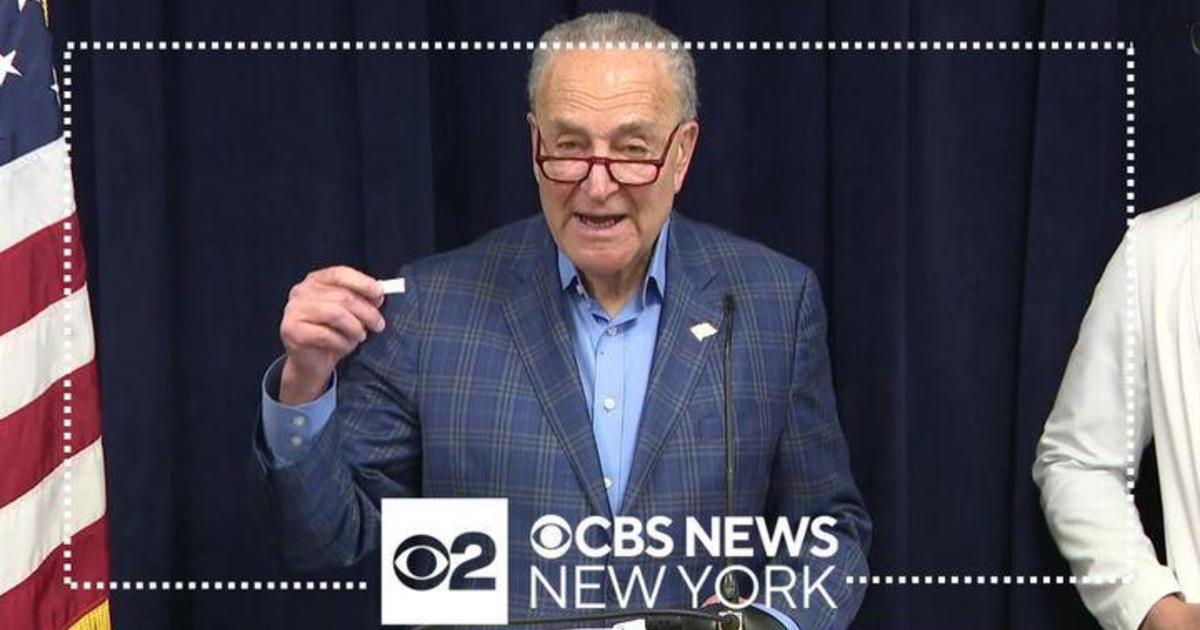
In a recent report by CBS New York, the Majority Leader of the United States Senate, Chuck Schumer, has called for federal action to combat the nicotine pouch product known as "Zyn". He expressed concerns that these nicotine pouches pose a danger to teenagers who use them as a substitute for e-cigarettes.


Schumer emphasizes that, despite being marketed as a healthier way to consume nicotine, Zyn might actually have negative impacts on the health of teenagers. He states that teenagers may misunderstand its risks and perceive it as a safe alternative to nicotine, a matter that requires attention from the federal government.


We welcome news tips, article submissions, interview requests, or comments on this piece.

Please contact us at info@2firsts.com, or reach out to Alan Zhao, CEO of 2Firsts, on LinkedIn


Notice

1.  This article is intended solely for professional research purposes related to industry, technology, and policy. Any references to brands or products are made purely for objective description and do not constitute any form of endorsement, recommendation, or promotion by 2Firsts.

2.  The use of nicotine-containing products — including, but not limited to, cigarettes, e-cigarettes, nicotine pouchand heated tobacco products — carries significant health risks. Users are responsible for complying with all applicable laws and regulations in their respective jurisdictions.

3.  This article is not intended to serve as the basis for any investment decisions or financial advice. 2Firsts assumes no direct or indirect liability for any inaccuracies or errors in the content.

4.  Access to this article is strictly prohibited for individuals below the legal age in their jurisdiction.


Copyright


This article is either an original work created by 2Firsts or a reproduction from third-party sources with proper attribution. All copyrights and usage rights belong to 2Firsts or the original content provider. Unauthorized reproduction, distribution, or any other form of unauthorized use by any individual or organization is strictly prohibited. Violators will be held legally accountable.

For copyright-related inquiries, please contact: info@2firsts.com


AI Assistance Disclaimer


This article may have been enhanced using AI tools to improve translation and editorial efficiency. However, due to technical limitations, inaccuracies may occur. Readers are encouraged to refer to the cited sources for the most accurate information.

We welcome any corrections or feedback. Please contact us at: info@2firsts.com

Malaysia moves ahead with vape sales ban plan; PMI urges Japan-style differentiated excise taxes
Malaysia plans to implement a ban or restrictions on e-cigarettes and vaping products as early as mid-2026 and no later than year-end. The head of Philip Morris Malaysia and Singapore said the government should look to Japan’s approach of regulating and taxing different tobacco and nicotine products differently, warning that an outright ban could push demand into illicit channels.
Feb.02
The Volume Illusion: Measuring the Future of Nicotine with the Tools of the Past
As next-generation nicotine products become economically central rather than marginal, traditional volume-based metrics are increasingly unable to explain consumption, risk, and value. Units designed for a cigarette-based economy struggle to describe systems defined by delivery speed, pharmacokinetics, and adaptive user behavior. Drawing on financial reporting, regulation, and nicotine science, a fundamental question: can the future of nicotine still be measured using the tools of its past?
Feb.09 by Alan Zhao | 2Firsts Perspectives
WHO warns Europe will remain the world’s biggest tobacco consumer by 2030 as vaping fuels youth uptake
According to Euronews, the World Health Organization (WHO) says its European Region—53 countries across Europe and Central Asia—is projected to remain the world’s largest tobacco consumer by 2030. While overall tobacco use is declining, e-cigarettes and flavoured nicotine products are capturing a new generation.
Feb.27 by 2FIRSTS.ai
Product | Vaporesso lists Vibe SE 2 on official site, offering leather/plated versions and a 1,400mAh battery
Vaporesso has recently listed the Vibe SE 2, a new device in its Vibe series, on the brand’s official website. The product is positioned as an entry-level MTL device and features a 1,400mAh built-in battery with Type-C 1A charging. It is available in two finishes—Leather and Plated—while listings on online retail channels show prices of around $17.99 and £22.99.
Jan.30 by 2FIRSTS.ai
Virginia asks Fourth Circuit to stay order blocking parts of its unauthorized-vape sales law
Virginia has asked the U.S. Court of Appeals for the Fourth Circuit to stay a district court order that blocks enforcement of certain provisions of a state law restricting the sale of unauthorized vaping products. The district court held the law was preempted to the extent it enforced federal requirements under the FDCA and the Tobacco Control Act.
Jan.21 by 2FIRSTS.ai
FDA Commissioner Stresses “Predictability” as Science Chief Addresses Industry Uncertainty
FDA Commissioner Marty Makary briefly appeared at the February 10 PMTA roundtable, underscoring the importance of regulatory predictability. At the close of the session, Office of Science Director Matthew Farrelly responded to industry concerns over review uncertainty, stating the agency will issue a written summary of feedback, while reiterating that no fixed quantitative risk benchmark governs authorization decisions.
Feb.11