Key Points
- EU finance ministers failed to agree on tobacco excise reform on November 9. Twenty-six member states supported the compromise, while Malta remained the only country unable to accept it.
- Malta cited concerns over minimum tax levels, periodic adjustments, purchasing-power mechanisms and national tax-setting flexibility.
- Finland and Estonia accepted further concessions. Estonia agreed to a compromise suspending automatic EU minimum-rate adjustments until the directive's next revision.
- A further proposal would include nicotine pouches in the EU tax framework while leaving the precise minimum rates for a later decision.
- Another compromise would allow ten qualifying countries until January 2036 to meet certain cigarette and roll-your-own tobacco excise requirements. Ireland plans to resume discussions in December.
2Firsts
November 11, 2026
European Union finance ministers failed to reach agreement on a tobacco excise overhaul at the Economic and Financial Affairs Council (ECOFIN) meeting in Brussels on November 9. The Irish Council presidency's compromise was backed by 26 of the EU's 27 member states, but Malta said it could not accept the text, preventing the Council from reaching a unanimous general approach.
The proposed reform would increase minimum excise duties on conventional tobacco and introduce a common EU minimum tax framework for e-cigarette liquids, heated tobacco and nicotine pouches.
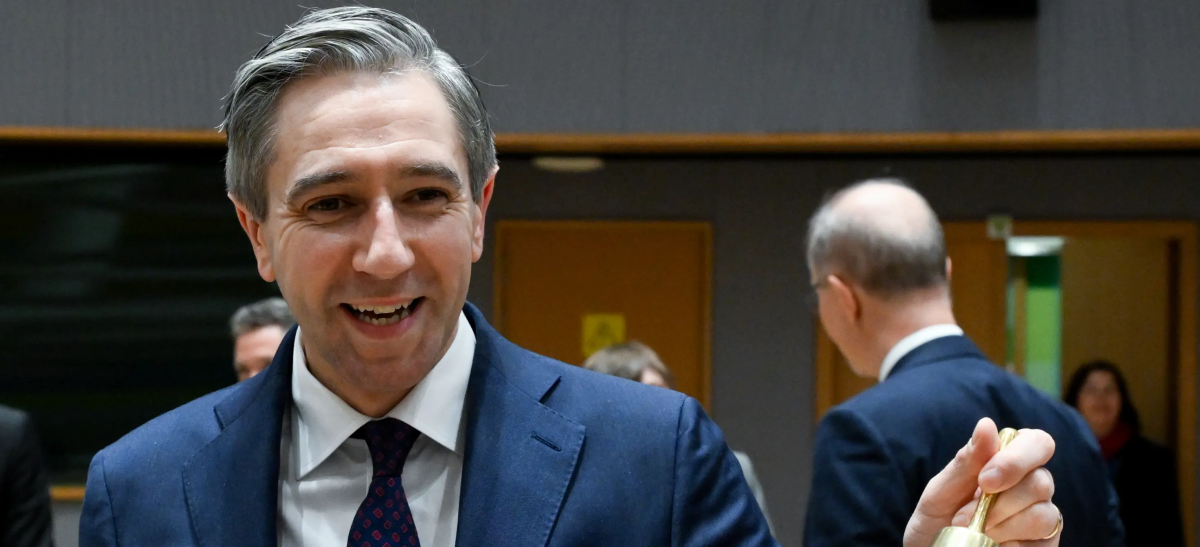
Irish Deputy Prime Minister and Finance Minister Simon Harris said after the meeting that support from 26 member states represented significant progress. Ireland intends to continue discussions with Malta and seek agreement in December without reopening the entire negotiated package.
Malta Remains Sole Holdout After Finland and Estonia Accept Compromise
The Council's official summary of the November 9 meeting confirms that most member states strongly supported the Irish presidency's tobacco taxation compromise, but one country ultimately said it could not accept the proposal.
Harris confirmed at his post-meeting news conference that 26 member states backed the package, leaving Malta as the only outstanding holdout.
Maltese Finance Minister Clyde Caruana said Malta supported the overall objectives of the reform but that concerns raised during the negotiations remained unresolved.
According to EUobserver and Maltese newspaper MaltaToday, Malta's objections focused on three issues: proposed minimum excise duties above current domestic levels, mechanisms for periodic rate adjustments and adjustments reflecting national purchasing power and price levels.
Caruana said the proposed minimum duties could have a disproportionate economic impact on Malta, despite recent changes concerning nicotine pouches.
He also argued that the adjustment mechanisms did not provide sufficient flexibility for member states to respond to domestic economic conditions.
Finland and Estonia also had reservations earlier in the November 9 discussions.
Finland had sought higher minimum taxes on nicotine pouches, while Estonia opposed provisions that could allow automatic adjustments to EU minimum excise duties without renewed unanimous agreement.
According to post-meeting reporting by EUobserver and Eunews, Estonia accepted an additional Irish compromise suspending automatic adjustments to EU minimum rates until the directive's next revision. No date has been set for that revision.
Finland also agreed to support the overall package, leaving Malta as the sole remaining holdout.
Under Article 113 of the Treaty on the Functioning of the European Union, the relevant excise harmonization measures require unanimous agreement in the Council. Support from 26 member states was therefore insufficient to establish a Council general approach.
Nicotine Pouch Rates Left for Later Talks as Ten Countries Offered Transition Until 2036
The European Commission proposed the tobacco tax overhaul in July 2025, seeking higher minimum duties for certain conventional tobacco products and a common EU minimum excise framework covering e-liquids, heated tobacco and nicotine pouches.
Unlike conventional cigarettes and several other tobacco categories already covered by EU minimum duties, these newer products face varying national excise arrangements across member states.
Nicotine pouch taxation was one of the main unresolved issues ahead of the November 9 meeting.
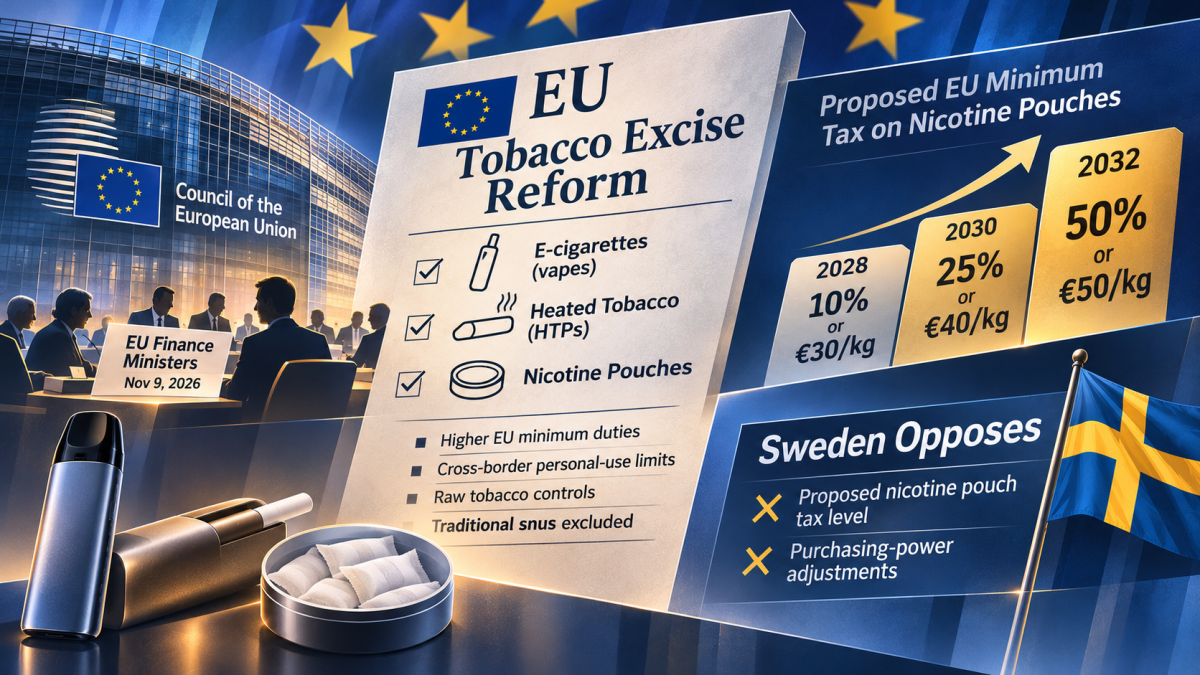
A Council note dated November 5, ST 15387/26, proposed phased minimum rates for nicotine pouches:
| Proposed implementation | November 5 compromise |
|---|---|
| January 1, 2028 | 10% of retail selling price or €30 per kilogram |
| January 1, 2030 | 25% of retail selling price or €40 per kilogram |
| January 1, 2032 | 50% of retail selling price or €50 per kilogram |
Those figures were part of the November 5 negotiating text, not enacted EU minimum tax rates.
According to reporting following the November 9 meeting, the Irish presidency subsequently proposed agreeing first on the inclusion of nicotine pouches in the common EU excise framework while leaving their precise minimum tax rates for a later decision.
That additional proposal did not secure unanimous support for the overall package.
Consequently, no new common EU minimum excise rates for nicotine pouches have been adopted. The proposed rules covering e-liquids and heated tobacco also remain subject to legislative agreement.
The transition period for conventional tobacco taxes was another part of the negotiations.
According to Italy's La Repubblica and Cyprus Mail, the Irish compromise would allow ten qualifying member states until January 1, 2036, to meet certain minimum excise requirements for cigarettes and roll-your-own tobacco.
The countries identified in those reports are Cyprus, Greece, Italy, Spain, Bulgaria, Croatia, Luxembourg, Portugal, Romania and Slovenia.
The proposed extension would apply to countries where reaching the new minimum requirements would require average annual excise increases exceeding 2.35%, calculated against 2025 levels.
Italy had previously expressed reservations about the reform. According to La Repubblica, Italian Economy Minister Giancarlo Giorgetti considered the latest compromise an acceptable balance between competing national demands.
The extended transition period remains part of an unapproved negotiating package.
The wider proposal also covers e-cigarette liquids, including qualifying nicotine-free liquids, heated tobacco, raw tobacco and certain cross-border excise arrangements.
With no Council agreement reached on November 9, the proposed common EU minimum excise rules have not entered into force. Existing national tax regimes remain applicable.
Ireland Plans December Talks as Further Legislative Steps Remain
The Council's November 9 meeting summary states that the Irish presidency intends to continue working with the remaining holdout to achieve unanimity as soon as possible.
Harris said Ireland would not reopen the entire negotiation but hoped to address Malta's outstanding concerns through further discussions in December.
The next regular ECOFIN meeting is scheduled for December 11, although any agreement on tobacco taxation remains dependent on those negotiations.
The reform consists of two related legislative proposals: a directive on the structure and minimum rates of excise duty on tobacco and related products, and amendments to the EU's general arrangements for excise duties.
The European Parliament delivered consultative opinions on June 17, 2026, rejecting the proposed directive on tobacco excise structures and rates while seeking amendments to the related general excise arrangements directive.
Under the applicable special legislative procedure, Parliament's consultation does not terminate the legislative process. The Council must still reach unanimity on the final measures through the required procedures.
As of November 10, 2026, the EU has not reached agreement on the tobacco taxation overhaul. Common EU minimum excise rules for e-cigarette liquids, heated tobacco and nicotine pouches remain under negotiation.
Follow 2Firsts for updates on global tobacco and nicotine taxation, regulation and market developments.
Cover Image source:Irish Council Presidency