Key Points
- Canada's federal government is reportedly open to changing pharmacy-only sales rules for nicotine pouches, but no decision has been made and the issue is not currently a government priority.
- Since 2024, certain emerging NRT products, including nicotine pouches, have been largely restricted to behind-the-counter pharmacy sales and limited flavors.
- Buccal nicotine pouches containing 4 mg or less per pouch can be non-prescription products, but remain subject to place-of-sale restrictions; products above 4 mg fall within prescription-drug rules.
- Zonnic was previously sold through convenience stores, gas stations and pharmacies before the 2024 restrictions, while Canada continues enforcement against unauthorized nicotine pouches.
2Firsts
September 13, 2026
According to Western Standard, citing reporting by the National Post, Canada's federal government is considering changes to restrictions on where nicotine pouches can be sold, potentially allowing certain authorized products to return to convenience stores and other general retail outlets.
A senior federal government source said Ottawa is open to changing the current rules, but no decision has been made and the issue is not a current government priority.
The discussion concerns Canada's pharmacy-focused sales model introduced in 2024 for emerging nicotine replacement therapy, or NRT, products. The federal government moved products including nicotine pouches out of general retail channels, citing concerns about youth access and appeal.
2024 Rules Moved Nicotine Pouches Out of General Retail
Health Canada introduced supplementary rules for emerging NRT products in August 2024.
Under the current framework, certain products including nicotine pouches are generally sold by pharmacists or under pharmacist supervision and kept behind pharmacy counters. The rules also restrict flavors as part of measures intended to reduce youth appeal.
The changes altered the retail model for Zonnic.
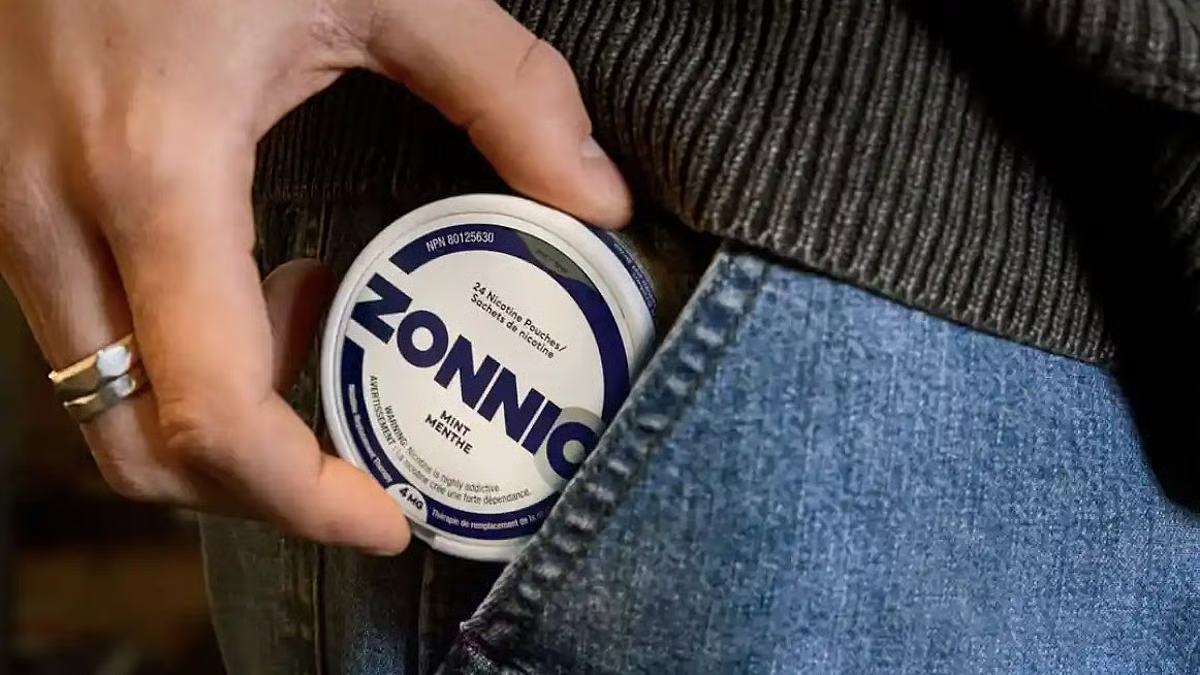
Before the 2024 restrictions, Zonnic had been sold through convenience stores, gas stations and pharmacies in parts of Canada. Following the rule change, the product shifted primarily to behind-the-counter pharmacy sales.
Zonnic contains 4 mg of nicotine per pouch. Its Canadian product licence is held by BAT-owned Nicoventures Trading Limited, while Imperial Tobacco Canada serves as the exclusive Canadian distributor.
Non-Prescription Status Does Not Remove Sales Restrictions
Health Canada further revised the prescription status of buccal nicotine pouches in January 2026.
Under the current framework, pouches containing 4 mg of nicotine or less per unit may be regulated as non-prescription natural health products. Products containing more than 4 mg fall within prescription-drug requirements.
Non-prescription status, however, does not automatically allow sale through convenience stores or other general retail outlets.
Authorized products at 4 mg or below remain subject to the place-of-sale rules introduced in 2024 and are therefore largely confined to pharmacy channels.
The current policy discussion centers on whether those retail restrictions should be changed.
Provinces and Convenience Retailers Push for Wider Access
Pressure to reconsider the policy has come from provincial governments and the retail industry.
Alberta Premier Danielle Smith has called on Prime Minister Mark Carney to revisit the restrictions, questioning why authorized nicotine pouches face tighter retail access than cigarettes and some other nicotine products.
Ontario has also raised the issue with the federal government.
Retail companies are pushing for changes as well. Canadian convenience-store operator Alimentation Couche-Tard has lobbied federal officials over nicotine pouch policy, including contacts with the Prime Minister's Office and senior government officials this year.
A change in federal rules could allow convenience stores and other outlets to resume selling authorized nicotine pouches.
For Zonnic, that would represent a reopening of retail channels that existed before the 2024 restrictions rather than the creation of a new distribution model.
Canada Continues Enforcement Against Unauthorized Pouches
The debate over retail access does not signal a broad relaxation of Canadian nicotine pouch regulation.
Health Canada has continued taking action against unauthorized products.
In June 2026, the agency recalled unauthorized ZYN 6 mg and Siberia 35 mg nicotine pouches. In July, it also recalled Supernova and Supreme products, including pouches containing 6 mg, 9 mg, 12 mg and 15 mg of nicotine, as well as some unauthorized 4 mg products.
Canada is therefore pursuing two tracks at the same time: continued enforcement against unauthorized or non-compliant products, and a reassessment of whether authorized, lower-dose NRT products should remain restricted to pharmacy sales.
Policy Debate Shifts From Whether Products Can Be Sold to Where
Canada's 2024 policy focused on limiting youth exposure to nicotine pouches by tightening retail access.
Two years later, the debate around authorized products is increasingly focused on accessibility.
Provincial governments and retailers are questioning whether products authorized as smoking-cessation NRTs should remain more restricted in retail placement than cigarettes and some other nicotine products.
The federal government has not announced a formal policy change, and existing pharmacy sales restrictions remain in force.
If the rules are revised, the immediate effect would be on distribution channels for authorized nicotine pouches rather than the underlying product authorization standard. Whether convenience stores and other general retailers regain access to the category will be a key policy issue for Canada's nicotine pouch market.
Follow 2Firsts for timely updates on global tobacco and nicotine regulations, market developments and industry trends.
Cover Image: Western Standard
Disclaimer
This article is provided solely for professional research, industry discussion, and informational purposes. Any references to brands, companies, products, technologies, or policies are made for factual reporting and analytical purposes only, and do not constitute endorsement, recommendation, promotion, or advertising by 2Firsts.
Nicotine-containing products, including but not limited to cigarettes, e-cigarettes, heated tobacco products, and nicotine pouches, carry significant health risks. Readers are responsible for complying with all applicable laws and regulations in their respective jurisdictions, including age restrictions and access limitations.
The information contained in this article should not be regarded as investment, legal, medical, regulatory, or commercial advice. While 2Firsts strives to ensure the accuracy and reliability of its content, it does not assume liability for any direct or indirect loss arising from errors, omissions, inaccuracies, or reliance on the information contained herein.
This article is not intended for individuals below the legal age for accessing tobacco or nicotine-related information in their jurisdiction.
Copyright Notice
This article is either original content produced by 2Firsts or content reproduced, translated, summarized, or adapted from third-party sources with attribution where applicable. The intellectual property rights of the original content remain with 2Firsts or the respective original rights holders.
No individual or organization may copy, reproduce, distribute, republish, modify, translate, or otherwise use this content without prior authorization. Any unauthorized use may result in legal action.
For copyright-related inquiries, corrections, or removal requests, please contact: info@2firsts.com.
AI-Assisted Translation and Editing Notice
Portions of this article may have been translated, edited, or reviewed with the assistance of artificial intelligence tools to improve efficiency and readability. Due to the limitations of AI-assisted translation and editing, discrepancies, omissions, or inaccuracies may exist when compared with the original source.
Where applicable, readers are advised to refer to the original source for the most complete and accurate information. If you identify any errors or believe that any content infringes upon your rights, please contact us at info@2firsts.com, and we will review and address the matter promptly.