Eve Lithium Energy: Gel Technology Has Battery Products Applied in E-cigarette Field

Business by 2FIRSTS.ai
Jun.18.2024
Eve Lithium Energy: Gel Technology Has Battery Products Applied in E-cigarette Field
Eve Lithium Energy hosts first lithium battery conference, reveals breakthroughs in e-cigarette and solid-state battery technology.

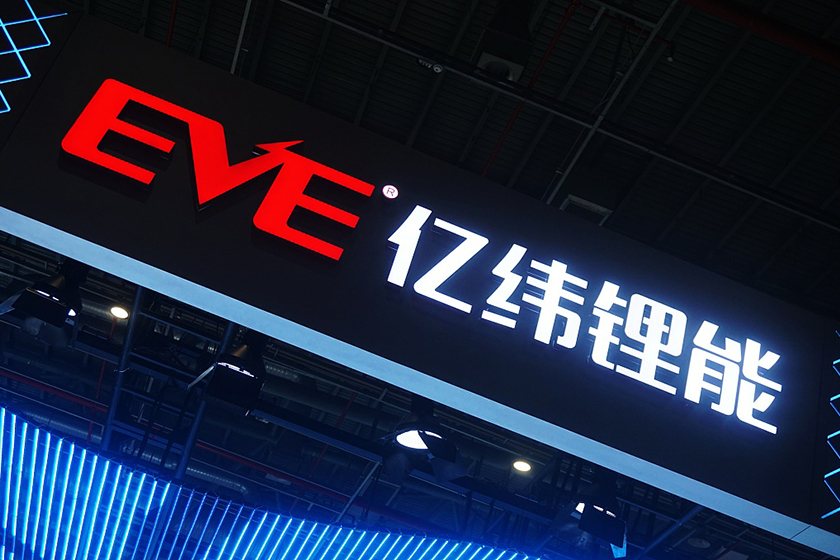
On June 18th, according to Caixin, CATL held the "First Lithium Battery Conference" today. Zhao Ruirui, deputy dean of the company's Central Research Institute, said at the meeting that the company's gel technology route has battery products applied in the e-cigarette field; the polymer technology route has formed ultra-thin soft-pack battery products and has entered the industrialization process; in the most difficult area of power batteries, the all-solid-state battery technology, the company has chosen the route of sulfide and halide composite solid electrolyte, and it is expected to achieve a breakthrough in production process in 2026, introducing all-solid-state batteries, and launching 400Wh/Kg high-specific-energy all-solid-state batteries in 2028.


We welcome news tips, article submissions, interview requests, or comments on this piece.

Please contact us at info@2firsts.com, or reach out to Alan Zhao, CEO of 2Firsts, on LinkedIn


Notice

1.  This article is intended solely for professional research purposes related to industry, technology, and policy. Any references to brands or products are made purely for objective description and do not constitute any form of endorsement, recommendation, or promotion by 2Firsts.

2.  The use of nicotine-containing products — including, but not limited to, cigarettes, e-cigarettes, nicotine pouchand heated tobacco products — carries significant health risks. Users are responsible for complying with all applicable laws and regulations in their respective jurisdictions.

3.  This article is not intended to serve as the basis for any investment decisions or financial advice. 2Firsts assumes no direct or indirect liability for any inaccuracies or errors in the content.

4.  Access to this article is strictly prohibited for individuals below the legal age in their jurisdiction.


Copyright


This article is either an original work created by 2Firsts or a reproduction from third-party sources with proper attribution. All copyrights and usage rights belong to 2Firsts or the original content provider. Unauthorized reproduction, distribution, or any other form of unauthorized use by any individual or organization is strictly prohibited. Violators will be held legally accountable.

For copyright-related inquiries, please contact: info@2firsts.com


AI Assistance Disclaimer


This article may have been enhanced using AI tools to improve translation and editorial efficiency. However, due to technical limitations, inaccuracies may occur. Readers are encouraged to refer to the cited sources for the most accurate information.

We welcome any corrections or feedback. Please contact us at: info@2firsts.com

COP11 Concludes with Major Decisions on Global Tobacco Control
The Eleventh Session of the Conference of the Parties (COP11) to the WHO Framework Convention on Tobacco Control (FCTC) concluded in Geneva on November 22, with 160 Parties adopting major decisions on tobacco and nicotine regulation, environmental protection, sustainable financing, and tobacco industry liability. A landmark decision mandates a complete ban on the use and sale of tobacco and all novel nicotine products across all UN premises worldwide.
Nov.24 by 2FIRSTS.ai
Malaysia’s vape industry flags “policy U-turn” concerns after ban on refillable open-system e-cigarettes
Malaysia’s vape industry has raised concerns over the government’s decision to ban refillable open-system e-cigarettes, describing it as a policy reversal despite earlier regulatory approvals.
Jan.08 by 2FIRSTS.ai
After Export Tax Rebates Go to Zero: How China’s E-Cigarette Supply Chain Is Being Reshaped, According to 2Firsts Research
China’s e-cigarette industry is adjusting to a major policy shift. From April 1, 2026, China will scrap the 13% export VAT rebate on e-cigarette products, a move affecting manufacturers centered in Shenzhen. Industry participants told 2Firsts the change is forcing a reassessment of pricing and capacity, with competition shifting toward cash flow resilience, regulatory compliance, and multi-location strategies.
Industry Insight
Jan.16
Heated tobacco brand DIITO launches in Mongolia
A new heat-not-burn (HNB) brand, DIITO, has commenced promotional activities in the Mongolian market. The device features an integrated display panel and supports dual heating modes, "RELAX" and "RUSH." Investigations reveal that DIITO’s local promotion closely overlaps with RELX’s official distribution channels. Furthermore, the DIITO trademark is held by the UK-based REAZEN TECH LIMITED, a company that also manages the e-cigarette brand FASTA.
Jan.16 by 2FIRSTS.ai
Russia's Perm Legislators Approve Full Ban on Vape Products in Regional Retail Market
2Firsts, November 28, 2025 — The Legislative Assembly of Perm Krai has passed a law banning the retail sale of vape products and other nicotine-aerosol devices, effective March 1, 2026. Individuals found selling such items will face fines between ₽15,000–₽20,000 (about US $180–240), while companies face ₽50,000–₽100,000 (about US $600–1,200). The ban covers all electronic nicotine delivery systems (ENDS), heated-tobacco devices, and their components, regardless of nicotine content.
Nov.28 by 2FIRSTS.ai
5th Circuit Reviews FDA’s Compliance on Small-Business Impact of Vape Rule
A Fifth Circuit panel expressed doubts about whether the U.S. Food and Drug Administration complied with the Regulatory Flexibility Act when issuing its 2021 final rule on premarket tobacco product applications. Vape companies argued the FDA relied on outdated and inaccurate economic data, while the government said the challenged requirements stem from the Tobacco Control Act.
Dec.03 by 2FIRSTS.ai