First-ever Electronic Smoke Detection System Developed in Russia

Innovation by 2FIRSTS.ai
Nov.24.2023
First-ever Electronic Smoke Detection System Developed in Russia
The engineers at St. Petersburg State University have developed the first electronic smoke detection system to combat e-cigarette accidents.

Recently, according to Aif report, engineers from Saint Petersburg State University of Aerospace Instrumentation in Russia have developed the first electronic smoke prevention system, in response to accidents caused by e-cigarettes.


It is reported that the device can detect the composition of smoke in the air and transmit it to a server, aiding in determining if someone is using an e-cigarette indoors.


A team of researchers from St. Petersburg National Aerospace Instrumentation University has developed a device that can detect the use of e-cigarettes in the environment, in response to the increasing incidents of harm and accidents caused by their usage. This innovative product is expected to provide assistance to educational institutions such as schools and universities, by reducing the prevalence of e-cigarette users on campus.


We welcome news tips, article submissions, interview requests, or comments on this piece.

Please contact us at info@2firsts.com, or reach out to Alan Zhao, CEO of 2Firsts, on LinkedIn


Notice

1.  This article is intended solely for professional research purposes related to industry, technology, and policy. Any references to brands or products are made purely for objective description and do not constitute any form of endorsement, recommendation, or promotion by 2Firsts.

2.  The use of nicotine-containing products — including, but not limited to, cigarettes, e-cigarettes, nicotine pouchand heated tobacco products — carries significant health risks. Users are responsible for complying with all applicable laws and regulations in their respective jurisdictions.

3.  This article is not intended to serve as the basis for any investment decisions or financial advice. 2Firsts assumes no direct or indirect liability for any inaccuracies or errors in the content.

4.  Access to this article is strictly prohibited for individuals below the legal age in their jurisdiction.


Copyright


This article is either an original work created by 2Firsts or a reproduction from third-party sources with proper attribution. All copyrights and usage rights belong to 2Firsts or the original content provider. Unauthorized reproduction, distribution, or any other form of unauthorized use by any individual or organization is strictly prohibited. Violators will be held legally accountable.

For copyright-related inquiries, please contact: info@2firsts.com


AI Assistance Disclaimer


This article may have been enhanced using AI tools to improve translation and editorial efficiency. However, due to technical limitations, inaccuracies may occur. Readers are encouraged to refer to the cited sources for the most accurate information.

We welcome any corrections or feedback. Please contact us at: info@2firsts.com

 PMI Opens Generative AI Center in Portugal to Support Global Operations
PMI Opens Generative AI Center in Portugal to Support Global Operations
According to information released by Portugal’s Trade & Investment Agency (AICEP) in July 2026, Philip Morris International (PMI) has established a global Generative Artificial Intelligence Factory (GenAI Factory) at its Portuguese subsidiary Tabaqueira. The center will support PMI’s global operations by developing and deploying AI solutions focused on industrial process optimization, data analytics, operational automation and AI application development. The initiative strengthens Portugal’s role in PMI’s global technology and innovation network.
Aug.27
GSTHR Estimates 200 Million People Use Non-Combustible Nicotine Products as 28 Countries Show Rising Use Alongside Falling Smoking Rates
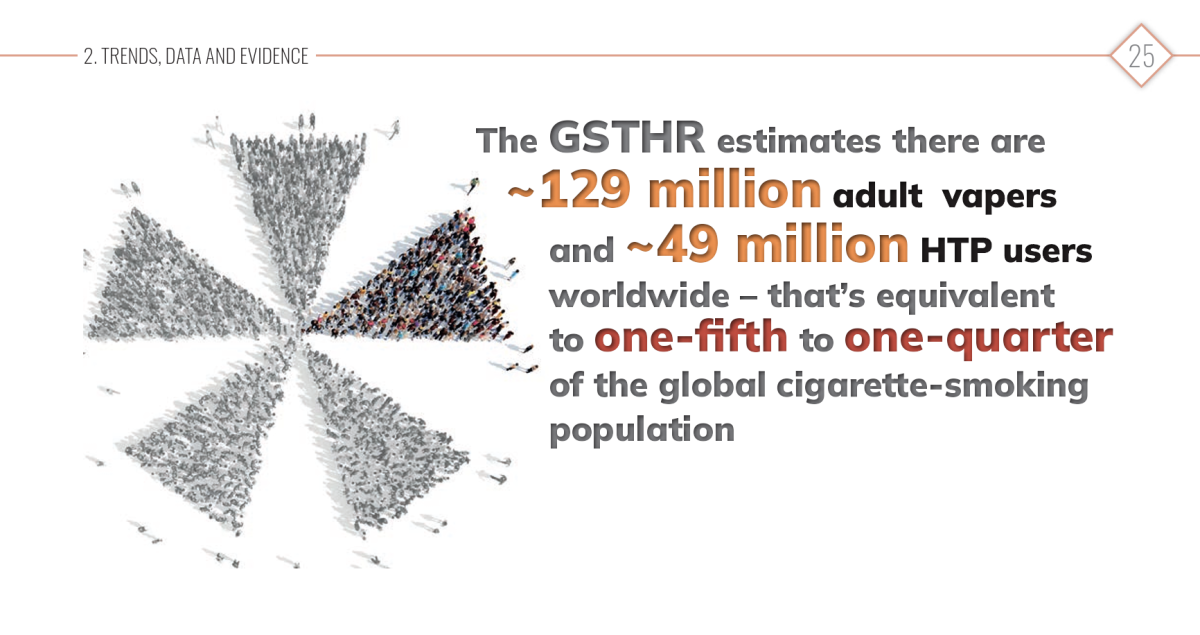
The Global State of Tobacco Harm Reduction, a project operated by Knowledge·Action·Change, estimates that about 200 million people worldwide use non-combustible nicotine products including vapes, heated tobacco, nicotine pouches and snus. Its 2026 report says use of these products rose alongside declining smoking rates in 28 countries it analyzed. The data do not establish that all 200 million users have quit smoking, nor do they prove a direct causal relationship. GSTHR also says regulatory restrictions on the products continue to expand in many markets.
Sep.10
South Korea Vape Strategies Diverge as BAT Reconsiders Exit and PMI Takes VEEV to About 14,000 Stores
BAT Rothmans says it previously considered exiting South Korea's vaping market because of competitive pressure from unregulated products, but is now reassessing conditions following changes to the country's nicotine regulatory framework. Vuse and other BAT vaping products remain available through existing distribution channels. The statement followed a South Korean media report that interpreted BAT's broader withdrawal from selected Vapour markets as a full exit from South Korea. Meanwhile, Philip Morris International launched VEEV inPRIME in the country in June and began expanding distribution to around 14,000 convenience stores and other retail channels in July. The contrasting moves highlight differing investment strategies as South Korea's regulated vaping market evolves.
Aug.14
Australia’s TGA Places Nicotine Pouches Under Therapeutic Goods Rules From July 24, Blocking Imports of Unapproved Products
Australia is strengthening controls on nicotine pouches under its existing therapeutic goods regulatory framework. According to the Therapeutic Goods Administration (TGA), nicotine pouch products must meet regulatory requirements, and unapproved products cannot be legally imported. The move follows Australia’s broader approach of maintaining strict oversight of nicotine products, including nicotine-containing vapes. As nicotine pouches expand globally, Australia’s regulatory approach highlights growing differences in how countries manage emerging smoke-free nicotine products.
Regulations
Jul.27
Nevada Considers Nearly Doubling Tobacco Taxes, With $65 Million in New Revenue Expected From Expanded Nicotine Levies
Health groups in Nevada are urging lawmakers to nearly double the state cigarette tax and extend similar tax changes to other nicotine products, including e-cigarettes and nicotine pouches.
Jul.17
InterTabac 2026: Further Sessions on Regulation, Market Access and Innovation Confirmed; 2FIRSTS to Host China Market Forum
InterTabac 2026 will bring together international experts to discuss European regulation, tax policy, Track & Trace, market access, retail impacts, consumer behavior and innovation. Sessions will also examine Poland’s tobacco-growing perspective and the growing fragmentation of Europe’s tobacco and nicotine market. Media partner 2FIRSTS will host the second “2FIRSTS Connect at InterTabac” on September 16, focusing on developments in China’s tobacco and nicotine industry.
Aug.06