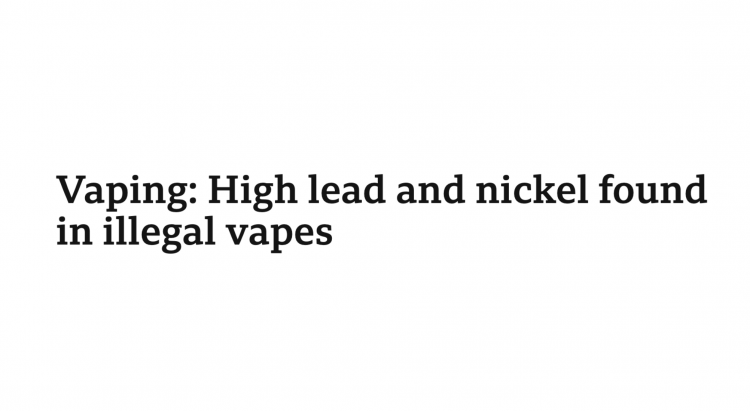
On May 23rd, BBC reported that Inter Scientific laboratory in Liverpool analyzed 18 types of electronic cigarettes and found that the lead content in these e-cigarettes was more than twice the safe limit, while the nickel content was nine times the safe limit.
According to the article, these e-cigarettes were confiscated from students at the Bacchus Marsh College. Most of them are illegal products that have not undergone any type of testing before being sold in the UK.
David Lawson, co-founder of Inter Scientific Laboratory, stated that in 15 years of testing, he has never found any traces of lead in the tested equipment.
These should not appear on the market as they violate all regulations regarding permissible metal content.
In a type of electronic cigarette called "highlighter vapes", laboratory tests have detected the presence of metals.
Lead, at 12 micrograms per gram, is 2.4 times the regulated safe exposure level; nickel is 9.6 times the safe level; and chromium is 6.6 times the safe level. Laboratory testing has shown these metals present in e-cigarette oil. Additionally, the testing revealed the presence of carbonyl compounds, which break down into chemicals such as formaldehyde and acetaldehyde when the oil is heated, reaching levels up to 10 times higher than that of legal e-cigarettes.
According to UK regulations, all e-cigarettes and e-liquid products that are sold must be registered with the Medicines and Healthcare products Regulatory Agency (MHRA), and manufacturers must comply with guidelines related to ingredients, packaging, and marketing. However, the agency does not have the authority to investigate unregistered products.
Craig Copland, the head of the MHRA's e-cigarette project, stated that they will review the findings in order to evaluate whether electronic cigarettes pose a health risk.
The discovery has shocked Mat Carpenter, the dean of Buxton College. He installed sensors in the school's restrooms in an effort to reduce students' use of e-cigarettes. John Britton, an epidemiology professor at the University of Nottingham, has stated that inhaling metal substances is highly dangerous.
He explained the dangers of metal substances entering the human body.
Lead is a neurotoxin that can damage brain development, while chromium and nickel are allergens. Metal particles in the bloodstream commonly trigger blood clots and exacerbate cardiovascular disease.
David Rosen, co-founder of Inter Scientific laboratory, stated that there has been a significant increase in the quantity of illegal products sold recently.
He said:
Some of these products are difficult to distinguish which ones may be legitimate.
References:
Illegal vaping products found to contain high amounts of lead and nickel
Disclaimer
This article is provided solely for professional research, industry discussion, and informational purposes. Any references to brands, companies, products, technologies, or policies are made for factual reporting and analytical purposes only, and do not constitute endorsement, recommendation, promotion, or advertising by 2Firsts.
Nicotine-containing products, including but not limited to cigarettes, e-cigarettes, heated tobacco products, and nicotine pouches, carry significant health risks. Readers are responsible for complying with all applicable laws and regulations in their respective jurisdictions, including age restrictions and access limitations.
The information contained in this article should not be regarded as investment, legal, medical, regulatory, or commercial advice. While 2Firsts strives to ensure the accuracy and reliability of its content, it does not assume liability for any direct or indirect loss arising from errors, omissions, inaccuracies, or reliance on the information contained herein.
This article is not intended for individuals below the legal age for accessing tobacco or nicotine-related information in their jurisdiction.
Copyright Notice
This article is either original content produced by 2Firsts or content reproduced, translated, summarized, or adapted from third-party sources with attribution where applicable. The intellectual property rights of the original content remain with 2Firsts or the respective original rights holders.
No individual or organization may copy, reproduce, distribute, republish, modify, translate, or otherwise use this content without prior authorization. Any unauthorized use may result in legal action.
For copyright-related inquiries, corrections, or removal requests, please contact: info@2firsts.com.
AI-Assisted Translation and Editing Notice
Portions of this article may have been translated, edited, or reviewed with the assistance of artificial intelligence tools to improve efficiency and readability. Due to the limitations of AI-assisted translation and editing, discrepancies, omissions, or inaccuracies may exist when compared with the original source.
Where applicable, readers are advised to refer to the original source for the most complete and accurate information. If you identify any errors or believe that any content infringes upon your rights, please contact us at info@2firsts.com, and we will review and address the matter promptly.