Hungary's Regulator to Enforce Strict Measures on Tobacco Sales to Minors

Regulations by 2FIRSTS.ai
Jan.24.2024
Hungary's Regulator to Enforce Strict Measures on Tobacco Sales to Minors
Hungary's Regulated Activities Supervisory Authority (SZTFH) will impose stricter measures and hefty fines of up to 500 million forints for selling tobacco products to minors online.

Hungarian media outlet vg.hu reported on January 23rd that the Regulated Activities Supervisory Authority (SZTFH) in Hungary recently announced stricter measures for the sale of tobacco products to minors online. Offenders will now face hefty fines, potentially ranging from 5 million to 500 million Forints.


Regulatory agencies have pointed out that a significant amount of illegal tobacco trade has shifted from underground markets to online platforms, making online tobacco trade a key domain for young people. They can easily purchase tobacco products in this realm. These online shops directly target the younger generation by promoting trendy and fashionable yet hazardous products through vibrant and visually appealing webpages.


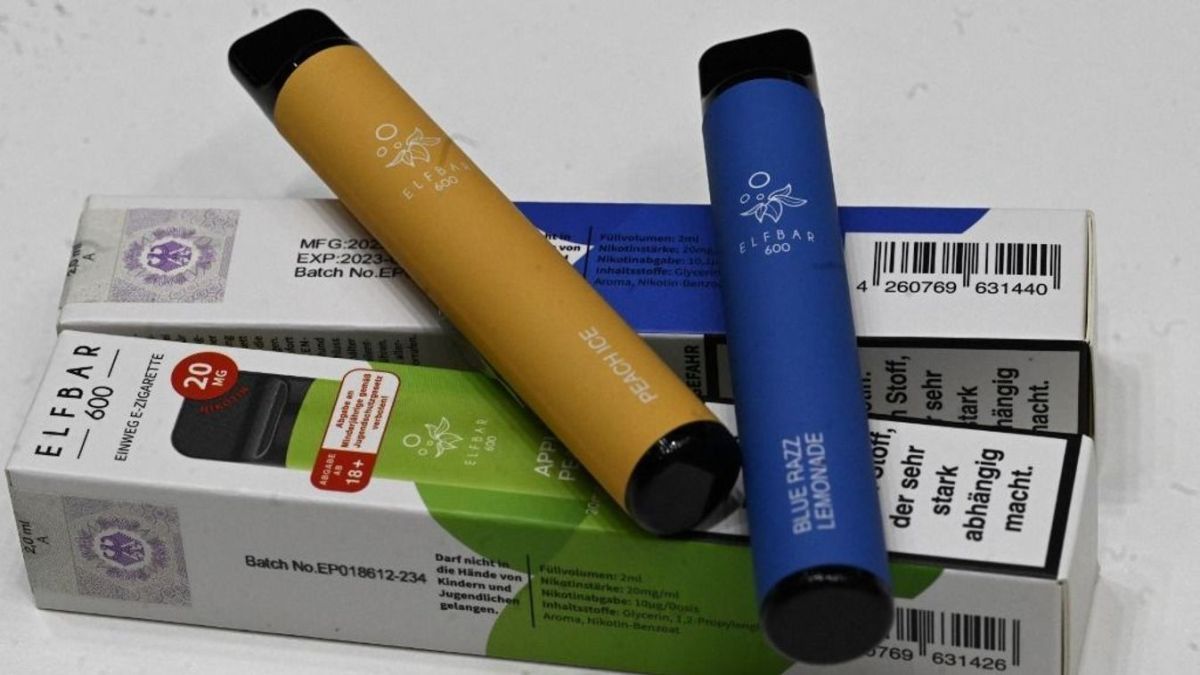
The SZTFH emphasizes that the online sale of products that are only permitted to be sold in tobacco shops is illegal, as these violators circumvent local retail regulations by taking advantage of neighboring countries' more lenient sales provisions. Businesses engaged in such online sales could face fines ranging from 5 million to 500 million Florins. This penalty also applies to the sale of various flavored e-cigarettes, including Elf Bar and others.


Furthermore, SZTFH points out that these products may pose serious addiction problems and their components are often not subjected to rigorous inspections. Untested devices may carry risks of overheating, explosion, or even severe injuries. The organization also warns that customers may ultimately receive dangerous products from unverified locations after payment.


In order to address this issue, SZTFH proposed amendments to laws aimed at preventing minors from smoking and restricting the retail of tobacco products. These amendments broaden the scope of regulatory agencies, enabling them to collaborate with national media and communication regulatory authorities to collectively crackdown on the illegal sale of websites targeting local consumers.


We welcome news tips, article submissions, interview requests, or comments on this piece.

Please contact us at info@2firsts.com, or reach out to Alan Zhao, CEO of 2Firsts, on LinkedIn


Notice

1.  This article is intended solely for professional research purposes related to industry, technology, and policy. Any references to brands or products are made purely for objective description and do not constitute any form of endorsement, recommendation, or promotion by 2Firsts.

2.  The use of nicotine-containing products — including, but not limited to, cigarettes, e-cigarettes, nicotine pouchand heated tobacco products — carries significant health risks. Users are responsible for complying with all applicable laws and regulations in their respective jurisdictions.

3.  This article is not intended to serve as the basis for any investment decisions or financial advice. 2Firsts assumes no direct or indirect liability for any inaccuracies or errors in the content.

4.  Access to this article is strictly prohibited for individuals below the legal age in their jurisdiction.


Copyright


This article is either an original work created by 2Firsts or a reproduction from third-party sources with proper attribution. All copyrights and usage rights belong to 2Firsts or the original content provider. Unauthorized reproduction, distribution, or any other form of unauthorized use by any individual or organization is strictly prohibited. Violators will be held legally accountable.

For copyright-related inquiries, please contact: info@2firsts.com


AI Assistance Disclaimer


This article may have been enhanced using AI tools to improve translation and editorial efficiency. However, due to technical limitations, inaccuracies may occur. Readers are encouraged to refer to the cited sources for the most accurate information.

We welcome any corrections or feedback. Please contact us at: info@2firsts.com

Moldova adopts new sanitary rules for tobacco products, e-cigarettes and related goods
Moldova is introducing new sanitary standards for tobacco products, e-cigarettes and related goods, with regulations adopted on January 14 aimed at protecting public health and tightening control over tobacco sales. The rules include measures to limit minors’ access to tobacco products, including via online shops, and establish procedures for notifications, reporting and market monitoring.
Jan.16 by 2FIRSTS.ai
Dalton, Georgia considers new licensing rules and caps for vape shops
Dalton, Georgia is weighing a proposal to require city licenses for vape shops, limit how many can operate within city limits, and impose a 1,000-foot buffer for new shops from schools and other community facilities. City officials say the ordinance would not eliminate existing vape shops outright, though some may be impacted if ownership changes or licenses expire.
Feb.05 by 2FIRSTS.ai
After Export Tax Rebates Go to Zero: How China’s E-Cigarette Supply Chain Is Being Reshaped, According to 2Firsts Research
China’s e-cigarette industry is adjusting to a major policy shift. From April 1, 2026, China will scrap the 13% export VAT rebate on e-cigarette products, a move affecting manufacturers centered in Shenzhen. Industry participants told 2Firsts the change is forcing a reassessment of pricing and capacity, with competition shifting toward cash flow resilience, regulatory compliance, and multi-location strategies.
Industry Insight
Jan.16
South Korea to Classify Synthetic Nicotine E-Cigarettes as Tobacco from April 2026
South Korea will implement amendments to its Tobacco Business Act on April 24, 2026, officially classifying synthetic nicotine liquid e-cigarettes as tobacco. This marks the first revision of the legal definition of tobacco since 1988. Once in effect, synthetic nicotine e-cigarettes will be subject to existing tobacco regulations, including health warnings, advertising restrictions, smoke-free area enforcement, and youth protection measures.
Dec.29 by 2FIRSTS.ai
Thailand’s Bangkok Police Bust Two Warehouses, Seize Over 100,000 Heated-Tobacco Items Worth $960,000
Bangkok police said they raided two warehouse locations linked to an online distribution network for illicit vaping/heated-tobacco products, seizing IQOS ILUMA i devices and large quantities of TEREA sticks worth more than 30 million baht (about US$960,000). Three suspects described as administrators and caretakers were arrested, while investigators probe suspected smuggling routes and unpaid excise liabilities.
Feb.02 by 2FIRSTS.ai
Washington Policy Media Flags Surge: China’s Monthly Vape Exports Jump from 2.2M Kg to 14.8M Kg; Crackdown Effectiveness Questioned
The Washington Examiner on December 9, 2025, reported: China's vape export volume to the U.S. rebounded sharply from 2.2 million kilograms to 14.8 million kilograms despite the crackdown. This volatility, confirming the annual multi-billion dollar trade gap, is the "Bullwhip Effect" in action. It transfers massive inventory to the U.S. market, putting the working capital of Chinese manufacturers and the supply chain at severe risk of lock-up and failure. Regulatory escalation is now imminent.
News
Dec.11