Imperial Brands Explains What the UK Tobacco and Vapes Act 2026 Means for Retailers

May.11
Imperial Brands Explains What the UK Tobacco and Vapes Act 2026 Means for Retailers
Imperial Brands has outlined what the newly approved UK Tobacco and Vapes Act 2026 means for retailers. The legislation received Royal Assent on April 29, 2026, and gives the Government powers to extend tobacco-style regulation to a wider range of products, including vaping products, heated tobacco, nicotine pouches and cigarette papers. Imperial Brands emphasized that most measures will be introduced in phases rather than taking effect immediately.

Key Takeaways

  • The UK Tobacco and Vapes Act 2026 received Royal Assent on April 29, 2026.
  • The Act gives the Government powers to regulate vapes, heated tobacco, nicotine pouches and cigarette papers.
  • Imperial Brands said many measures will be phased in and subject to further public consultation.
  • Restrictions on free distribution and discounting are expected to apply from October 29, 2026.
  • The generational smoking ban will take effect on January 1, 2027.

2Firsts, May 11,2026


According to Slrmag Imperial Brands highlighted what the newly approved UK Tobacco and Vapes Act 2026 means for retailers, stressing that most measures will be introduced in phases rather than taking effect immediately.


The Act received Royal Assent on April 29


The Tobacco and Vapes Act 2026 received Royal Assent on April 29, 2026. 


The legislation gives the Government powers to extend tobacco-style regulation to a broader range of products, including vaping products, heated tobacco, nicotine pouches and cigarette papers.


Imperial Brands said that while the Act is wide-ranging, many of its provisions will be subject to further public consultation before implementation. 


As a result, several major changes are not expected to come into force until later in 2027, once secondary legislation has been developed.


Some measures have confirmed start dates


The report said some elements have confirmed start dates. Restrictions on free distribution and discounting are expected to apply from October 29, 2026.


The most high-profile measure is the generational smoking ban. It will take effect on January 1, 2027, making it illegal to sell tobacco products, herbal smoking products and cigarette papers to anyone born on or after January 1, 2009.


Flavors, display rules and retail licensing remain subject to detail


Other proposed measures are expected to follow later next year, subject to consultation and publication of detailed regulations. These include potential restrictions on flavor descriptors, changes to retail display and the introduction of a retail licensing scheme.


Imperial Brands also expects the Department of Health and Social Care to publish further guidance, alongside an implementation roadmap and timetable for secondary legislation, to help retailers understand how and when each measure will take effect.

Image source: Slrmag

We welcome news tips, article submissions, interview requests, or comments on this piece.

Please contact us at info@2firsts.com, or reach out to Alan Zhao, CEO of 2Firsts, on LinkedIn


Notice

1.  This article is intended solely for professional research purposes related to industry, technology, and policy. Any references to brands or products are made purely for objective description and do not constitute any form of endorsement, recommendation, or promotion by 2Firsts.

2.  The use of nicotine-containing products — including, but not limited to, cigarettes, e-cigarettes, nicotine pouchand heated tobacco products — carries significant health risks. Users are responsible for complying with all applicable laws and regulations in their respective jurisdictions.

3.  This article is not intended to serve as the basis for any investment decisions or financial advice. 2Firsts assumes no direct or indirect liability for any inaccuracies or errors in the content.

4.  Access to this article is strictly prohibited for individuals below the legal age in their jurisdiction.


Copyright


This article is either an original work created by 2Firsts or a reproduction from third-party sources with proper attribution. All copyrights and usage rights belong to 2Firsts or the original content provider. Unauthorized reproduction, distribution, or any other form of unauthorized use by any individual or organization is strictly prohibited. Violators will be held legally accountable.

For copyright-related inquiries, please contact: info@2firsts.com


AI Assistance Disclaimer


This article may have been enhanced using AI tools to improve translation and editorial efficiency. However, due to technical limitations, inaccuracies may occur. Readers are encouraged to refer to the cited sources for the most accurate information.

We welcome any corrections or feedback. Please contact us at: info@2firsts.com

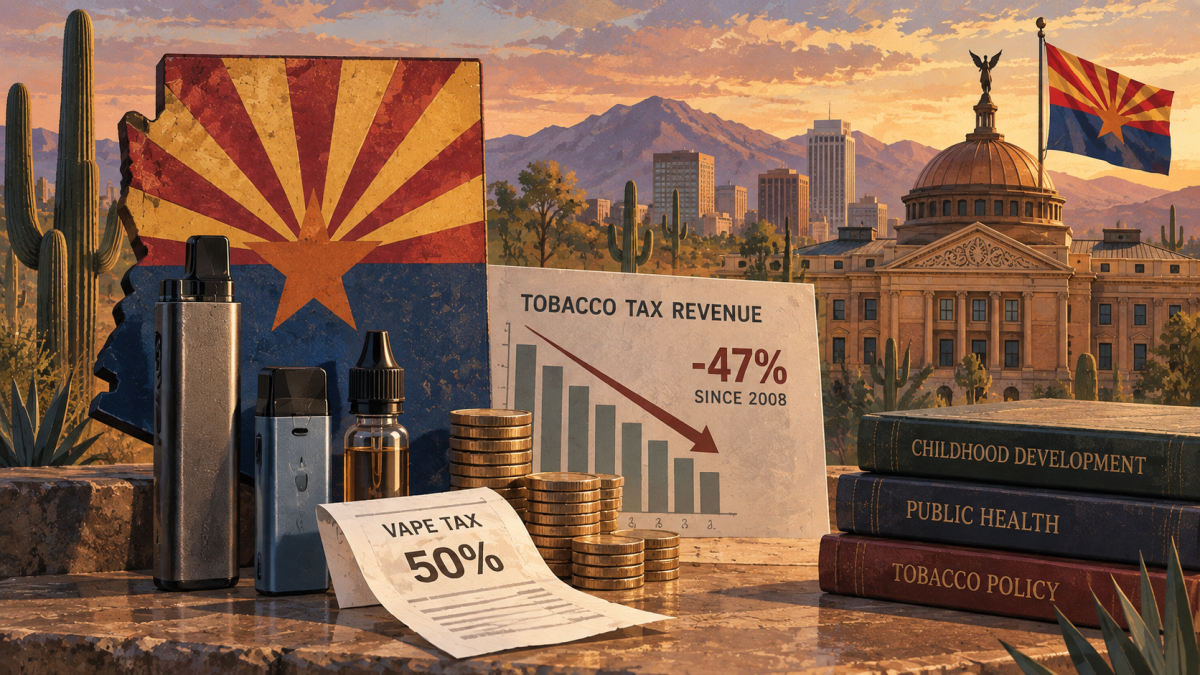
Arizona Turns to a 50% Retail Vape Tax as Tobacco Tax Revenue Falls 47% From 2008
Arizona's First Things First is pushing for an excise tax equal to 50% of the retail price of vaping products, estimating that the measure could generate about $100 million annually. The agency says its tobacco-tax revenue has fallen 47% from 2008 levels. Arizona has attempted to broaden its nicotine tax base in each of the past two years: a 2025 bill proposed a 50% wholesale-price tax, while a 2026 measure shifted to a 50% retail-price tax covering alternative nicotine products and vapor products. Separately, the state enacted HB 4001 this year to establish a new licensing and sales framework for alternative nicotine products.
Sep.21
Iowa Sets November 16 Vape Directory Launch: Unlisted Products Face Sales Ban, Manufacturers $1,000 Daily Fines per Product
Iowa plans to publish its first vapor products directory on November 16, 2026, after which products not listed will be prohibited from sale or offer for sale in the state. The Department of Revenue expects to begin penalty enforcement on December 17, following an initial 21-business-day period focused on compliance education. Under House File 2677, retailers, distributors and wholesalers selling unlisted products face civil penalties of $300 per product per day, while manufacturers face $1,000 per product per day. Eligibility extends to FDA-authorized products and certain products meeting historical marketing and pending PMTA requirements. The directory program resumed after a federal appeals court vacated a preliminary injunction in July 2026.
Regulations
Nov.05
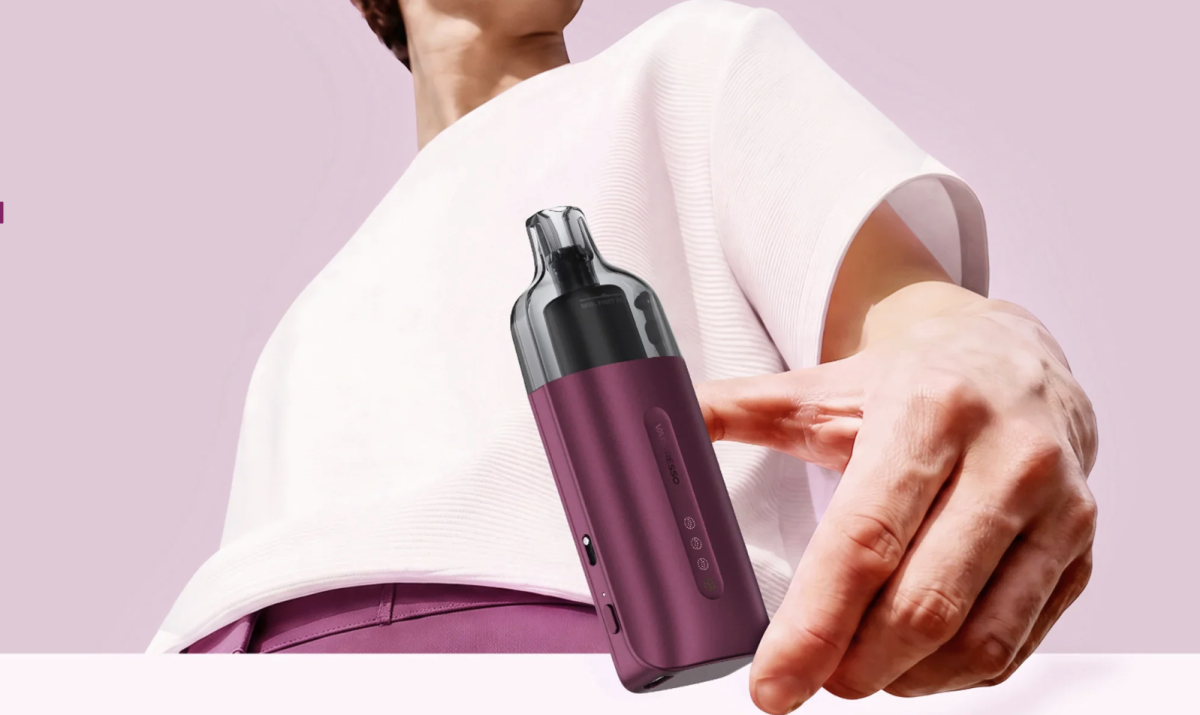
Product | SMOORE's VAPORESSO Introduces VAST Refillable Vape With Three Resistances in One Pod
SMOORE-owned vaping brand VAPORESSO introduced the VAST refillable open-system vape in October 2026, featuring Tri-Core Mesh technology that integrates three resistance configurations—0.8Ω, 0.6Ω and 0.4Ω—within a single pod. The device supports different operating modes and e-liquid types. The standard version features a 10mL pod, while a TPD-labelled configuration combines a 2mL pod with an 8mL refill container. The device has a 1,600mAh battery and a maximum output of 30W. VAPORESSO claims up to six pod refills and a tested coil lifespan of up to 150,000 puffs. The UK's MHRA published a related device notification on October 12. The official MSRP is $25.90, compared with a $35.90 listing on VAPORESSO's direct store.
product
Oct.30
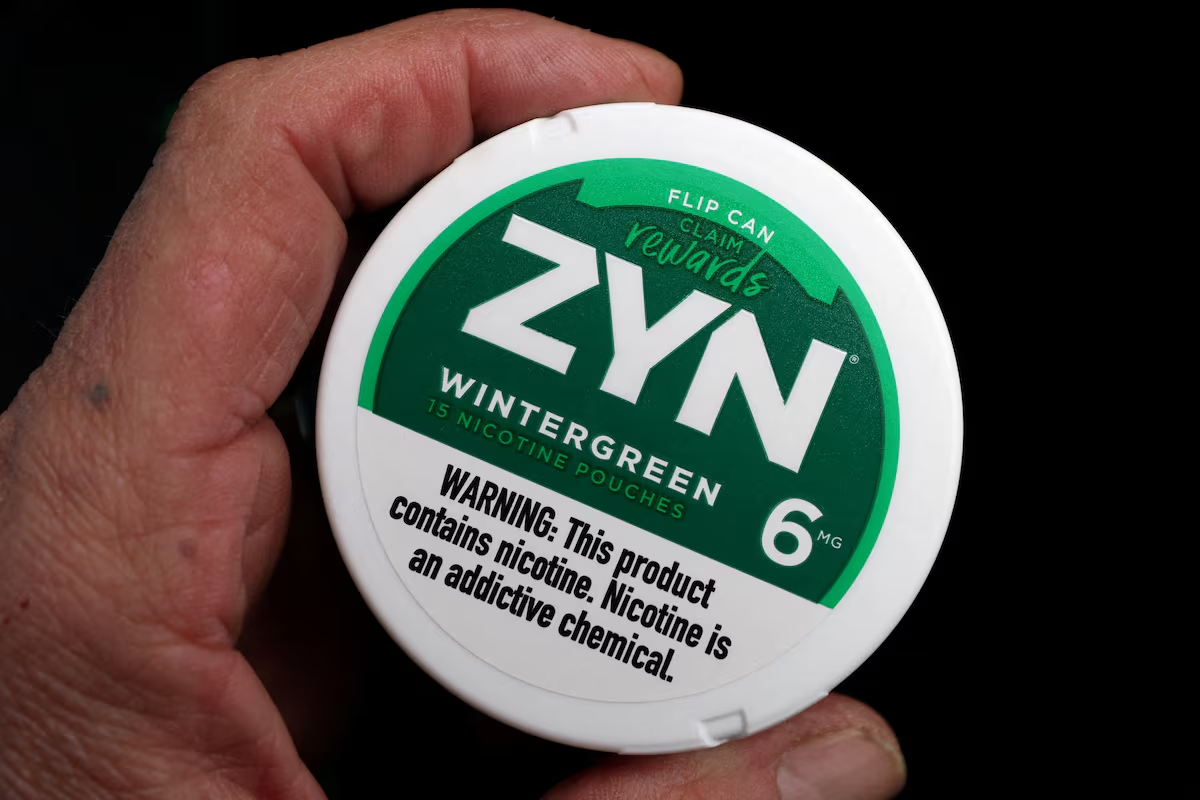
India Steps Up Nicotine Pouch Enforcement as ZYN, White Fox Circulate and Drug Panel Urges Halt to New Nicotine Formulations
India's Ministry of Health and Family Welfare has directed states to step up enforcement against nicotine pouch sales, citing increased availability through online and offline channels and concern about nicotine exposure among children. Reuters reported that international brands including ZYN and White Fox are being sold in India. A study led by ICMR-NICPR found pouches in seven of 10 surveyed locations and identified 68 brands and 445 flavors online. Separately, India's Drugs Technical Advisory Board recommended in August that no new nicotine formulation be approved.
Regulations
Sep.28 by 2Firsts Perspectives
UK ONS Data: Vaping Rate Among Women Aged 25–34 Reaches 18.3%, Compared With 14.4% for Men
The vaping rate among women aged 25 to 34 in Great Britain reached 18.3% in 2025, up from 13.7% in 2024 and 8.3% in 2020, according to data from the Office for National Statistics (ONS). The figure was the highest for this group since records began in 2014 and exceeded the 14.4% recorded among men of the same age. Adults aged 25 to 34 also overtook those aged 16 to 24 as the age group with the highest vaping prevalence. Overall, about 5.4 million adults in Great Britain used e-cigarettes in 2025, broadly unchanged from the previous year.
DATA
Oct.13
Italy Proposes Earlier Vape and HTP Tax Hikes, New Rules for E-Liquid Pricing, Exclusive Deals and Distribution
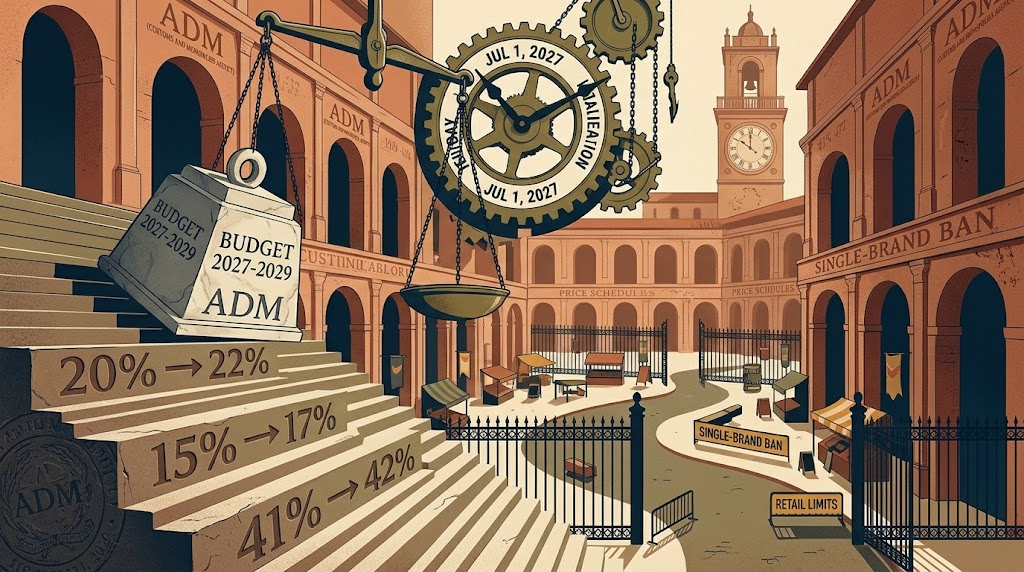
Italy's proposed 2027–2029 budget would bring forward scheduled tax increases for e-cigarette liquids and heated tobacco products from January 1, 2028, to July 1, 2027. The consumption tax coefficient for nicotine-containing e-liquids would rise from 20% to 22%, that for nicotine-free liquids and applicable flavorings from 15% to 17%, and the heated-tobacco coefficient from 41% to 42%. The bill would also introduce official retail price schedules for e-liquids, restrict exclusive agreements between retailers and suppliers, and limit single-brand-dominated displays, sales incentives and bundled offers. Importing, authorized warehousing and retailer sourcing arrangements would also change. The proposals remain subject to parliamentary approval and subsequent implementing regulations.
Regulations
Nov.04