The profits of Empire Tobacco have seen a significant decline due to the tobacco giant's decision to withdraw from the Russian market amid escalating hostilities in the conflict between Russia and Ukraine, resulting in a major blow to sales.
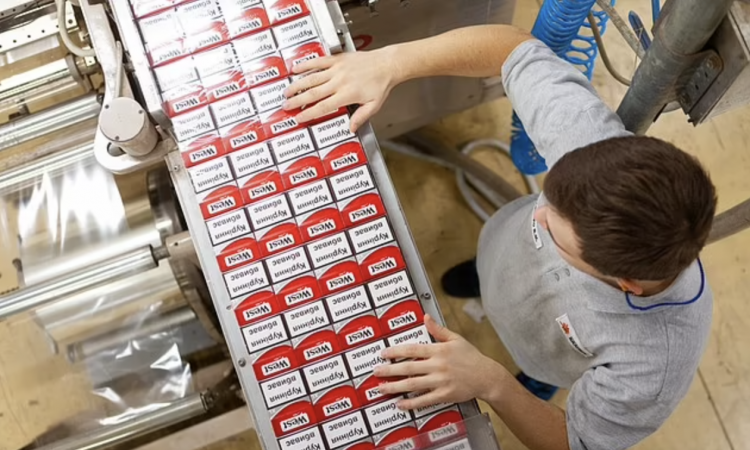
A cigarette manufacturer based in Bristol, UK, owns multiple popular cigarette brands such as Gauloises, West, and Golden Virginia. The company has disclosed a 14.7% year-on-year decline in revenue and profit, totaling £2.68 billion as of September.
Imperial Tobacco's departure from Russia resulted in a loss of nearly £400 million in revenue for the group, with further impact from the previous year's sale of its premium cigar subsidiary no longer generating income.
In March, the FTSE 100 index company suspended its operations in Russia, including all production at its Volgograd factory, before transferring the business to local investors in the following month.
As a result, the total sales volume of tobacco decreased by 8.4% in the second half of the year compared to the same period in 2021, and declined by 4.7% for the entire year.
The higher prices helped offset the decline in production, but the weakening of the euro against the dollar still resulted in a decrease in total revenue by 240 million pounds to 32.6 billion pounds.
Imperial Tobacco has increased its market share in four out of its five largest traditional cigarette markets, with the majority of its operating profits coming from these markets.
The company reported in the UK that its increase in market share was driven by investments in local "jewellery" brands such as Embassy, which have made progress in areas where tobacco brands are underrepresented.
As part of a five-year strategy led by CEO Stefan Bomhard, increasing market share in its top five cigarette sales regions (United Kingdom, United States, Germany, Spain, and Australia) is a priority.
The plan also calls for streamlining operations, including cost-cutting measures, as well as expanding the sales of "next-generation products (NGPs)" such as heated tobacco and electronic cigarettes.
Although NGPs (Next-Generation Products) still make up only a small portion of Imperial Tobacco's overall trade, their popularity is increasing due to their launch in more regions and government regulations imposing heavy taxes on and strict regulations of traditional cigarette brands.
However, the significant investment required to introduce brands such as Pulze, iD (both heated tobacco products), and the electronic cigarette device Blu 2.0 into new markets resulted in the NGP department losing £87 million in the year.
Bomhard, who was born in Germany, took over the business a month before the start of the COVID-19 pandemic. However, he stated that the Empire was "prepared and ready to achieve the next stage of our five-year strategy.
He added, "As we face a more challenging macroeconomic environment, the extra investments and actions we took during the initial two years of strengthening phase have laid a stronger foundation for us.
We are fully capable of building upon our delivery record in the next three years, increasing returns, and creating sustainable growth that adds value for our shareholders.
Imperial Tobacco announced today that, in addition to the £1 billion share buyback plan announced in October, it is proposing to distribute a final dividend of £467 million to investors in March next year.
The share price of Imperial Tobacco rose to 20.54 pounds, up 0.5% in late morning trading on Tuesday, indicating an approximately 30% increase in value over the past 12 months.
Statement:
This article is compiled from third-party information and is intended only for industry communication and learning.
This article does not represent the views of 2FIRSTS and 2FIRSTS cannot confirm the truthfulness or accuracy of its contents. Its translation is only intended for industry communication and research.
Due to limited translation capabilities, the translated article may not fully convey the original meaning. Please refer to the original article for accuracy.
2FIRSTS maintains complete alignment with the Chinese government regarding any domestic, Hong Kong, Macau, Taiwan, and foreign-related expressions and positions.
The copyright of compiled information belongs to the original media and authors. If there is any infringement, please contact us for deletion.
Disclaimer
This article is provided solely for professional research, industry discussion, and informational purposes. Any references to brands, companies, products, technologies, or policies are made for factual reporting and analytical purposes only, and do not constitute endorsement, recommendation, promotion, or advertising by 2Firsts.
Nicotine-containing products, including but not limited to cigarettes, e-cigarettes, heated tobacco products, and nicotine pouches, carry significant health risks. Readers are responsible for complying with all applicable laws and regulations in their respective jurisdictions, including age restrictions and access limitations.
The information contained in this article should not be regarded as investment, legal, medical, regulatory, or commercial advice. While 2Firsts strives to ensure the accuracy and reliability of its content, it does not assume liability for any direct or indirect loss arising from errors, omissions, inaccuracies, or reliance on the information contained herein.
This article is not intended for individuals below the legal age for accessing tobacco or nicotine-related information in their jurisdiction.
Copyright Notice
This article is either original content produced by 2Firsts or content reproduced, translated, summarized, or adapted from third-party sources with attribution where applicable. The intellectual property rights of the original content remain with 2Firsts or the respective original rights holders.
No individual or organization may copy, reproduce, distribute, republish, modify, translate, or otherwise use this content without prior authorization. Any unauthorized use may result in legal action.
For copyright-related inquiries, corrections, or removal requests, please contact: info@2firsts.com.
AI-Assisted Translation and Editing Notice
Portions of this article may have been translated, edited, or reviewed with the assistance of artificial intelligence tools to improve efficiency and readability. Due to the limitations of AI-assisted translation and editing, discrepancies, omissions, or inaccuracies may exist when compared with the original source.
Where applicable, readers are advised to refer to the original source for the most complete and accurate information. If you identify any errors or believe that any content infringes upon your rights, please contact us at info@2firsts.com, and we will review and address the matter promptly.