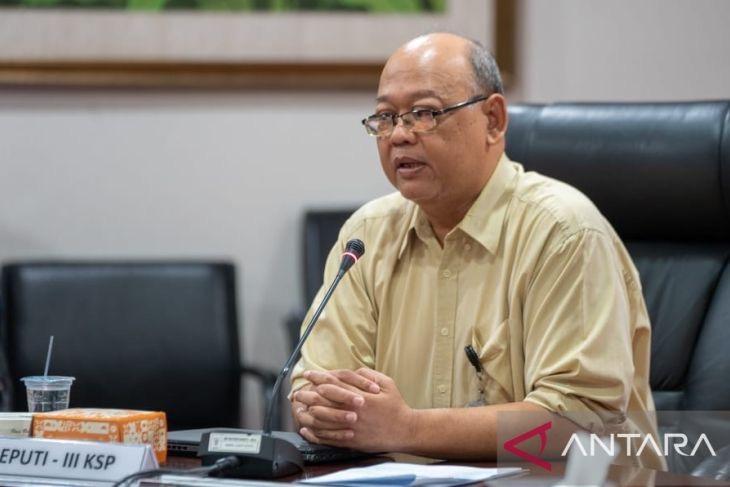
The Indonesian Presidential Office (KSP) has stated that 50% of the tobacco product excise tax revenue sharing fund (DBH CHT) will be allocated to support a social protection fund for tobacco industry farmers and workers.
According to a statement received by Edy Priyono, the director of the Presidential Office on Saturday, efforts are being made to predict how global economic uncertainty will affect Indonesia's tobacco industry.
Priono stated that social protection will be implemented through various programs such as providing fertilizer assistance, agricultural machinery for production or harvest, and direct cash assistance.
The work of social protection is in line with the outcomes of coordination meetings participated by the Office of the President, the Ministry of Finance, the Ministry of Agriculture, the Ministry of Internal Affairs, and as many as 77 local governments at the provincial, county, and city levels.
At present, the Fiscal Balance Bureau of the Ministry of Finance has issued a letter regarding the use of 2023 DBH CHT. According to a statement from the bureau's spokesperson, the letter is addressed to local governments that have agreed to receive DBH CHT, as they are the planners and implementers of the program.
As a follow-up to the program, local governments must actively disseminate information about the social protection plan for farmers and tobacco industry workers in their respective regions.
Priono is optimistic about the participation of the Tobacco Farmers Association in the plan to strengthen social protection through cooperation with their respective local governments.
He said, "We hope that the plan will be tailored to suit the characteristics of each region.
According to Regulation No. 215 of the Finance Minister in 2021, 3% of tobacco consumption tax revenue is allocated to a profit sharing fund to be managed by the governments of production regions.
He explained that in the income sharing fund, up to 50% of the funds must be used to improve people's welfare, with the remaining 40% to be used for healthcare and 10% for law enforcement.
He emphasizes that the policy of increasing the consumption tax on tobacco products must also have an impact on the welfare of farmers and workers.
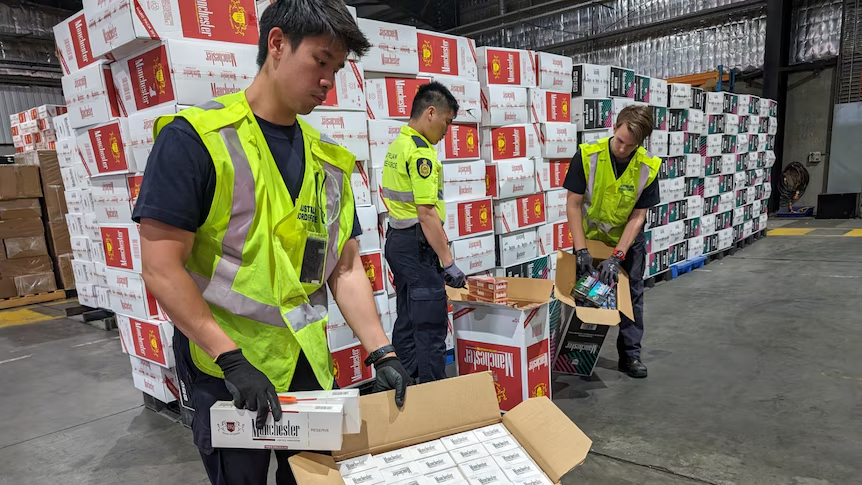
Earlier, the government made the decision to increase the Consumption and Health Tax (CHT) on tobacco products by 10% during the period of 2023-2024. This policy takes into consideration various aspects such as controlling cigarette consumption, workers’ welfare, national revenue and monitoring illegal cigarette sales.
Disclaimer
This article is provided solely for professional research, industry discussion, and informational purposes. Any references to brands, companies, products, technologies, or policies are made for factual reporting and analytical purposes only, and do not constitute endorsement, recommendation, promotion, or advertising by 2Firsts.
Nicotine-containing products, including but not limited to cigarettes, e-cigarettes, heated tobacco products, and nicotine pouches, carry significant health risks. Readers are responsible for complying with all applicable laws and regulations in their respective jurisdictions, including age restrictions and access limitations.
The information contained in this article should not be regarded as investment, legal, medical, regulatory, or commercial advice. While 2Firsts strives to ensure the accuracy and reliability of its content, it does not assume liability for any direct or indirect loss arising from errors, omissions, inaccuracies, or reliance on the information contained herein.
This article is not intended for individuals below the legal age for accessing tobacco or nicotine-related information in their jurisdiction.
Copyright Notice
This article is either original content produced by 2Firsts or content reproduced, translated, summarized, or adapted from third-party sources with attribution where applicable. The intellectual property rights of the original content remain with 2Firsts or the respective original rights holders.
No individual or organization may copy, reproduce, distribute, republish, modify, translate, or otherwise use this content without prior authorization. Any unauthorized use may result in legal action.
For copyright-related inquiries, corrections, or removal requests, please contact: info@2firsts.com.
AI-Assisted Translation and Editing Notice
Portions of this article may have been translated, edited, or reviewed with the assistance of artificial intelligence tools to improve efficiency and readability. Due to the limitations of AI-assisted translation and editing, discrepancies, omissions, or inaccuracies may exist when compared with the original source.
Where applicable, readers are advised to refer to the original source for the most complete and accurate information. If you identify any errors or believe that any content infringes upon your rights, please contact us at info@2firsts.com, and we will review and address the matter promptly.