Juncheng Technology Explains Low Profit Margin and Improvement Plan

Business by 2FIRSTS.ai
Jul.03.2024
Juncheng Technology Explains Low Profit Margin and Improvement Plan
Investors inquire about Jun Cheng Technology's low profit margin in its 2023 annual report, attributing it to TFT product development challenges.

Recently, on the investor interaction platform, an investor asked Jun Cheng Technology (301106.SZ): In the company's 23rd annual report, the gross profit margin for color screens was 4.33%, why is it so low? Is there any improvement this year?


In response to this, Jun Cheng Technology stated that the company has started laying out the TFT market for 2023, but TFT products are still in the research and development stage with low yield rates. Additionally, due to small production and sales volume, the company has not achieved economies of scale, resulting in lower profit margins. Thanks to early planning in 2023, yield rates have significantly improved this year, and the sales of e-cigarette TFT products and electric vehicle TFT products in 2024 have reached scale, becoming incremental businesses for the company. Cost efficiencies are now evident, and it is expected that there will be a satisfactory level of profit margins in 2024.


Previously, Jun Cheng Technology replied to investors that the products related to e-cigarettes are classified as consumer electronics products, and the current production capacity is sufficient. With the continuous discovery of incremental customers, the company's production capacity planning will be increased accordingly.


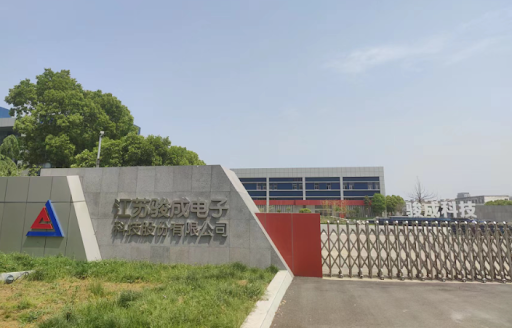
According to the official website of Jun Cheng Technology, the company is located in the Economic Development Zone of Jurong City, Jiangsu Province, China, adjacent to Nanjing. It was established in 2009 and is a professional manufacturer of LCD & LCM equipment from the Japanese company HITACHI. They specialize in producing and selling STN type LCD displays and display modules, and have obtained ISO TS16949, ISO 9001, and ISO 14001 certifications. The company covers an area of 25,000 square meters, with more than 10,000 square meters of purification workshops, and has the capacity to produce over 15 million various types of displays and 20 million display modules per year.


We welcome news tips, article submissions, interview requests, or comments on this piece.

Please contact us at info@2firsts.com, or reach out to Alan Zhao, CEO of 2Firsts, on LinkedIn


Notice

1.  This article is intended solely for professional research purposes related to industry, technology, and policy. Any references to brands or products are made purely for objective description and do not constitute any form of endorsement, recommendation, or promotion by 2Firsts.

2.  The use of nicotine-containing products — including, but not limited to, cigarettes, e-cigarettes, nicotine pouchand heated tobacco products — carries significant health risks. Users are responsible for complying with all applicable laws and regulations in their respective jurisdictions.

3.  This article is not intended to serve as the basis for any investment decisions or financial advice. 2Firsts assumes no direct or indirect liability for any inaccuracies or errors in the content.

4.  Access to this article is strictly prohibited for individuals below the legal age in their jurisdiction.


Copyright


This article is either an original work created by 2Firsts or a reproduction from third-party sources with proper attribution. All copyrights and usage rights belong to 2Firsts or the original content provider. Unauthorized reproduction, distribution, or any other form of unauthorized use by any individual or organization is strictly prohibited. Violators will be held legally accountable.

For copyright-related inquiries, please contact: info@2firsts.com


AI Assistance Disclaimer


This article may have been enhanced using AI tools to improve translation and editorial efficiency. However, due to technical limitations, inaccuracies may occur. Readers are encouraged to refer to the cited sources for the most accurate information.

We welcome any corrections or feedback. Please contact us at: info@2firsts.com

Product | FLONQ Parent Company Launches New Vaping Brand ROQY: Two Hybrid-Nicotine Devices Debut in Russia
Alfabet Labs, the parent company of FLONQ, has recently launched its new vaping brand ROQY in Russia, debuting two products: ROQY L and ROQY M. Both devices use a hybrid nicotine formulation combining nicotine salts and freebase nicotine and are each available in 19 flavors. The two products are now on sale via the official ROQY website as well as multiple online and offline retailers across Russia.
Nov.19 by 2FIRSTS.ai
NSW Landlords Could Face Jail or $165,000 Fine for Allowing Illegal Vape and Tobacco Sales
According to The Guardian, landlords in New South Wales who knowingly allow tenants to sell illicit tobacco or illegal vapes could face fines of up to AUD 165,000, a year in prison, or both. The new offences are part of the state government’s broader crackdown on Australia’s growing black market for cigarettes and vaping products.
Nov.12 by 2FIRSTS.ai
U.S. FDA Includes Cytisinicline for Vaping Addiction in National Priority Voucher Program, Shortens Review to 1–2 Months
The U.S. Food and Drug Administration (FDA) has added Cytisinicline, a plant-based therapy developed by Achieve Life Sciences for nicotine vaping addiction, to its new National Priority Voucher (CNPV) program. The initiative shortens drug review timelines from 10–12 months to just 1–2 months, expediting approval for treatments that address major public health needs.
Oct.20 by 2FIRSTS.ai
Bangladesh High Court Questions Legality of BEZA’s Approval for Philip Morris Nicotine Pouch Factory
The High Court in Bangladesh has asked government bodies to explain why the approval granted to Philip Morris to establish a nicotine pouch factory should not be deemed illegal. Petitioners argue the decision contradicts existing policies and a 2016 Appellate Division ruling that restricts new tobacco-related enterprises. Authorities have ten days to respond.
Nov.20 by 2FIRSTS.ai
KT&G Q3 Net Profit Up 73%; Overseas NGP Revenue Nearly Doubles, Nicotine Pouch Expansion Set to Launch Globally
KT&G reported its Q3 2025 financial results, posting revenue of KRW 1.83 trillion (≈USD 1.31 billion) and a 73.4% year-over-year surge in net profit—marking the company’s highest operating profit in five years. The Next Generation Product (NGP) segment performed strongly, generating KRW 279.1 billion (≈USD 199 million) in revenue, with overseas NGP sales more than doubling year-over-year.
Nov.06
Exclusive Interview | What’s Changing in Cigars? A Data Firm’s Perspective on the Industry’s Turning Point
As regulations tighten, consumer habits evolve, and new nicotine products reshape the market, the cigar industry is undergoing a quiet but profound transformation. In this exclusive interview, 2Firsts speaks with Cigar Sense — a data-driven sensory analysis firm — to explore what’s really changing in cigars, and what it means for manufacturers, retailers, and smokers around the world.
Nov.10