Key Points
- ITM Semiconductor is a KOSDAQ-listed South Korean electronics-component maker focused on battery protection circuits and related components.
- The company said e-cigarette device mass production has begun at its Indonesia subsidiary.
- First-quarter e-cigarette business revenue reached 42.1 billion won, up 55.4% year on year.
- The business accounted for about 32% of total company revenue in the first quarter.
- ITM Semiconductor plans to strengthen the business by expanding capacity, securing new customers and winning additional orders.
2Firsts
July 8, 2026
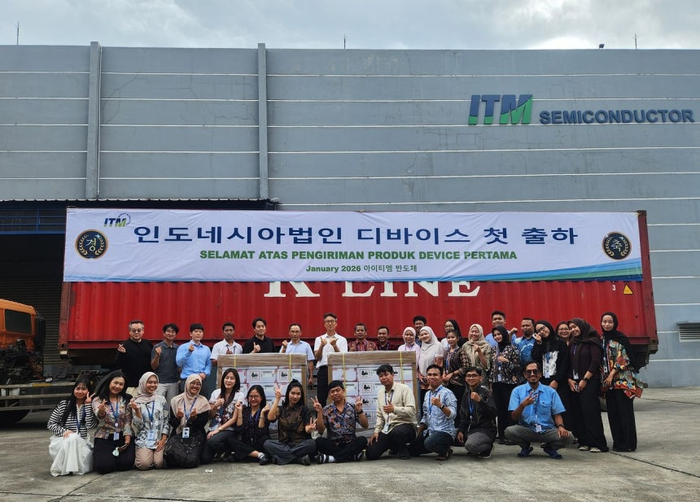
South Korea’s Maeil Business Newspaper reported on July 6 that ITM Semiconductor, a KOSDAQ-listed electronics-component maker, said its Indonesia subsidiary has begun full-scale mass production of e-cigarette devices, making the business one of the company’s key growth areas.
ITM Semiconductor’s core business is secondary-battery protection circuits and related electronic components. Unlike consumer-facing e-cigarette brands, the company plays a role closer to an e-cigarette device and electronics-component manufacturer in the supply chain.
First-Quarter E-Cigarette Revenue Rose 55.4%
According to the report, ITM Semiconductor is mainly known for its secondary-battery protection circuit business. The company recorded 42.1 billion won in e-cigarette business revenue in the first quarter of 2026, up 55.4% from 27.1 billion won a year earlier.
E-cigarette revenue accounted for about 32% of ITM Semiconductor’s total revenue in the first quarter, showing that device production has become an increasingly important part of the company’s business portfolio.
Indonesia Subsidiary Started Mass Production in January
ITM Semiconductor established its Indonesia production subsidiary last year and began mass production of e-cigarette devices in January.
The production site is located in Cikarang, Indonesia. It covers about 13,000 square meters of land and has a building area of about 9,500 square meters. The site was completed in July last year.
A company official said the Indonesia subsidiary has secured production facilities and professional staff that meet global customers’ quality standards, and has built a systematic quality management system for stable mass production. The official also said the company has secured space for additional production-line expansion to meet rising demand.
Company Plans to Strengthen E-Cigarette Device Business
ITM Semiconductor said it plans to strengthen the competitiveness of its e-cigarette device business by expanding capacity, securing new customers and pursuing additional orders.
The company said the e-cigarette business is growing into one of its main business pillars, alongside its existing protection circuit and sensor businesses.
ITM Semiconductor also plans to expand e-cigarette device production while developing future growth businesses, including robot and defense-related components, as part of a broader diversification strategy.
Chief Executive Na Hyuk-hwi said the company would accelerate growth in the e-cigarette business by expanding production capacity at its Indonesia subsidiary and strengthening order competitiveness. He said the company would also continue to raise corporate value through new business development and business diversification.
Industry Impact and Outlook
From a global e-cigarette supply-chain perspective, China has long held a dominant position in the manufacturing of e-cigarette devices and related components, with Shenzhen and surrounding regions developing highly concentrated ecosystems covering product development, manufacturing and supply-chain services. In recent years, Indonesia has emerged as an important destination for overseas capacity expansion by some e-cigarette manufacturers and supply-chain companies.
While Indonesia’s e-cigarette supply chain remains much smaller than China’s Shenzhen-based manufacturing ecosystem, its growing manufacturing capabilities, labor resources and regional market position are increasing its strategic importance in the global e-cigarette supply chain. Some China-linked companies have established production capacity in Indonesia, contributing to the development of local manufacturing and supporting industries.
ITM Semiconductor’s launch of e-cigarette device mass production at its Indonesia subsidiary shows that participants in Indonesia’s e-cigarette manufacturing ecosystem are becoming more diversified. As a South Korean listed electronics-component maker, ITM Semiconductor is not a traditional e-cigarette brand owner, but rather an electronics and device manufacturer entering the new nicotine product supply chain through the manufacturing side.
This development highlights a trend worth monitoring. In the short term, China continues to maintain significant advantages in e-cigarette manufacturing capabilities, production efficiency and supply-chain completeness. However, over the longer term, the expansion of overseas manufacturing bases such as Indonesia, along with the entry of more international electronics-component companies, could contribute to a more regionalized and diversified global e-cigarette manufacturing and supply-chain landscape.
Follow 2Firsts for the latest updates on global tobacco harm reduction, nicotine products and regulatory developments.
Image source: Maeil Business Newspaper
Disclaimer
This article is provided solely for professional research, industry discussion, and informational purposes. Any references to brands, companies, products, technologies, or policies are made for factual reporting and analytical purposes only, and do not constitute endorsement, recommendation, promotion, or advertising by 2Firsts.
Nicotine-containing products, including but not limited to cigarettes, e-cigarettes, heated tobacco products, and nicotine pouches, carry significant health risks. Readers are responsible for complying with all applicable laws and regulations in their respective jurisdictions, including age restrictions and access limitations.
The information contained in this article should not be regarded as investment, legal, medical, regulatory, or commercial advice. While 2Firsts strives to ensure the accuracy and reliability of its content, it does not assume liability for any direct or indirect loss arising from errors, omissions, inaccuracies, or reliance on the information contained herein.
This article is not intended for individuals below the legal age for accessing tobacco or nicotine-related information in their jurisdiction.
Copyright Notice
This article is either original content produced by 2Firsts or content reproduced, translated, summarized, or adapted from third-party sources with attribution where applicable. The intellectual property rights of the original content remain with 2Firsts or the respective original rights holders.
No individual or organization may copy, reproduce, distribute, republish, modify, translate, or otherwise use this content without prior authorization. Any unauthorized use may result in legal action.
For copyright-related inquiries, corrections, or removal requests, please contact: info@2firsts.com.
AI-Assisted Translation and Editing Notice
Portions of this article may have been translated, edited, or reviewed with the assistance of artificial intelligence tools to improve efficiency and readability. Due to the limitations of AI-assisted translation and editing, discrepancies, omissions, or inaccuracies may exist when compared with the original source.
Where applicable, readers are advised to refer to the original source for the most complete and accurate information. If you identify any errors or believe that any content infringes upon your rights, please contact us at info@2firsts.com, and we will review and address the matter promptly.